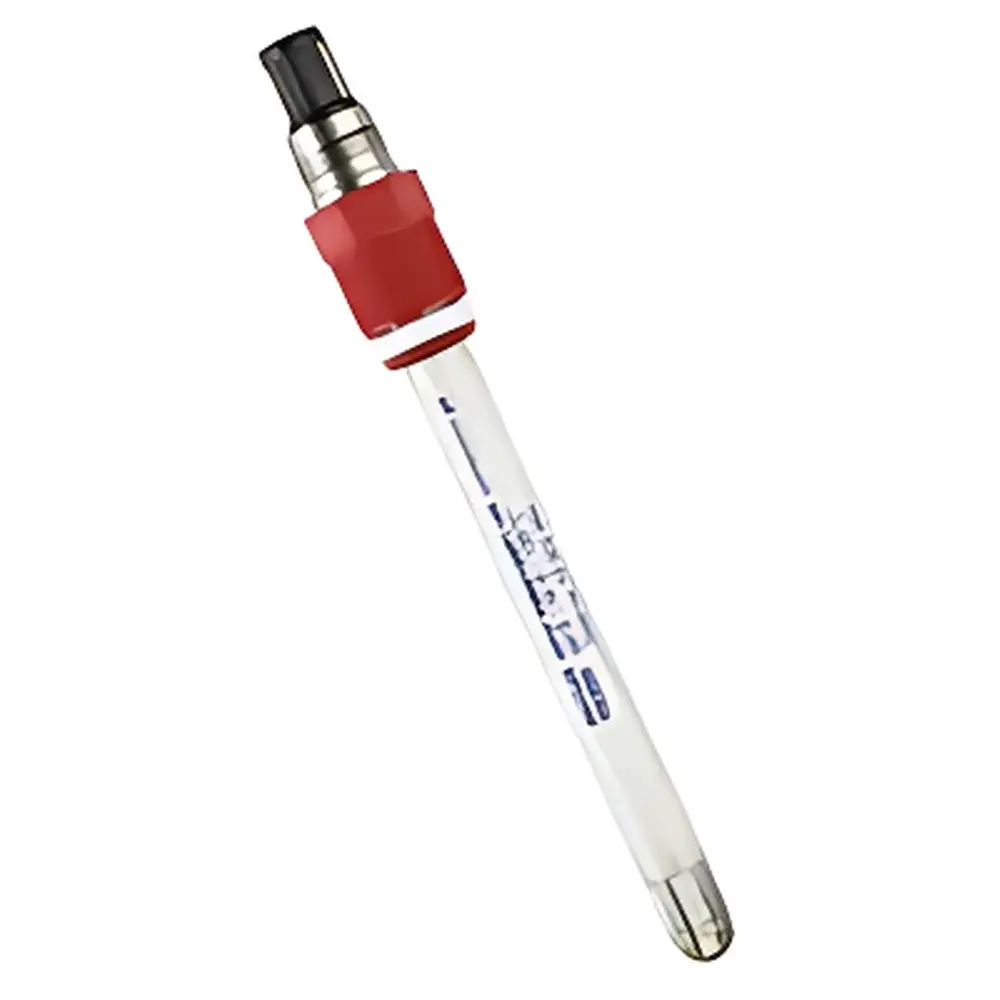
METTLER TOLEDO InPro4260 Online pH Electrode
| Brand | METTLER TOLEDO |
|---|---|
| Origin | Switzerland |
| Model | InPro4260 |
| pH Range | 0–14 |
| Temperature Range | 0–130 °C |
| Max. Pressure | 16 bar (25 °C), 8 bar (130 °C) |
| Reference System | XEROLYT® EXTRA polymer-based electrolyte with KCl |
| Junction Type | Open liquid junction |
| Integrated Temperature Sensor | Pt100 or Pt1000 |
| ATEX Certification | II 1/2G EEx ia IIc T6–T3 |
| FM Approval | Class I, II, III |
| IP Rating | IP68 (VP connector) |
Overview
The METTLER TOLEDO InPro4260 is a high-performance, maintenance-optimized online pH electrode engineered for continuous, reliable measurement in demanding industrial process environments. It operates on the fundamental principle of potentiometric pH sensing—measuring the potential difference across a hydrated glass membrane relative to a stable reference electrode—while integrating robust physical and electrochemical design features to ensure long-term stability and accuracy. Unlike conventional gel- or liquid-filled reference systems, the InPro4260 employs the patented XEROLYT® EXTRA polymer electrolyte, a solid-state, KCl-containing high-polymer matrix that minimizes liquid junction potential drift and eliminates leakage risks. Its open liquid junction design ensures unrestricted ionic contact with process media—even under conditions of high solids content, viscous fluids, or sulfide-rich streams—thereby preventing junction clogging and sustaining electrochemical equilibrium over extended operational cycles. The electrode is rated for continuous operation up to 130 °C and 16 bar at ambient temperature, making it suitable for sterilization-in-place (SIP), clean-in-place (CIP), and high-pressure chemical synthesis applications.
Key Features
- XEROLYT® EXTRA reference system: Patented polymer-based electrolyte offering superior long-term stability, minimal junction potential drift, and resistance to poisoning by sulfides, proteins, or heavy metals.
- Open liquid junction: Eliminates membrane fouling in suspensions, slurries, and viscous media by enabling direct, unobstructed ionic contact between the reference electrolyte and process fluid.
- Integrated Pt100 or Pt1000 temperature sensor: Enables fast, accurate automatic temperature compensation (ATC) without requiring external thermistors—critical for compliance with ISO 7027, ASTM D1293, and USP .
- VarioPin™ (VP) connection system: IP68-rated, stainless-steel push-pull connector with integrated O-ring sealing and mechanical locking—designed for repeatable, vibration-resistant installation in hazardous areas.
- Hazardous area certifications: Fully compliant with ATEX Directive 2014/34/EU (II 1/2G EEx ia IIc T6–T3) and FM Class I, II, III, Division 1 (Groups A–G, T6), supporting deployment in Zone 0/1 and Class I Div. 1 environments.
- Chemical and thermal resilience: Glass body construction with PEEK or ETFE process wetted parts; compatible with aggressive oxidizers, caustics, and organic solvents per METTLER TOLEDO’s Material Compatibility Database.
Sample Compatibility & Compliance
The InPro4260 demonstrates broad compatibility across aqueous and semi-aqueous process streams—including wastewater effluents, fermentation broths, caustic soda solutions, chlorine dioxide dosing lines, and pharmaceutical buffer preparations. Its open junction and polymer reference eliminate common failure modes associated with particulate-laden or reducing environments (e.g., biogas scrubbers, pulp & paper bleach plants). From a regulatory standpoint, the electrode supports GLP/GMP data integrity requirements when paired with METTLER TOLEDO’s SevenMulti or EasyPlus transmitters, which provide full audit trail logging, electronic signatures, and 21 CFR Part 11–compliant user access control. Calibration traceability aligns with NIST-traceable pH buffer standards (DIN 19266, ISO 3696), and routine verification protocols follow ASTM E70 and EN ISO 11277 guidelines.
Software & Data Management
When interfaced with METTLER TOLEDO’s iSense or LabX software platforms, the InPro4260 enables automated calibration scheduling, drift monitoring, and predictive maintenance alerts based on impedance diagnostics and asymmetry potential trends. Transmitter-integrated diagnostics (e.g., via M800 or M400 controllers) deliver real-time status reporting—including junction resistance, glass impedance, and reference potential deviation—facilitating root-cause analysis during out-of-spec events. All measurement data, calibration records, and configuration changes are timestamped and stored with immutable metadata, satisfying ALCOA+ principles (Attributable, Legible, Contemporaneous, Original, Accurate, Complete, Consistent, Enduring, Available) required for regulated industries.
Applications
- Chemical manufacturing: Real-time pH control in nitration, sulfonation, and neutralization reactors where rapid response and chemical resistance are critical.
- Pharmaceutical bioreactors: In-situ monitoring of cell culture pH during upstream processing, compliant with ICH Q5D and FDA guidance on process analytical technology (PAT).
- Food & beverage pasteurization: Continuous pH verification in HTST and UHT lines to ensure microbial safety and regulatory compliance (FDA 21 CFR 113/114).
- Water & wastewater treatment: Monitoring of coagulation/flocculation basins, denitrification zones, and anaerobic digesters exposed to H₂S and suspended solids.
- Pulp & paper bleaching: Stable operation in chlorine dioxide and peroxide stages where conventional electrodes suffer from silver sulfide deposition and reference contamination.
FAQ
What distinguishes XEROLYT® EXTRA from standard gel-filled reference systems?
XEROLYT® EXTRA uses a cross-linked polymer matrix impregnated with KCl, delivering lower junction potential variability, no electrolyte depletion, and immunity to hydrostatic pressure effects—unlike traditional gels that dehydrate or leach under thermal cycling.
Can the InPro4260 be autoclaved or SIP-sterilized?
Yes—it is rated for repeated steam sterilization up to 130 °C at 2 bar for 30 minutes, provided pressure ramp rates comply with METTLER TOLEDO’s validated SIP protocol (Document No. 51170233).
Is temperature compensation mandatory for accurate pH readings?
Yes—pH is intrinsically temperature-dependent; the built-in Pt100/Pt1000 sensor ensures compliance with Nernst equation correction across the full 0–130 °C range, eliminating manual correction errors.
How often should calibration be performed in continuous operation?
Calibration frequency depends on process severity; METTLER TOLEDO recommends initial 24-hr validation followed by weekly 2-point calibration (pH 4.01 + 7.00 or 9.21) supported by daily slope and offset verification using transmitter diagnostics.
Does the InPro4260 support digital communication protocols?
Yes—when used with compatible METTLER TOLEDO transmitters, it supports HART 7, FOUNDATION Fieldbus, and PROFIBUS PA for integration into DCS/SCADA systems with full device description (DD) and FDI package support.
Related Products