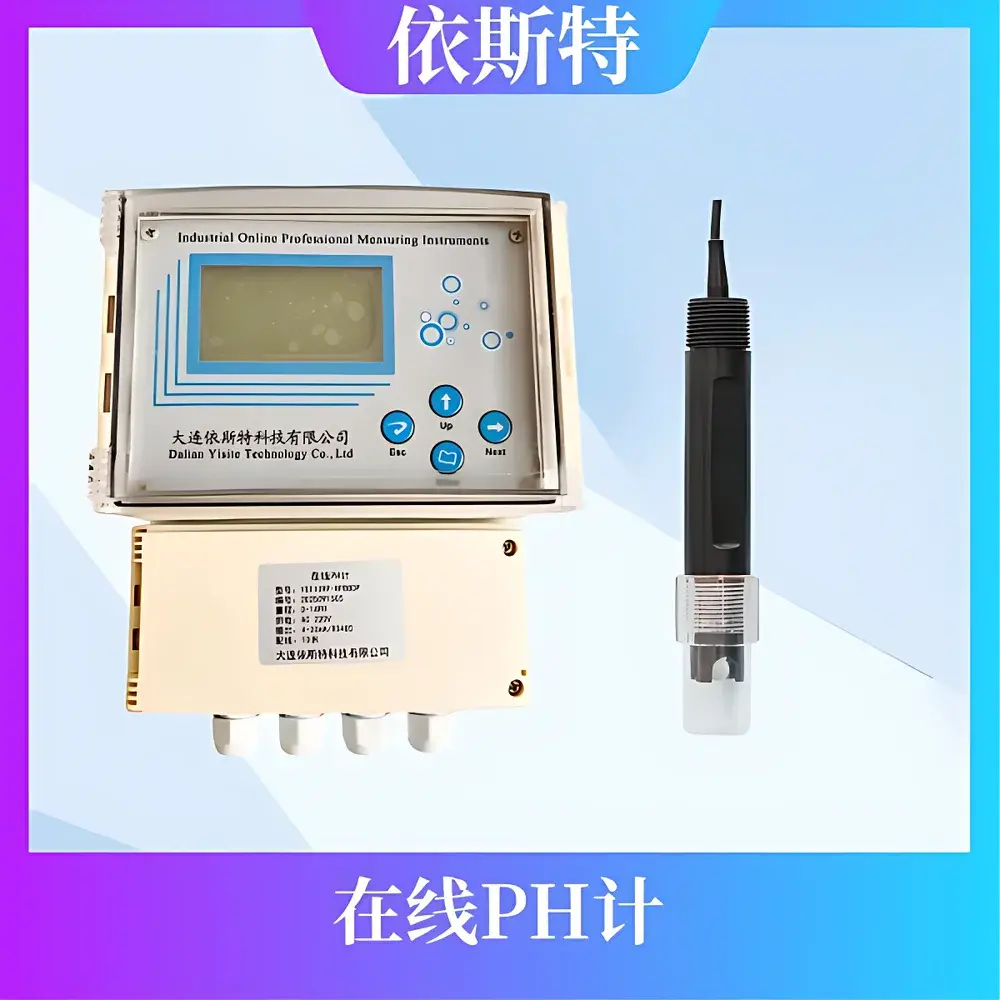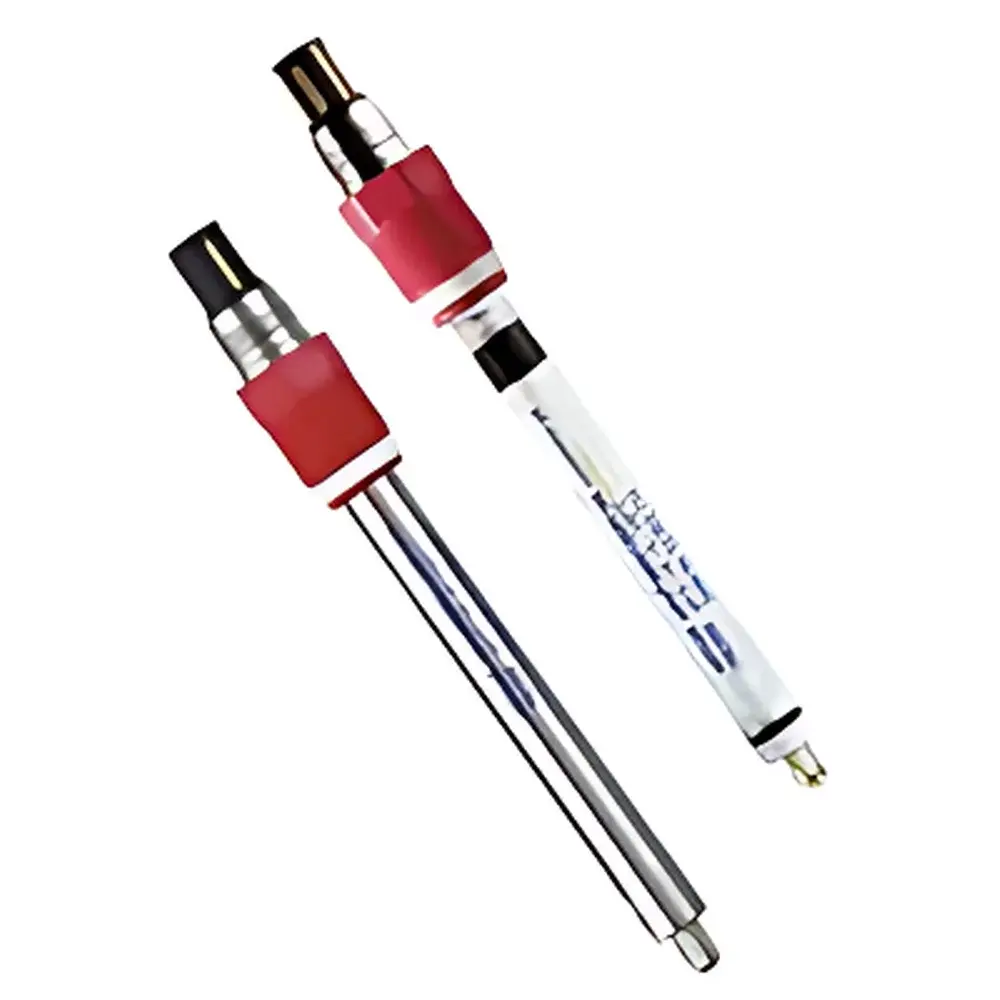
METTLER TOLEDO InPro4800 Online pH Electrode
| Brand | METTLER TOLEDO |
|---|---|
| Origin | Switzerland |
| Model | InPro4800 |
| pH Range | 0–14 |
| Temperature Range | −5 to 130 °C |
| Max. Operating Pressure | 13 bar (at 130 °C) / 188 psi (at 266 °F) |
| Safety Factor | 3 |
| Diaphragm | External PTFE annular junction, internal non-flowing diaphragm |
| Reference System | Patented dual-gel electrolyte chamber with pressure compensation, Ag/AgCl |
| Certifications | ATEX II 1/2G Ex ia IIc T6/T5/T4, FM IS Class I, Div 1, Groups A–D |
| Compliance | IEC 60079-0, IEC 60079-11, UL 913 |
Overview
The METTLER TOLEDO InPro4800 is a high-integrity, industrial-grade online pH electrode engineered for continuous, reliable measurement in demanding process environments—including aggressive chemical media, high-pressure systems, and explosive atmospheres. Based on the potentiometric principle, it measures hydrogen ion activity via a glass sensing membrane coupled with a robust, pressure-compensated dual-gel reference system. Unlike conventional single-junction electrodes, the InPro4800 integrates an extended diffusion path within its dual-chamber reference architecture, significantly delaying electrolyte depletion and minimizing drift—particularly critical in applications involving oxidizing agents, concentrated acids or alkalis, sulfide-containing streams, or suspended solids. Its design conforms to fundamental electrochemical stability requirements defined in ISO 12076 and ASTM D1293 for process pH monitoring, ensuring traceable performance under dynamic thermal and mechanical stress.
Key Features
- Patented dual-gel reference system with integrated pressure compensation—eliminates liquid junction potential shifts caused by backpressure or temperature gradients.
- PTFE-based annular junction (external diaphragm) resists fouling and clogging in abrasive, viscous, or fiber-laden process streams.
- Non-flowing internal diaphragm prevents electrolyte leakage and cross-contamination, extending service life and reducing calibration frequency.
- Flat glass membrane variant (InPro4801SG) optimized for slurries, pulp, and heterogeneous media; eliminates surface trapping and improves response time in particulate-rich environments.
- Solution Ground (SG) functionality enables stable reference potential establishment in electrically noisy or poorly grounded vessels—critical for compliance with IEC 61000-6-2 EMC standards.
- Intrinsically safe construction certified to ATEX II 1/2G Ex ia IIc T6 and FM Class I, Div 1, Groups A–D—validated for Zone 0/20 and Class I, Division 1 hazardous locations.
- Stainless steel body with optional PEEK or Hastelloy C-22 wetted parts supports long-term compatibility with HNO₃, H₂SO₄, NaOH, Cl₂, and other corrosive process chemicals.
Sample Compatibility & Compliance
The InPro4800 demonstrates proven reliability across diverse industrial matrices: caustic soda production (up to 50% w/w NaOH), chlorine dioxide generation, pharmaceutical API crystallization, bioreactor pH control, and wastewater nitrification/denitrification loops. It maintains metrological integrity under sustained exposure to redox-active species (e.g., Fe³⁺/Fe²⁺, Cr⁶⁺/Cr³⁺) and sulfide-laden effluents where conventional electrodes exhibit rapid reference poisoning. All variants comply with GLP data integrity expectations per FDA 21 CFR Part 11 when paired with METTLER TOLEDO’s SevenExcellence or Thornton 4000 Series transmitters—supporting full audit trails, electronic signatures, and secure user access control. Mechanical certifications include PED 2014/68/EU (Category IV) and ASME B31.3 process piping compatibility.
Software & Data Management
When interfaced with METTLER TOLEDO’s iSense software or Thornton Process Analytics Suite, the InPro4800 delivers automated diagnostics including junction resistance monitoring, asymmetry potential tracking, and temperature-compensated slope validation. Real-time health indicators—such as “Diaphragm Resistance” and “Reference Stability Index”—are logged with timestamped metadata and exported in CSV or XML formats compliant with ISA-88/ISA-95 batch record structures. Firmware updates preserve calibration history and support delta-check verification protocols aligned with ISO/IEC 17025 clause 7.7. All communication occurs over HART 7, Profibus PA, or Foundation Fieldbus—enabling integration into DCS platforms (e.g., Emerson DeltaV, Honeywell Experion) with native device description (DD) files.
Applications
- Chemical manufacturing: Continuous pH control in nitration, sulfonation, and chlorination reactors operating above 10 bar and 120 °C.
- Power plant water chemistry: Condensate polishing and boiler feedwater pH monitoring under ultra-high-purity constraints (ASTM D4582).
- Food & beverage: Fermentation pH profiling in high-sugar, high-CO₂ environments where biofilm formation challenges conventional sensors.
- Environmental engineering: Real-time alkalinity titration endpoints in lime softening and phosphorus removal basins.
- Biotechnology: Disposable bioreactor pH monitoring with autoclave-compatible InPro4801SG-S variant (S = sterilizable).
FAQ
What distinguishes the InPro4800 from standard pH electrodes in high-pressure applications?
Its pressure-compensated dual-gel reference system actively equalizes internal hydrostatic pressure against process conditions—preventing diaphragm extrusion and reference contamination up to 13 bar at 130 °C.
Can the InPro4801SG be used without a separate ground rod?
Yes—the integrated Solution Ground electrode establishes a stable reference potential directly within the process stream, eliminating dependency on vessel grounding integrity.
Is calibration traceable to NIST standards?
Calibration certificates are available with NIST-traceable buffer solutions (e.g., NIST SRM 186, 187), and field calibration procedures follow ISO 8655-5 guidelines for volumetric apparatus verification.
Does the electrode support simultaneous pH and ORP measurement?
When equipped with the optional Pt auxiliary electrode, the InPro4800/4801SG provides synchronized pH and redox potential outputs via shared analog or digital channels.
How often does the dual-gel reference require maintenance?
Under typical chemical processing conditions, service intervals exceed 12 months; diagnostic alerts notify users of electrolyte depletion ≥20% prior to performance degradation.