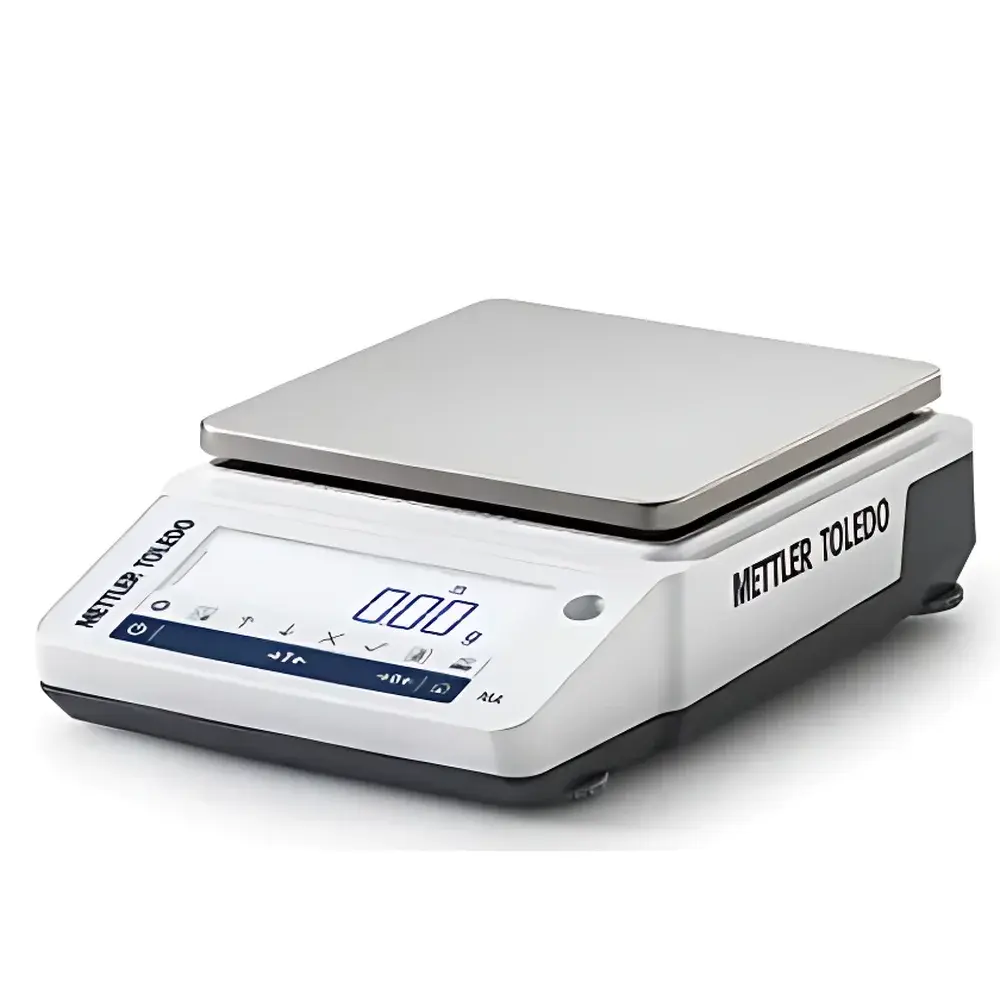
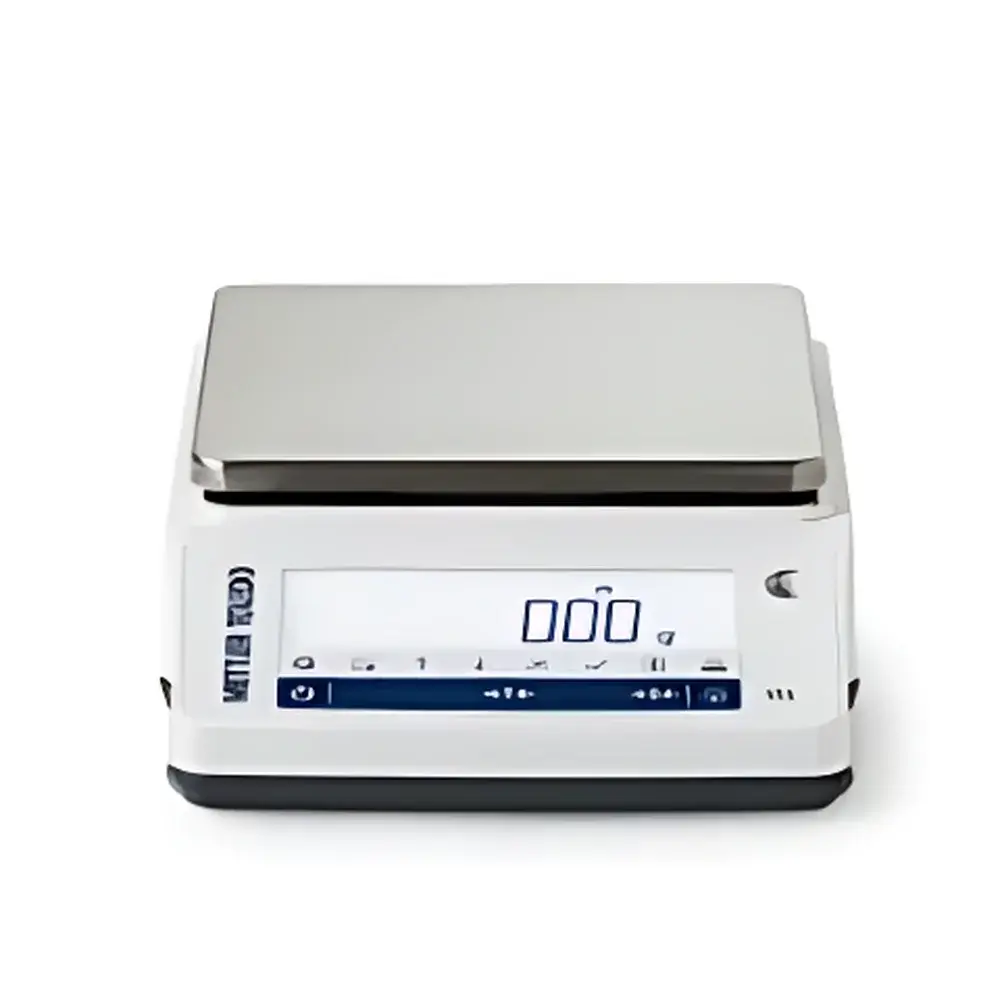
METTLER TOLEDO MA2002P Compact Laboratory Balance
| Brand | METTLER TOLEDO |
|---|---|
| Origin | Shanghai, China |
| Model | MA2002P Compact Laboratory Balance |
| Power Options | AC adapter or rechargeable battery |
| Display | High-contrast LCD with backlight |
| Interface | Touch-sensitive keys |
| Calibration | Internal motorized calibration with built-in test weight |
| Construction | Scratch-resistant glass top plate, reinforced polymer housing |
| Compliance | ISO/IEC 17025-compatible operation, GLP/GMP-ready data logging |
Overview
The METTLER TOLEDO MA2002P Compact Laboratory Balance is an entry-level precision weighing instrument engineered for reliability, portability, and ease of integration into routine laboratory and light industrial workflows. Utilizing electromagnetic force compensation (EMFC) technology, the MA2002P delivers stable, drift-resistant measurements with high reproducibility across variable ambient conditions—including moderate temperature fluctuations and minor vibration exposure. Designed for daily use in QC labs, educational institutions, field service units, and production line stations, this balance operates without compromise on metrological integrity despite its compact footprint (190 × 185 × 65 mm) and lightweight chassis (≈1.8 kg). Its dual-power architecture—supporting both AC mains operation and extended battery runtime—enables seamless transition between fixed benchtop deployment and mobile applications such as inventory verification, sample preparation in remote locations, or on-site calibration support.
Key Features
- Electromagnetic force compensation (EMFC) sensor system ensuring long-term stability and minimal zero drift.
- Internal motorized calibration routine activated via single-touch keypress, using a factory-installed, traceable test weight compliant with ISO 9001 and ISO/IEC 17025 requirements.
- High-contrast, backlit LCD display (128 × 64 pixels) with intuitive icon-based navigation and real-time contextual prompts guiding users through tare, unit conversion, and basic statistical functions.
- Dual power configuration: compatible with standard 12 V DC adapter (included) and optional rechargeable Li-ion battery pack (up to 20 hours continuous operation at typical load).
- Scratch-resistant tempered glass weighing pan surface (120 mm diameter) and reinforced polymer enclosure rated IP42 for dust resistance and limited moisture protection.
- Touch-sensitive control panel with haptic feedback; no mechanical switches to wear out over repeated use cycles.
Sample Compatibility & Compliance
The MA2002P accommodates standard laboratory containers—including beakers, weighing boats, and plastic vials—within its 2.1 kg maximum capacity and 1 mg readability range. It supports common weighing modes: net/gross/tare, parts counting (with user-defined reference weight), percent weighing, and density determination (when used with optional density kit). All firmware operations adhere to Good Laboratory Practice (GLP) and Good Manufacturing Practice (GMP) documentation standards. Audit trail functionality—including timestamped calibration events, operator ID input (via optional USB keyboard), and automatic print/log of critical actions—is enabled through METTLER TOLEDO’s LabX Lite software interface. The device meets CE marking requirements under the EU Measuring Instruments Directive (MID) Annex MI-001 for non-automatic weighing instruments and conforms to OIML R76-1 Class II accuracy specifications.
Software & Data Management
Data output is supported via RS232 serial interface (standard) and optional USB-to-serial adapter for connection to PCs, label printers, or LIMS systems. The balance transmits stable weight values in ASCII format following NIST-traceable transmission protocols. When paired with METTLER TOLEDO’s free LabX Lite software, users gain access to automated report generation, customizable templates (PDF/CSV), electronic signature support, and secure local storage with folder-based project organization. All data exports include embedded metadata: date/time stamp, balance ID, calibration status flag, and environmental condition logs (if external sensor integrated). Firmware updates are delivered via USB memory stick and validated using SHA-256 checksums to ensure integrity per FDA 21 CFR Part 11 principles.
Applications
- Raw material receipt inspection in pharmaceutical and food manufacturing environments.
- Student experiments and teaching labs requiring robust, low-maintenance instrumentation.
- Field-based quality assurance tasks including warehouse stock reconciliation and packaging line verification.
- Preparation of standard solutions and reagent aliquots in analytical chemistry workflows.
- Inventory management in clinical laboratories where space-constrained workstations necessitate portable yet accurate mass measurement.
- Supporting ISO/IEC 17025 accreditation audits through documented calibration history and traceable uncertainty budgets.
FAQ
What is the maximum capacity and readability of the MA2002P?
The MA2002P offers a maximum capacity of 2100 g with 1 mg readability (d = 1 mg, Max = 2100 g), conforming to OIML R76-1 Class II tolerances.
Does the MA2002P support external calibration with user-provided weights?
Yes—external calibration is available via menu-driven procedure using certified external weights; however, internal motorized calibration remains the recommended method for routine verification.
Is the battery rechargeable, and how is it charged?
The optional battery is a sealed Li-ion pack charged via the included AC adapter when the balance is powered on; no separate charging dock is required.
Can the MA2002P be connected to a networked LIMS or ERP system?
Direct Ethernet or Wi-Fi connectivity is not supported; integration occurs via RS232 or USB-serial link using middleware or custom scripts compliant with HL7 or ASTM E1384 standards.
What documentation is provided for regulatory compliance?
Each unit ships with a Factory Calibration Certificate (traceable to national standards), Declaration of Conformity (CE), and user manual containing metrological specifications, maintenance schedules, and GLP/GMP implementation guidance.