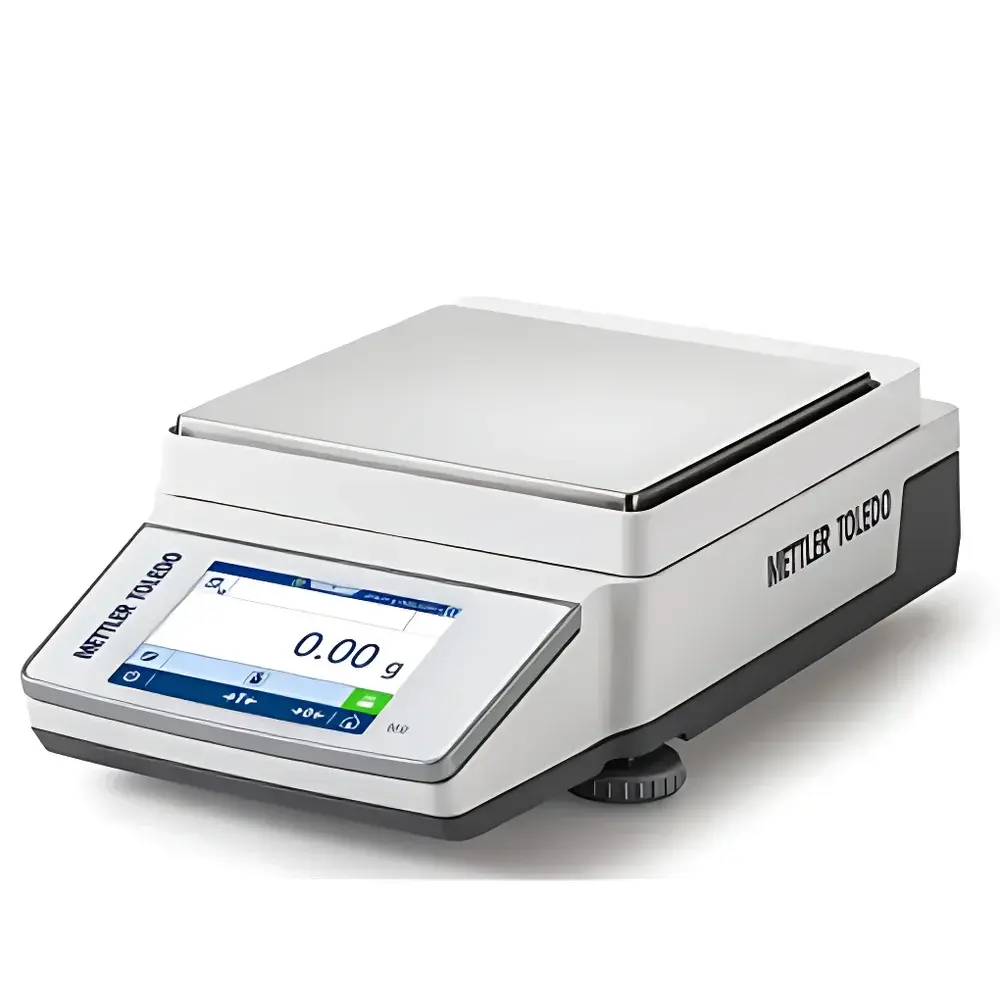
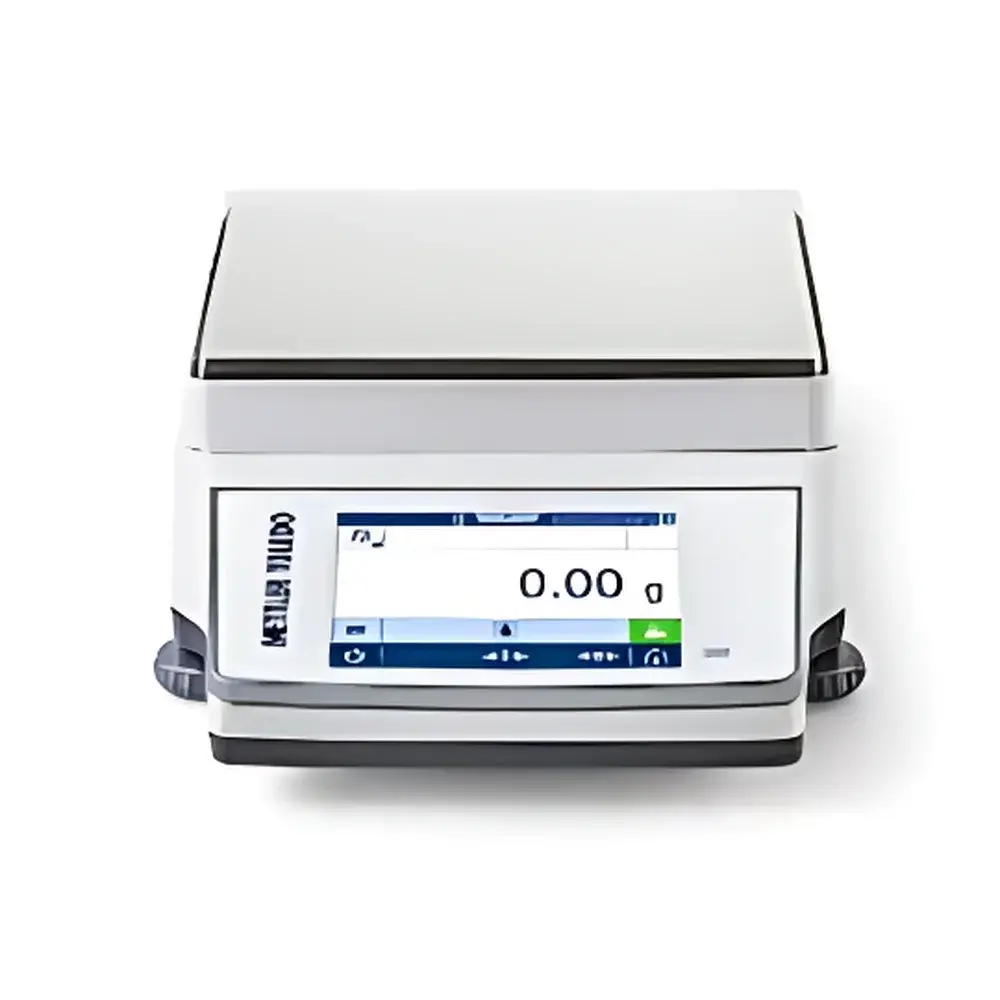
METTLER TOLEDO MR3002 Precision Balance
| Brand | METTLER TOLEDO |
|---|---|
| Origin | Shanghai, China |
| Model | MR3002 Precision Balance |
| Protection Rating | IP43 |
| Construction | Full-metal housing with dust- and chemical-resistant components |
| Overload Protection | Integrated sensor protection against mechanical overloading and pan drop impact |
| Power Management | Configurable energy-saving mode |
| Connectivity | RS232, USB, Ethernet (optional), MT-SICS command protocol compliant |
| User Management | Role-based access control with customizable user groups and application visibility |
| Calibration | Automatic internal calibration (AutoCal™) with guided leveling assistance |
| Compliance | Designed for GLP/GMP environments |
Overview
The METTLER TOLEDO MR3002 Precision Balance is an industrial-grade analytical weighing instrument engineered for reproducible mass measurement in demanding laboratory, quality control, and production environments. Built upon METTLER TOLEDO’s proven electromagnetic force compensation (EMFC) principle, the MR3002 delivers high-resolution static weighing performance with exceptional long-term stability and temperature independence. Its robust architecture—featuring a full-metal monolithic frame, hardened stainless-steel pan, and hermetically sealed load cell—is specifically optimized for environments where mechanical shock, airborne particulates, or incidental liquid exposure are routine concerns. Unlike entry-level balances, the MR3002 integrates metrological rigor with operational resilience: its IP43-rated enclosure provides certified protection against solid objects ≥1 mm and water spray at angles up to 60° from vertical, ensuring uninterrupted operation in workshops, pilot plants, and regulated manufacturing areas where environmental control is limited.
Key Features
- Electromagnetic force compensation (EMFC) transduction technology for drift-free, high-stability readings under variable ambient conditions
- Full-metal housing with chemically resistant surface finish and reinforced pan support structure tested to withstand repeated mechanical stress
- Integrated AutoCal™ automatic internal calibration system with temperature-triggered recalibration and guided leveling wizard for rapid setup
- Overload protection mechanism that safeguards the load cell during accidental overloading or pan impact events—critical for minimizing downtime in shared-use facilities
- Configurable power management suite including standby mode, auto-off timers, and low-power display options to reduce energy consumption without compromising readiness
- Multi-interface connectivity: native RS232 and USB Device ports; optional Ethernet module enables seamless integration into factory automation networks
Sample Compatibility & Compliance
The MR3002 accommodates a wide range of sample types—from powders and granules to packaged components—within its 3.1 kg maximum capacity and 1 mg readability specification (per model variant). Its large, removable stainless-steel pan (180 × 180 mm) facilitates easy cleaning and decontamination between batches. The balance meets essential regulatory prerequisites for use in GxP environments: it supports traceable calibration records, configurable user authentication, and role-based interface restrictions to enforce procedural compliance. When connected to METTLER TOLEDO LabX software or third-party LIMS/MES platforms via MT-SICS protocol, the MR3002 generates timestamped, operator-identified weight data with full audit trail capability—aligning with FDA 21 CFR Part 11, EU Annex 11, and ISO/IEC 17025 documentation requirements.
Software & Data Management
Data integrity and workflow integration are central to the MR3002’s design philosophy. Through standardized MT-SICS (METTLER TOLEDO Standard Interface Command Set), the balance communicates bidirectionally with PLCs, SCADA systems, and laboratory informatics platforms without proprietary middleware. All weight values, timestamps, operator IDs (when authenticated), and status flags (e.g., calibration due, door open, overload) are transmitted as ASCII strings compliant with ASTM E1578 and ISO/IEC 11179 metadata conventions. Optional LabX Direct integration enables real-time data capture, electronic signature enforcement, and automated report generation—including PDF certificates compliant with ISO 9001 and ISO/IEC 17025 calibration documentation standards.
Applications
The MR3002 serves as a primary weighing platform across multiple regulated and non-regulated domains: raw material receipt inspection in pharmaceutical and chemical manufacturing; formulation batch verification in R&D labs; component counting and checkweighing on assembly lines; and routine calibration verification in metrology labs. Its ruggedized construction makes it suitable for installation in cleanrooms (Class 8/ISO 14644-1), humid production floors, and vibration-prone packaging areas—environments where traditional analytical balances would require frequent recalibration or protective enclosures. It is frequently deployed alongside automated dispensing systems, tablet presses, and filling machines where repeatable, networked mass measurement is critical to process validation.
FAQ
What is the maximum capacity and readability of the MR3002 Precision Balance?
The standard MR3002 configuration offers a 3.1 kg capacity with 1 mg readability. Specific variants may differ; consult the technical datasheet for model-specific specifications.
Does the MR3002 support external calibration weights?
Yes—the balance accepts external calibration using certified Class M2 or better weights. Internal AutoCal™ remains the recommended method for routine verification between external calibrations.
Can the MR3002 be validated for GMP use?
Yes—its design supports IQ/OQ/PQ execution per ASTM E2500 and EU GMP Annex 15. Documentation packages, including test protocols and URS templates, are available through METTLER TOLEDO’s Validation Services team.
Is firmware upgrade supported in-field?
Yes—firmware updates are delivered via USB stick or network connection and maintain full backward compatibility with existing MT-SICS integrations.
How does the IP43 rating affect installation location options?
IP43 certification permits installation in non-sterile production zones, laboratories with intermittent humidity, and environments subject to light splashing or dust accumulation—without requiring additional enclosures or HVAC conditioning.