
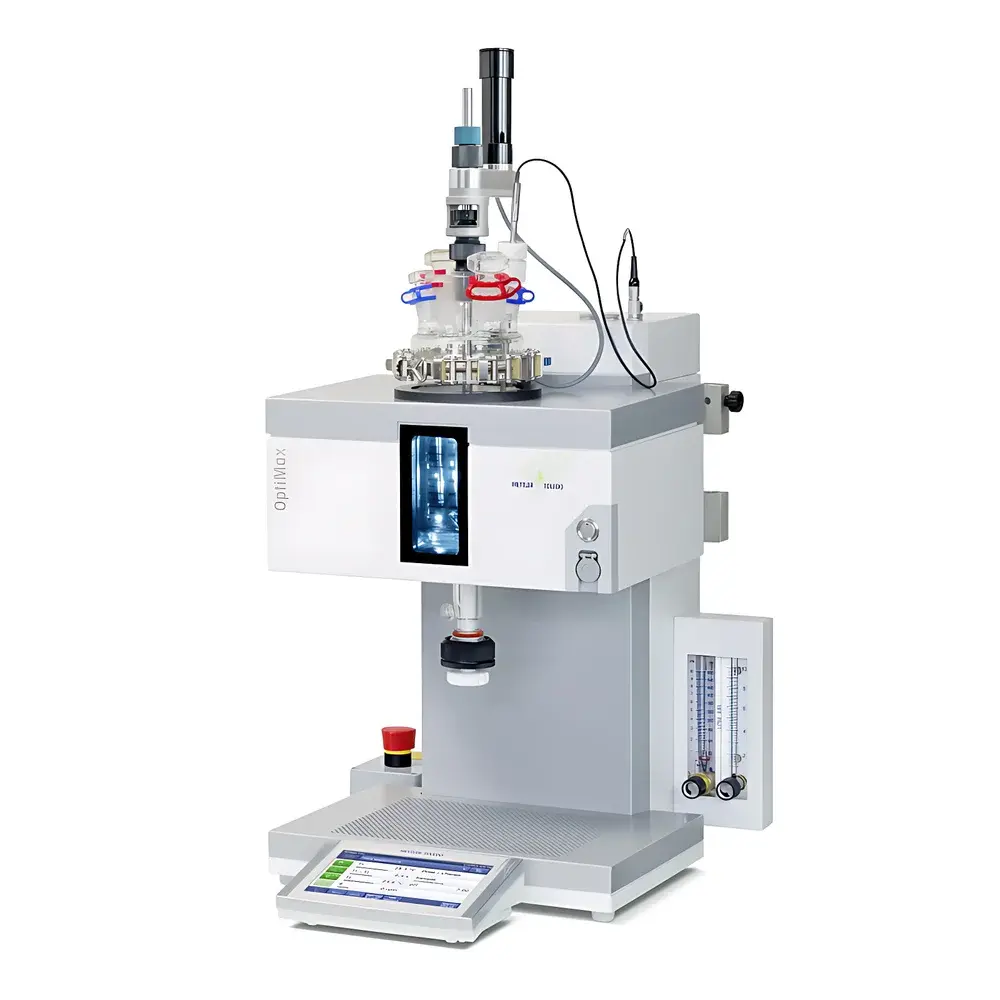
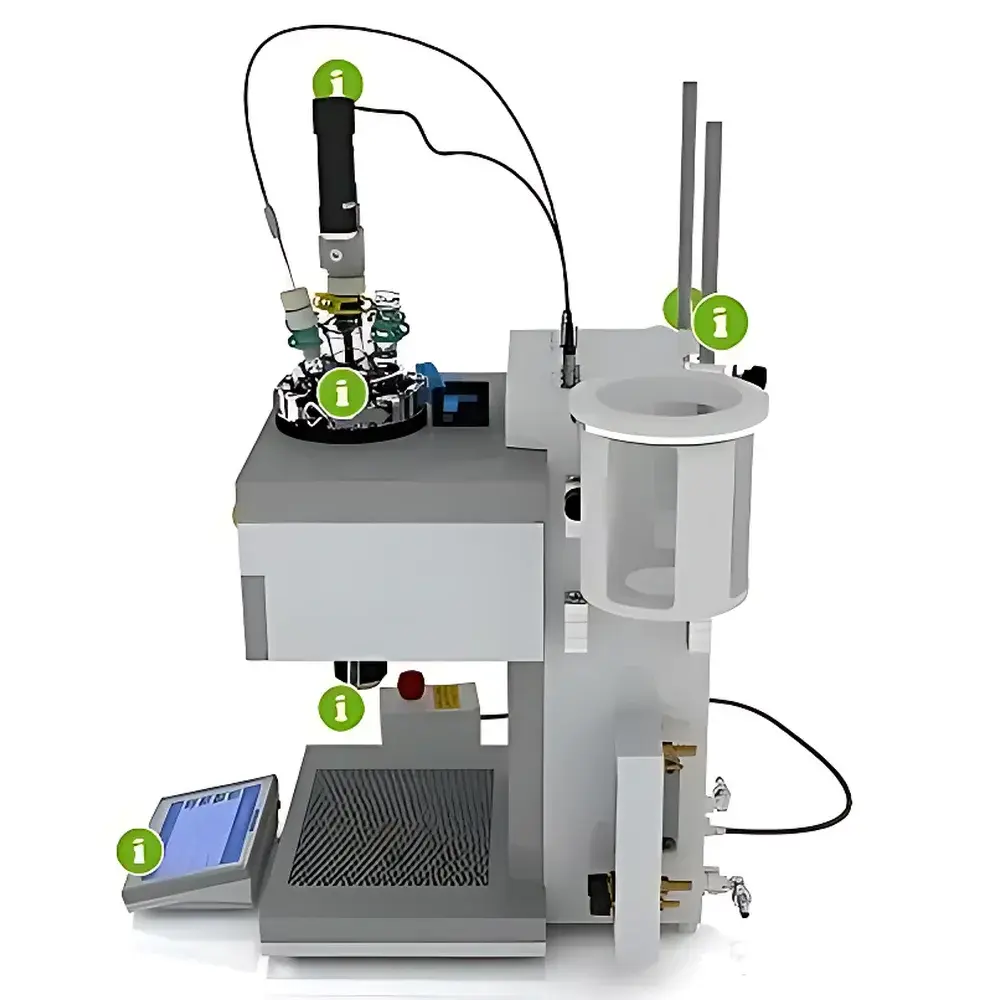
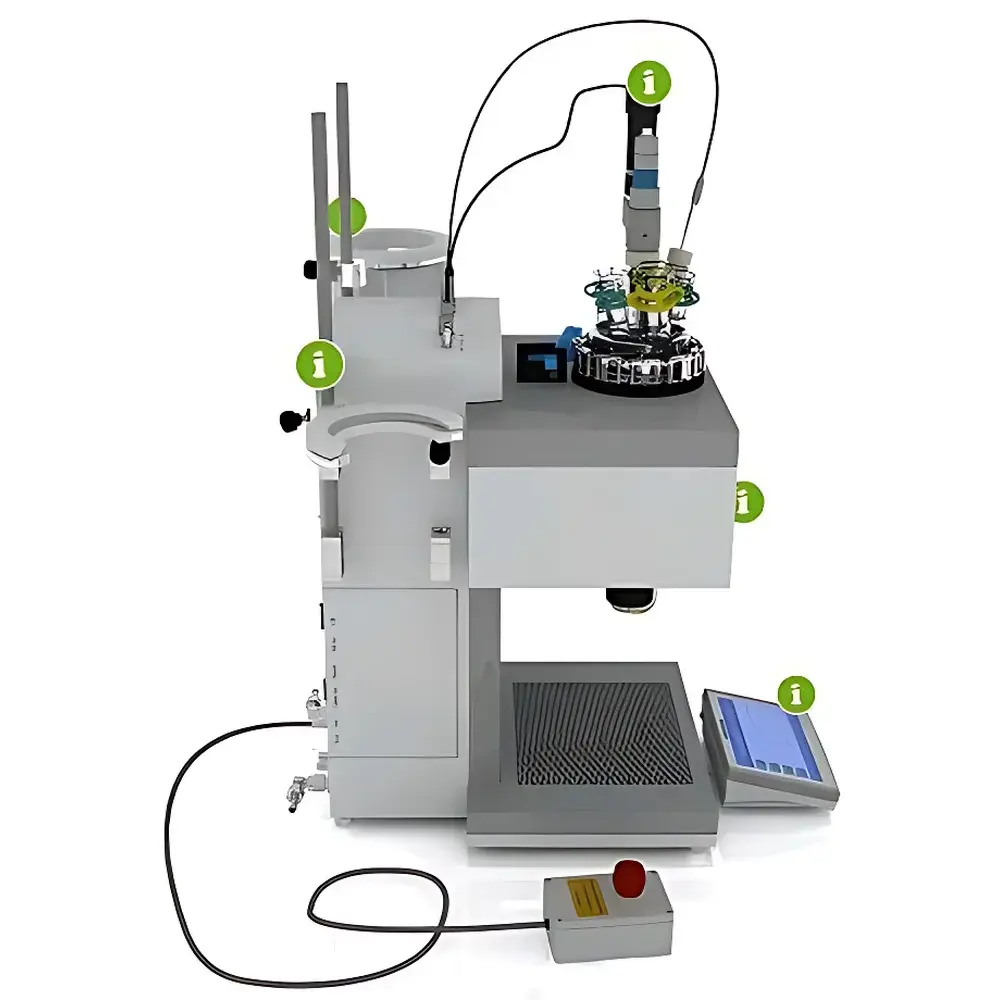
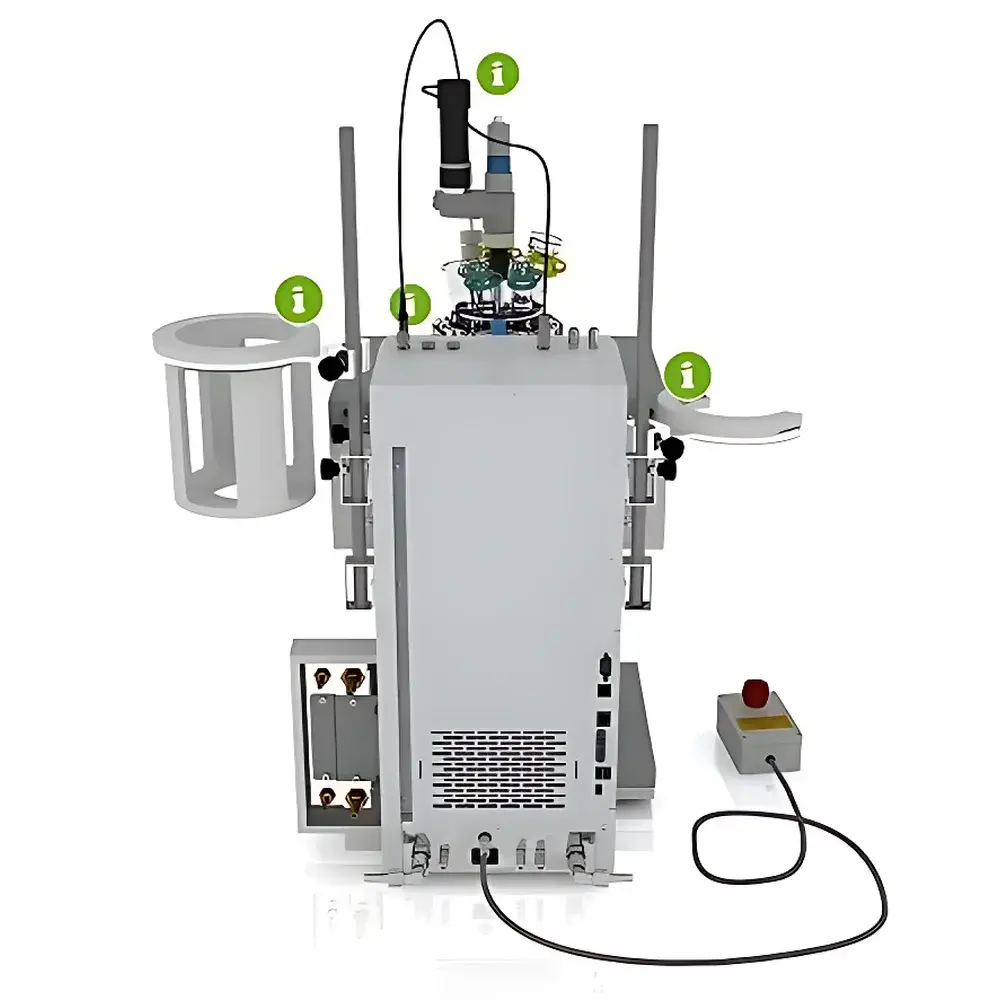
METTLER TOLEDO OptiMax™ Automated Chemical Synthesis Reactor
| Brand | METTLER TOLEDO |
|---|---|
| Origin | Switzerland |
| Model | OptiMax™ |
| Temperature Range | −40 to 180 °C (jacket) |
| Temperature Control Accuracy | ±0.2 mK |
| Reaction Vessels | 1–10 units |
| Vessel Volume | 8–1000 mL |
| Stirring Speed | 30–1200 rpm (±5 rpm) |
| Dimensions | 388 × 414 × 539 mm (W × D × H) |
| Weight | 35 kg |
Overview
The METTLER TOLEDO OptiMax™ Automated Chemical Synthesis Reactor is an integrated, modular reaction platform engineered for precision-controlled synthesis and process development in R&D laboratories. It employs solid-state Peltier-based heating and cooling technology—eliminating dependence on external cryogenic units, oil baths, or ice baths—while delivering rapid, bidirectional thermal response across a wide operational range. The system operates via jacket temperature (Tj) control, with nominal jacket setpoints spanning −40 °C to 180 °C, and supports multiple control modes including reaction mass temperature (Tr), distillation, and crystallization. Its closed-loop thermal architecture ensures high reproducibility and minimal thermal lag, enabling accurate kinetic profiling even for highly exothermic or endothermic reactions. Designed for seamless integration into modern lab workflows, the OptiMax™ platform facilitates unattended operation through pre-programmed task sequences, real-time parameter logging, and automated reagent addition—supporting both small-molecule discovery and early-stage API process optimization.
Key Features
- Solid-state thermal management: Integrated Peltier modules provide precise, oil-free heating and cooling from −40 °C to 180 °C without auxiliary chillers or heating baths.
- High-resolution temperature control: ±0.2 mK stability under dynamic load conditions, validated per ASTM E2877 and ISO/IEC 17025 traceable calibration protocols.
- Modular reactor configuration: Supports 1–10 independent reaction vessels with scalable volumes (8–1000 mL); compatible with glass and Hastelloy C-22 wetted materials.
- Intuitive touchscreen interface: Graphical HMI enables drag-and-drop method creation, sequence scheduling, and live visualization of Tj, Tr, power consumption, and heat flow profiles.
- Robust mechanical agitation: Dual-mode stirring (30–1200 rpm, ±5 rpm accuracy) with interchangeable impellers—downward-pumping, anchor, and crescent types—optimized for heterogeneous mixing and suspension stability.
- Full data integrity compliance: All sensor inputs, actuator commands, and user actions are time-stamped, encrypted, and stored locally with optional network backup—aligned with FDA 21 CFR Part 11 and EU Annex 11 requirements for audit trail generation.
Sample Compatibility & Compliance
The OptiMax™ accommodates diverse chemistries—including Grignard, lithiation, hydrogenation, and catalytic cross-coupling—across solvent systems ranging from low-boiling ethers to high-boiling amides and ionic liquids. Vessel configurations meet ASTM D6304 (moisture analysis), USP (dissolution), and ICH Q5C (protein stability) compatibility guidelines. All contact materials conform to USP Class VI biocompatibility standards; pressure-rated vessels (optional) comply with PED 2014/68/EU. System validation documentation supports GLP and GMP-regulated environments, with IQ/OQ/PQ templates available upon request.
Software & Data Management
Control and data acquisition are managed via METTLER TOLEDO’s iC software suite, which provides real-time multichannel monitoring, customizable alarm thresholds, and automated report generation (PDF/CSV). Raw data—including temperature gradients, heat flow rates (W), stirrer torque (N·m), and dosing event logs—are stored in a relational SQLite database with SHA-256 hashing for tamper-evident integrity. Export functions support LIMS integration via OPC UA and direct transfer to ELN platforms (e.g., LabArchives, Benchling). Audit trails record operator ID, timestamp, parameter changes, and system events—fully compliant with ALCOA+ principles.
Applications
The OptiMax™ is routinely deployed in fine chemical process research, pharmaceutical route scouting, and biocatalysis development. Typical use cases include reaction calorimetry for safety screening (RC1e equivalence), kinetic modeling of nucleophilic substitution pathways, polymorph screening under controlled supersaturation, and continuous-flow precursor synthesis. Its multi-vessel capability supports Design of Experiments (DoE) studies for parameter space mapping—accelerating scale-up decisions while reducing material consumption by up to 70% compared to traditional batch reactors.
FAQ
Does the OptiMax™ require external cooling utilities to reach −40 °C?
No. Its integrated Peltier-based cooling system achieves −40 °C jacket temperature without liquid nitrogen, dry ice, or recirculating chillers.
Can the system operate under inert atmosphere or elevated pressure?
Yes—when equipped with optional gas-tight lids and pressure-rated vessels (up to 10 bar), it supports Schlenk-line and autoclave-style operation.
Is raw temperature data exportable for third-party kinetic modeling tools?
Yes. Time-synchronized Tj, Tr, and power data are exportable in CSV format with millisecond resolution for use in MATLAB, Python (SciPy), or Kinetics Simulator.
How is user access and method modification controlled in regulated labs?
Role-based permissions (Administrator, Technician, Viewer) are enforced via Windows Active Directory integration; method edits trigger electronic signatures and version-controlled archiving.
What maintenance intervals are recommended for long-term reliability?
Annual calibration verification is advised; Peltier module health diagnostics are performed automatically during startup, with predictive alerts generated 30 days prior to service threshold.
Related Products



