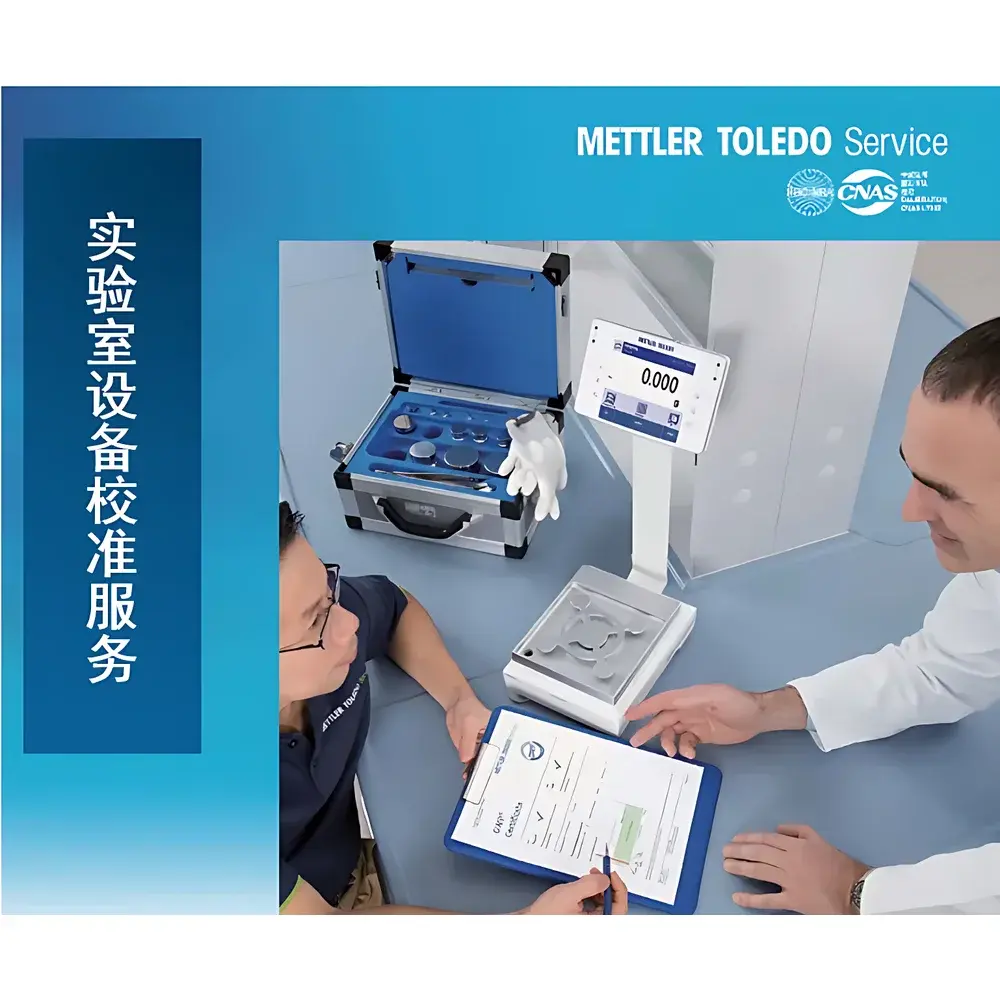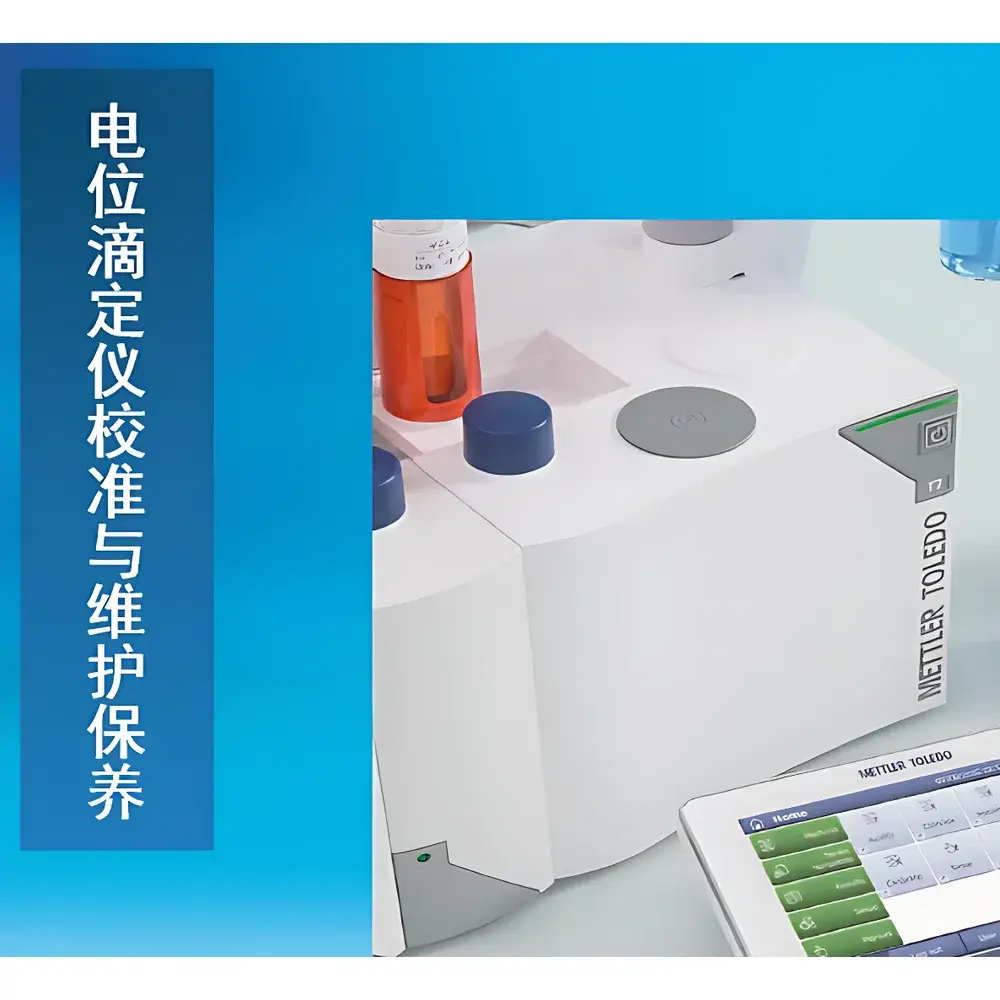
METTLER TOLEDO Potentiometric Titration System Calibration and Preventive Maintenance Service
| Brand | METTLER TOLEDO |
|---|---|
| Origin | Switzerland |
| Manufacturer Status | Authorized Distributor |
| Product Origin | Imported |
| Service Type | Instrument Calibration & Preventive Maintenance |
| Instrument Category | Analytical Instrumentation |
| Service Experience | 100 Years |
| Response Time | Within 24 Hours |
| Scope of Certification/Calibration | Drive Mechanism, Burette Assembly, Signal Board Verification |
| Compliance Framework | ISO/IEC 17025, ASTM E2026, USP <797> & <1225>, GLP/GMP-Aligned Documentation |
Overview
The METTLER TOLEDO Potentiometric Titration System Calibration and Preventive Maintenance Service is a metrologically traceable, standards-compliant technical intervention designed for laboratory-grade potentiometric titrators—including models such as the T5, T7, T9, and Excellence series. This service is grounded in the fundamental principles of electrochemical measurement traceability and volumetric delivery integrity. It addresses three interdependent subsystems: the motor-driven burette actuation mechanism (drive unit), the precision glass or polymer burette assembly, and the analog signal conditioning board responsible for electrode potential acquisition (mV/pH/mV vs. Ag/AgCl reference). Unlike generic calibration offerings, this service implements a dual-path verification strategy: volumetric accuracy assessment via gravimetric comparison against certified reference weights (per ISO 8655-3), and electrochemical signal fidelity validation using NIST-traceable buffer solutions and redox standards. The outcome is not merely instrument “pass/fail” status, but a documented uncertainty budget per component—fully aligned with ISO/IEC 17025 requirements for accredited calibration laboratories.
Key Features
- Component-level calibration: Independent verification of drive unit step resolution, burette dispensing accuracy (±0.1% at 1 mL–50 mL range), and signal board linearity (±0.2 mV over ±2000 mV span)
- Gravimetric volumetric calibration: Conducted in accordance with ISO 8655-3 using Class E1 stainless-steel weights and certified analytical balances (uncertainty ≤ 0.005 mg)
- Electrochemical signal validation: Utilizes certified pH buffers (NIST SRM 186, 187) and redox standards (Fe²⁺/Fe³⁺, Ce⁴⁺/Ce³⁺) to verify slope, offset, and noise floor of the potentiometric input circuit
- Preventive maintenance protocol: Includes mechanical lubrication of stepper motor gear trains, cleaning of optical encoders and limit switches, decontamination of fluid pathways, and inspection of PCB-level corrosion (especially on drive-stage control boards)
- Full audit trail documentation: Each service generates a calibrated certificate with measurement uncertainty statements, environmental conditions (temperature, humidity), technician ID, equipment IDs, and revision-controlled calibration records
Sample Compatibility & Compliance
This service applies to all METTLER TOLEDO potentiometric titration platforms operating under standard laboratory conditions (15–30 °C, 30–70% RH). It supports compatibility with aqueous, non-aqueous, and mixed-solvent titrations—including acid-base, redox, precipitation, and complexometric methods. All procedures conform to international regulatory expectations: calibration data meets ASTM E2026 (Standard Practice for Calibration of Volumetric Glassware), signal verification aligns with USP (Validation of Compendial Procedures), and documentation structure satisfies FDA 21 CFR Part 11 requirements for electronic records and signatures. Certificates issued are recognized under ILAC MRA signatory frameworks for cross-border acceptance.
Software & Data Management
Calibration and maintenance data are integrated into METTLER TOLEDO LabX® software via secure API endpoints. Users receive encrypted PDF certificates with embedded digital signatures and QR-coded access to raw calibration logs. Audit trails include timestamped technician actions, version-controlled firmware revision checks, and automated flagging of out-of-tolerance components. All records support GLP/GMP audit readiness—enabling full traceability from electrode signal acquisition to final titration result export. No proprietary cloud storage is required; local server deployment and air-gapped network configurations remain fully supported.
Applications
This service directly supports quality-critical workflows across regulated industries: pharmaceutical assay validation (e.g., active pharmaceutical ingredient quantification per USP ), food acidity testing (AOAC 973.41), water hardness analysis (ISO 6059), battery electrolyte purity control, and catalyst activity profiling in fine chemical synthesis. By ensuring metrological continuity between burette dispense volume and measured potential response, it eliminates systematic bias in equivalence point determination—particularly critical in low-volume microtitrations (<100 µL) and multi-step back-titrations where cumulative error propagation is non-linear.
FAQ
What is the difference between calibration, adjustment, and verification?
Calibration establishes the mathematical relationship between input (known standard) and output (instrument reading), including associated measurement uncertainty. Adjustment modifies instrument behavior (e.g., gain or offset) to reduce deviation from nominal values. Verification confirms conformance to defined specification limits—often resulting in pass/fail outcomes per ISO/IEC 17000.
Why calibrate both the drive unit and burette separately?
Because interchangeable drive units and burettes introduce combinatorial error sources; calibration must account for each pairing’s unique mechanical hysteresis and thermal expansion profile.
Is signal board calibration necessary if electrodes are regularly calibrated?
Yes—electrode calibration verifies sensor performance only; signal board drift (e.g., due to temperature-induced op-amp offset) introduces uncorrected bias upstream of electrode compensation algorithms.
How frequently should preventive maintenance be scheduled?
Annually for routine use; quarterly for high-throughput environments (>500 titrations/month) or aggressive chemistries (e.g., concentrated HBr, HF, or organic solvents).
Can this service be performed on-site?
Yes—certified field service engineers conduct full calibration and maintenance at customer premises, with portable gravimetric standards and electrochemical reference kits meeting ISO/IEC 17025 transport requirements.