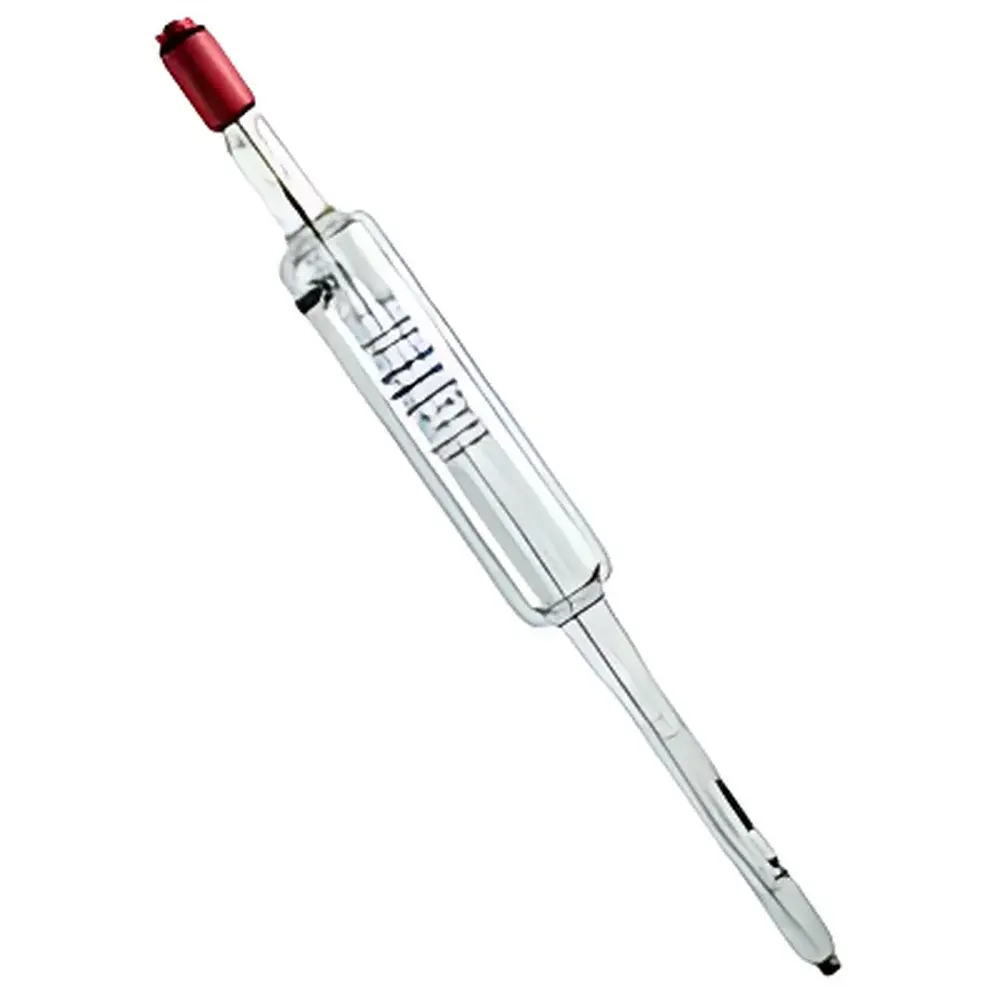
METTLER TOLEDO Pt4865-50-SC-T-S7 Reusable Liquid-Electrolyte ORP Electrode
| Brand | METTLER TOLEDO |
|---|---|
| Origin | Switzerland |
| Model | Pt4865-50-SC-T-S7 |
| pH Range | Not applicable (ORP-only electrode) |
| ORP Measurement Range | Typically ±1500 mV (standard reference: Ag/AgCl, 3 mol/L KCl) |
| Temperature Range | 0–130 °C (32–266 °F) |
| Maximum Process Pressure | 6 bar (87 psi) |
| Reference System | Ag/AgCl with silver ion trap |
| Junction Type | Porous ceramic diaphragm |
| Refillable Electrolyte | Yes (Viscolyt™ liquid electrolyte) |
| Sterilizable | Yes (autoclavable up to 130 °C) |
| High-Pressure Housing Compatible | Yes |
| Compliance | Designed for IEC 61511 functional safety support in SIS applications |
Overview
The METTLER TOLEDO Pt4865-50-SC-T-S7 is a refillable, liquid-electrolyte oxidation-reduction potential (ORP) electrode engineered for continuous, high-integrity redox monitoring in demanding chemical process environments. Unlike composite or gel-filled sensors, this electrode employs a true liquid-junction reference system based on a stable Ag/AgCl element and Viscolyt™—a thixotropic, low-migration potassium chloride electrolyte formulation optimized for fouling resistance and long-term potential stability. Its measurement principle relies on the Nernst equation, where the measured potential (in mV) reflects the thermodynamic tendency of oxidizing and reducing species present in the process stream relative to the internal reference. The Pt4865-50-SC-T-S7 is not a pH sensor; it delivers direct millivolt output referenced to Ag/AgCl (3 mol/L KCl), making it suitable for applications requiring strict redox control—such as chlorine dosing in water treatment, peroxide concentration verification in pharmaceutical clean-in-place (CIP) cycles, or nitric acid regeneration in metal pickling lines.
Key Features
- Refillable liquid-electrolyte design extends operational lifetime significantly compared to sealed or gel-electrolyte alternatives—electrolyte can be replenished in situ without sensor replacement.
- Porous ceramic junction provides consistent, low-resistance ionic contact while resisting clogging from suspended solids, oils, or polymerized organics common in chemical effluents and reactor slurries.
- Integrated silver ion trap prevents Ag+ leaching into the process, eliminating interference with sensitive catalytic reactions or precipitation-based unit operations.
- Rated for continuous operation at temperatures up to 130 °C and pressures up to 6 bar (87 psi), enabling direct insertion into pressurized pipelines, jacketed reactors, and sterilizable bioreactor loops.
- Constructed with 316L stainless steel body and chemically resistant PEEK housing—compliant with ASTM A269 for sanitary process equipment and compatible with SIP (steam-in-place) protocols.
- Designed for seamless integration with METTLER TOLEDO’s InPro™ 4800 series transmitters and compatible third-party pH/ORP analyzers supporting mV input with temperature compensation.
Sample Compatibility & Compliance
The Pt4865-50-SC-T-S7 demonstrates robust performance across aggressive media including concentrated acids (e.g., HNO3, H2SO4), oxidizing agents (e.g., NaOCl, H2O2, O3), and high-solids slurries encountered in electroplating, pulp & paper bleaching, and wastewater disinfection. It is not recommended for strongly reducing environments containing sulfides or thiols without frequent maintenance. The electrode meets material traceability requirements under ISO 9001 and supports audit readiness for GMP-regulated facilities. While the sensor itself does not carry intrinsic functional safety certification, its mechanical and electrical interface complies with IEC 61511 hardware fault tolerance guidelines when deployed within a SIL-rated measurement loop using certified transmitters and wiring.
Software & Data Management
When connected to METTLER TOLEDO’s EasyClean™ or Liquiline System CA80PH platforms, the Pt4865-50-SC-T-S7 enables automated calibration logging, drift diagnostics, and predictive maintenance alerts based on junction resistance trends and mV stability metrics. All configuration changes, calibration events, and raw mV/temperature readings are time-stamped and stored with user ID attribution—supporting compliance with FDA 21 CFR Part 11 requirements for electronic records and signatures when paired with validated software versions. Audit trails include full change history, ensuring full traceability during regulatory inspections.
Applications
- Real-time redox control in chlorine dioxide generation systems for municipal water treatment.
- Monitoring of Fenton’s reagent (H2O2/Fe2+) oxidation efficiency in industrial wastewater advanced oxidation processes (AOPs).
- CIP cycle endpoint detection via rapid ORP shift upon peroxide or hypochlorite breakthrough in biopharmaceutical skids.
- Redox potential profiling in sulfuric acid regeneration units within titanium dioxide pigment manufacturing.
- In-line verification of passivation efficacy on stainless steel surfaces using nitric acid baths (ASTM A967).
FAQ
Is the Pt4865-50-SC-T-S7 suitable for pH measurement?
No. This is an ORP-specific electrode with a platinum sensing element and Ag/AgCl reference system. It outputs millivolts only and lacks a pH-sensitive glass membrane.
How often should the Viscolyt™ electrolyte be refilled?
Refill frequency depends on temperature, pressure, and process fouling rate—typically every 3–6 months under continuous 80 °C operation; visual inspection of electrolyte level through the fill port is recommended monthly.
Can this electrode be autoclaved?
Yes. It is rated for repeated autoclaving at 130 °C / 266 °F for up to 30 minutes, provided the electrolyte fill port is sealed and the cable gland remains dry.
Does it support digital communication protocols like HART or Profibus PA?
No—the Pt4865-50-SC-T-S7 is an analog mV sensor. Digital functionality requires pairing with a compatible transmitter (e.g., Liquiline CM44P) that supports HART, FOUNDATION Fieldbus, or Profibus PA.
What is the expected service life under typical chemical plant conditions?
With routine electrolyte refills and junction cleaning, field experience indicates median service life of 24–36 months in non-abrasive, non-particulate streams; life may be reduced by >50% in high-solids or fluoride-containing media without protective flow cells.
Related Products