
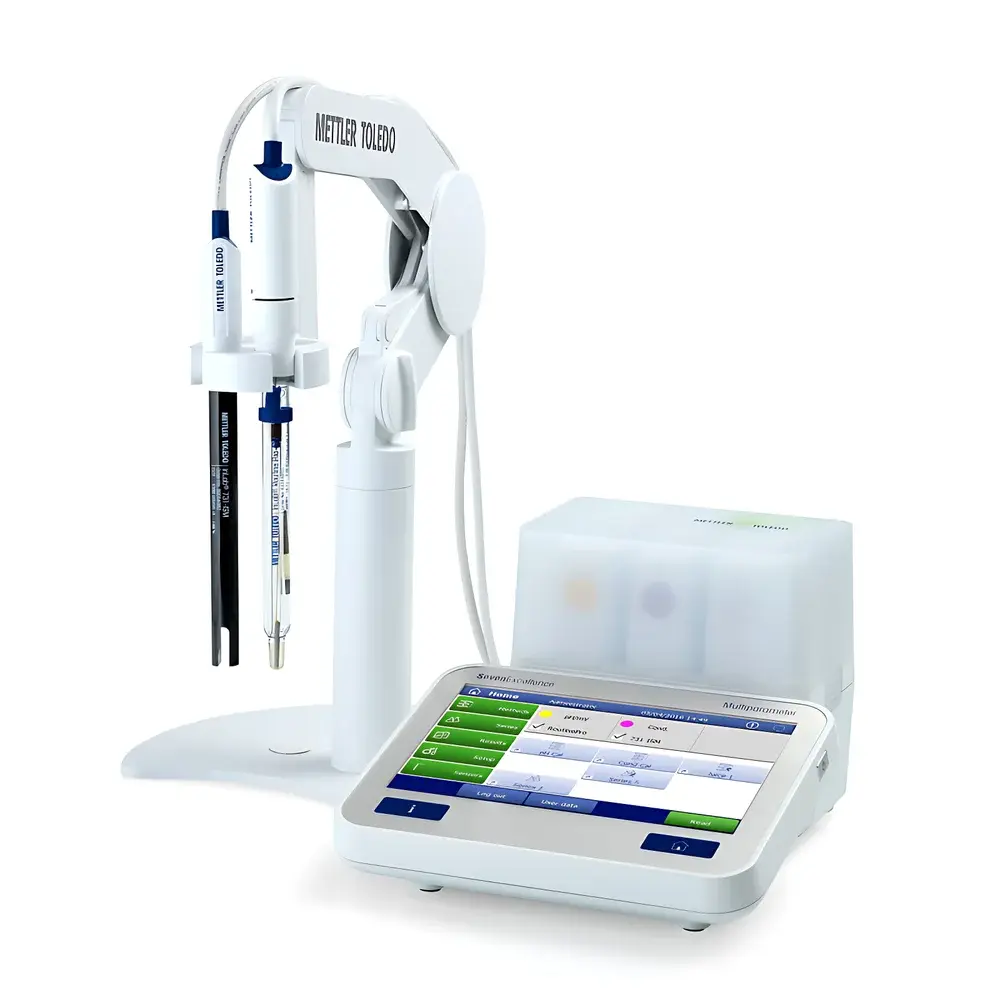
METTLER TOLEDO SevenExcellence™ pH/Conductivity/Ion/O2 Benchtop Meter Series
| Brand | METTLER TOLEDO |
|---|---|
| Origin | Shanghai, China |
| Model Variants | S400 / S470 / S700 / S600 / S900 |
| Measurement Range | pH: –2.000 to 20.000 |
| mV | –2000 to +2000 |
| Resolution | pH: 0.001 |
| mV | 0.1 |
| Accuracy | ±0.002 pH (model-dependent) |
| Calibration Standards | NIST-traceable US standard buffer solutions |
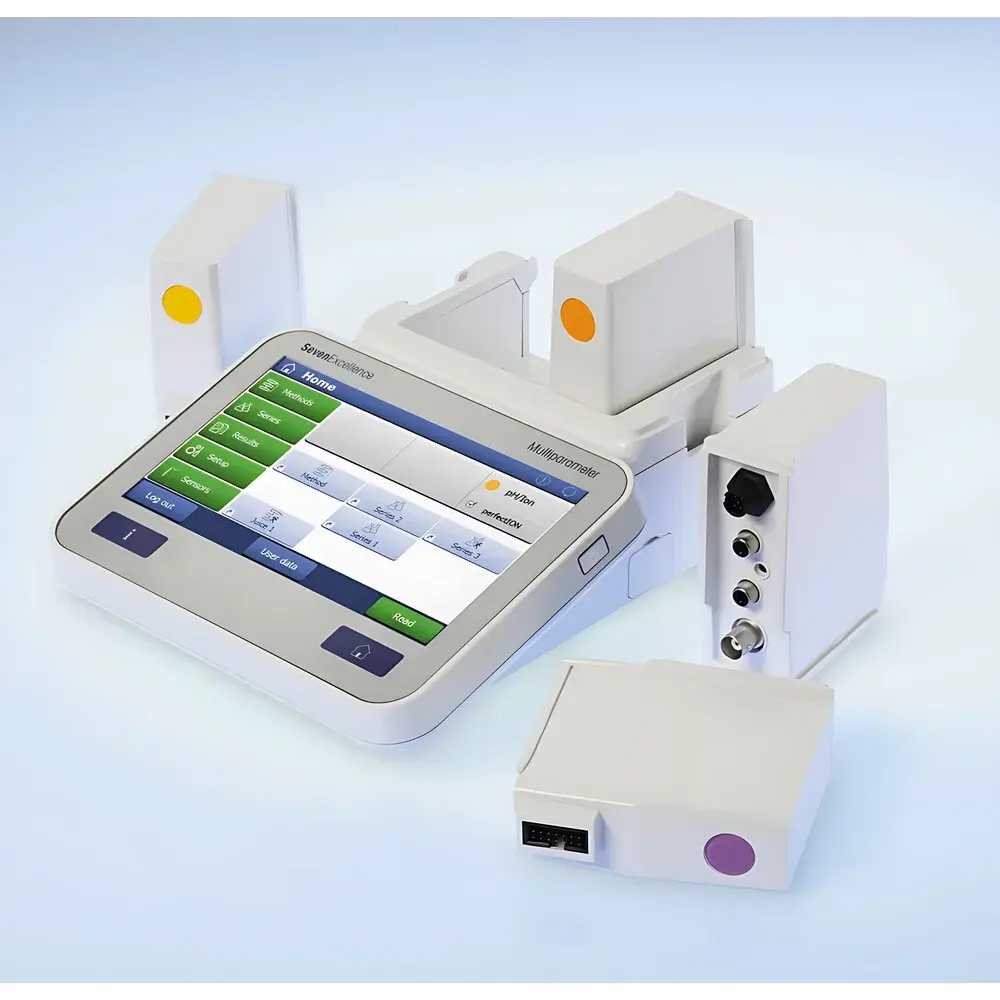
| Module Configuration | Up to three interchangeable measurement modules (pH, conductivity, ion concentration, redox, dissolved oxygen) |
| Compliance | Designed for GLP/GMP environments |
Overview
The METTLER TOLEDO SevenExcellence™ is a modular, high-precision benchtop meter platform engineered for rigorous electrochemical analysis in regulated and research-intensive laboratories. Based on potentiometric measurement principles—employing high-impedance input circuitry and temperature-compensated electrode interfaces—it delivers traceable, reproducible quantification of pH, oxidation-reduction potential (ORP/mV), ion activity (via ISE), conductivity, and dissolved oxygen (optical or electrochemical probe). Its architecture adheres to fundamental electrochemical standards including ISO 3696 (water purity for calibration), ASTM D1293 (pH of water), and USP (pH measurement in pharmaceutical preparations). The system is not a single-function instrument but a scalable analytical hub—designed from inception to support evolving method requirements without hardware replacement.
Key Features
- Modular three-slot design enabling simultaneous or sequential deployment of up to three independent measurement modules (e.g., pH + conductivity + dissolved oxygen), each with dedicated signal conditioning and auto-recognition.
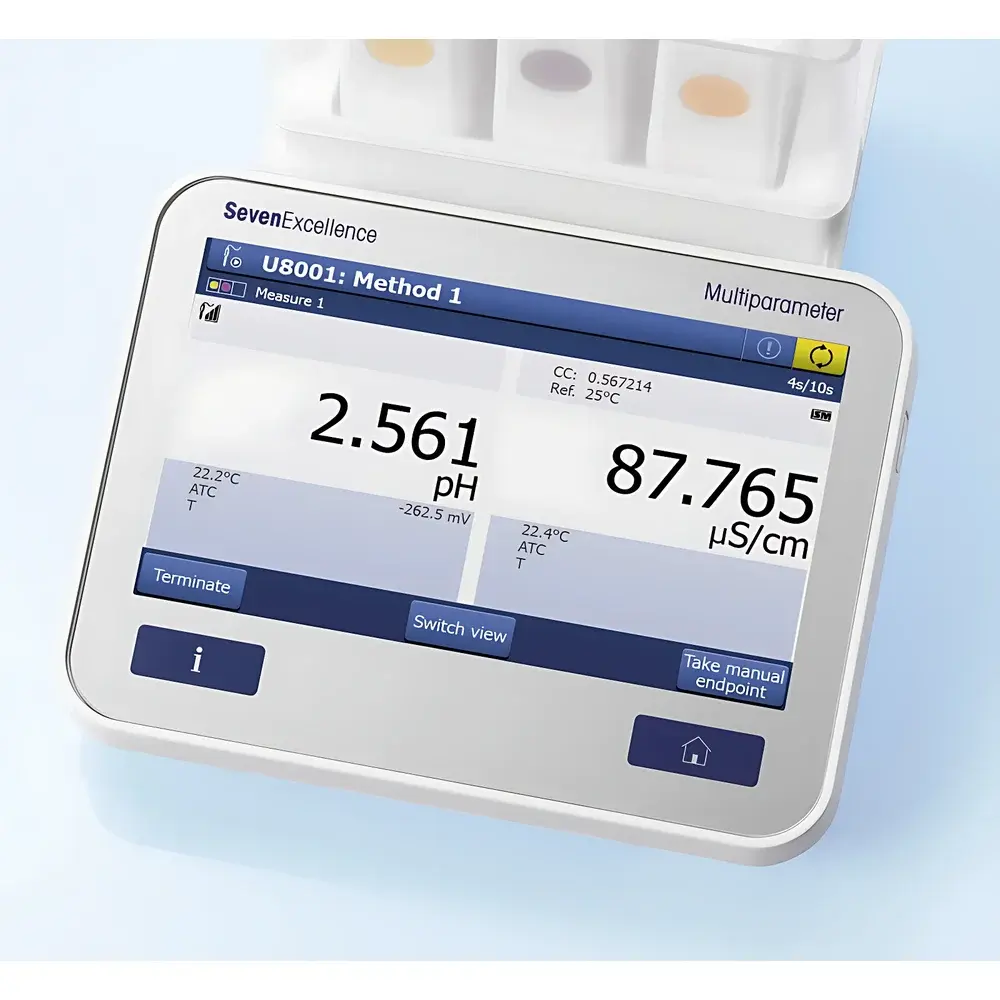
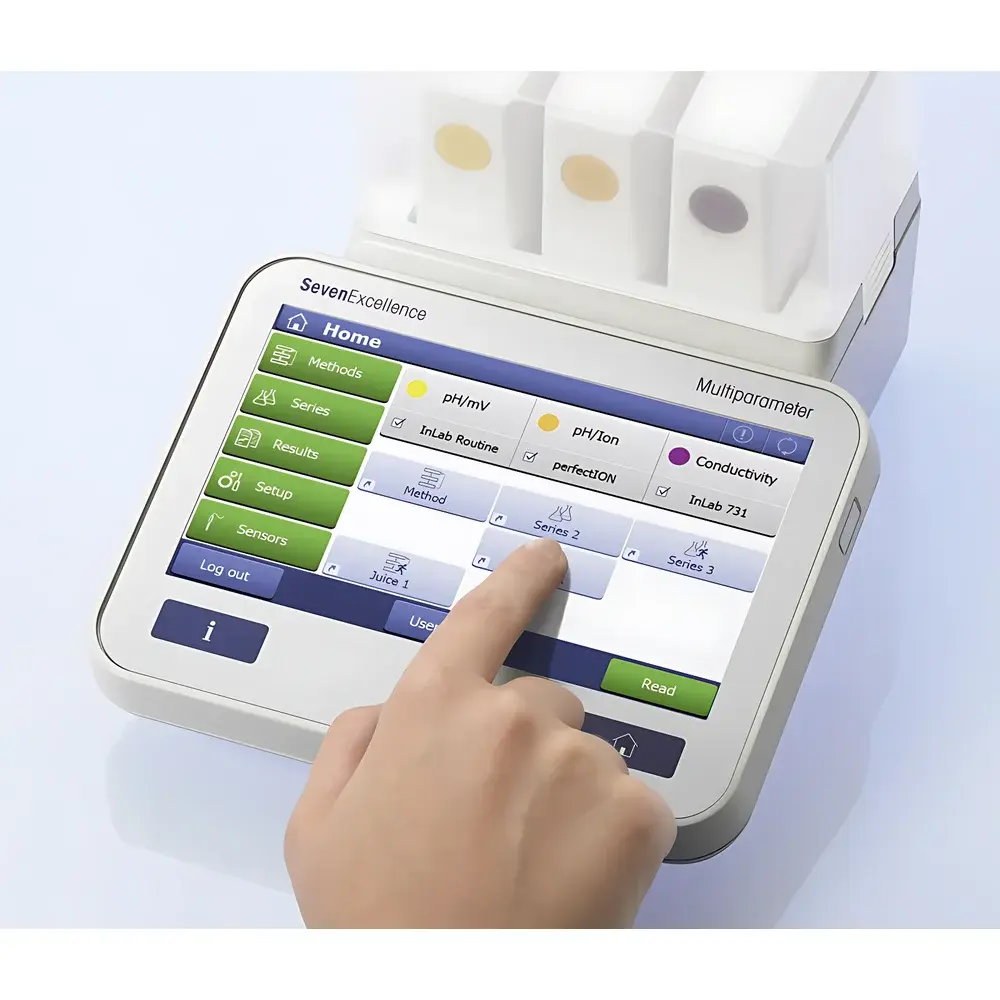
- High-resolution 7-inch capacitive touchscreen with multi-language UI (including English, German, French, Chinese, Japanese); interface conforms to IEC 62366 usability engineering standards.
- Intelligent method-based operation: pre-configured, version-controlled analytical methods—including calibration protocols, measurement sequences, and acceptance criteria—can be loaded, executed, and audited with one touch.
- Integrated real-time temperature compensation using Pt1000 or NTC sensors; automatic recognition of integrated temperature probes within compatible electrodes.
- Robust data integrity framework: built-in audit trail with immutable timestamps, role-based user access control (administrator/operator/auditor), and electronic signature capability compliant with FDA 21 CFR Part 11 Annex 11 requirements.
- Auto-calibration recognition: detects and validates NIST-traceable US standard buffers (pH 1.68, 4.01, 7.00, 10.01, 12.45) via RFID-tagged buffer bottles or manual entry with checksum verification.
Sample Compatibility & Compliance
The SevenExcellence™ accommodates a broad spectrum of sample matrices—from low-ionic-strength ultrapure water (pharmaceutical WFI/PW) to highly viscous or protein-rich biological suspensions, aggressive organic solvents, and corrosive industrial process streams. Electrode compatibility spans glass-body pH electrodes (e.g., InLab® Excellence series), solid-state ISEs, toroidal conductivity cells, optical DO sensors (LDO®), and redox electrodes with noble metal junctions. All measurements are traceable to SI units via documented calibration hierarchies. The platform meets ISO/IEC 17025 documentation requirements for testing laboratories and supports full validation packages (IQ/OQ/PQ) aligned with GxP frameworks. Data export formats include CSV, PDF (with embedded metadata), and XML for LIMS integration.
Software & Data Management
SevenExcellence™ operates exclusively with METTLER TOLEDO’s LabX™ software—deployable as standalone desktop application or enterprise server edition. LabX provides centralized method management, automated report generation (including uncertainty calculation per GUM), statistical process control (SPC) dashboards, and raw data archiving with SHA-256 hashing. All instrument-generated events—including calibration, measurement, user login/logout, and parameter changes—are recorded in a tamper-evident audit trail with granular filtering and export capability. Electronic signatures comply with ALCOA+ principles (Attributable, Legible, Contemporaneous, Original, Accurate) and are enforceable under EU Annex 11 and FDA guidance.
Applications
- Pharmaceutical QA/QC: pH and conductivity testing of purified water, buffer solutions, and final drug product formulations per USP , , and EP 2.2.38.
- Biotechnology: monitoring cell culture media pH and dissolved oxygen during upstream bioprocessing; verification of cleaning-in-place (CIP) rinse water neutrality.
- Food & Beverage: titratable acidity assessment, shelf-life stability studies, and regulatory compliance for FDA 21 CFR 110 and ISO 22000.
- Chemical Manufacturing: real-time monitoring of reaction pH endpoints, catalyst performance evaluation, and effluent discharge compliance (EPA Method 9040).
- Academic Research: teaching electrochemical fundamentals; supporting thesis-level investigations in environmental chemistry, corrosion science, and sensor development.
FAQ
Does the SevenExcellence™ support automatic temperature compensation (ATC) for all measurement modes?
Yes—ATC is fully integrated across pH, conductivity, and ion concentration modules via direct probe input or manual entry; algorithms follow ISO 7888 and DIN EN 27888 standards.
Can calibration data be exported in a format suitable for regulatory submission?
Yes—calibration reports are generated as PDF/A-1b compliant documents containing electrode ID, buffer lot numbers, slope/mV/pH deviation, and operator signature; raw data exports include full audit trail metadata.
Is it possible to retrofit additional modules to an existing base unit?
Yes—the modular chassis accepts new modules at any time; firmware updates and configuration synchronization occur automatically upon module insertion.
What cybersecurity measures are implemented in LabX and the instrument firmware?
LabX employs TLS 1.2+ encryption for network communication; instrument firmware includes secure boot, signed updates, and configurable password policies aligned with NIST SP 800-53 Rev. 4.
How does the system handle electrode drift or out-of-spec calibration results?
The instrument triggers configurable alerts, logs root-cause flags (e.g., “slope deviation >5%”), and optionally blocks further measurements until corrective action is verified and documented.




