
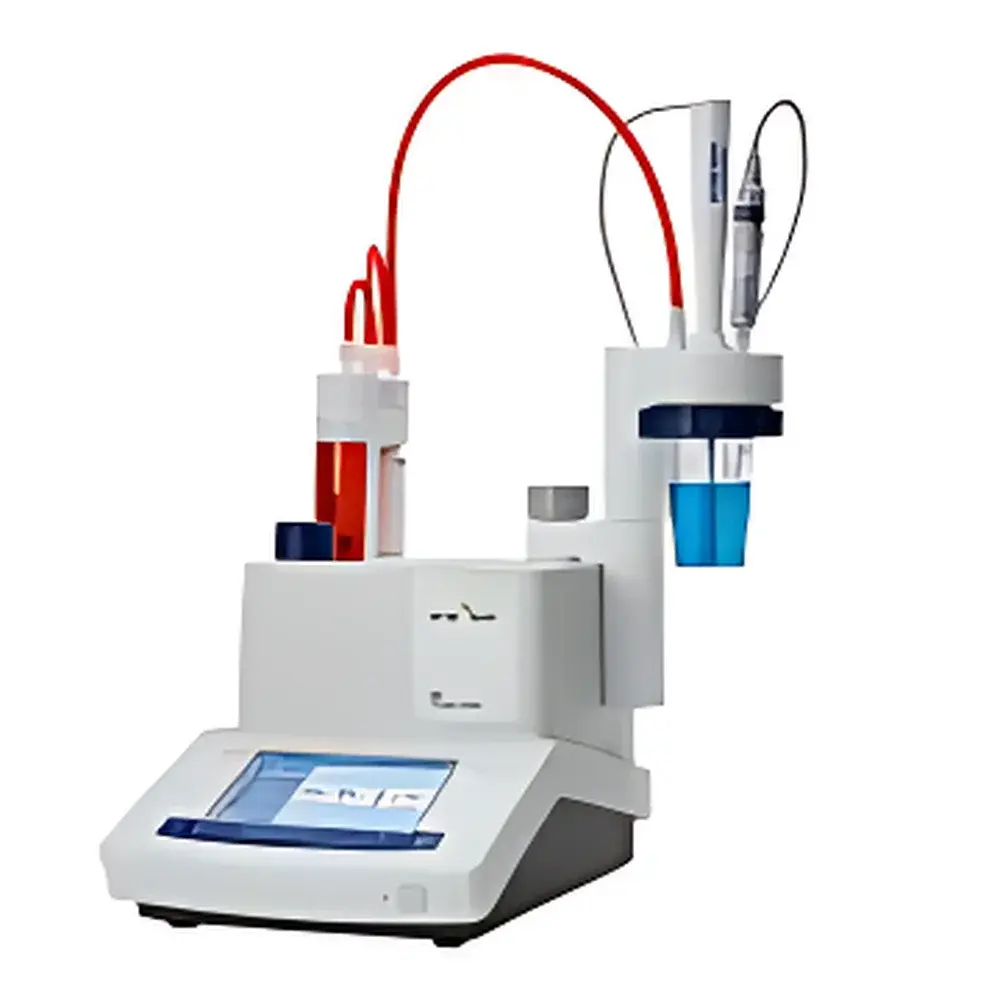
METTLER TOLEDO T50/T70/T90 Automatic Potentiometric Titrator
| Brand | METTLER TOLEDO |
|---|---|
| Origin | Switzerland |
| Model | T50 / T70 / T90 |
| Instrument Type | General-purpose Potentiometric Titrator |
| Application Scope | Universal |
| Measurement Range | −2000 to +2000 mV |
| Titration Resolution | 0.1 mV |
| Electrode Interfaces | pH/mV, Conductivity, Coulometric (modular) |
| Built-in Titration Drivers | 1 internal + up to 7 external (T90) |
| Sample Capacity per Series | up to 300 samples |
| Method Storage Capacity | 100 methods |
| Communication Interfaces | Ethernet, USB Host (3×), USB Client (1×), RS-232 (COM, 3–5 ports), CAN Bus (optional) |
| Compliance | Designed for GLP/GMP environments |
Overview
The METTLER TOLEDO T50, T70, and T90 Automatic Potentiometric Titrators constitute the next-generation One Click™ Titration platform engineered for precision, reproducibility, and regulatory compliance in modern analytical laboratories. These instruments operate on the fundamental principle of potentiometric endpoint detection—measuring the potential difference (in mV) between a reference electrode and an indicator electrode as titrant is incrementally added to the analyte solution. The resulting titration curve is analyzed in real time using first- or second-derivative algorithms to determine stoichiometric endpoints with sub-millivolt resolution (0.1 mV). Designed for universal application, the system supports acid-base, redox, precipitation, and complexometric titrations—including ASTM D664 (acid number), ISO 6618 (iodine value), USP (potentiometric assay), and pharmacopeial methods requiring strict traceability. Each model shares a common modular architecture but scales in automation capacity, interface flexibility, and multi-parameter support to match evolving lab throughput and regulatory requirements.
Key Features
- One Click™ Titration workflow: Graphical, icon-based method execution reduces operator training time and minimizes procedural errors.
- SmartSample™ intelligent weighing integration: Direct connection to METTLER TOLEDO balances enables automatic sample mass import, eliminating manual entry and associated transcription errors.
- Hot-swappable titration modules: Auto-recognition of burettes—including titrant name, concentration, expiry date, and lot number—via RFID or barcode scanning.
- Modular electrode interface architecture: Configurable combinations of pH/mV, conductivity, coulometric, and polarographic boards; T90 supports up to three simultaneous electrochemical measurement modes.
- StatusLight™ visual status indication: Real-time color-coded feedback (green/amber/red) on instrument readiness, method execution, and error conditions—critical for unattended operation.
- Multi-level user management: Role-based access control (RBAC) with configurable permissions for method editing, result approval, calibration, and audit trail review—fully aligned with FDA 21 CFR Part 11 and EU Annex 11 requirements.
- Dual-control operation: Seamless switching between touchscreen interface and remote PC control via LabX software—ensuring continuity during method development, validation, or routine analysis.
Sample Compatibility & Compliance
The T50/T70/T90 series accommodates diverse sample matrices—from aqueous solutions and organic solvents to viscous oils, suspensions, and solid extracts—through programmable stirring speed, temperature compensation (via DT1000 sensor interface), and adaptive dosing algorithms. All models comply with IEC 61000-6-3 (EMC) and IEC 61010-1 (safety). When operated with LabX titration software, the system delivers full ALCOA+ data integrity: attributable, legible, contemporaneous, original, accurate, complete, consistent, enduring, and available. Audit trails are immutable, time-stamped, and include operator ID, parameter changes, result modifications, and device events. Electronic signatures meet 21 CFR Part 11 Subpart B criteria for binding legal effect in regulated environments (e.g., pharmaceutical QC, food safety testing, environmental monitoring).
Software & Data Management
LabX titration software serves as the central data management hub, enabling method development, instrument control, automated reporting (PDF, Excel, CSV), and enterprise-level data archiving. It supports method validation workflows per ICH Q2(R2), including repeatability, intermediate precision, and robustness assessment. The software integrates with LIMS and ERP systems via ODBC or RESTful APIs. “If…then” conditional logic allows dynamic method branching—for example, adjusting titrant concentration based on preliminary pH or conductivity readings. Emergency sample insertion preserves queue integrity while prioritizing urgent analyses without disrupting ongoing sequences. All raw data—including mV vs. volume curves, derivative plots, and metadata—are stored in a secure, encrypted database with configurable retention policies.
Applications
These titrators are routinely deployed across industries for standardized and non-standardized assays: determination of free fatty acids in edible oils (AOCS Cd 3d-63), chloride in wastewater (EPA 325.2), peroxide value in fats (ISO 3960), bromine index in hydrocarbons (ASTM D1159), sodium content in pharmaceutical excipients (USP ), and Karl Fischer water content (volumetric and coulometric modes via optional modules). Their modularity also supports advanced applications such as potentiometric titration coupled with flow injection analysis (FIA), sequential multi-ion analysis (e.g., Na⁺, Cl⁻, F⁻), and dissolution testing in formulation development.
FAQ
What distinguishes the T50, T70, and T90 models in terms of hardware scalability?
The T50 features one internal burette driver and supports up to three external drivers; the T70 adds expanded electrode interface options (e.g., dual pH/mV + conductivity); the T90 provides seven external burette positions, triple electrode board slots, and native CAN bus for integration with third-party automation systems.
Can the instrument perform non-aqueous titrations?
Yes—the system supports solvent management via optional Solvent Manager module, enabling automated solvent exchange, drying, and conditioning for titrations in acetonitrile, glacial acetic acid, or other non-aqueous media.
Is method transfer between instruments possible?
All methods created in LabX are portable across T50/T70/T90 platforms and remain compatible with legacy METTLER TOLEDO titrators via standardized XML-based method export/import.
How is calibration traceability maintained?
Each electrode and burette is assigned a unique identifier; calibration events—including date, operator, standard used, and deviation values—are automatically logged in the audit trail and linked to subsequent analytical results.
Does the system support remote diagnostics and firmware updates?
Yes—Ethernet connectivity enables secure remote access for technical support, firmware upgrades, and performance verification via METTLER TOLEDO’s certified service portal.





