
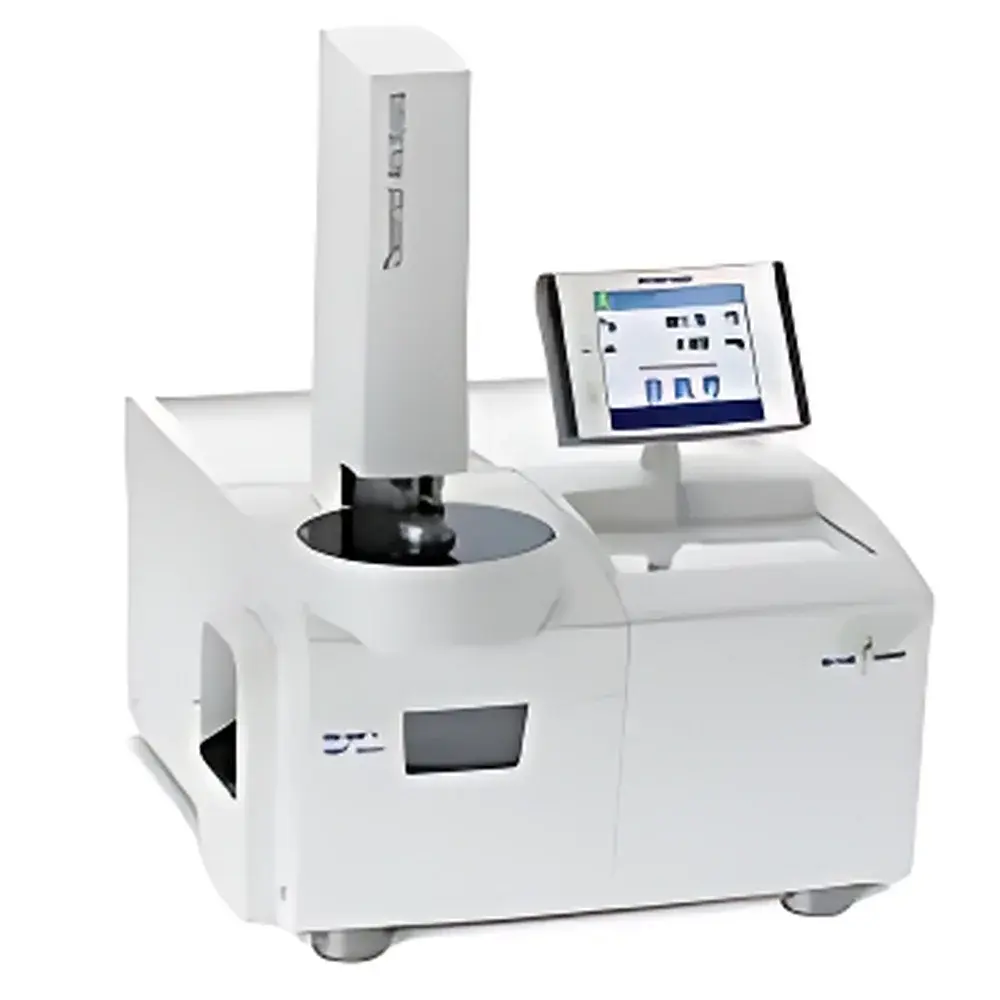
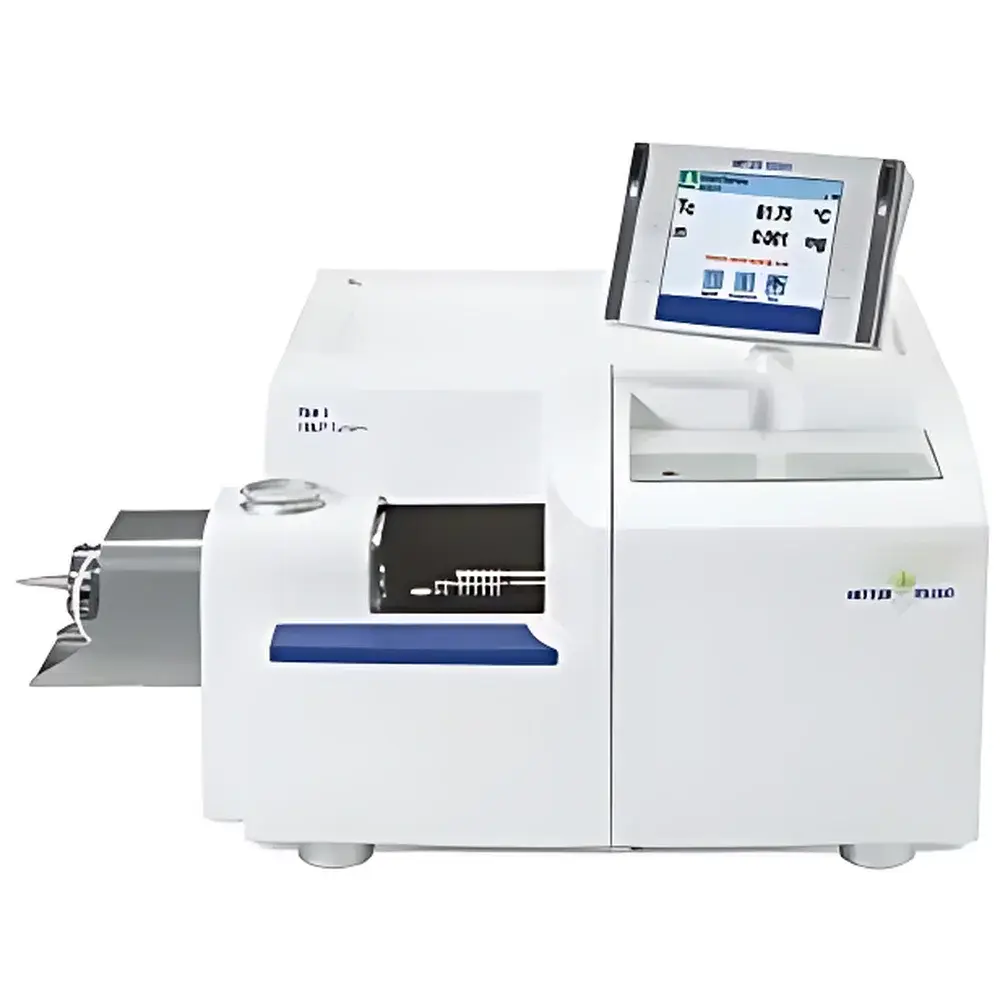
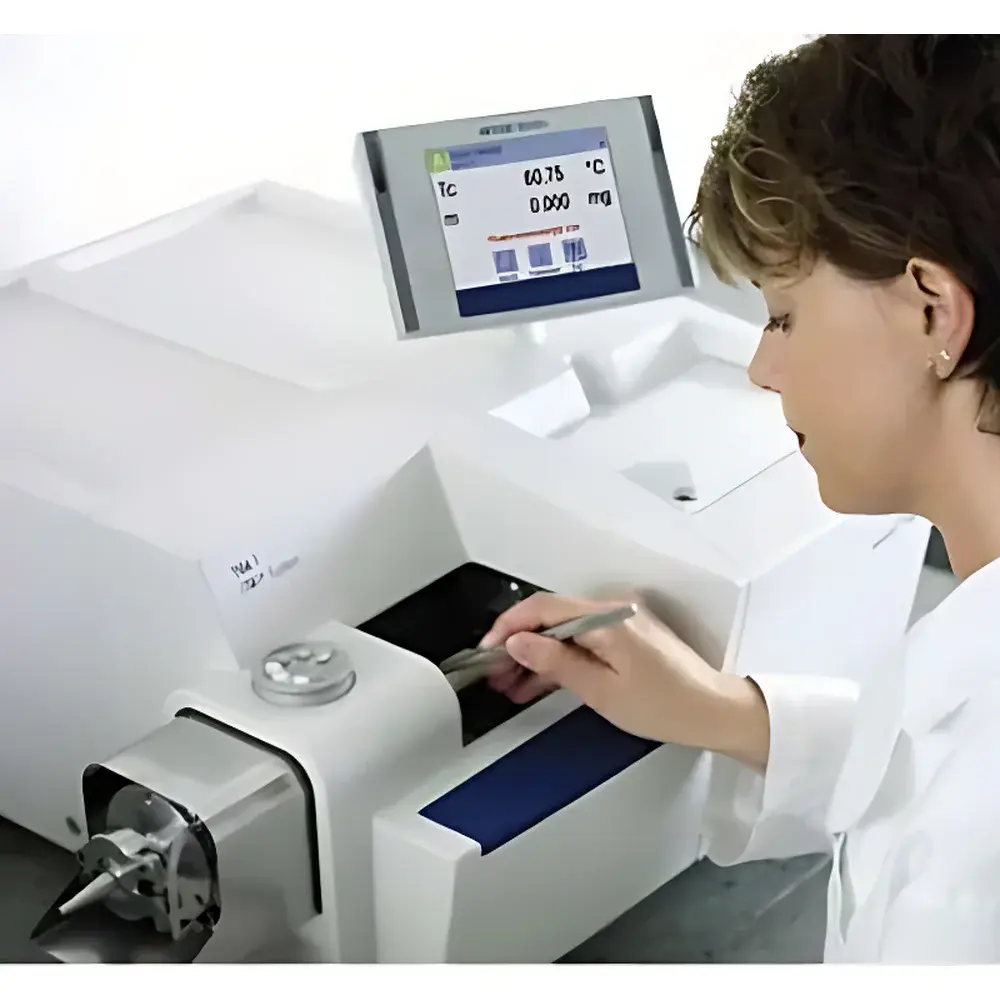
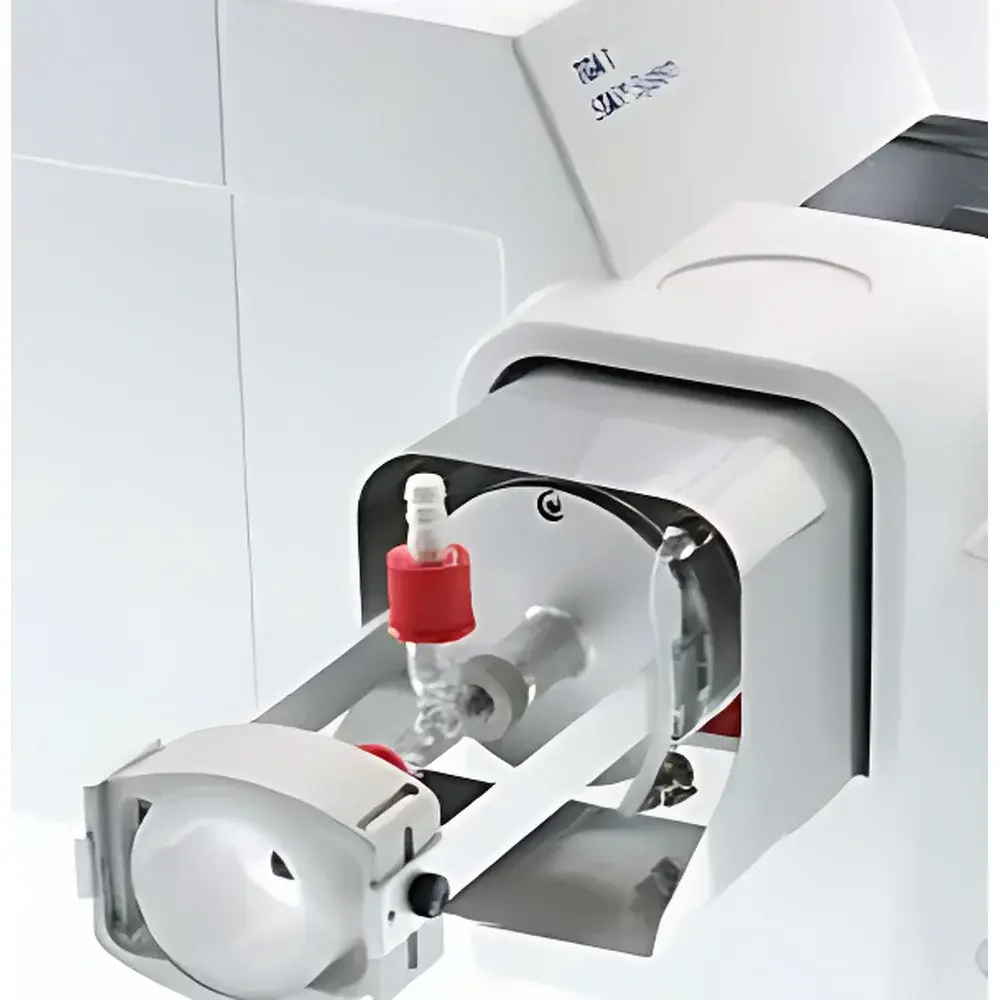
METTLER TOLEDO TGA/DSC 1/1100 Thermogravimetric Analyzer with Simultaneous DSC
| Brand | METTLER TOLEDO |
|---|---|
| Origin | Switzerland |
| Model | TGA/DSC 1/1100 |
| Temperature Range | Ambient to 1100 °C |
| Temperature Accuracy | ±0.25 °C |
| Balance Sensitivity | 0.1 µg or 0.01 µg |
| Baseline Repeatability | ±10 µg (full temperature range) |
| Sensor Type | Single-disk SDTA with Pt–Pt/Rh thermocouples |
| Modular Configuration | Optional autosampler, vacuum pump, MS/FTIR coupling, humidity control module |
Overview
The METTLER TOLEDO TGA/DSC 1/1100 is a high-precision, modular thermogravimetric analyzer with integrated differential scanning calorimetry (DSC) capability. Designed on the principle of simultaneous thermal analysis (STA), it measures mass change (TGA) and heat flow (simulated DSC) in a single, controlled atmosphere environment—enabling direct correlation between weight loss events and associated thermal transitions. Its core measurement architecture centers on METTLER TOLEDO’s proprietary ultra-microbalance technology, engineered for long-term stability and sub-microgram resolution across the full operating range (ambient to 1100 °C). The instrument employs a single-disk SDTA (Simultaneous Differential Thermal Analysis) sensor, which uses calibrated Pt–Pt/Rh thermocouples to deliver traceable temperature accuracy (±0.25 °C) and supports metal standard-based calibration (e.g., In, Sn, Zn, Ag) for both temperature and enthalpy scales. As a direct descendant of the world’s first commercial TGA/DTA system introduced by METTLER in 1964, the TGA/DSC 1/1100 embodies four decades of iterative refinement in thermal instrumentation—prioritizing mechanical robustness, signal fidelity, and regulatory-compliant data integrity.
Key Features
- Ultra-microbalance platform with dual sensitivity options: 0.1 µg or 0.01 µg resolution, optimized for low-mass samples and high-precision kinetic studies
- Single-disk SDTA sensor enabling true simultaneous TGA and simulated DSC measurements under identical thermal and atmospheric conditions
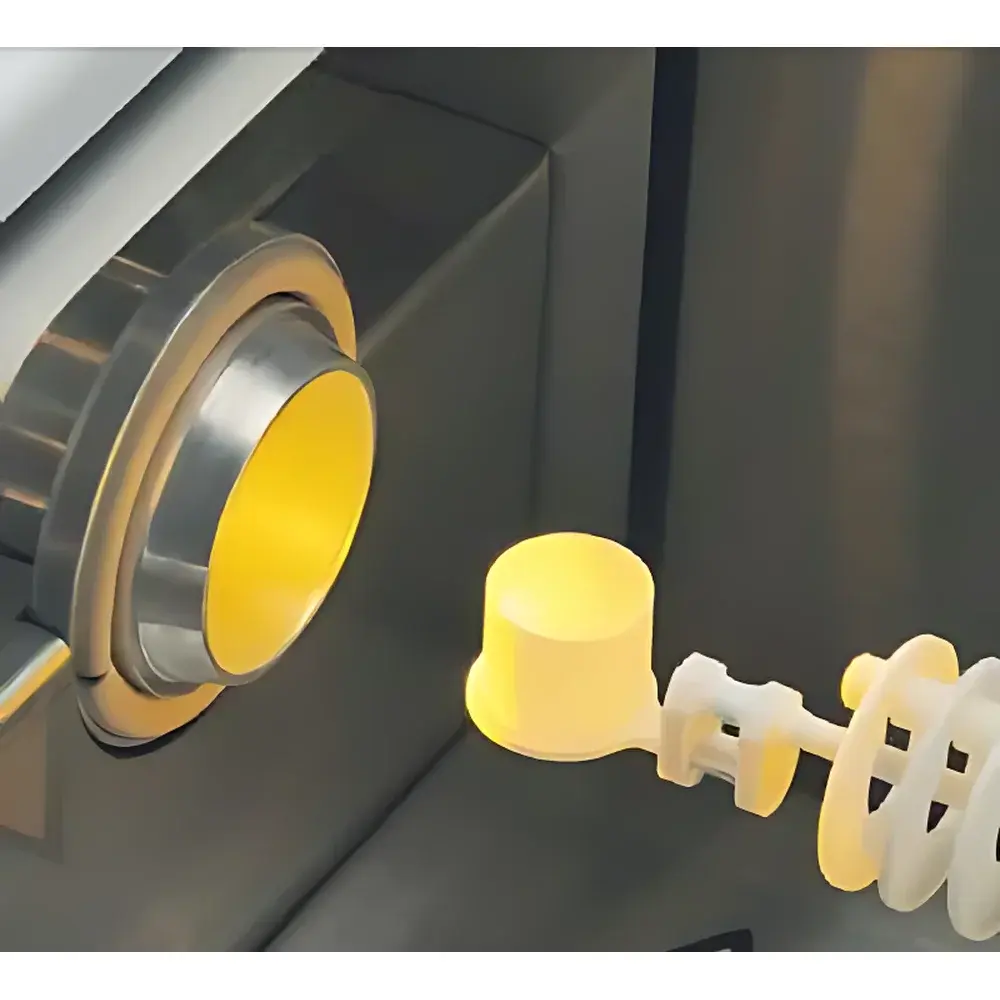
- Hermetically sealed furnace chamber with programmable gas purging (N₂, Ar, O₂, synthetic air), vacuum compatibility (optional pump), and pressure regulation
- Modular expansion architecture supporting seamless integration of analytical peripherals: quadrupole mass spectrometer (MS), Fourier-transform infrared spectrometer (FTIR), MS/FTIR hyphenated systems, and dynamic vapor sorption (DVS) modules
- Optional high-reliability autosampler (up to 48 positions) for unattended operation in QC laboratories and routine testing environments
- Thermally isolated balance suspension and active drift compensation algorithms ensuring baseline repeatability of ±10 µg over the full temperature ramp
Sample Compatibility & Compliance
The TGA/DSC 1/1100 accommodates solid, powder, and thin-film samples (typically 0.1–50 mg) in crucibles made from alumina, platinum, gold, or quartz—selected based on thermal stability, inertness, and compatibility with target atmospheres. It meets essential requirements for GLP (Good Laboratory Practice) and GMP (Good Manufacturing Practice) environments, including audit-trail-enabled software (STARe), electronic signature support per FDA 21 CFR Part 11, and configurable user access levels. Instrument performance verification follows ISO 11358-1 (polymer thermogravimetry), ASTM E1131 (standard test method for compositional analysis by TGA), and USP (residual solvents in pharmaceuticals). Calibration protocols are traceable to NIST-certified reference materials, and all thermal and mass data are timestamped, version-controlled, and exportable in ASTM E1447-compliant formats.
Software & Data Management
Controlled by the STARe (Simultaneous Thermal Analysis Research) software suite, the system provides fully integrated method development, real-time visualization, and post-acquisition analysis—including derivative thermogravimetry (DTG), peak deconvolution, kinetic modeling (e.g., Friedman, Ozawa–Flynn–Wall), and multi-step decomposition fitting. Raw data files (.stf) are structured, non-proprietary, and support third-party import into MATLAB, Python (via PyMca or custom parsers), or statistical platforms such as JMP. All instrument logs, calibration records, and user actions are archived with immutable timestamps and operator ID linkage—ensuring full compliance with data integrity principles outlined in ALCOA+ (Attributable, Legible, Contemporaneous, Original, Accurate, Complete, Consistent, Enduring, Available).
Applications
This instrument serves critical roles across R&D, quality assurance, and regulatory submission workflows. In polymer science, it quantifies filler content, degradation onset temperatures, char yield, and oxidative induction time (OIT). For pharmaceuticals, it determines hydrate/solvate stoichiometry, excipient compatibility, residual solvent profiles, and thermal stability of active pharmaceutical ingredients (APIs). In food science, it evaluates moisture loss kinetics, starch gelatinization, and lipid oxidation behavior. Industrial chemicals benefit from compositional fingerprinting of catalysts, carbon black loading, and flame-retardant decomposition pathways. Its modularity further enables advanced applications such as evolved gas analysis (EGA) for reaction mechanism elucidation or dynamic vapor sorption profiling for hygroscopicity assessment in packaging and formulation development.
FAQ
What is the maximum sample temperature and heating rate capability?
The furnace operates from ambient to 1100 °C, with programmable heating rates up to 250 °C/min and cooling rates up to 100 °C/min (with optional forced-air cooling module).
Can the system perform quantitative evolved gas analysis (EGA)?
Yes—when coupled with a mass spectrometer or FTIR spectrometer via heated transfer line, the system supports real-time identification and semi-quantitative tracking of volatile species released during thermal decomposition.
Is the instrument suitable for cGMP-regulated pharmaceutical testing?
Yes—the STARe software includes 21 CFR Part 11 compliance features (electronic signatures, audit trails, role-based permissions), and hardware design conforms to ICH Q5C stability testing guidelines.
How is temperature calibration verified?
Using certified pure metal standards (In, Sn, Pb, Zn, Ag) measured under identical gas and heating conditions; calibration data is stored with metadata and applied automatically during subsequent analyses.
Does the system support kinetic modeling of decomposition reactions?
Yes—STARe includes built-in isoconversional methods (Friedman, Kissinger–Akahira–Sunose) and model-fitting approaches (e.g., nth-order, diffusion-controlled) with confidence interval estimation.



