
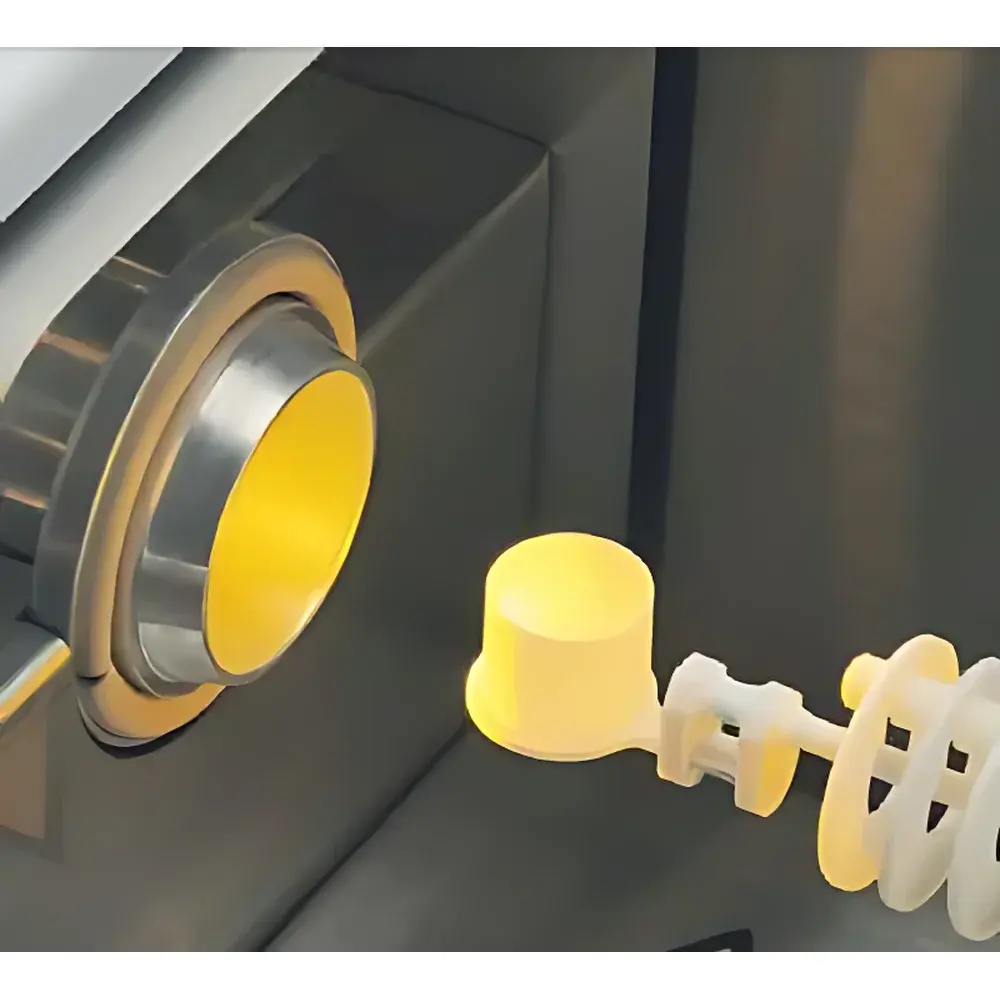
METTLER TOLEDO TGA/DSC 1 Professional Simultaneous Thermal Analyzer
| Brand | METTLER TOLEDO |
|---|---|
| Origin | Switzerland |
| Model | TGA/DSC 1 Professional |
| Temperature Range | RT to 1100 °C or RT to 1600 °C |
| Balance Sensitivity | 0.1 µg or 0.01 µg |
| DSC Sensor | Dual Pt–Pt/Rh thermocouples |
| Calorimetric Temperature Resolution | 0.0001 °C |
| Calorimetric Accuracy (metal standards) | ±2% |
| Compliance | ASTM E1131, ISO 11358, USP <1163>, FDA 21 CFR Part 11 (with optional software module) |
Overview
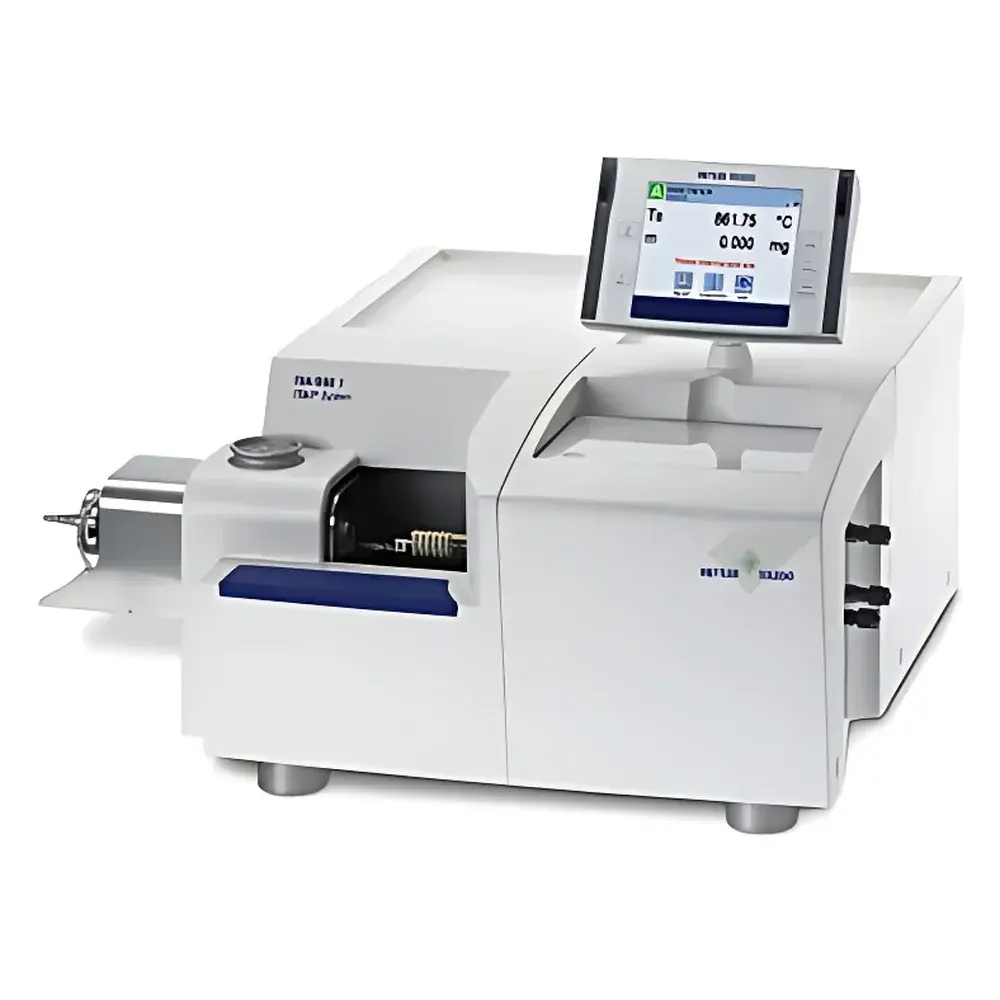
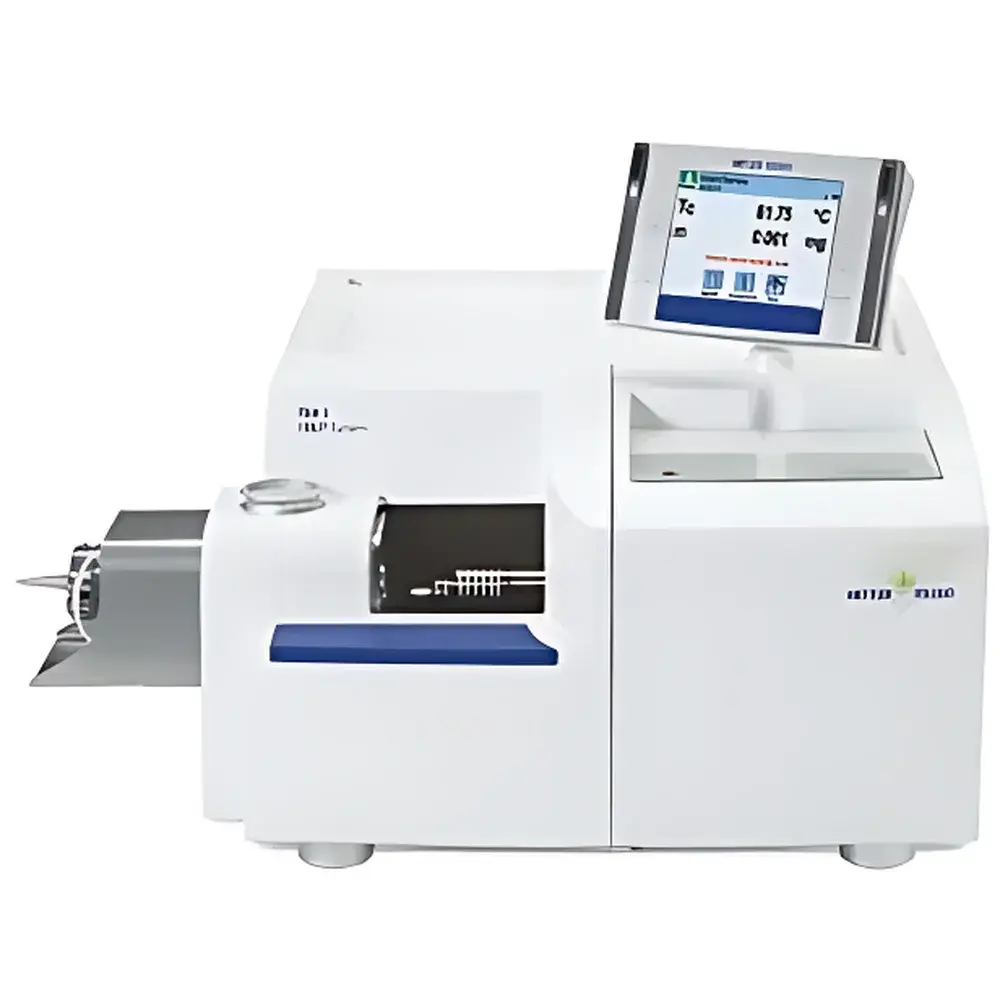
The METTLER TOLEDO TGA/DSC 1 Professional Simultaneous Thermal Analyzer is an advanced benchtop instrument engineered for high-precision, real-time concurrent measurement of mass change (thermogravimetry, TGA) and heat flow (differential scanning calorimetry, DSC) under controlled atmospheric conditions. Leveraging METTLER TOLEDO’s proprietary microbalance technology—originally pioneered in 1964 with the world’s first commercial TGA/DTA system—the TGA/DSC 1 Professional delivers exceptional stability, reproducibility, and long-term drift resistance across extended temperature ramps. Its dual-sensor architecture enables true simultaneous detection: a high-resolution quartz-microbalance (0.01 µg sensitivity option available) captures minute mass losses or gains, while a matched pair of Pt–Pt/Rh thermocouples provides calibrated, symmetric heat-flow signals with sub-millikelvin thermal resolution. The instrument operates over two selectable temperature ranges—RT to 1100 °C for routine polymer and pharmaceutical applications, or RT to 1600 °C for advanced ceramics, refractory metals, and high-temperature catalysis studies—ensuring broad applicability without hardware compromise.
Key Features
- Ultra-stable microbalance platform with active drift compensation and digital filtering, achieving ≤0.1 µg baseline noise over 24 h at 1000 °C
- Dual symmetric DSC sensor geometry ensuring high signal-to-noise ratio and excellent baseline flatness (<0.05 µW)
- Modular furnace design with interchangeable crucible holders (alumina, platinum, gold, graphite) supporting inert, oxidative, reducing, and vacuum environments
- Integrated gas control system with up to three independent mass flow controllers (MFCs), enabling precise atmosphere switching during a single run
- Optional automated sample changer (ASC) for unattended analysis of up to 48 samples with programmable cooling and purge sequences
- Hermetically sealed measurement chamber with pressure monitoring (10−3 to 2000 mbar), compatible with vacuum pump and gas-tight coupling to external analytical systems
Sample Compatibility & Compliance
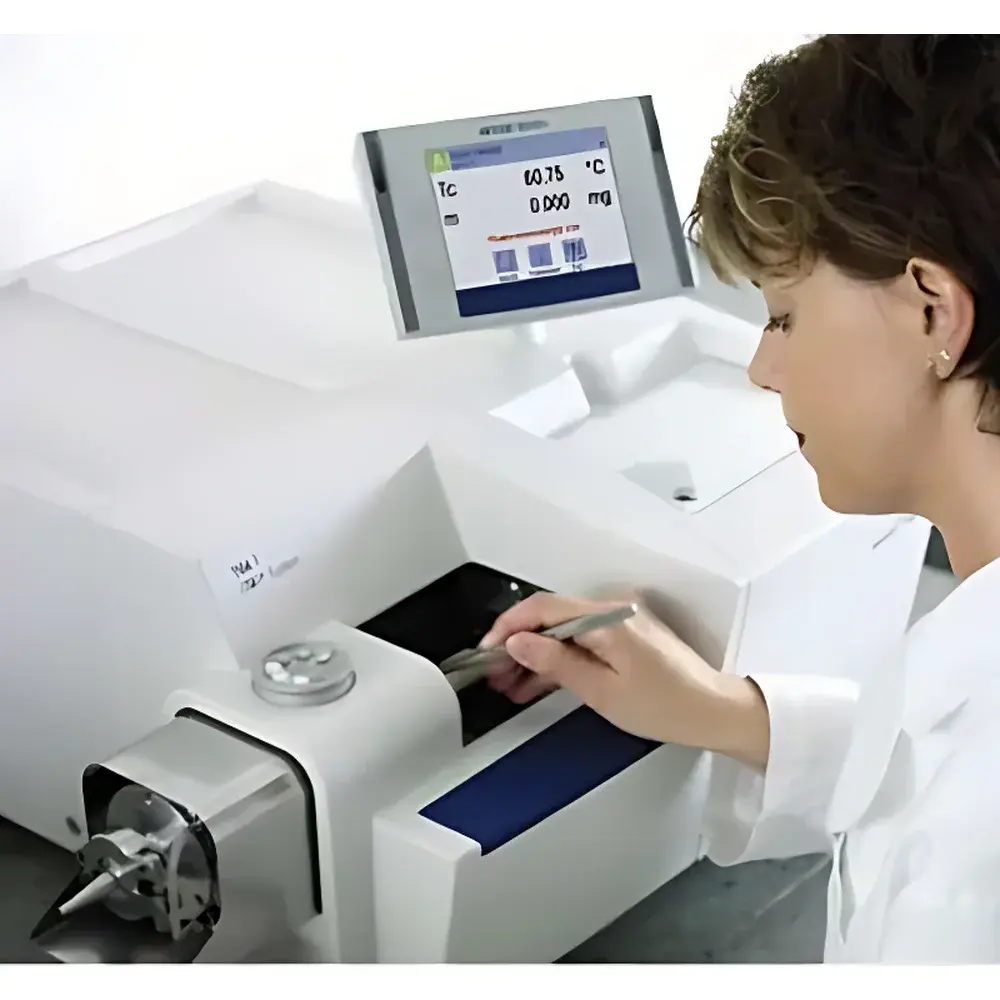
The TGA/DSC 1 Professional accommodates solid powders, granules, films, fibers, and small-volume liquids in standard crucibles (20–100 µL capacity). Its robust mechanical design supports routine QC testing of polymers (e.g., decomposition onset, filler content, residual solvent), pharmaceuticals (e.g., hydrate/dehydrate transitions, polymorph stability, excipient compatibility), and inorganic materials (e.g., carbonate decomposition, oxidation kinetics). The system meets key international standards including ASTM E1131 (TGA), ISO 11358 (polymer thermal degradation), and USP (thermal analysis in pharmaceutical development). When configured with the STARe Software Suite and audit trail module, it fully complies with FDA 21 CFR Part 11 requirements for electronic records and signatures, supporting GLP and GMP-regulated laboratories.
Software & Data Management
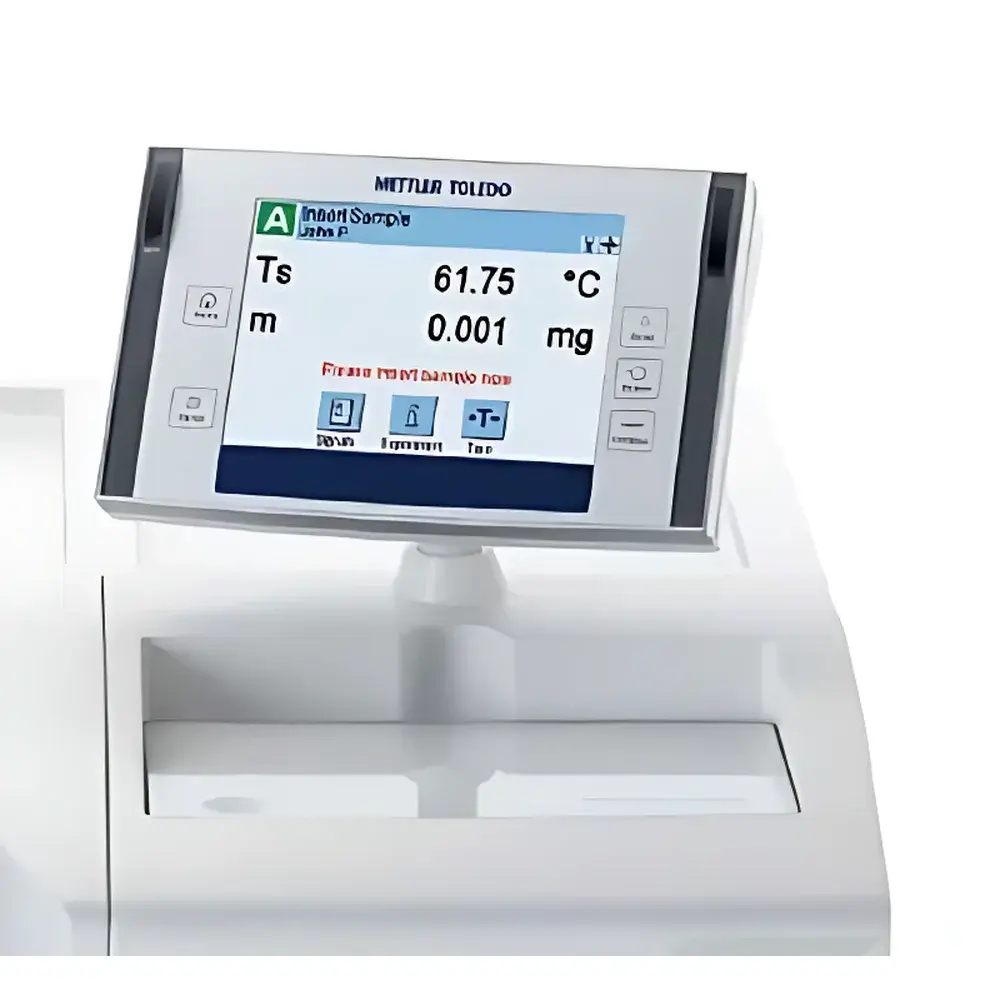
STARe Evaluation Software provides comprehensive instrument control, real-time data visualization, and advanced post-processing—including derivative thermogravimetry (DTG), peak deconvolution, kinetic modeling (e.g., Kissinger, Ozawa–Flynn–Wall), and multi-step reaction fitting. All raw and processed data are stored in a secure, timestamped database with full version history, user access logs, and electronic signature capability. Export formats include ASCII, CSV, PDF reports, and ASTM E1447-compliant XML. Integration with LIMS platforms is supported via OPC UA and RESTful API interfaces, enabling traceable data flow from acquisition to QA release documentation.
Applications
- Quantitative determination of moisture, volatiles, ash, and organic/inorganic content in polymers and composites
- Thermal stability assessment of active pharmaceutical ingredients (APIs) and formulations under ICH Q1A(R3) stress conditions
- Decomposition kinetics and activation energy calculation for catalysts and battery electrode materials
- Hydration/dehydration behavior and sorption isotherms using optional humidity generator coupling
- Evolved gas analysis (EGA) via direct coupling to quadrupole mass spectrometers (QMS) or Fourier-transform infrared (FTIR) spectrometers for molecular identification of off-gassing species
- Multi-stage thermal events in food matrices (e.g., starch gelatinization, lipid oxidation, Maillard reactions)
FAQ
What is the difference between TGA/DSC 1 Professional and earlier TGA/DSC 1 models?
The Professional variant features upgraded microbalance electronics, enhanced furnace insulation for improved temperature homogeneity, expanded gas handling options (including reactive gas compatibility), and native support for 21 CFR Part 11 compliance out-of-the-box.
Can the instrument operate under reducing atmospheres such as H₂ or CO?
Yes—when equipped with appropriate furnace liners and gas safety interlocks, the system supports operation in H₂, CO, NH₃, and other reactive gases up to 1000 °C; full specifications are provided in the Safety Manual and require local risk assessment.
Is calibration traceable to NIST or equivalent national standards?
All temperature and mass calibrations are performed using certified reference materials traceable to NIST (e.g., Ni, In, Sn, Zn for DSC; CaC₂O₄·H₂O, Al₂O₃ for TGA), with documented uncertainty budgets included in the Certificate of Calibration.
How does the dual thermocouple DSC sensor improve measurement accuracy?
The symmetric, differential configuration cancels common-mode thermal noise and eliminates baseline curvature caused by asymmetric heat flow, resulting in higher sensitivity to weak endothermic/exothermic transitions and improved quantitative repeatability across sample masses and heating rates.



