
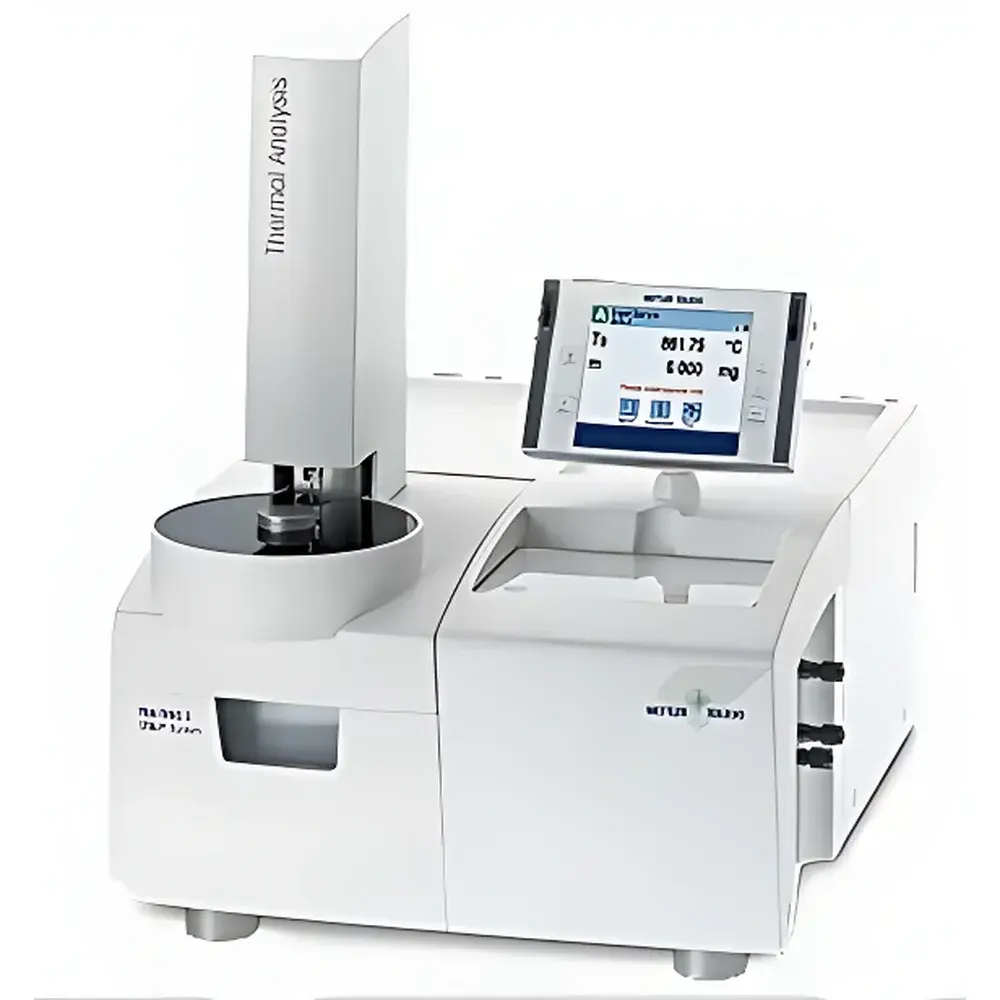
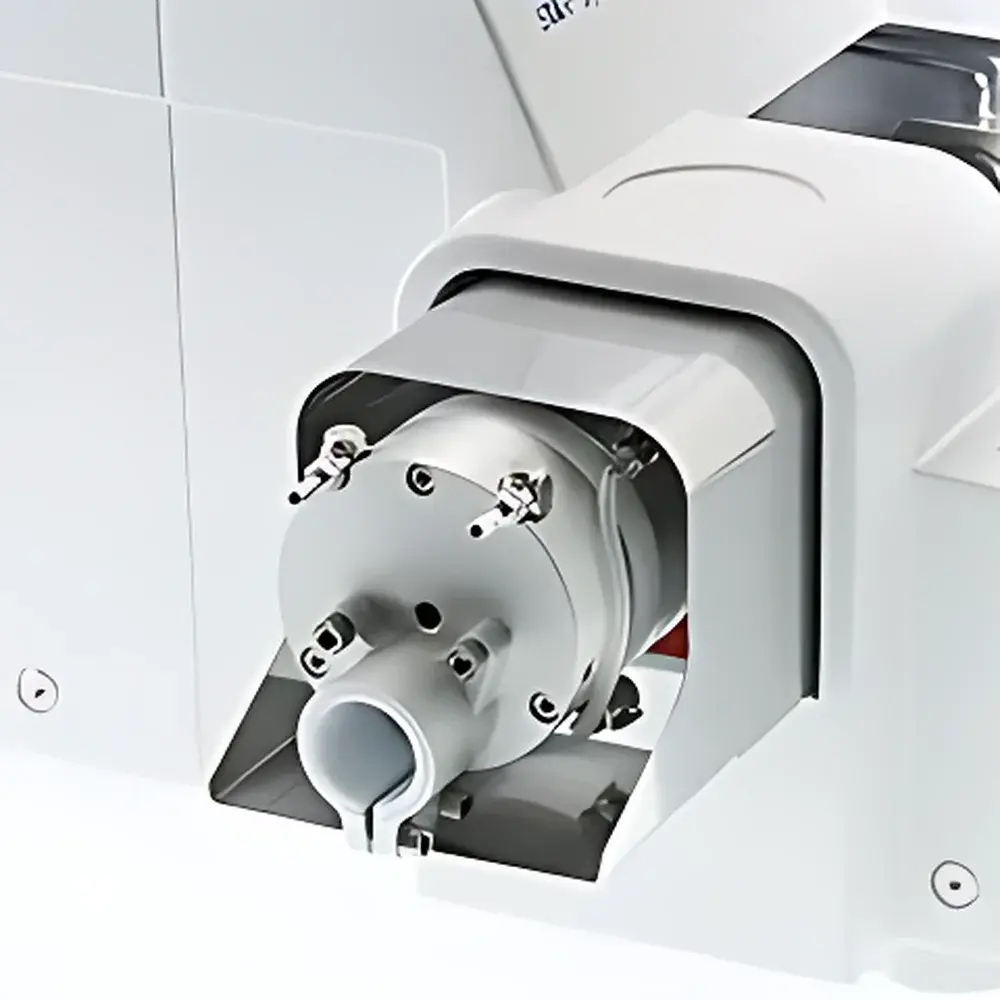
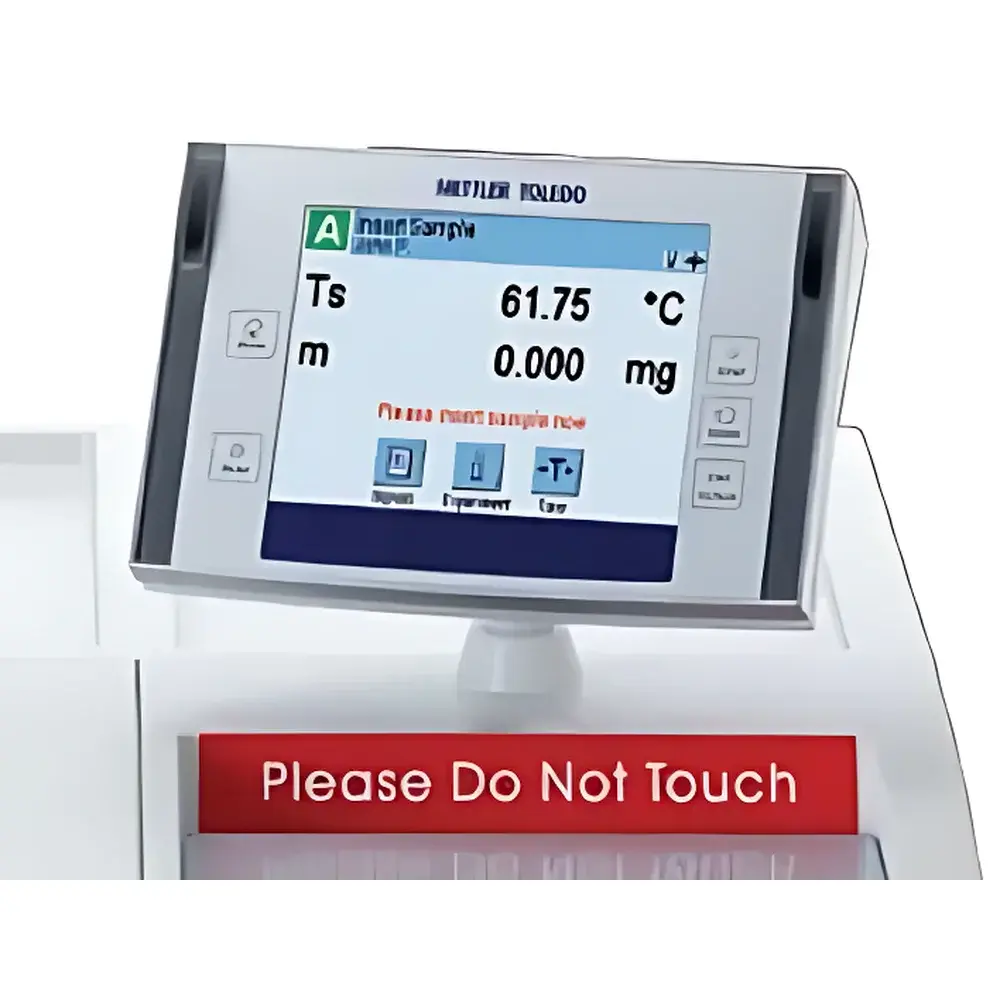
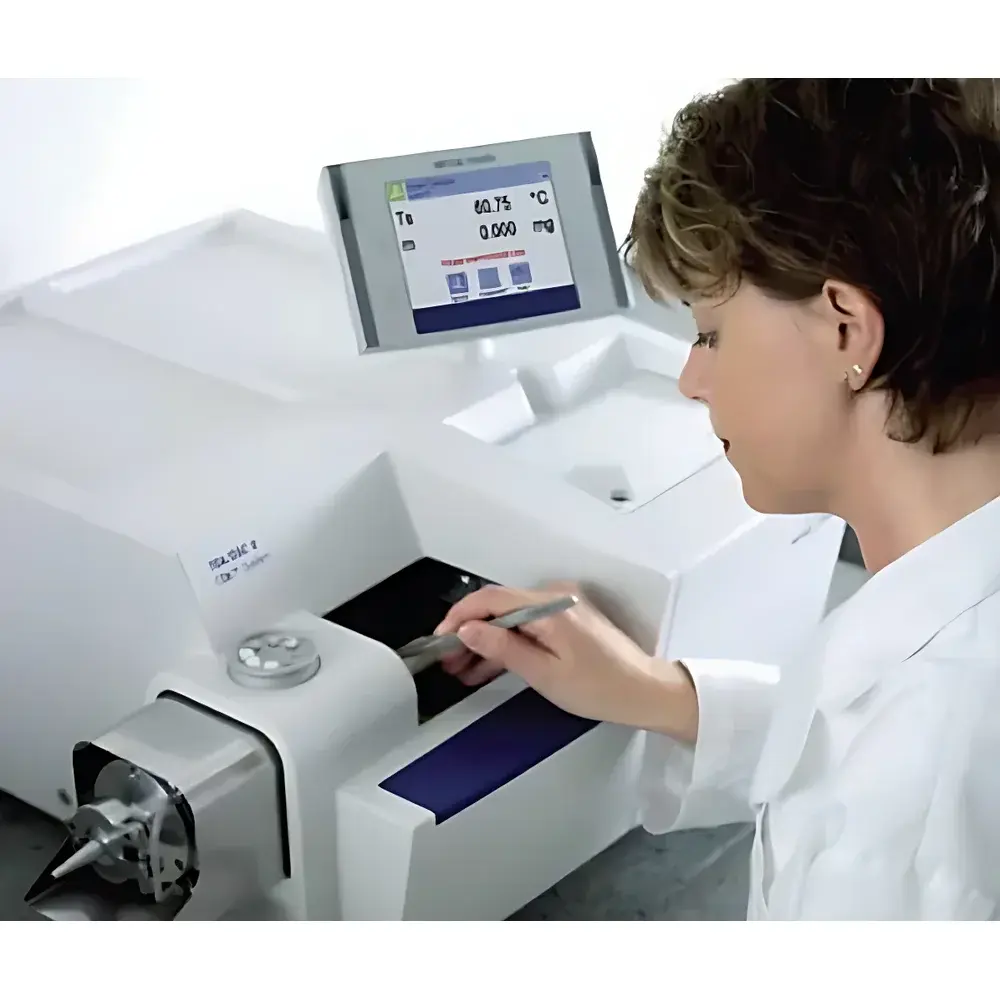
METTLER TOLEDO TGA/DSC 2 Simultaneous Thermal Analyzer
| Brand | METTLER TOLEDO |
|---|---|
| Origin | Switzerland |
| Model | TGA/DSC 2 |
| Instrument Type | Universal |
| Temperature Range | RT to 1100 °C or 1600 °C |
| Balance Sensitivity | 0.1 µg / 1 µg (model-dependent) |
| Heating/Cooling Rate | 0.02–150 K/min (standard furnace) / up to 250 K/min (fast furnace) |
| Dynamic Weighing Range | 1 g / 5 g (model-dependent) |
| Balance Accuracy | 0.005% |
| Balance Precision | 0.0025% |
| Resolution | Sub-microgram across full weighing range |
Overview
The METTLER TOLEDO TGA/DSC 2 is a high-performance simultaneous thermal analyzer engineered for precision, reproducibility, and long-term stability in demanding research, quality control, and industrial development environments. It integrates thermogravimetric analysis (TGA) and differential scanning calorimetry (DSC) into a single, modular platform—enabling real-time, synchronized measurement of mass change (via high-resolution microbalance) and heat flow (via calibrated DSC sensor) under controlled temperature programs. The instrument operates on the principle of dynamic thermal analysis: samples are subjected to precisely regulated heating, cooling, or isothermal profiles in inert or reactive atmospheres, while mass loss/gain (e.g., decomposition, oxidation, desorption) and endo-/exothermic transitions (e.g., melting, crystallization, glass transition, reaction enthalpy) are recorded concurrently. Its dual-signal acquisition eliminates time-lag artifacts common in sequential measurements and ensures strict thermal synchronization between weight and energy data—critical for kinetic modeling, multi-step reaction deconvolution, and material fingerprinting.
Key Features
- Ultra-high-resolution METTLER TOLEDO microbalance with 0.1 µg sensitivity (standard configuration) or 1 µg (high-capacity variant), delivering sub-microgram resolution across the full dynamic weighing range (1 g or 5 g, model-dependent)
- Dual-furnace architecture supporting two distinct temperature ranges: standard operation from room temperature to 1100 °C, and high-temperature capability up to 1600 °C with optional ceramic furnace and specialized crucibles
- Programmable heating/cooling rates spanning 0.02 K/min (ultra-slow ramp for equilibrium studies) to 250 K/min (fast kinetics and screening applications)
- Three interchangeable DSC sensor options—including standard, high-sensitivity, and high-temperature variants—to match application-specific signal-to-noise requirements and thermal stability demands
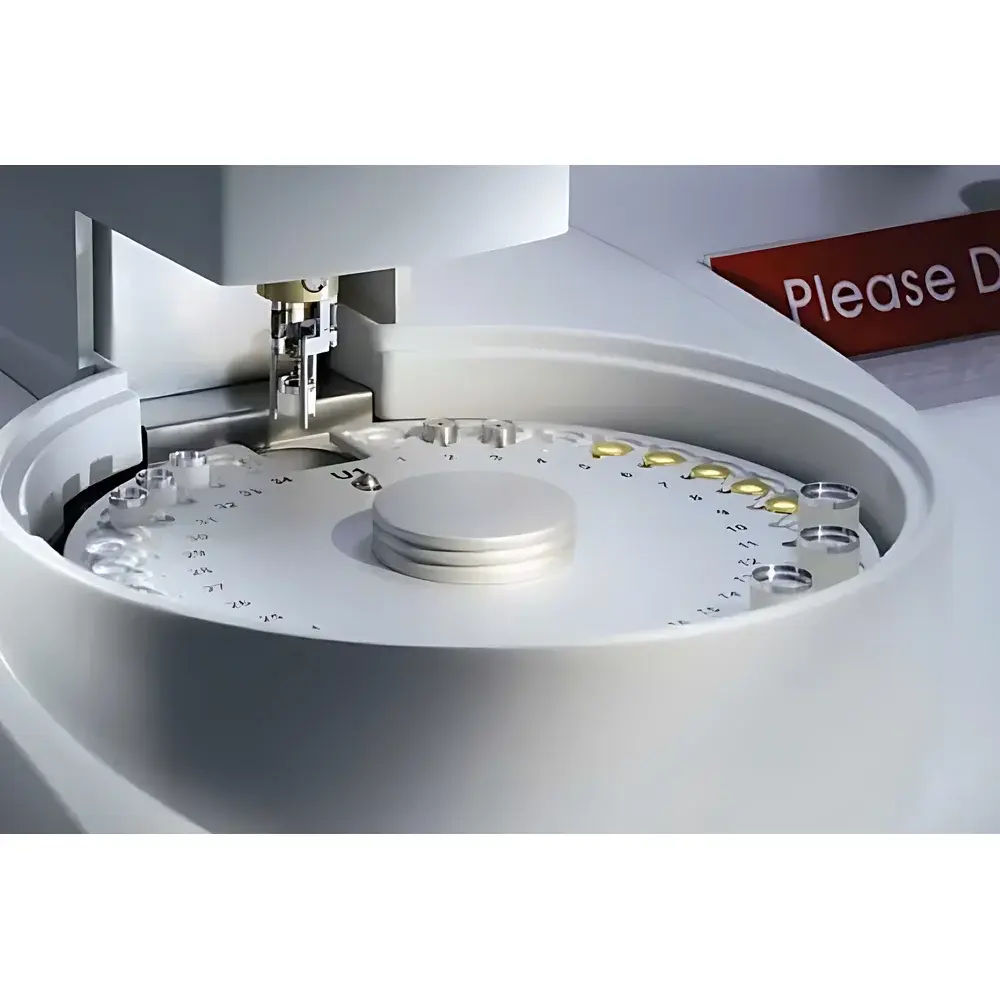
- Modular design enabling field-upgradable configurations: automatic sample changers (up to 48 positions), gas switching modules (up to 4 gases), humidity generators, and coupling interfaces for evolved gas analysis (EGA)
- Robust mechanical architecture with active vibration damping, electromagnetic shielding, and temperature-stabilized electronics to ensure baseline stability and long-term calibration integrity
Sample Compatibility & Compliance
The TGA/DSC 2 accommodates a broad spectrum of sample types—from milligram-scale polymers and pharmaceuticals to refractory ceramics, metals, and composites—using alumina, platinum, gold, or graphite crucibles compatible with oxidative, reducing, inert, or corrosive atmospheres. All hardware and software components comply with international standards relevant to thermal analysis instrumentation, including ISO 11358 (TGA), ISO 11357 (DSC), ASTM E1131 (TGA), ASTM E1269 (DSC), and USP <1225> for method validation in regulated environments. When configured with audit trail, electronic signature, and data integrity features (e.g., secure user roles, immutable raw data storage), the system supports compliance with FDA 21 CFR Part 11, EU Annex 11, and GLP/GMP documentation requirements.
Software & Data Management
Controlled by STARe Evaluation Software (v17+), the TGA/DSC 2 provides intuitive method setup, real-time monitoring, and advanced post-processing capabilities—including peak deconvolution, kinetic modeling (e.g., Kissinger, Ozawa-Flynn-Wall), baseline correction algorithms, and multi-curve comparison. Raw data files are stored in vendor-neutral .STA format with embedded metadata (instrument ID, operator, timestamp, atmospheric conditions, calibration history). The software supports automated report generation compliant with internal SOPs or external regulatory templates, and integrates seamlessly with LIMS via OPC UA or CSV export. All data operations maintain full traceability: every parameter change, calibration event, or result export is logged with user ID and timestamp in an encrypted audit trail.
Applications
- Thermal stability assessment and decomposition kinetics of pharmaceutical actives and excipients (ICH Q1A–Q1E)
- Quantification of filler content, moisture, volatiles, and residual solvents in polymer composites and battery electrode materials
- Oxidation onset temperature (OOT) and char yield determination for flame-retardant formulations
- Phase transition analysis (melting point, crystallinity, cold crystallization) coupled with mass-loss events in semicrystalline polymers
- Reaction stoichiometry and enthalpy determination in catalytic and solid-state synthesis processes
- EGA-coupled characterization using FTIR, MS, or GC/MS to identify volatile decomposition products in food packaging, elastomers, or energetic materials
FAQ
What is the difference between TGA/DSC 2 and standalone TGA or DSC instruments?
The TGA/DSC 2 enables true simultaneous acquisition—both signals originate from the same sample, at the same time, under identical thermal conditions—eliminating positional and temporal discrepancies inherent in sequential or dual-instrument setups.
Can the TGA/DSC 2 be used for quantitative residue analysis per pharmacopeial methods?
Yes. With certified calibration weights, NIST-traceable temperature sensors, and validated methods, it meets USP <731>, Ph. Eur. 2.2.34, and JP 14 requirements for loss on drying (LOD) and ash content determination.
Is remote operation and monitoring supported?
The system supports secure remote access via VPN-enabled Ethernet connection, allowing method execution, real-time data viewing, and alarm notification through the STARe Web Client interface.
How is temperature accuracy verified and maintained?
Temperature calibration is performed using high-purity reference materials (e.g., In, Sn, Zn, Al, Ag) per ISO 11357-1. The instrument stores calibration coefficients per furnace and sensor, automatically applying corrections during data acquisition.
What safety features prevent damage during high-temperature operation?
Integrated overtemperature cutoff, pressure-relief crucible lids, gas-flow interlocks, and real-time furnace temperature monitoring ensure safe operation up to 1600 °C—even during unattended overnight runs.



