
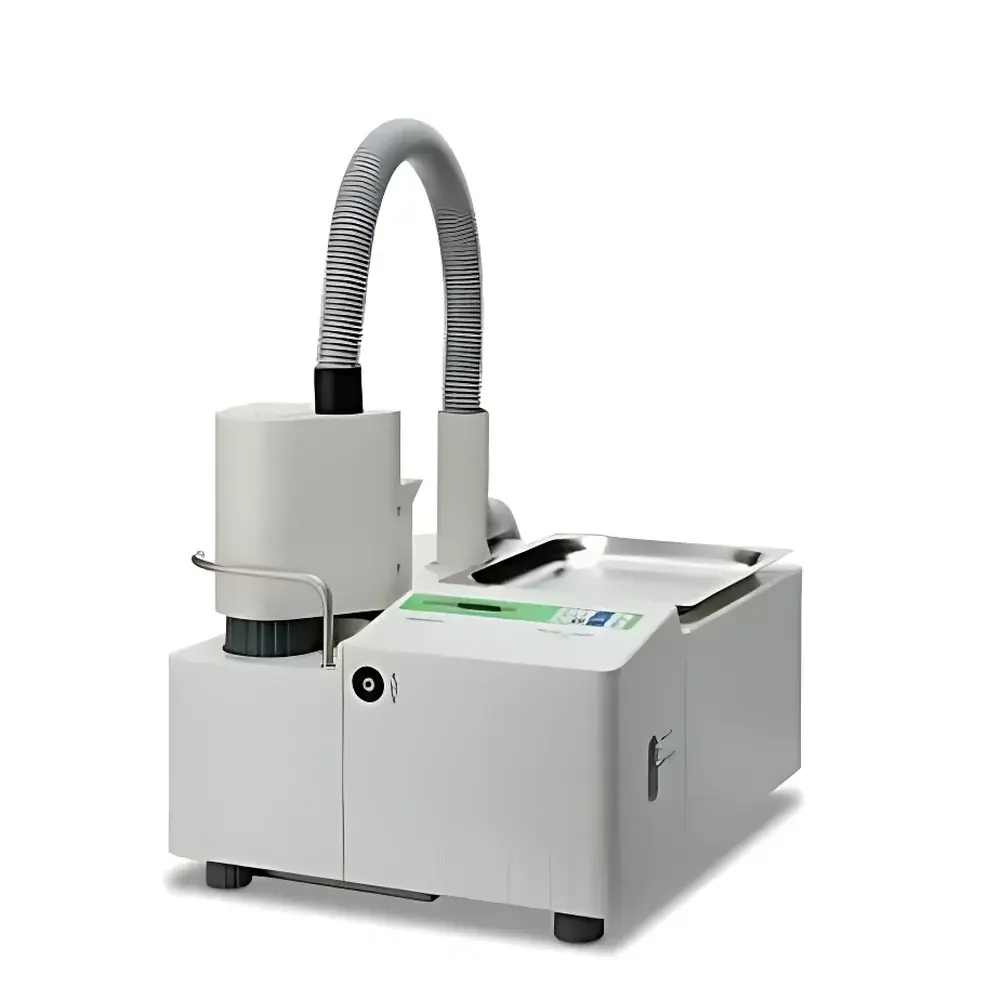
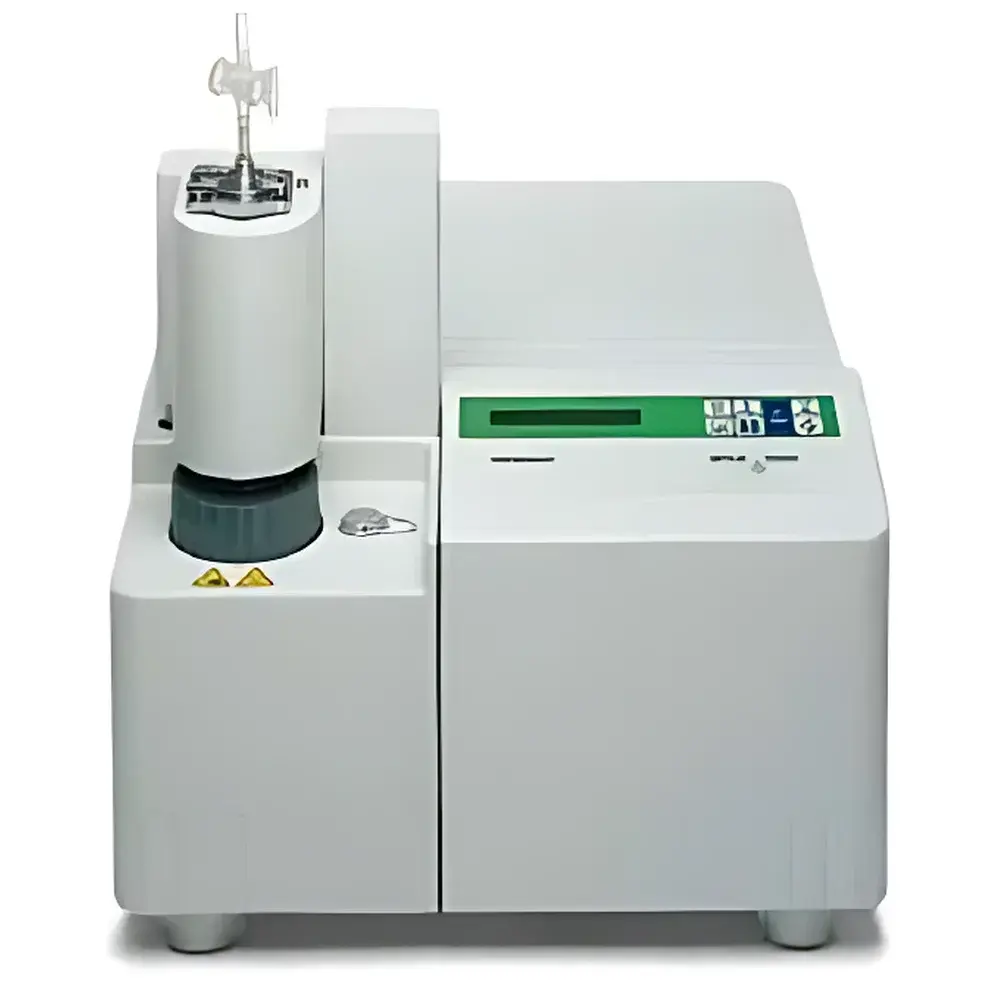
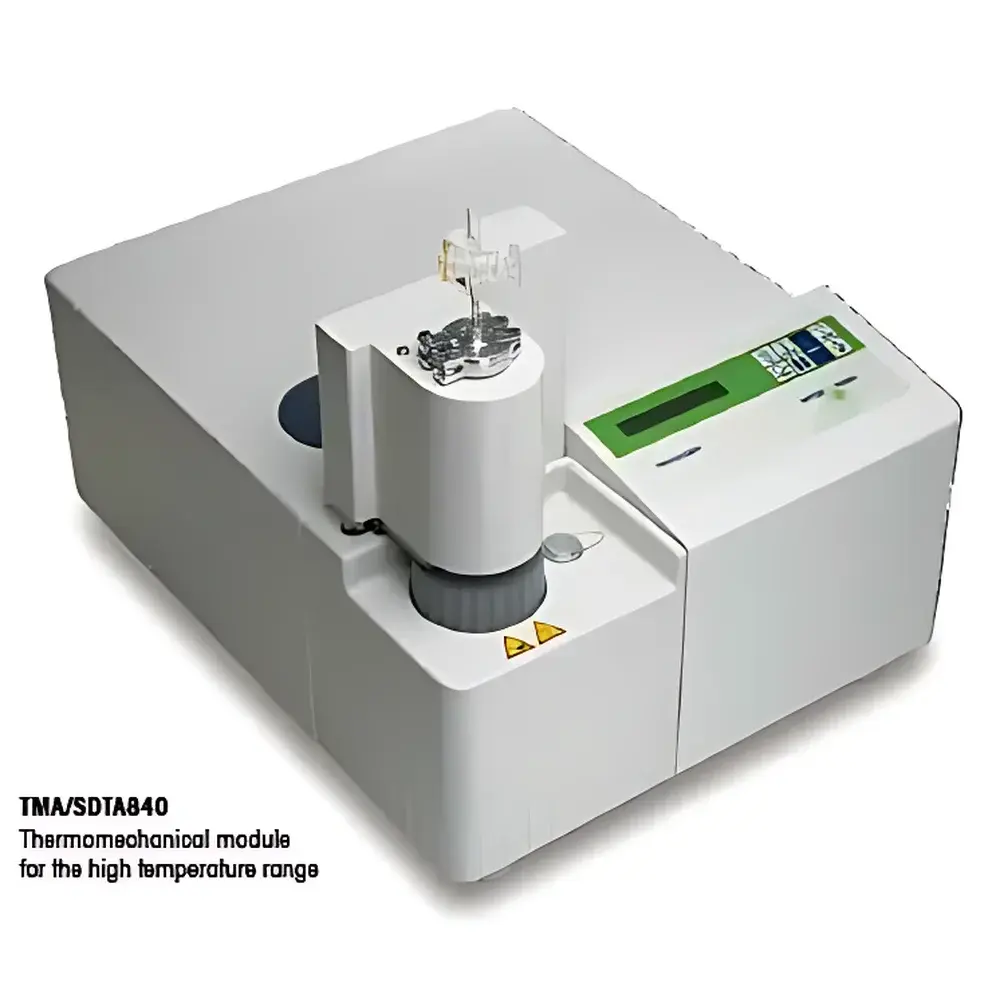
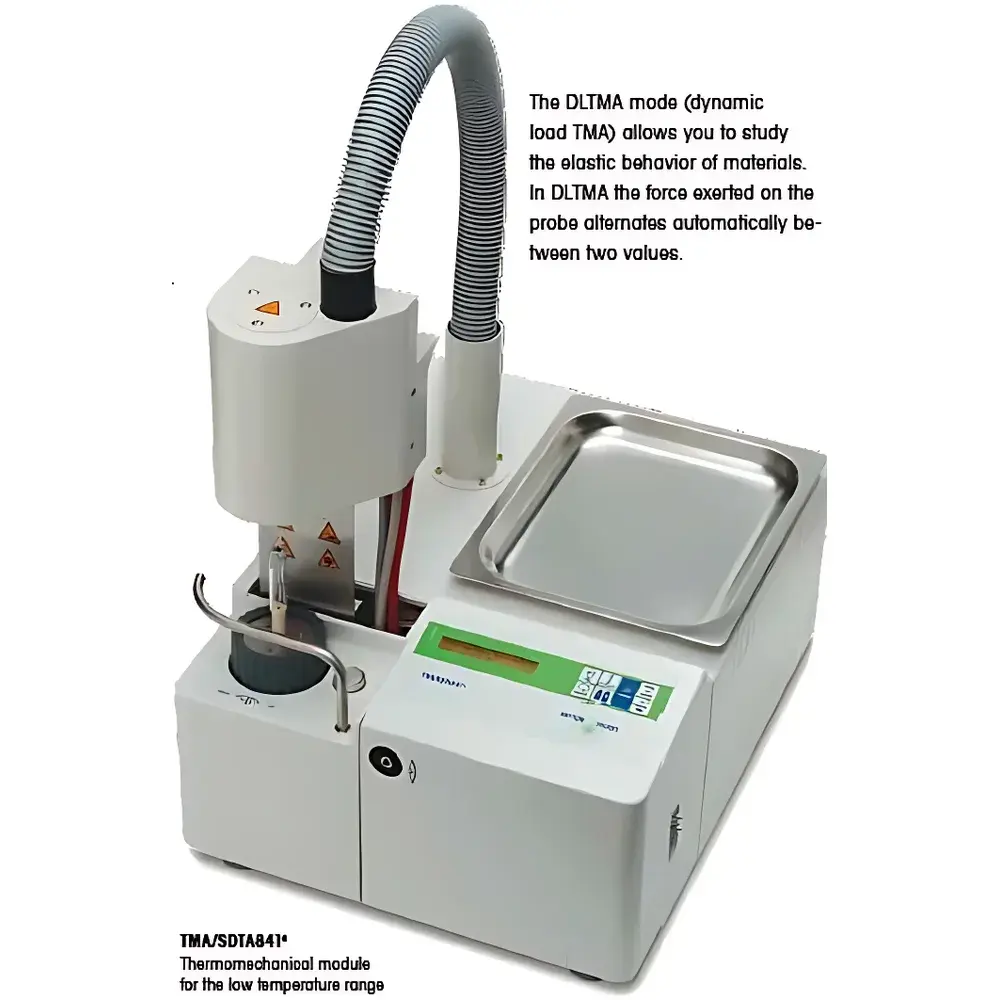
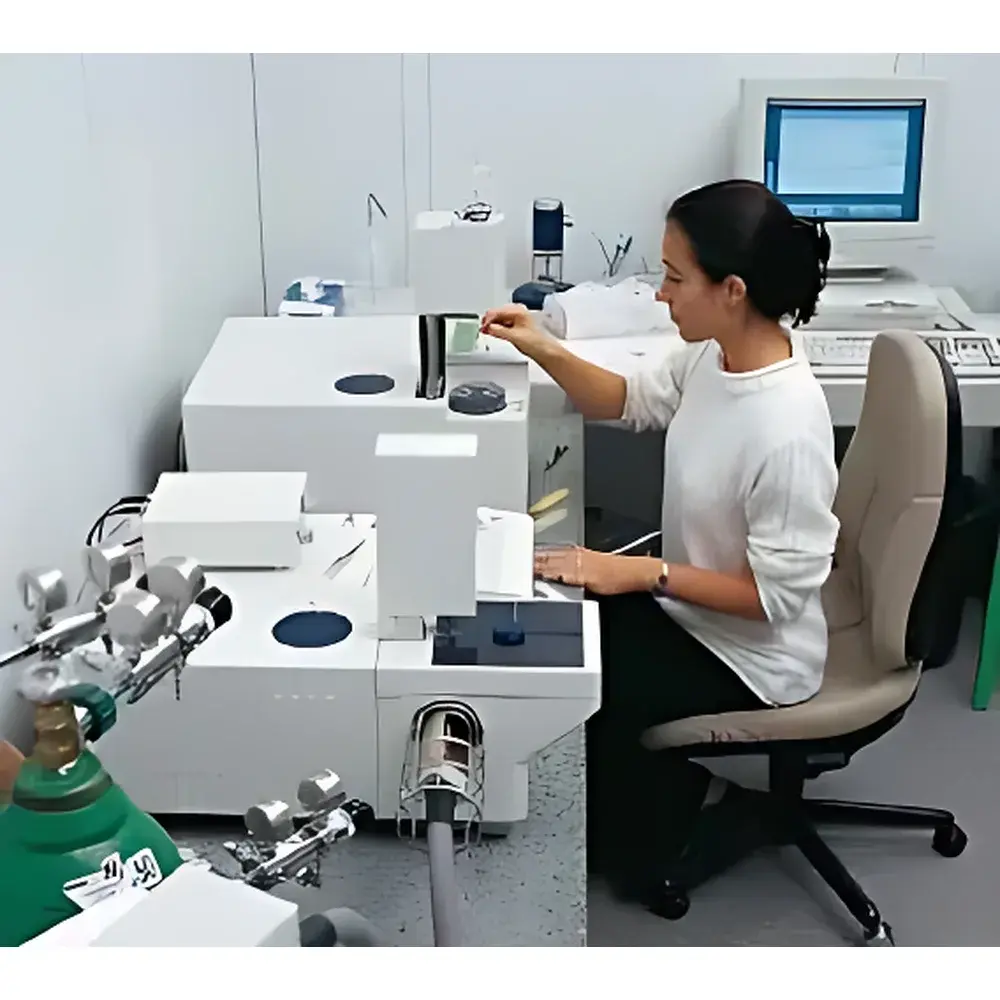
METTLER TOLEDO TMA/SDTA840 and TMA/SDTA841e Thermomechanical Analyzer with Synchronous Differential Thermal Analysis
| Brand | METTLER TOLEDO |
|---|---|
| Origin | Switzerland |
| Model | TMA/SDTA840, TMA/SDTA841e |
| Temperature Range | −150–600 °C (TMA/SDTA841e), RT–1100 °C (TMA/SDTA840) |
| Temperature Accuracy | ±0.25 °C |
| TMA Resolution | 1 nm (TMA/SDTA841e), 10 nm (TMA/SDTA840) |
| Measurement Modes | Expansion, Penetration, Bending, Tension, Dynamic Load TMA (DLTMA) |
| SDTA Capability | Yes |
| Environmental Control | Hermetic sample chamber |
| Coupling Options | MS, FTIR |
Overview
The METTLER TOLEDO TMA/SDTA840 and TMA/SDTA841e are high-precision thermomechanical analyzers engineered for quantitative dimensional response measurement under controlled thermal conditions. These instruments operate on the principle of contact-based mechanical probing—applying a defined static or dynamic force to a sample while ramping temperature—and detecting minute dimensional changes (expansion, contraction, softening, creep, or viscoelastic deformation) with nanoscale resolution. Integrated Synchronous Differential Thermal Analysis (SDTA) enables simultaneous detection of heat flow differences during transitions, using calibrated metal standards (e.g., In, Sn, Zn) for traceable temperature calibration per ISO 11357-1 and ASTM E831. The dual-capability architecture ensures correlation between structural change (TMA) and energetic events (SDTA), eliminating temporal misalignment common in sequential measurements. Designed and manufactured in Switzerland, both models feature a rigid, low-drift mechanical frame, active furnace temperature control, and hermetically sealed sample compartments compatible with inert, oxidative, or reducing atmospheres—meeting requirements for GLP-compliant thermal characterization workflows.
Key Features
- Patented dual-sensor probe system with electromagnetic force compensation, delivering exceptional signal stability and long-term baseline reproducibility
- Nanometer-level displacement resolution: 1 nm for TMA/SDTA841e (cryogenic configuration), 10 nm for TMA/SDTA840 (high-temperature configuration)
- Dynamic Load TMA (DLTMA) mode enabling controlled stress application during heating/cooling ramps—critical for quantifying viscoelastic relaxation, modulus evolution, and weak transition phenomena
- Multi-mode mechanical testing: linear expansion, needle penetration (for soft materials), three-point bending (for brittle ceramics or thin films), and uniaxial tension (with optional fixtures)
- Hermetic, gas-tight sample chamber with programmable purge gas flow (N₂, Ar, O₂, synthetic air), pressure regulation up to 5 bar, and integrated humidity control option
- Modular coupling interface supporting real-time hyphenation with mass spectrometry (MS) or Fourier-transform infrared spectroscopy (FTIR) for evolved gas analysis (EGA)
Sample Compatibility & Compliance
The TMA/SDTA840 and TMA/SDTA841e accommodate solid samples ranging from 0.1 mm³ polymer beads to 25 mm-long metallic rods, including powders (in crucibles), fibers, laminates, and thin-film coatings on substrates. Sample holders are precision-machined from high-purity alumina or quartz to minimize thermal expansion interference. Both systems comply with ISO 11357 (Plastics — Differential Scanning Calorimetry and Thermomechanical Analysis), ASTM E1135 (Standard Test Method for Comparative Calibration of Thermometers), and USP <1151> for pharmaceutical excipient characterization. Data acquisition and instrument control support audit trails, electronic signatures, and 21 CFR Part 11 compliance when operated with METTLER TOLEDO’s STARe software in validated environments.
Software & Data Management
STARe (Scientific Thermal Analysis and Research Environment) is the native platform for method development, real-time monitoring, and advanced data evaluation. It provides automated baseline correction, derivative analysis (dL/dT), coefficient of linear expansion (CTE) calculation across user-defined intervals, glass transition onset/midpoint determination per ASTM E1356, and DLTMA-derived storage/loss modulus modeling. All raw and processed data are stored in secure, timestamped .sdt files with embedded metadata (operator ID, calibration history, environmental logs). Export options include CSV, ASCII, and XML formats compatible with LIMS integration and third-party statistical packages (e.g., JMP, MATLAB). Software validation documentation (IQ/OQ/PQ protocols) is available upon request for regulated laboratories.
Applications
These analyzers serve as primary tools in R&D and QC labs for structure–property relationship studies across diverse material classes. In polymer science, they quantify CTE mismatch in multilayer packaging, determine cure shrinkage in thermosets, map softening behavior of hot-melt adhesives, and assess dimensional stability of automotive composites under thermal cycling. For ceramics and glasses, TMA identifies sintering onset, densification kinetics, and thermal shock resistance thresholds. In metallurgy, they characterize phase transformation strains in shape-memory alloys and residual stress relaxation in brazed joints. Pharmaceutical applications include excipient compatibility screening via co-processed blend expansion profiling and capsule shell brittleness assessment under accelerated aging conditions.
FAQ
What distinguishes SDTA from conventional DTA?
SDTA is not a standalone DTA module—it is a synchronized, single-furnace signal derived from the same thermocouple used for temperature control, measuring net heat flow difference relative to an inert reference within the same sample holder. This eliminates inter-channel drift and enables direct correlation with dimensional change at identical time/temperature points.
Can DLTMA be performed under non-isothermal conditions?
Yes—DLTMA supports both isothermal stress-relaxation tests and dynamic load application during continuous heating or cooling ramps, allowing viscoelastic property mapping as a function of temperature and frequency.
Is calibration traceable to national standards?
Temperature calibration uses certified pure metal standards (In, Sn, Pb, Zn) with documented NIST-traceable melting points; displacement calibration employs laser interferometry verified against PTB (Physikalisch-Technische Bundesanstalt) reference artifacts.
What purge gases are supported, and how is atmosphere integrity verified?
Standard configurations support N₂, Ar, He, O₂, and synthetic air; optional upgrades enable H₂ and CO₂. Leak rate is validated at ≤1×10⁻⁷ mbar·L/s via helium leak testing per ISO 10648-2 prior to shipment.
Are these systems suitable for regulated pharmaceutical testing?
When deployed with STARe software in 21 CFR Part 11–compliant mode—including role-based access control, full audit trail, and electronic signature workflows—they meet ICH Q5C and USP <1151> requirements for thermal characterization of biologics and drug product components.



