
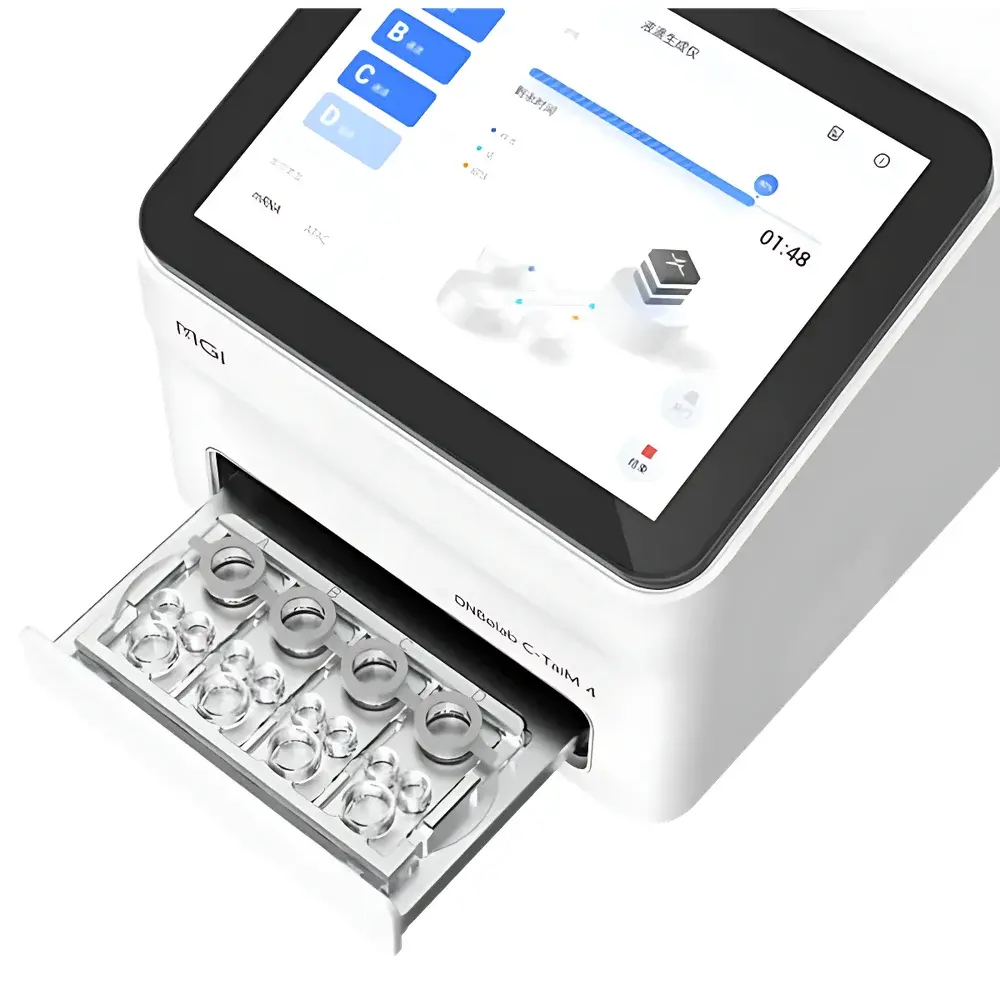
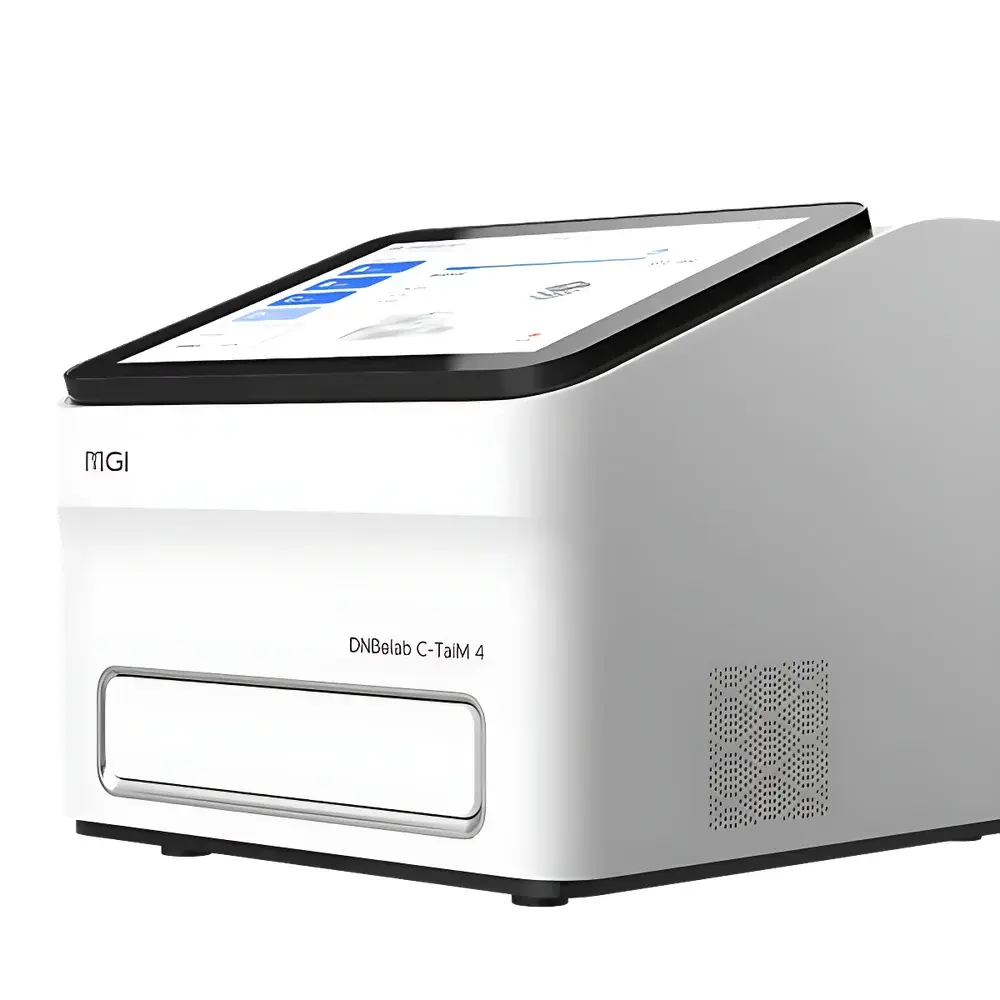
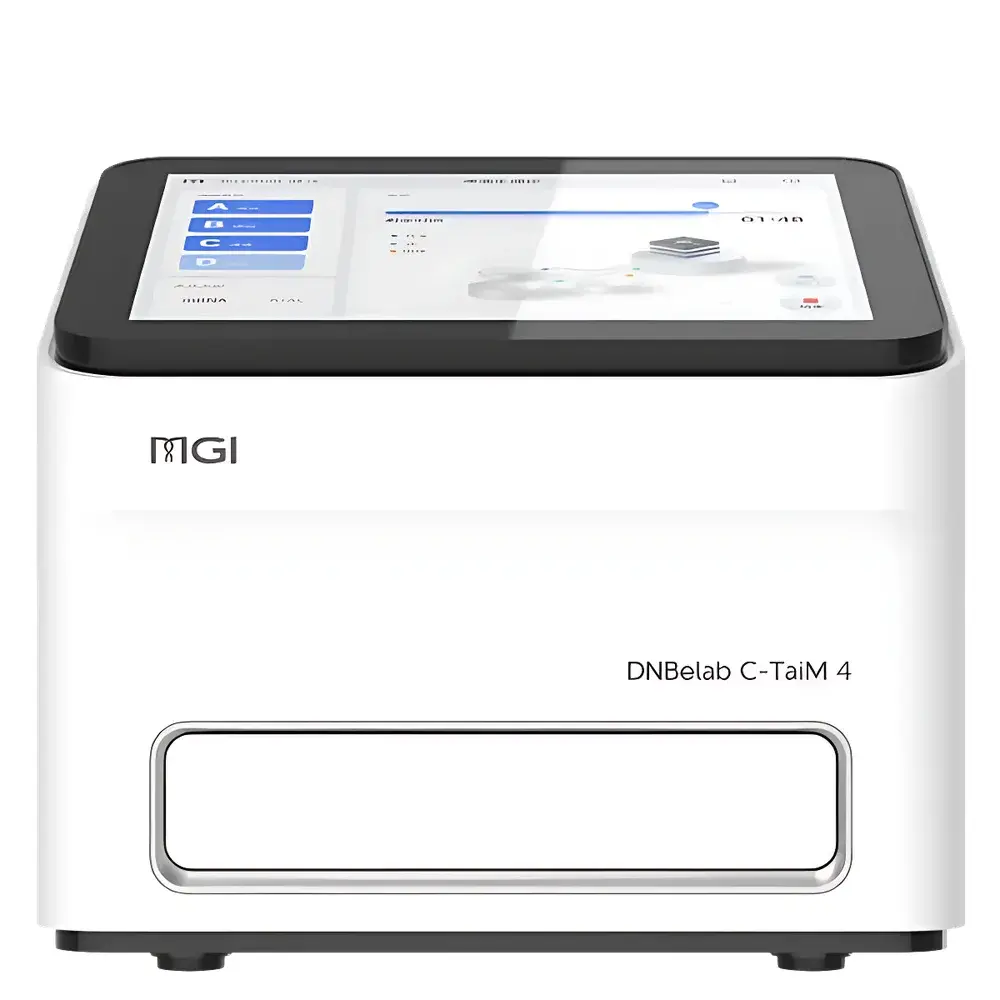
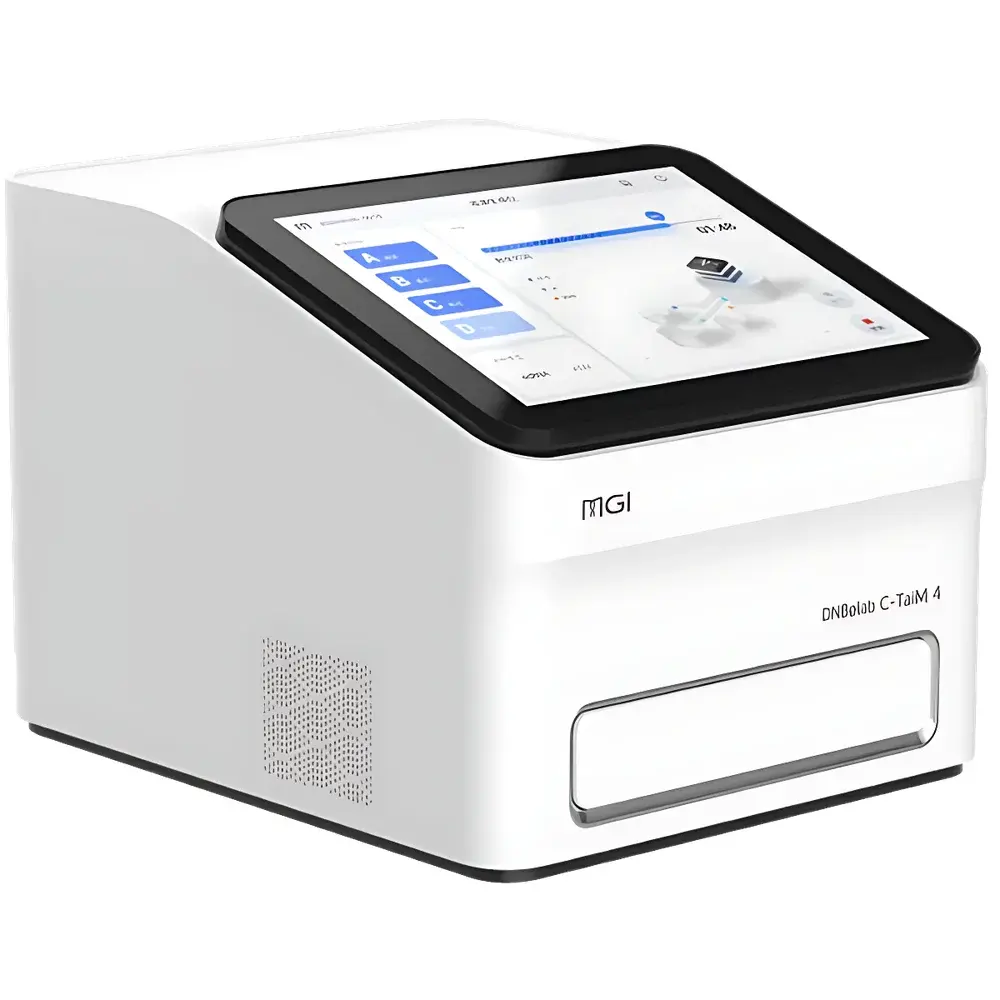
MGI DNBelab C-TaiM 4 Automated Single-Cell Library Preparation Platform
| Brand | MGI |
|---|---|
| Origin | Shenzhen, China |
| Model | DNBelab C-TaiM 4 |
| Instrument Type | Library Construction System |
| Library Type | Single-Cell Library Preparation System |
| Throughput | Independent 4-Channel Configuration |
| Sample Format | Microfluidic Cartridge-Based |
| Core Function | Fully Automated Single-Cell Nucleic Acid Library Construction |
| Regulatory Classification | Research-Use-Only (RUO) Instrument |
| Compliance | Designed for ISO 13485-aligned manufacturing environment |
| Software Validation | Supports audit trail and user access control per FDA 21 CFR Part 11 requirements |
Overview
The MGI DNBelab C-TaiM 4 Automated Single-Cell Library Preparation Platform is an integrated microfluidic workstation engineered for high-fidelity, walk-away single-cell multi-omics library construction. It implements a closed-cartridge microfluidic architecture to perform cell partitioning, lysis, reverse transcription, cDNA amplification, tagmentation, and index PCR — all within a single disposable chip under strictly controlled thermal and fluidic conditions. Unlike conventional plate-based automation, the C-TaiM 4 leverages deterministic lateral displacement (DLD) and hydrodynamic focusing to achieve >95% single-cell capture efficiency with minimal doublet formation (<3.2% at 1,000 cells/µL input). The platform is purpose-built for compatibility with both scRNA-seq and scATAC-seq workflows, enabling parallel or sequential generation of transcriptomic and epigenomic libraries from the same cell suspension without cross-contamination.
Key Features
- Fully automated 4-channel independent processing — enables concurrent preparation of up to four distinct single-cell libraries with individual protocol scheduling and real-time status monitoring.
- Integrated microfluidic cartridge system — pre-packaged, sterilized, and barcode-tracked chips eliminate manual pipetting steps and reduce hands-on time to <15 minutes per run.
- On-instrument thermal cycling and magnetic bead handling — supports full workflow execution from cell lysis to indexed library elution without external instrumentation.
- Embedded environmental sensors — monitors temperature uniformity (±0.3°C across all channels), humidity, and pressure differentials to ensure process consistency across runs.
- Modular firmware architecture — supports over-the-air updates and configurable protocol templates aligned with 10x Genomics, Chromium Single Cell ATAC, and standard Illumina-compatible indexing schemes.
Sample Compatibility & Compliance
The DNBelab C-TaiM 4 accepts fresh, cryopreserved, or FACS-sorted single-cell suspensions in PBS or standard cell culture media (e.g., DMEM/F12 with ≤0.04% BSA). It accommodates input cell concentrations ranging from 500 to 10,000 cells/µL and supports viability thresholds down to 70% as assessed by trypan blue exclusion. All consumables are manufactured under ISO 13485-certified conditions and supplied with CoA documentation. The instrument itself is classified as Research Use Only (RUO) and is not intended for diagnostic or therapeutic applications. Its software architecture includes role-based user authentication, electronic signatures, and immutable audit trails compliant with FDA 21 CFR Part 11 and GLP/GMP-aligned laboratory practices.
Software & Data Management
The DNBelab Control Suite v3.2 provides a browser-based interface for protocol configuration, run monitoring, and QC reporting. Each run generates structured JSON metadata files containing chip lot numbers, reagent expiration dates, thermal ramp logs, and real-time fluorescence intensity traces from on-chip qPCR monitoring. Raw output files conform to FASTQ standards and include dual-indexed read headers compatible with standard alignment pipelines (e.g., CellRanger, SnapATAC, Signac). Data export supports SFTP, local NAS mounting, and direct integration with LIMS via RESTful API. All software modules undergo annual verification per IQ/OQ protocols, and version history is retained for traceability during internal audits.
Applications
The C-TaiM 4 has been deployed in peer-reviewed studies requiring high-resolution mapping of cellular heterogeneity in developmental biology, oncology, and neuroimmunology. Published use cases include: (1) chromatin accessibility profiling of induced weight-cell-like cells derived from ginseng-targeted stem cells (Nature, 2022); (2) co-embedding scRNA-seq and scATAC-seq data to identify LGR5-expressing subpopulations in polycystic kidney disease models; (3) ischemia-responsive chromatin remodeling analysis in murine organoid-derived neuronal lineages (Frontiers in Neuroscience, 2023); and (4) integrative characterization of mesenchymal stromal cell states during renal fibrosis progression. These applications demonstrate robust performance across primary tissues, dissociated organoids, and low-input clinical specimens — provided sample quality meets minimum viability and debris thresholds.
FAQ
Is the DNBelab C-TaiM 4 compatible with 10x Genomics chemistry?
Yes — the platform supports dual-indexing schemes matching 10x v3.1 and v3.2 chemistry, including feature barcoding for multi-modal assays.
Can scRNA-seq and scATAC-seq libraries be prepared simultaneously on the same chip?
No — each cartridge is optimized for either transcriptomic or epigenomic library construction; however, sequential runs can be scheduled on the same instrument without hardware modification.
What is the minimum required cell number per channel?
The recommended minimum is 500 viable cells per channel to ensure statistically robust library complexity; lower inputs may yield reduced UMI counts and elevated dropout rates.
Does the system support custom primer sets or non-standard adapters?
Yes — the onboard thermal cycler accepts user-defined PCR programs, and the software allows import of custom index sequences and adapter definitions for bespoke sequencing strategies.
Are consumables supplied with batch-specific QC reports?
Yes — every microfluidic cartridge and reagent kit includes a Certificate of Analysis documenting endotoxin levels (<0.03 EU/mL), sterility testing, and functional validation using reference cell lines.



