
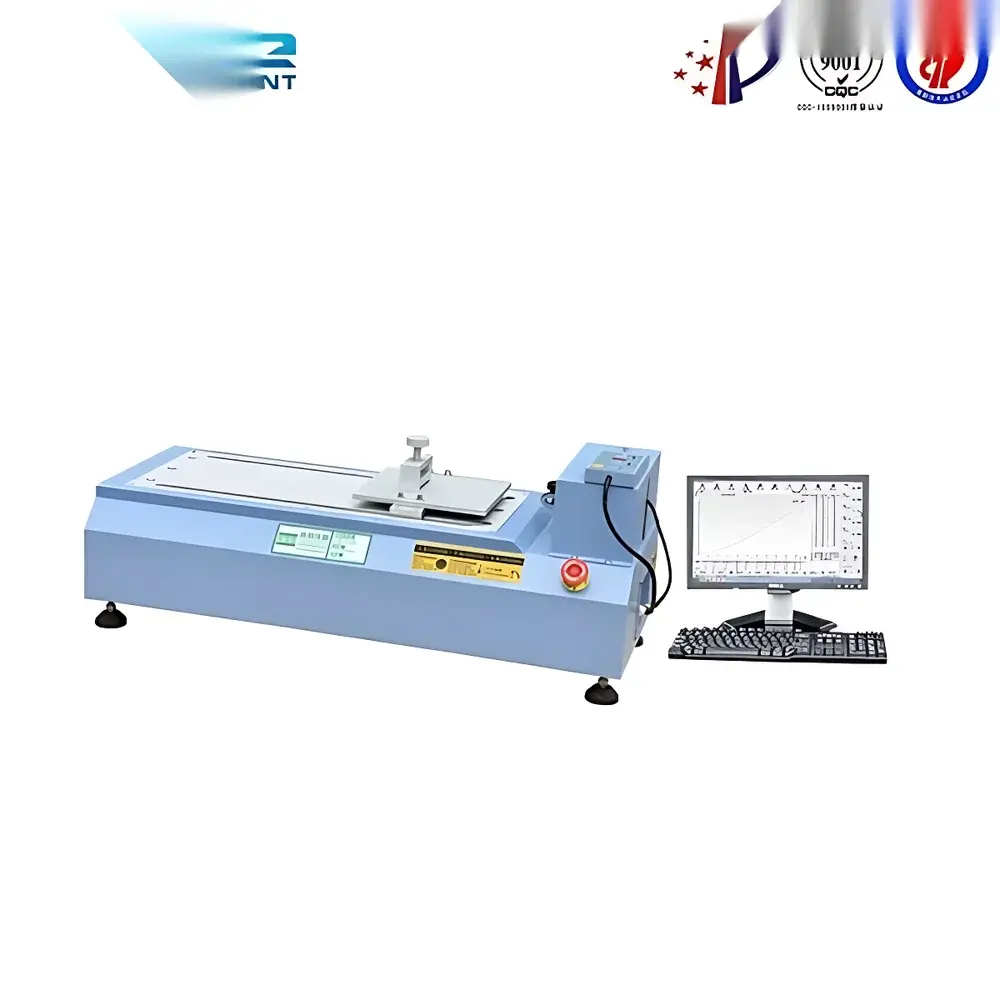
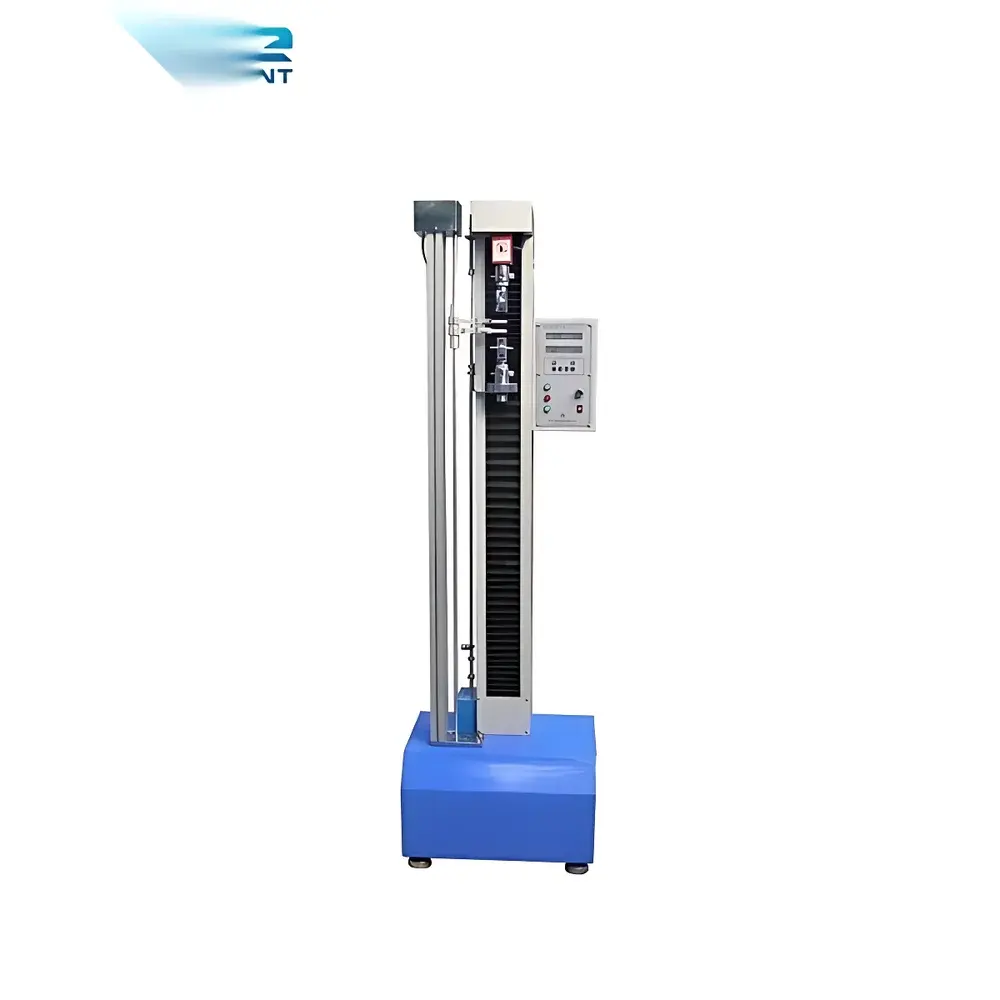
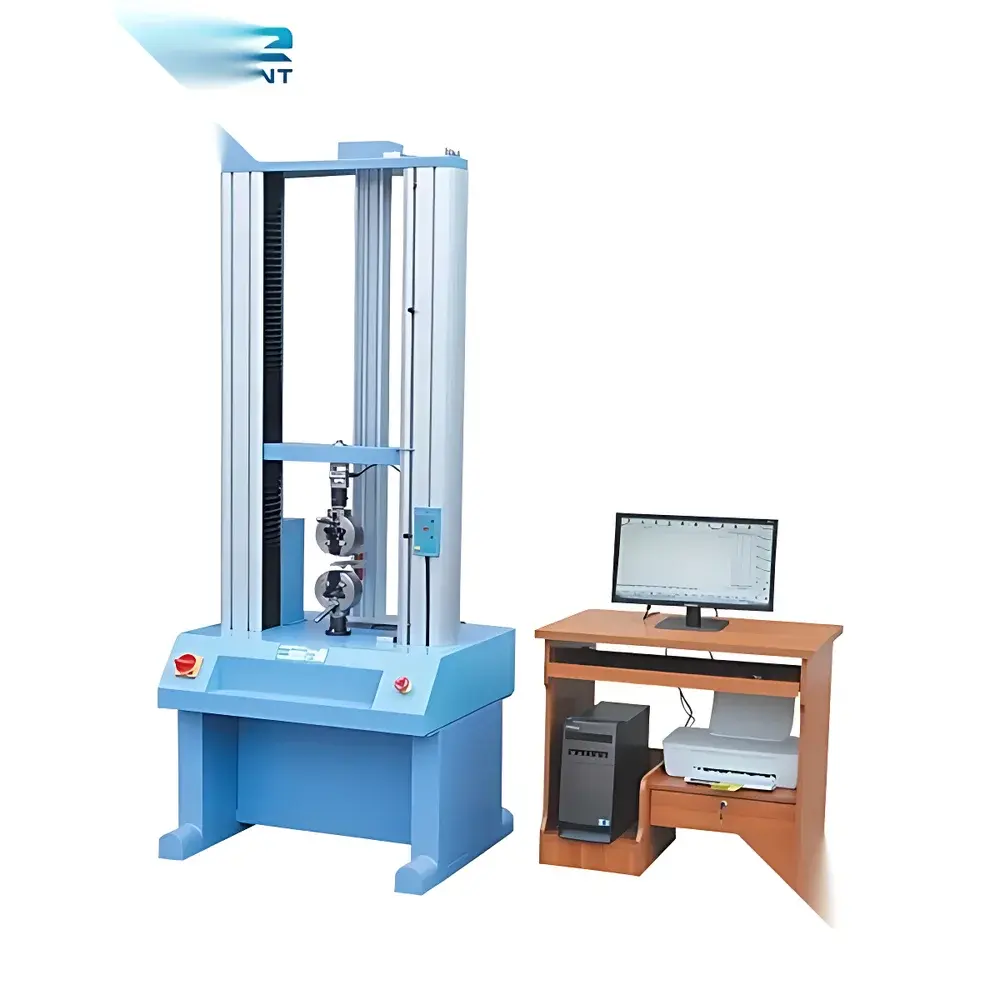
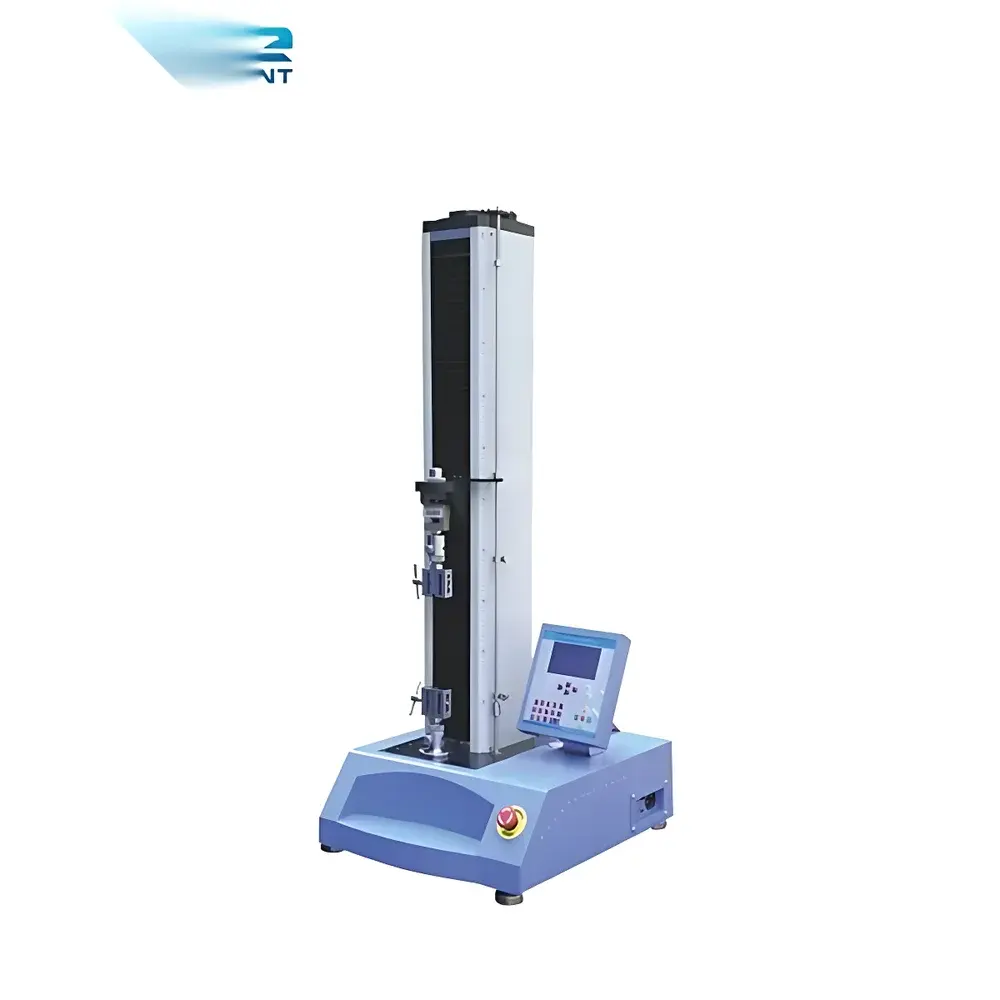
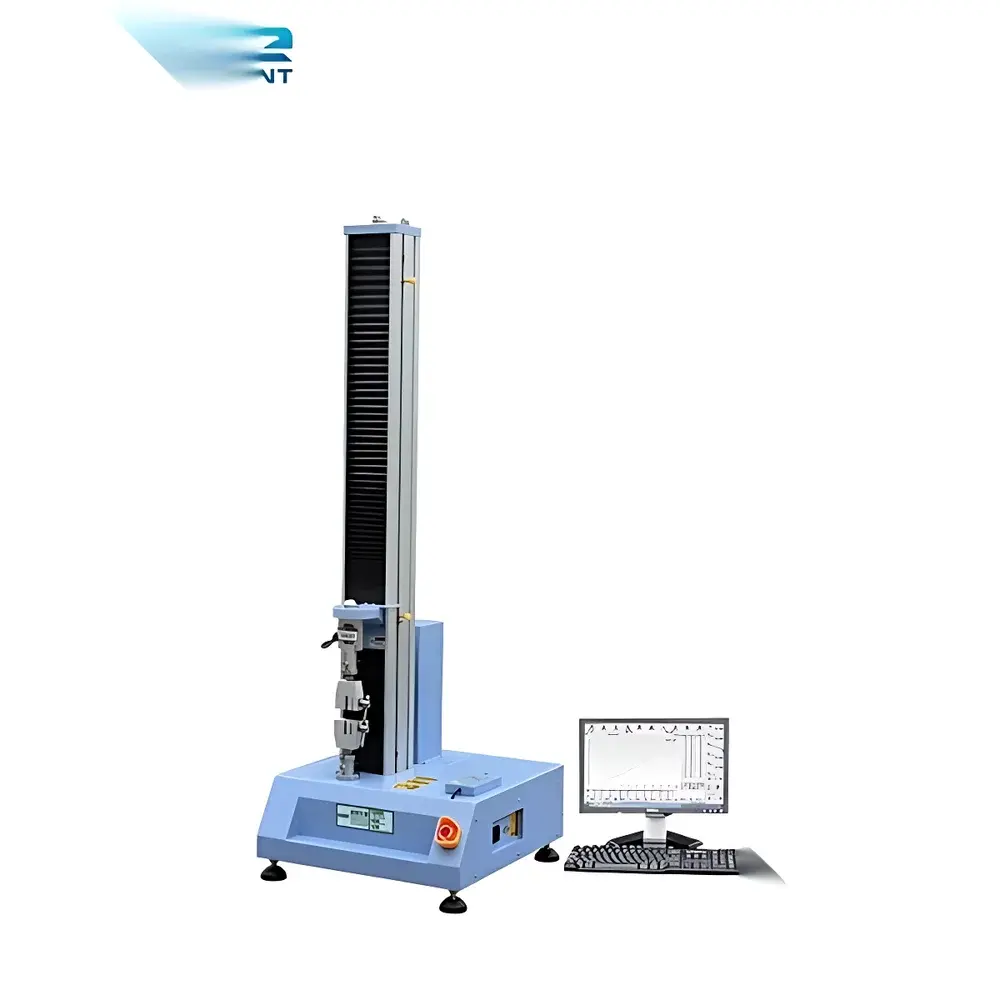
Microcomputer-Controlled Tensile Testing Machine
| Brand | OEM / Custom-Branded |
|---|---|
| Origin | Imported |
| Manufacturer Type | Authorized Distributor |
| Price | USD 3,200 (FOB) |
| Compliance | GB/T 16491, GB/T 1040, GB/T 2790–2792, GB/T 3923.1, GB/T 528, GB/T 17200, GB/T 16825 |
| Load Cell Accuracy | ±0.03% F.S. |
| Resolution | 1/100,000 full scale |
| Encoder | 2500 PPR AC servo motor with Panasonic drive |
| Drive System | Precision preloaded ball screw + linear guideways |
| Safety Features | Stroke limit switch, overload protection (150% transient capacity), real-time upper-limit warning |
| Environmental Compensation | Automatic temperature drift compensation |
| Software Functions | Real-time curve plotting, peak hold, break detection & auto-stop, unit conversion, data export (CSV/PDF), report generation |
Overview
The Microcomputer-Controlled Tensile Testing Machine is a precision electromechanical system engineered for static uniaxial tensile, compression, peel, shear, and flexural property evaluation of polymeric films, elastomers, textiles, composites, adhesives, packaging materials, and biomedical specimens. It operates on the principle of controlled displacement-driven force measurement, where a high-fidelity load cell captures axial force while a calibrated encoder-tracked crosshead delivers programmable strain rates per ISO 527-1 and ASTM D638 standards. Designed to meet Class 1 accuracy requirements per ISO 7500-1 and GB/T 16491, this system delivers traceable mechanical property data—including ultimate tensile strength, yield point, elongation at break, modulus of elasticity, and peel adhesion—under repeatable environmental conditions.
Key Features
- High-stability force measurement using explosion-proof, temperature-compensated load cells with ±0.03% full-scale repeatability and 150% transient overload tolerance
- Panasonic AC servo motor coupled with 2500 pulses-per-revolution optical encoder for precise speed control (0.001–500 mm/min range) and minimal velocity ripple
- Preloaded precision ball screw transmission and hardened linear guideways ensuring sub-micron positioning resolution and acoustic noise <55 dB(A)
- Integrated mechanical stroke limit switches and software-enforced upper-load thresholds to prevent sensor damage during abrupt failure events
- Real-time test monitoring via embedded microcontroller interface with automatic break detection and immediate crosshead stop (<10 ms response latency)
- 1/100,000 full-scale analog-to-digital resolution supporting multi-unit display (N, kN, kgf, lbf) and SI/metric/imperial conversions without recalibration
Sample Compatibility & Compliance
This tester accommodates specimens ranging from thin polymer films (≥10 µm thickness) to rigid structural composites (up to 100 mm width × 300 mm gauge length), with customizable grips including pneumatic, wedge, roller, and specialized peel fixtures. All hardware and firmware comply with national and international testing standards, including GB/T 1040 (plastics), GB/T 3923.1 (textiles), GB/T 2790–2792 (adhesive peel/shear), and GB/T 16825 (verification of force-measuring systems). While not certified to ISO/IEC 17025, the system supports GLP-compliant documentation workflows and is compatible with external calibration services traceable to NIM (China National Institute of Metrology) or NIST.
Software & Data Management
The proprietary Windows-based control software provides ISO/IEC 17025-aligned audit trails: all test parameters, operator ID, timestamp, environmental notes, and raw channel data (force vs. displacement) are logged in encrypted binary format with SHA-256 checksums. Data export supports CSV (for Excel/Origin analysis), PDF (formatted reports with logo/header customization), and XML (LIMS integration). The software includes built-in statistical tools for batch analysis—mean, SD, CV%, confidence intervals—and supports user-defined pass/fail criteria against specification limits. For regulated environments, optional 21 CFR Part 11 compliance modules provide electronic signatures, role-based access control, and immutable change logs.
Applications
- Mechanical qualification of medical device components (e.g., suture tensile strength per ISO 10993-12)
- Quality control of flexible packaging films (seal strength, puncture resistance, tear propagation)
- R&D validation of thermoplastic elastomers under varying strain rates (0.1–500 mm/min)
- Adhesion performance assessment of pressure-sensitive tapes and laminates (90°/180° peel per ASTM D3330)
- Composite material certification for aerospace prepregs (interlaminar shear strength per ASTM D2344)
- Textile tensile integrity testing per GB/T 3923.1 and ISO 13934-1, including loop and knot strength protocols
FAQ
What standards does this machine support out-of-the-box?
It natively implements test methods defined in GB/T 16491 (general requirements), GB/T 1040 (plastics), GB/T 3923.1 (woven fabrics), and GB/T 2790–2792 (adhesive bonding), with parameter templates preloaded for common protocols.
Can the system be integrated into an existing LIMS or MES platform?
Yes—via TCP/IP socket communication or OPC UA interface; raw data streams and metadata (test ID, result, status) are accessible through documented RESTful API endpoints.
Is third-party calibration documentation included?
A factory calibration certificate (traceable to NIM) is supplied; annual recalibration services are available through authorized service centers with ISO/IEC 17025-accredited labs.
What is the maximum specimen thickness the standard wedge grips can accommodate?
Standard pneumatic wedge grips accept specimens up to 15 mm thick; custom jaw inserts extend capability to 40 mm for metallic or composite coupons.
Does the software support multi-language UI and report generation?
The interface supports English, Simplified Chinese, and Spanish; report templates are fully editable in Microsoft Word-compatible formats and retain localized unit conventions.



