
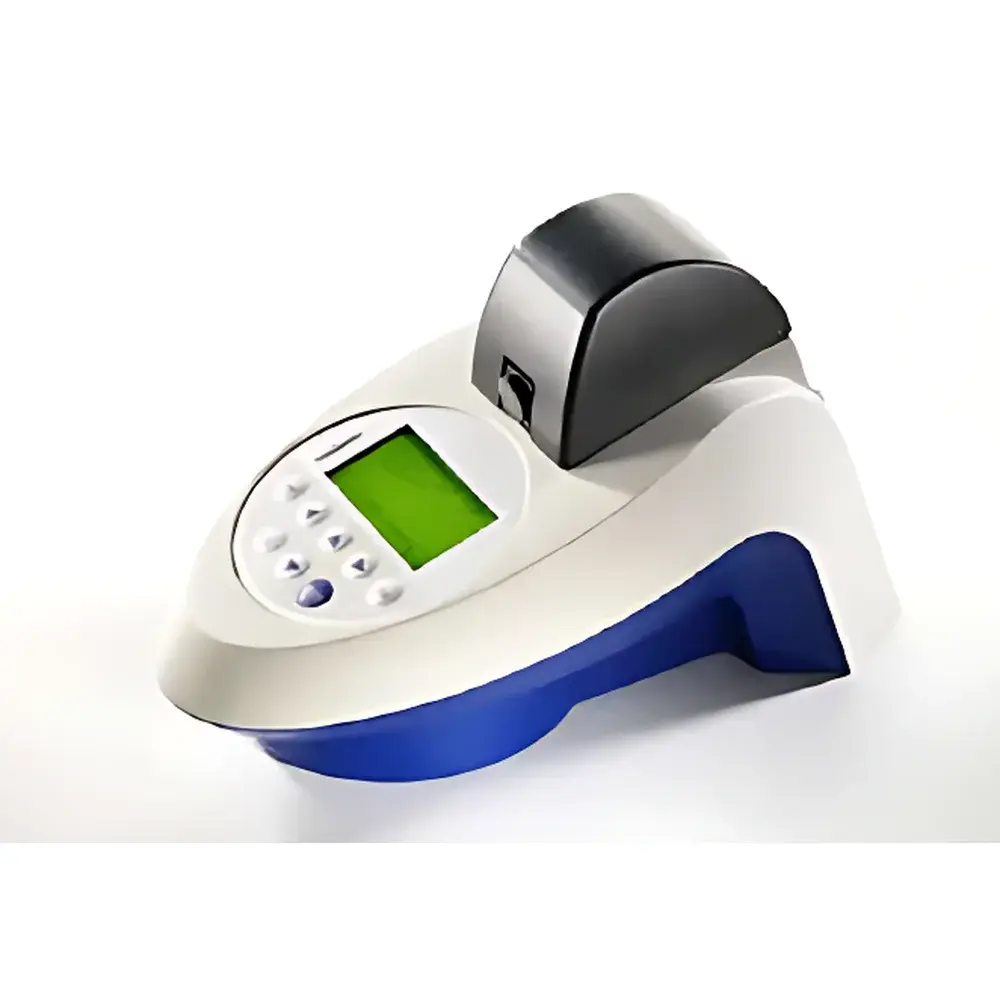
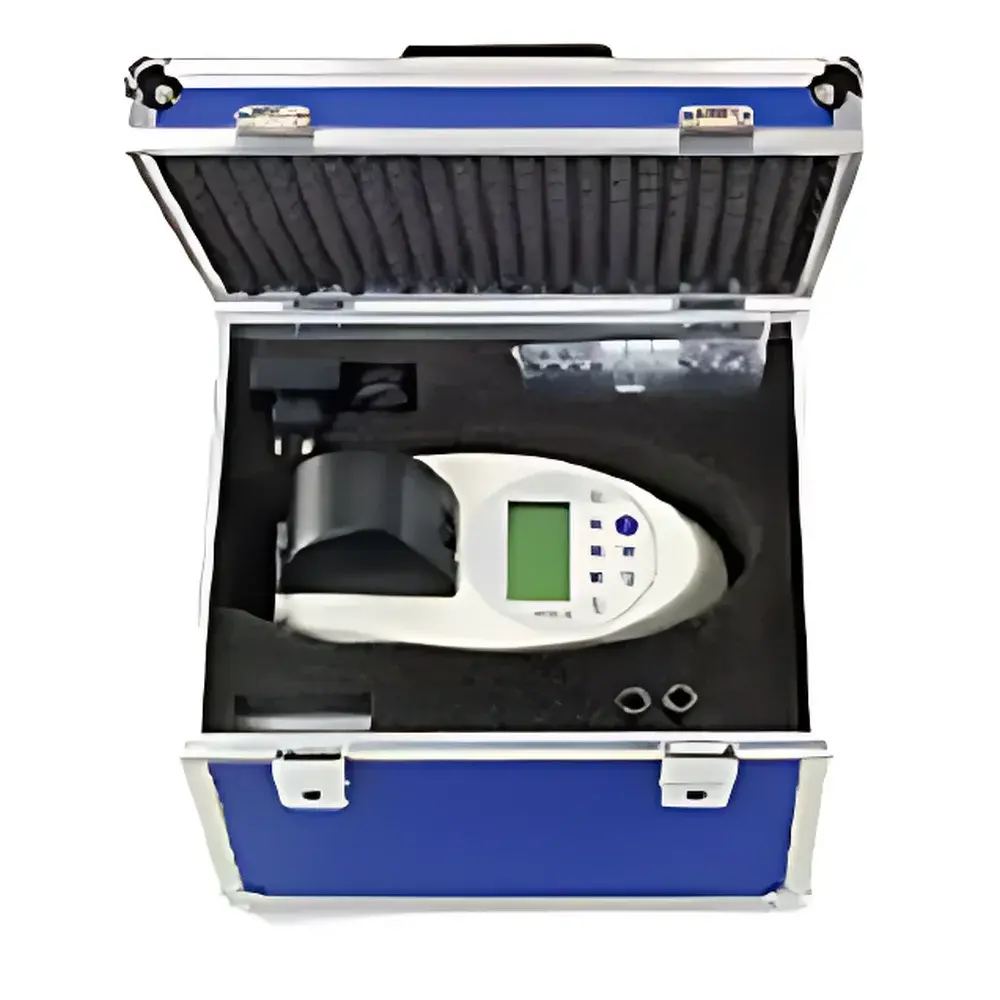
microLAN TOXmini Portable Bioluminescence-Based Water Toxicity Analyzer
| Origin | Netherlands |
|---|---|
| Manufacturer Type | Authorized Distributor |
| Origin Category | Imported |
| Model | TOXmini |
| Instrument Type | Portable |
| Biological Indicator | Aliivibrio fischeri (formerly Vibrio fischeri) |
| Operating Temperature Range | +15 °C to +30 °C |
| Reagent Storage & Handling Temperature | +2 °C to +8 °C |
| Repeatability | ≤15% RSD (Relative Standard Deviation) at 50% inhibition level |
| Batch Capacity | 1–12 samples per run |
| Typical Measurement Time | 15–30 min per sample (ISO 11348-3 compliant) |
Overview
The microLAN TOXmini is a field-deployable, bioluminescence-based water toxicity analyzer engineered for rapid, standardized assessment of acute aquatic toxicity. It quantifies the inhibitory effect of waterborne contaminants on the metabolic activity of freeze-dried Aliivibrio fischeri — a marine luminescent bacterium whose light emission (measured in relative light units, RLU) decreases proportionally upon exposure to toxic substances. Based on the principle of bacterial bioluminescence inhibition, the TOXmini implements ISO 11348-3 (Water quality — Determination of the inhibitory effect of water samples on the light emission of Vibrio fischeri — Part 3: Method using freeze-dried bacteria), enabling regulatory-grade screening of raw water, treated effluent, drinking water sources, and process streams. Its compact, battery-powered architecture supports both laboratory validation and real-time field deployment — including integration with optional temperature-controlled reaction modules to maintain strict thermal compliance during ambient fluctuations.
Key Features
- Portable, dual-power operation: Operates on rechargeable NiCd battery (2500 mAh, up to 8 hours continuous use) or universal AC input (115/230 V, 50/60 Hz)
- High-sensitivity photodetection: Ultra-fast single-photon-counting photomultiplier tube (PMT) with spectral response range 380–630 nm
- Intuitive user interface: Backlit monochrome LCD display (128 × 64 pixels), configurable language support (English or German)
- Onboard data management: Internal storage for up to 2000 test records, each timestamped and geotag-ready (via external GPS integration)
- Three standardized test modes: BioTox-S (single-point comparison between reference and sample), BioTox-B (dual-point baseline + post-exposure measurement), and RLU mode (quantitative bioluminescence intensity measurement for ATP assays or genetic reporter applications)
- Interoperability with iTOXcontrol: Uses identical lyophilized A. fischeri reagents, blank solution, and positive control — enabling cross-platform method verification and QA/QC traceability
Sample Compatibility & Compliance
The TOXmini accepts liquid water samples across diverse matrices: surface water, groundwater, wastewater influent/effluent, potable water, industrial process water, and leachates. Sample preparation follows ISO 11348-3 protocols — including pH adjustment (6.5–8.5), temperature equilibration, and filtration where particulates exceed 5 µm. The instrument meets CE marking requirements and supports GLP-compliant workflows through audit-trail-capable data export (via RS232 serial interface). When used with the optional cooling/heating module, it maintains reaction temperature at 15 ± 1 °C throughout the 15-minute exposure period — fulfilling the thermal stability criterion essential for ISO 11348-3 reproducibility. All reagents are supplied as certified freeze-dried vials with documented viability and shelf-life validation per ISO/IEC 17025-accredited manufacturing.
Software & Data Management
Embedded firmware includes six preconfigured test templates, each programmable for exposure time (5–30 min), measurement intervals, and RLU threshold logic. Historical datasets can be filtered by sampling location, date/time stamp, operator ID, or custom sample ID — supporting trend analysis and baseline establishment (e.g., site-specific toxicity thresholds derived from longitudinal monitoring). Raw RLU values, inhibition percentages, and QC flags (e.g., blank drift >10%, control response outside ±20% of nominal) are logged with full metadata. Export via RS232 enables direct import into LIMS platforms or Excel-compatible CSV files. Software design aligns with FDA 21 CFR Part 11 principles: electronic signatures, user access levels, and immutable audit logs are supported when paired with validated PC-based companion software (e.g., TOXlink).
Applications
- Drinking water source protection: Early-warning detection of accidental or intentional contamination events
- Wastewater treatment optimization: Monitoring toxicity reduction across biological treatment stages (influent vs. effluent)
- HACCP-compliant food processing: Verification of rinse water and ingredient contact water safety
- Environmental impact assessment: Screening of industrial discharge permits and landfill leachate compliance
- Biological QA/QC: Routine validation of A. fischeri reagent activity prior to batch testing
- Research applications: Mechanistic studies of nanomaterial toxicity, pharmaceutical metabolite effects, or mixture toxicity modeling
FAQ
What organism does the TOXmini use for toxicity assessment?
The TOXmini employs freeze-dried Aliivibrio fischeri (formerly Vibrio fischeri), a Gram-negative marine bacterium whose constitutive bioluminescence serves as a sensitive endpoint for metabolic disruption.
Is the TOXmini compliant with international standards?
Yes — the instrument and its associated protocol are fully aligned with ISO 11348-3:2022 for acute toxicity screening. Optional thermal regulation ensures adherence to the standard’s temperature control requirement.
Can TOXmini data be integrated into a laboratory information management system (LIMS)?
Yes — all measurements export via RS232 in ASCII format, supporting automated ingestion into LIMS or statistical analysis tools. Metadata fields include operator ID, sample ID, timestamp, and QC status flags.
How is reagent stability ensured during transport and storage?
Lyophilized A. fischeri vials are shipped and stored at 2–8 °C; viability is guaranteed for ≥12 months when unopened and refrigerated. Each lot includes a certificate of analysis with control response validation data.
What maintenance is required for long-term reliability?
Annual PM includes PMT dark-current calibration, optical path cleaning, and battery capacity verification. No consumable parts beyond reagents and sterile pipette tips are required.
Related Products







