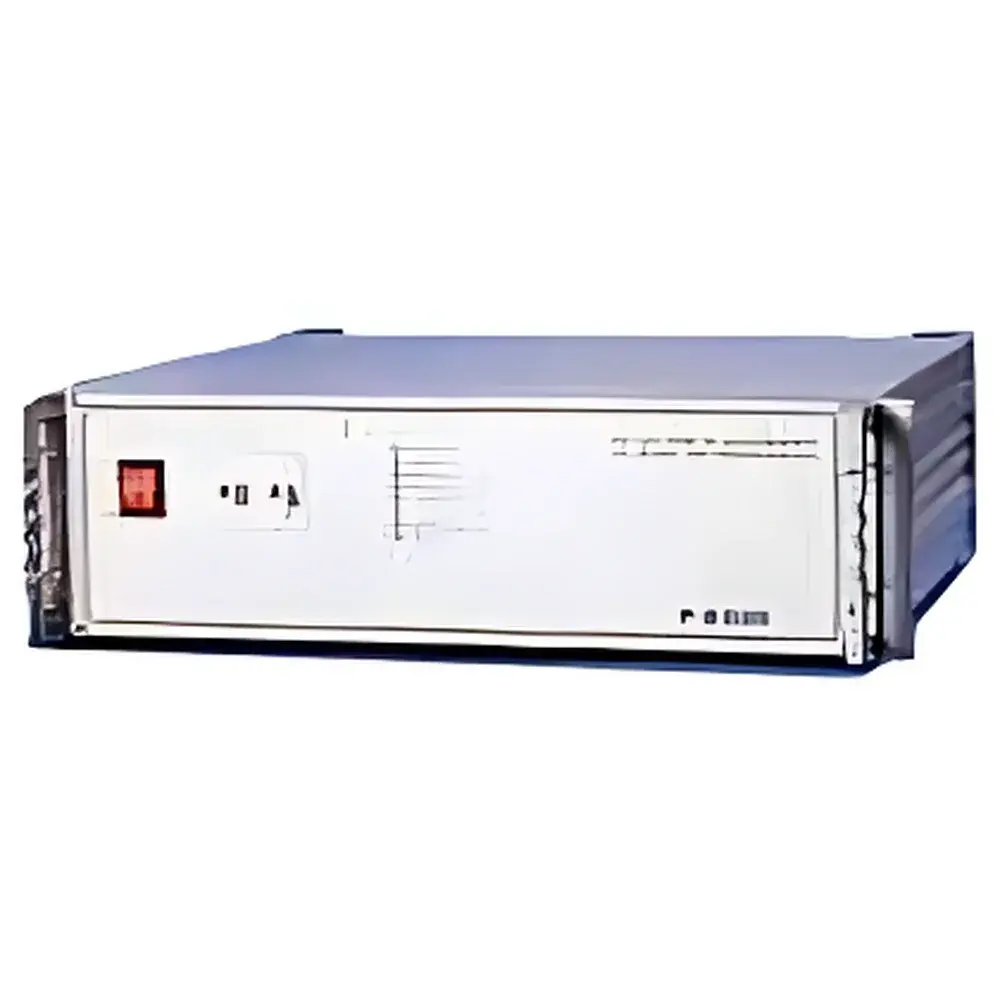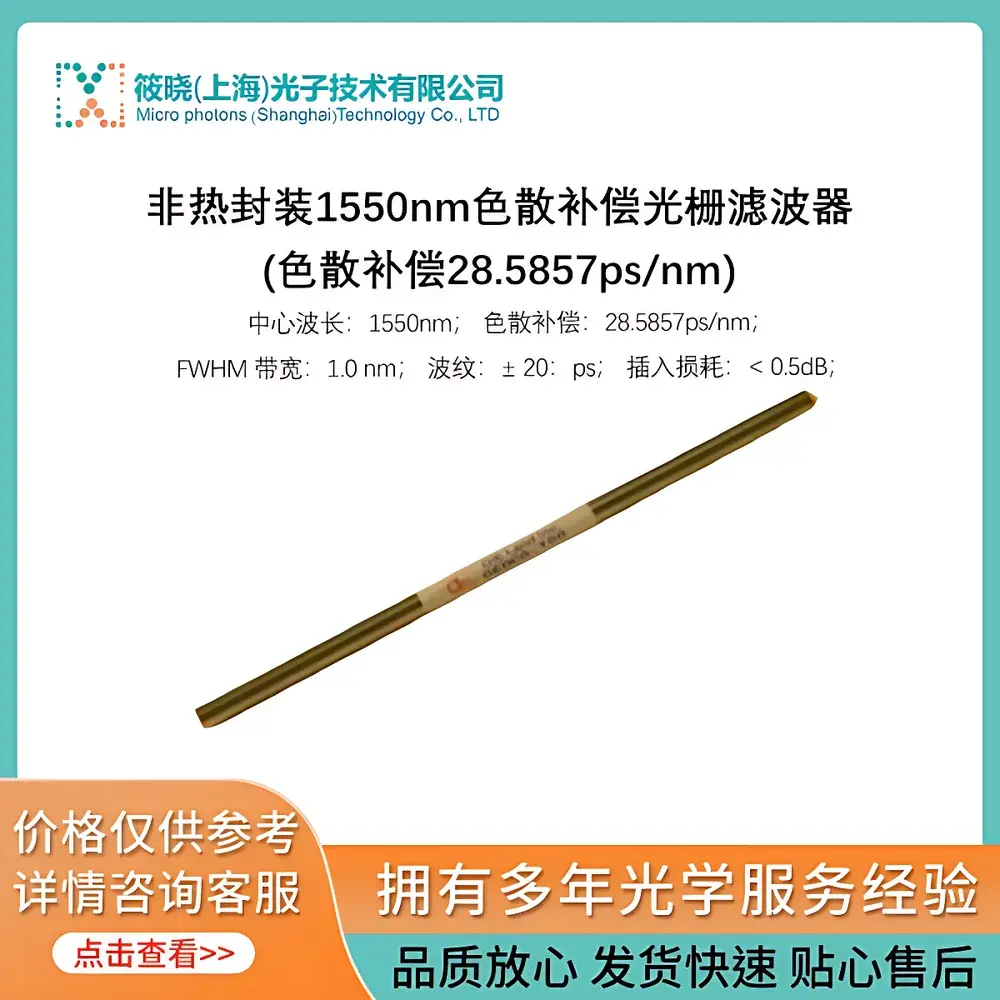
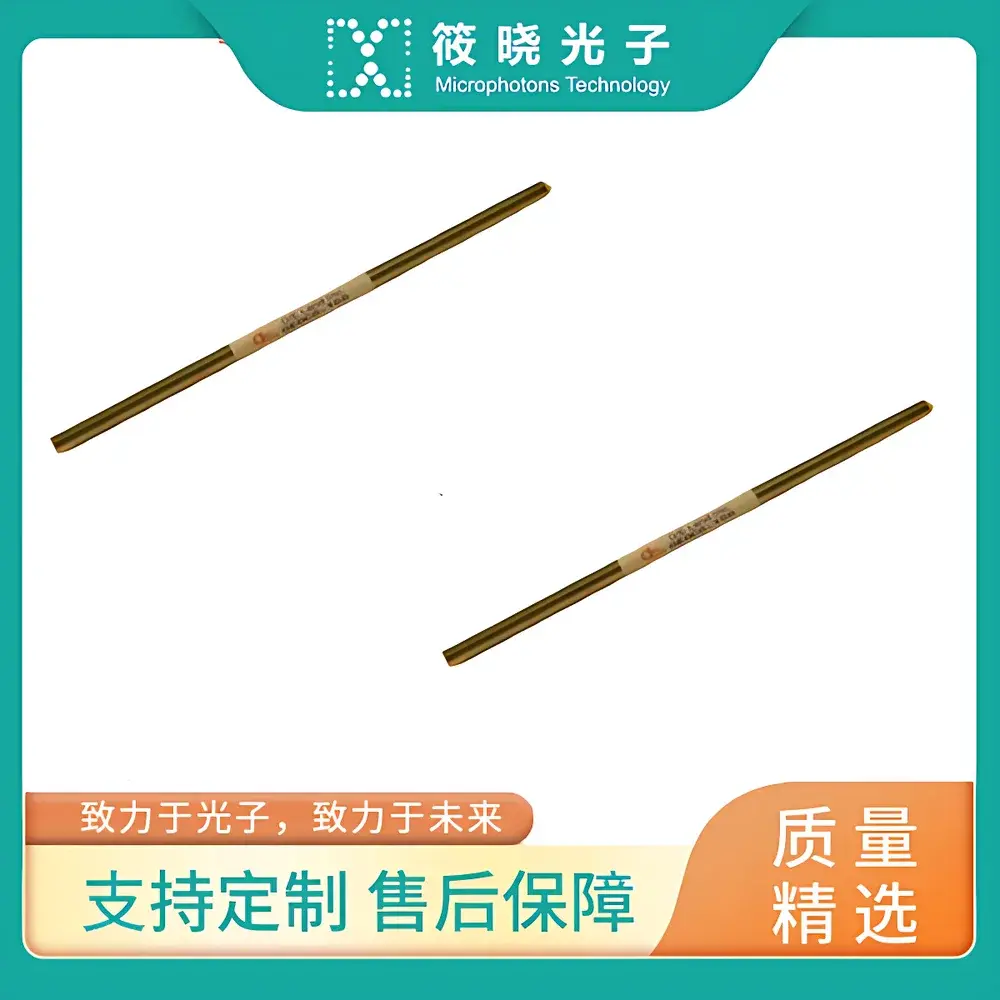
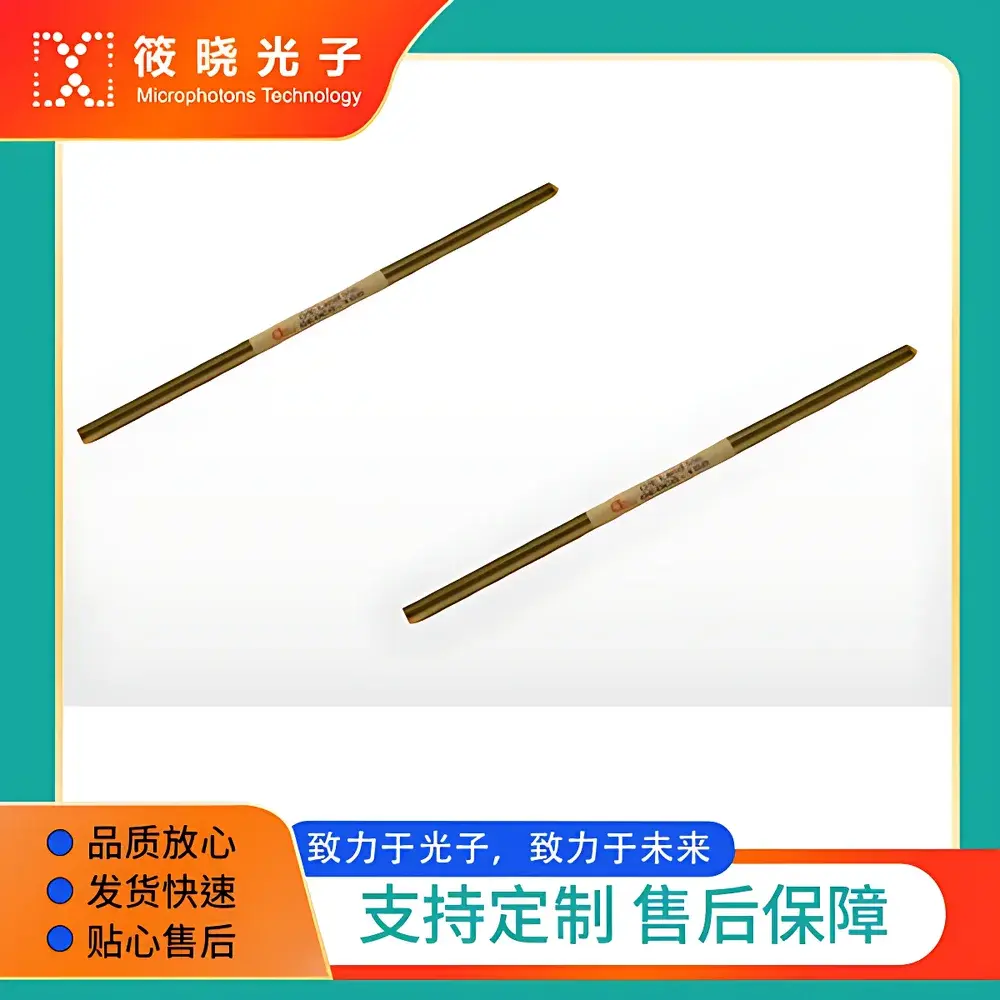
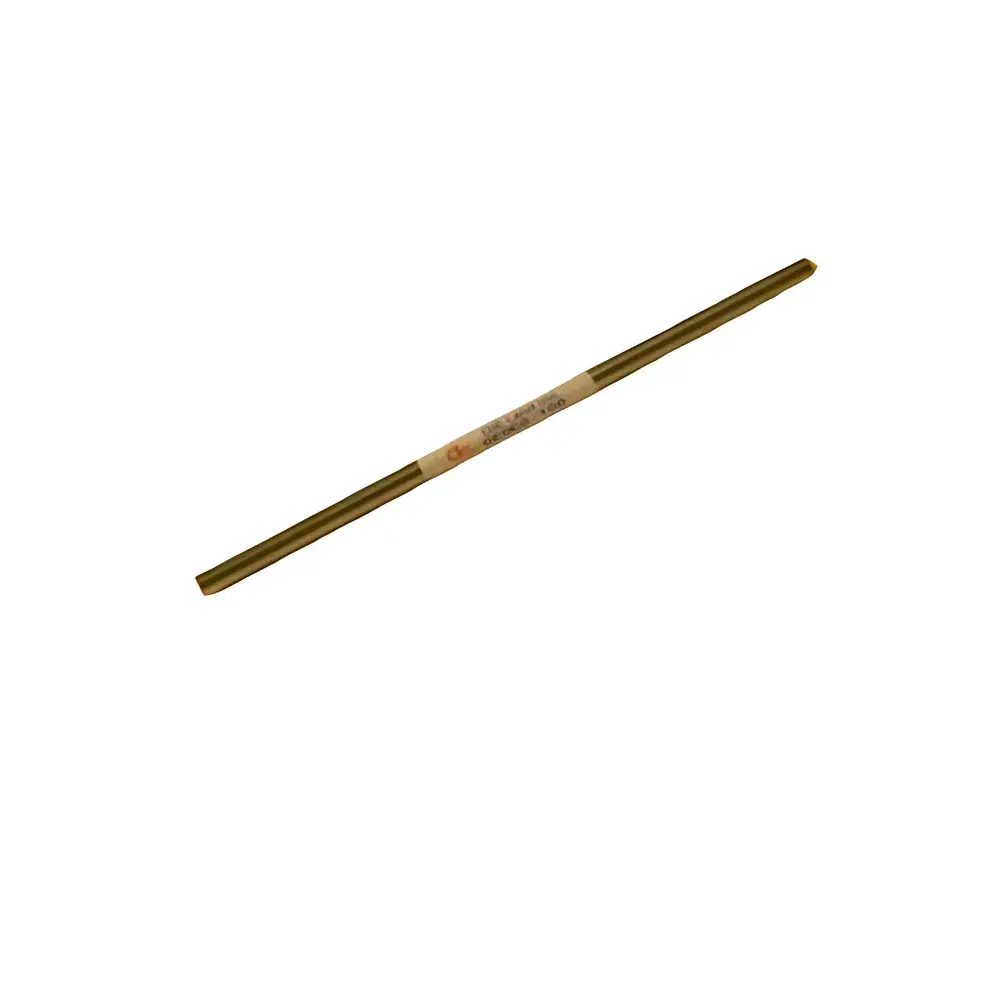
Microphotons OEDCG-100-28 Non-Thermal Packaging 1550 nm Dispersion Compensation Grating Filter
| Brand | Microphotons |
|---|---|
| Origin | Canada |
| Manufacturer Type | Manufacturer |
| Origin Category | Imported |
| Model | OEDCG-100-28 |
| Price | Upon Request |
Overview
The Microphotons OEDCG-100-28 is a high-stability, non-thermal packaging dispersion compensation grating filter engineered for precise chromatic dispersion management in C-band optical communication systems operating at 1550 nm. Unlike thermally tuned or MEMS-based alternatives, this device leverages a monolithic, athermal grating structure fabricated using advanced lithographic and etching processes on low-expansion fused silica substrates. Its core function is to introduce a controlled, wavelength-dependent group delay—specifically calibrated to −28.5857 ps/nm—to counteract accumulated dispersion in single-mode fiber (SMF) links. The filter operates on the principle of angular dispersion via a high-line-density reflective diffraction grating, where incident light is spectrally resolved and recombined with phase compensation across the 1520–1570 nm band. Designed for integration into DWDM transceivers, optical add-drop multiplexers (OADMs), and coherent receiver front-ends, it delivers passive, drift-free compensation without active temperature control or power consumption—critical for space-constrained, low-power, and high-reliability telecom and datacom modules.
Key Features
- Non-thermal, athermal design eliminates dependency on thermo-electric coolers (TECs) or feedback loops—ensuring long-term stability under varying ambient conditions.
- Precisely engineered dispersion slope of −28.5857 ps/nm across the C-band (1520–1570 nm), traceable to NIST-traceable interferometric calibration protocols.
- High polarization-dependent loss (PDL) < 0.15 dB and insertion loss < 2.3 dB, optimized for low-noise signal paths in coherent detection architectures.
- Robust hermetic packaging compliant with Telcordia GR-1221-CORE and IEC 61300-2-4 environmental stress testing standards—including thermal cycling (−40 °C to +85 °C, 500 cycles) and humidity exposure (85 % RH, 1000 h).
- Input/output interfaces configured with FC/APC or SC/APC connectors (customizable), with return loss > 55 dB to minimize back-reflection in laser-coupled systems.
- Zero-power operation and no moving parts—supporting MTBF > 1 million hours per Telcordia SR-332 prediction methodology.
Sample Compatibility & Compliance
The OEDCG-100-28 is compatible with standard single-mode fiber (G.652.D) and polarization-maintaining fiber (PANDA or Bow-tie) when integrated via collimated free-space coupling or pigtailed configurations. It meets RoHS Directive 2011/65/EU and REACH Regulation (EC) No. 1907/2006 requirements. Device-level qualification includes compliance with ITU-T G.694.1 (DWDM grid), IEC 61280-2-9 (optical attenuation measurement), and IEC 61300-2-1 (vibration testing). For laboratory validation, the filter supports alignment verification per ISO/IEC 17025-accredited procedures when used with tunable lasers and optical spectrum analyzers (OSAs) meeting IEC 61282-12 specifications.
Software & Data Management
As a passive optical component, the OEDCG-100-28 does not incorporate embedded firmware or digital interfaces. However, its performance data—including spectral response, group delay vs. wavelength, and polarization extinction ratio—is delivered in standardized .s4p (touchstone) and .csv formats compatible with industry simulation tools such as Lumerical INTERCONNECT, OptiSystem, and VPItransmissionMaker. Calibration reports include full uncertainty budgets per GUM (JCGM 100:2018) and are archived with unique serial-number traceability. For customers implementing automated test systems (ATE), Microphotons provides API-accessible metadata via secure FTP or HTTPS endpoints—enabling integration into LabVIEW, Python-based CI/CD pipelines, and MES platforms compliant with ISA-95 and FDA 21 CFR Part 11 audit trail requirements.
Applications
- Dispersion compensation in 100G/400G ZR and Open ROADM-compliant coherent transceivers.
- Pre-compensation in ultra-long-haul terrestrial and submarine repeaterless links.
- Chirp management in mode-locked fiber lasers and optical parametric oscillators (OPOs).
- Reference-grade dispersion tuning in metrology-grade optical coherence tomography (OCT) systems.
- Lab-scale characterization of nonlinear effects (e.g., SPM, XPM) in dispersion-engineered photonic circuits.
FAQ
Is the OEDCG-100-28 suitable for use in uncontrolled ambient environments?
Yes—the athermal mechanical design ensures dispersion stability within ±0.3 ps/nm over −40 °C to +85 °C without thermal regulation.
Can this filter be cascaded with other dispersion management elements?
Yes—its low PDL and high return loss enable stable cascading with FBGs, chirped mirrors, or DCF spools; system-level dispersion maps must be modeled using vector network analyzer (VNA)-derived S-parameters.
What documentation is provided with each unit?
Each shipment includes a Certificate of Conformance (CoC), full spectral calibration report (with uncertainty budget), mechanical drawings (STEP/IGES), and RoHS/REACH declarations.
Does Microphotons support custom dispersion profiles or center wavelengths?
Yes—custom variants (e.g., OEDCG-100-X.Y) are available under NDA with lead times aligned to wafer-level fabrication schedules; minimum order quantities apply.
Is the device qualified for space applications?
While not radiation-hardened by default, the base material stack and packaging architecture meet ESA ECSS-Q-ST-70-08C screening levels for low-earth orbit (LEO) missions; full qualification requires customer-defined TID and proton irradiation testing.