
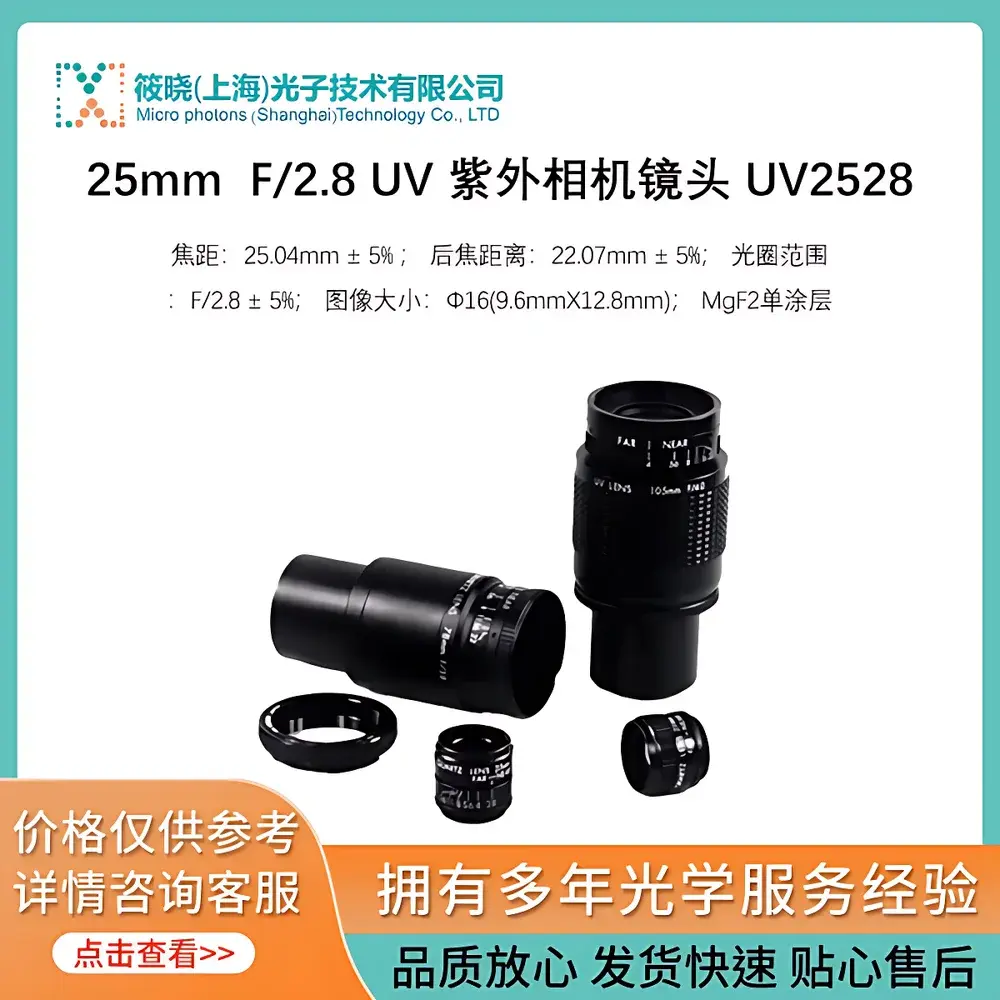
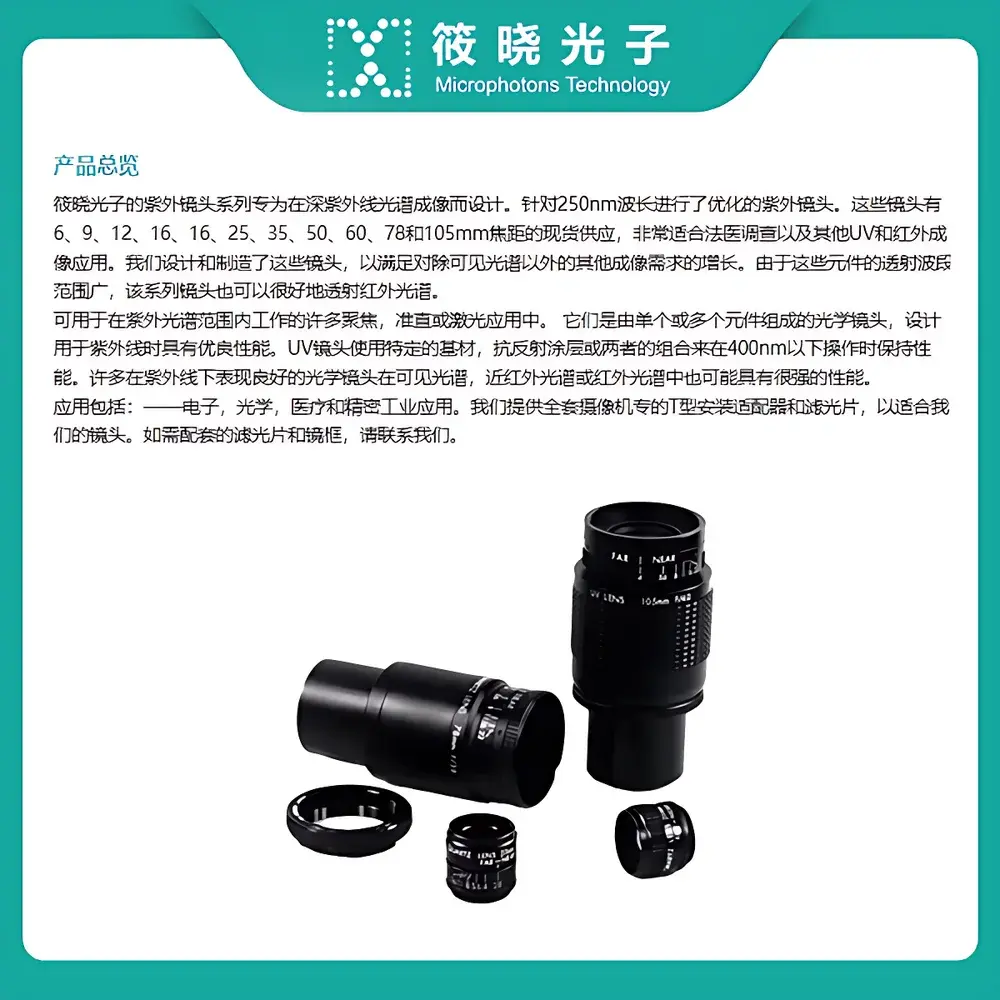
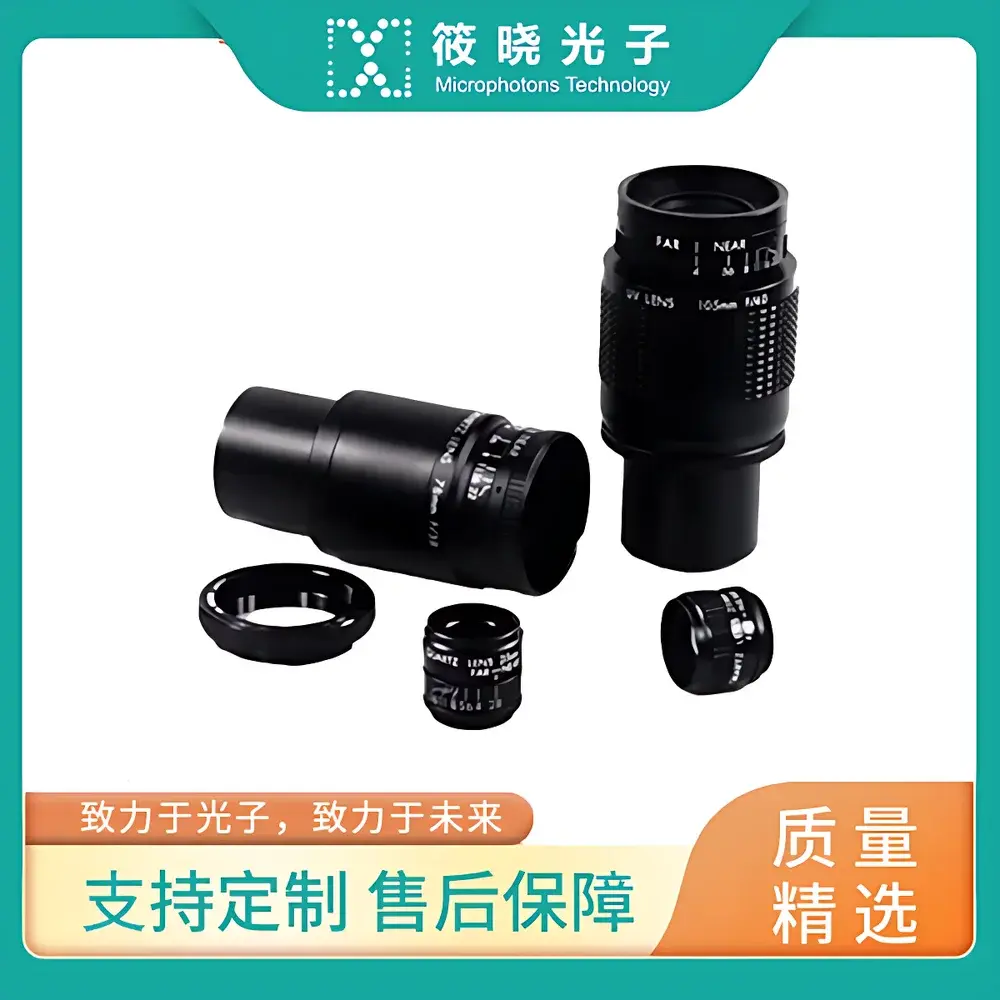
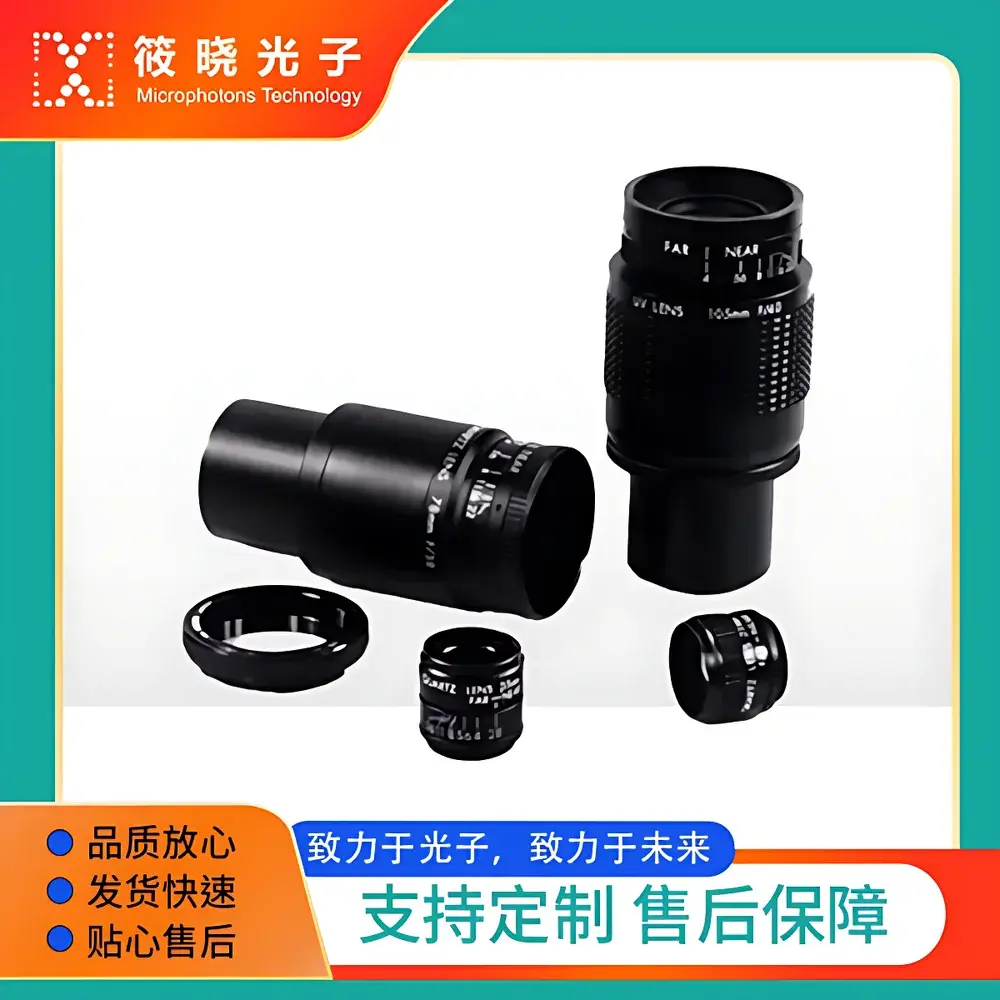
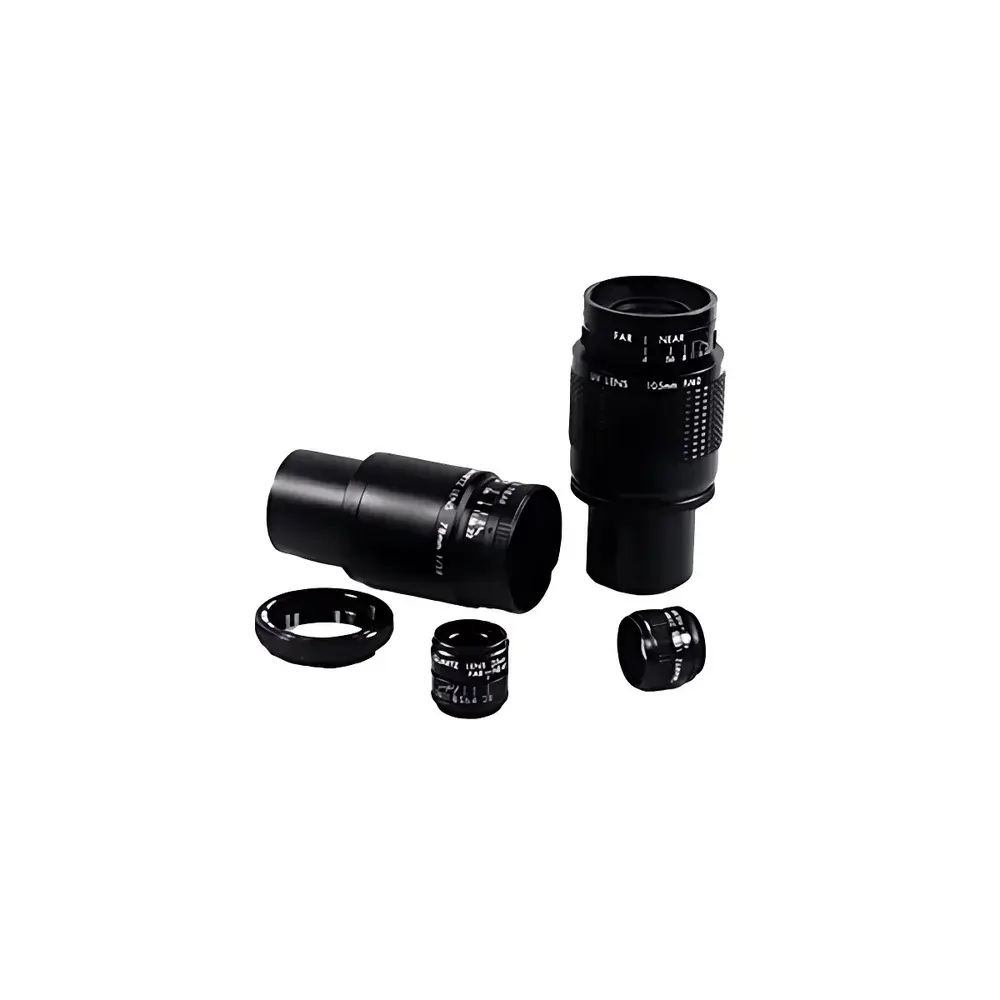
Microphotons UV2528B 25mm f/2.8 Ultraviolet Imaging Lens
| Brand | Microphotons |
|---|---|
| Origin | USA |
| Manufacturer Type | OEM Manufacturer |
| Product Category | Imported Optical Component |
| Model | UV2528B |
| Focal Length | 25.04 mm (at λ = 266 nm) |
| Back Focal Distance | 22.07 mm |
| Aperture Range | f/2.8–f/16 |
| Image Circle Diameter | Ø12.8 mm (1″ format, 9.6 mm × 12.8 mm) |
| Coating | Single-layer MgF₂ anti-reflection coating |
| Mount | C-mount |
| Lens Construction | Multi-element fused silica design optimized for deep-UV transmission |
| Operating Wavelength Range | 200–400 nm (peak transmission ≥85% at 266 nm) |
| Maximum Sensor Compatibility | 1″ (12.8 mm diagonal) |
| Diameter × Length | 30.0 mm × 28.9 mm |
Overview
The Microphotons UV2528B is a precision-engineered ultraviolet imaging lens designed for high-fidelity monochromatic and broadband imaging in the deep-ultraviolet (DUV) spectral region. Optimized for operation at 266 nm—commonly used in laser-induced fluorescence, semiconductor inspection, and UV lithography alignment—the lens employs multi-element optical architecture constructed entirely from synthetic fused silica (SiO₂), selected for its exceptional transmission below 200 nm and minimal solarization under prolonged UV exposure. Unlike standard visible-light lenses, the UV2528B avoids optical polymers, BK7 glass, or conventional AR coatings that degrade or exhibit strong absorption below 350 nm. Its single-layer magnesium fluoride (MgF₂) anti-reflection coating is deposited directly onto fused silica surfaces to maximize throughput across 200–400 nm while maintaining wavefront fidelity (RMS wavefront error < λ/8 @ 266 nm). The lens operates with fixed mechanical focus and manual aperture control, enabling stable, repeatable imaging in vacuum-compatible or nitrogen-purged environments typical of UV metrology labs and cleanroom-based inspection systems.
Key Features
- Fused silica optical elements with zero cemented interfaces—eliminates outgassing, birefringence, and UV-induced degradation
- Optimized MTF performance across 1″ format sensors (9.6 mm × 12.8 mm), supporting resolutions up to 50 lp/mm at Nyquist-limited sampling
- C-mount mechanical interface compliant with ANSI/ISO 10110-10 standards for interchangeability with industrial and scientific cameras
- Back focal distance of 22.07 mm ensures compatibility with standard UV-sensitive sCMOS and CCD sensors featuring protective window stacks
- Aperture range f/2.8–f/16 provides precise depth-of-field control without compromising UV throughput; calibrated iris mechanism enables reproducible exposure settings
- Designed for collimated or convergent beam paths—validated for use with UV LED, excimer laser, and deuterium lamp illumination sources
Sample Compatibility & Compliance
The UV2528B supports direct integration into ISO 17025-accredited UV imaging workflows. Its optical design conforms to ASTM E2742-21 (Standard Practice for Ultraviolet Imaging System Performance Verification) and aligns with ISO 10110-7 specifications for surface quality (scratch-dig 10–5) and transmitted wavefront distortion. The lens is suitable for GLP-compliant documentation when paired with traceable UV radiometric calibration sources (e.g., NIST-traceable deuterium lamps). No hazardous substances are used in manufacturing per RoHS Directive 2011/65/EU. All fused silica substrates meet MIL-O-13830A surface quality requirements and are certified free of heavy-metal dopants (e.g., Ce, Ti) that induce UV absorption bands.
Software & Data Management
While the UV2528B is a passive optical component, it is fully interoperable with industry-standard machine vision and scientific imaging software platforms—including HALCON, OpenCV, MATLAB Image Processing Toolbox, and Thorlabs’ Kinesis—and supports metadata tagging via EXIF extensions for wavelength-specific acquisition logs. When deployed in regulated environments (e.g., FDA-regulated pharmaceutical UV inspection), the lens may be included in instrument qualification protocols (IQ/OQ/PQ) as part of the optical train. Its mechanical stability ensures long-term repeatability without drift, satisfying audit requirements for 21 CFR Part 11-compliant electronic records where optical path consistency must be documented and verified.
Applications
- Semiconductor wafer defect detection using 266 nm laser scattering
- Forensic document analysis (e.g., ink differentiation, latent fingerprint enhancement)
- UV-fluorescence microscopy of biological specimens labeled with DAPI or Hoechst dyes
- Plasma diagnostics in fusion research (line emission imaging at 250–280 nm)
- UV-curable adhesive curing process monitoring and endpoint detection
- Aerosol particle sizing via UV Mie scattering in environmental monitoring systems
- Alignment optics for excimer laser beam delivery in micromachining stations
FAQ
Is the UV2528B compatible with vacuum chambers?
Yes—the all-fused-silica construction and absence of adhesives or organic coatings ensure ultra-low outgassing (per ASTM E595), making it suitable for UHV (<10⁻⁷ Torr) applications.
Can this lens be used with broadband UV sources such as deuterium lamps?
Yes—it maintains >82% average transmission across 200–400 nm, with peak transmission exceeding 90% at 266 nm and 300 nm.
Does the lens support autofocus or motorized aperture control?
No—it is a manually operated, fixed-focus lens intended for stable, calibrated setups where mechanical reproducibility is prioritized over automation.
What sensor formats does the 1″ image circle support?
It fully covers 1″ sensors (12.8 mm diagonal), including ON Semiconductor PYTHON, Hamamatsu ORCA-Fusion BT, and FLIR Blackfly S models equipped with UV-optimized quantum efficiency.
Is custom coating available beyond MgF₂?
Yes—multi-layer V-coatings optimized for narrowband operation (e.g., 213 nm, 248 nm, or 355 nm) can be specified upon request for enhanced spectral selectivity and reduced ghosting.





