
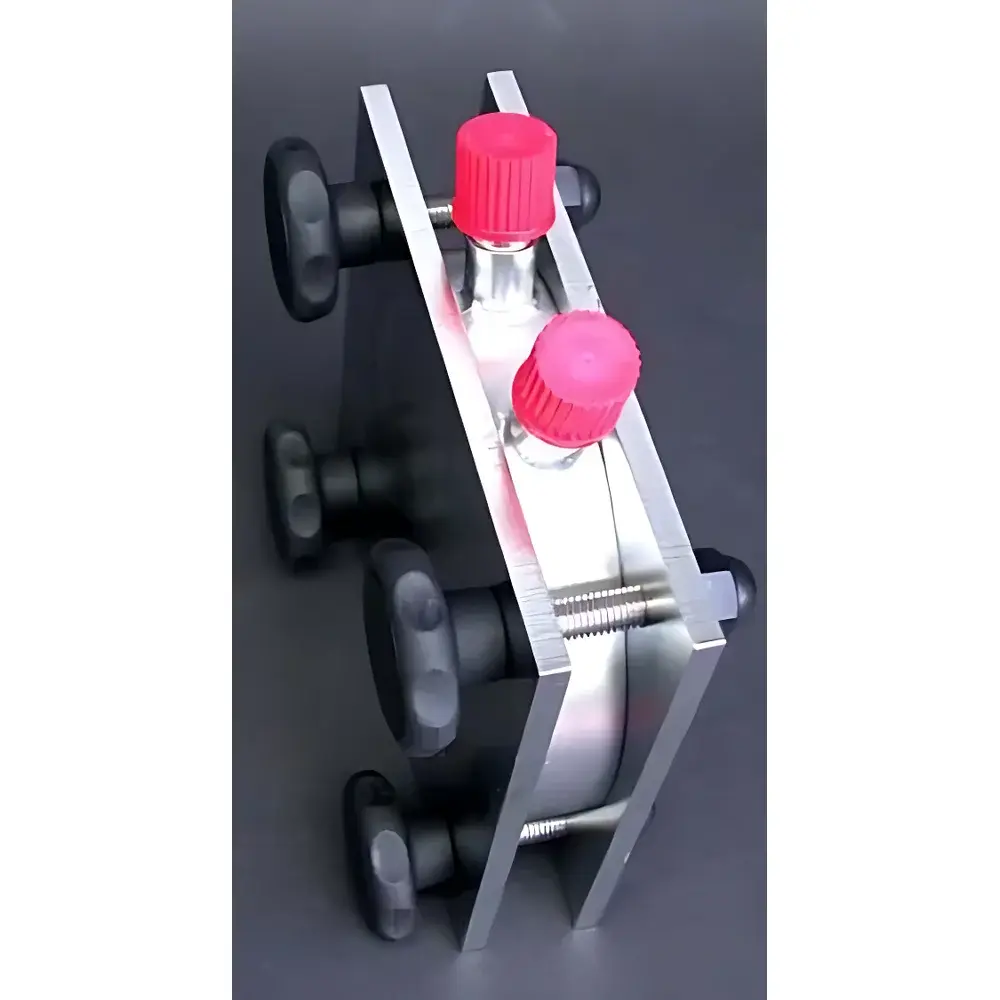
Migration Cell / Migration Chamber for Food Contact Materials Testing
| Origin | Imported |
|---|---|
| Manufacturer Type | Authorized Distributor |
| Model | Migration Cell |
| Quotation | Available Upon Request |
| Single-Side Contact Area | 0.05–2.0 dm² |
| Double-Side Contact Area | 0.1–4.0 dm² |
| Volume | 10–200 mL |
Overview
The Migration Cell is a precision-engineered laboratory device designed specifically for simulating and quantifying the migration of low-molecular-weight substances (e.g., plasticizers, antioxidants, monomers, and additives) from food contact materials (FCMs) into food simulants under standardized conditions. It operates in accordance with internationally recognized regulatory frameworks—including EU Regulation (EC) No. 10/2011, ISO 17767 (Parts 1–3), EN 13130-1 to -13, and ASTM F2825—enabling laboratories to conduct controlled, reproducible migration testing essential for compliance verification and safety assessment. The cell provides a defined interface between the test material (e.g., plastic film, coated paper, or laminated packaging) and a selected food simulant (e.g., 10% ethanol, 3% acetic acid, or olive oil), maintaining consistent temperature, contact time, and surface area exposure during incubation.
Key Features
- Modular design supporting both single-sided and double-sided migration configurations to reflect real-world packaging architectures (e.g., pouches vs. trays)
- Seven interchangeable cell variants covering a wide range of contact areas (0.05–2.0 dm² per side) and volumes (10–200 mL), enabling method flexibility across diverse FCM types and regulatory requirements
- Chemically resistant construction using high-purity borosilicate glass and PTFE-sealed stainless steel components to prevent interference or leaching during prolonged simulant exposure
- Compatible with standard incubation ovens and water baths; cells are stackable and labeled with engraved identification codes for traceability
- No internal moving parts or electronics—ensures mechanical robustness, long-term calibration stability, and minimal maintenance
Sample Compatibility & Compliance
The Migration Cell accommodates flat, flexible, or semi-rigid food contact materials up to 3 mm thickness, including polyolefins, PET, PS, PVC, aluminum foil composites, and coated cellulose-based substrates. Each configuration supports validated protocols for aqueous, acidic, alcoholic, and fatty food simulants as specified in EU Commission Regulation Annex I and ISO 17767-1. All cells are manufactured to meet GLP-compliant documentation standards, with individual serial numbers and optional certification reports available upon request. Test setups conform to the geometric constraints and exposure ratios mandated by EN 1186-1 and FDA Guidance for Industry: Use of Migration Studies in Food-Contact Notifications.
Software & Data Management
As a passive sample preparation tool, the Migration Cell does not integrate embedded software or digital interfaces. However, it is fully compatible with LIMS environments and electronic lab notebooks (ELNs) through standardized sample ID labeling and structured experimental metadata templates. When used in conjunction with analytical instrumentation (e.g., GC-MS, HPLC-UV, or ICP-MS), migration data workflows support 21 CFR Part 11-compliant audit trails when paired with validated instrument control software and secure data acquisition systems. Documentation packages include full traceability of cell calibration history, simulant lot numbers, incubation parameters, and analytical method references.
Applications
- Pre-market safety evaluation of novel packaging materials prior to regulatory submission (EU, FDA, Health Canada, MFDS)
- Routine quality control testing for migration limits of regulated substances (e.g., BPA, DEHP, BADGE, primary aromatic amines)
- Investigation of temperature- and time-dependent migration kinetics under accelerated storage conditions
- Validation of barrier layer performance in multilayer films and active packaging systems
- Supporting due diligence in supplier qualification programs aligned with IFS PACsecure and BRCGS Packaging Standards
FAQ
What simulant volumes are recommended for each cell size?
Simulant volume must fully cover the exposed surface without overflow; typical fill levels are 80–90% of nominal capacity. For example, the 50 mL cell uses ~40 mL simulant for 0.25 dm² exposure.
Can the same cell be reused across different simulants?
Yes—provided thorough cleaning with appropriate solvents (e.g., acetone followed by methanol) and validation via blank testing confirms absence of carryover.
Is validation documentation provided with the cells?
Each shipment includes a Certificate of Conformance stating compliance with dimensional tolerances per ISO 17767-2; optional UKAS-accredited calibration certificates are available for traceable area verification.
How are cells sterilized for microbiological migration studies?
Autoclaving at 121 °C for 20 min is permissible for glass/PTFE assemblies; stainless steel components require dry heat sterilization to avoid gasket degradation.
Do you offer custom cell geometries for non-standard packaging formats?
Yes—custom designs (e.g., curved-surface adapters or multi-compartment cells) can be developed under NDA for OEM or research collaboration projects.





