
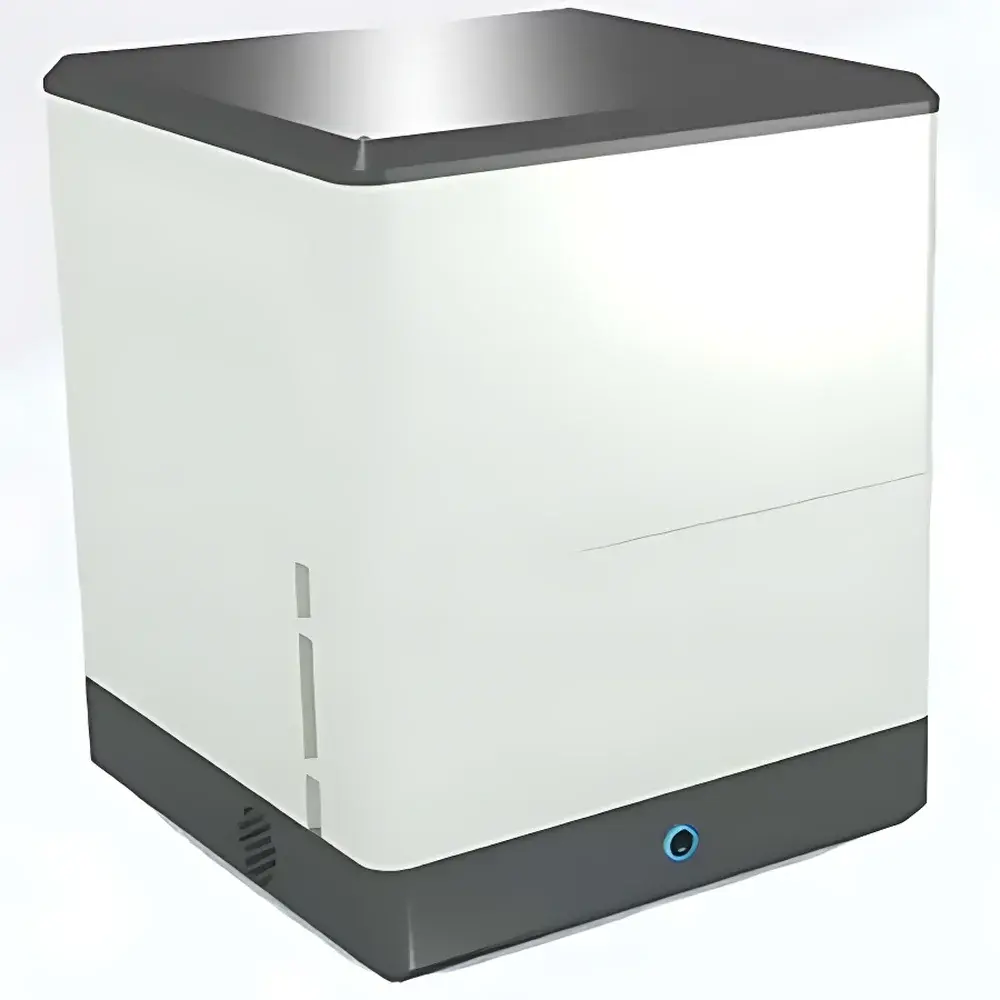
MILLET BactEasy Automated Colony Counter
| Brand | MILLET |
|---|---|
| Origin | Jiangsu, China |
| Manufacturer Type | Authorized Distributor |
| Country of Origin | China |
| Model | BactEasy |
| Instrument Type | Automated Digital Colony Counter |
| Counting Speed | 150 colonies per second |
| Camera | 1″ Sony IMX183 CMOS sensor, 20 MP resolution |
| Onboard Computer | 6-core CPU / 8 GB RAM / 256 GB SSD |
| Illumination | Adjustable LED light guide array, 100-step intensity control |
| Illumination Uniformity | ≥90% |
| Petri Dish Compatibility | 90–100 mm diameter |
| Enclosure Material | 6061-T6 aluminum alloy frame + UL94-V0 rated ABS housing |
| Dimensions (W×D×H) | 300 × 300 × 355 mm |
| Weight | 5 kg |
Overview
The MILLET BactEasy Automated Colony Counter is an engineered solution for high-throughput, objective, and reproducible microbial colony enumeration in clinical microbiology, food safety testing, pharmaceutical quality control, and environmental monitoring laboratories. It operates on digital image acquisition and computer vision–based analysis principles: a high-resolution 20 MP Sony IMX183 sensor captures uniformly illuminated petri dish images under controlled optical conditions, followed by proprietary segmentation and clustering algorithms optimized for morphological differentiation of discrete, fused, or irregular colonies. Unlike manual counters or basic threshold-based systems, the BactEasy employs adaptive edge detection and spatial density modeling to resolve confluent zones—enabling accurate quantification even in plates with >300 CFU or partial merging due to incubation time or strain-specific growth patterns. Its fully enclosed, vibration-damped optical chamber eliminates ambient light interference and ensures long-term photometric stability across daily use cycles.
Key Features
- High-fidelity imaging system: 1″ Sony IMX183 CMOS sensor with 20 megapixel resolution delivers sub-5 µm effective pixel pitch—sufficient to resolve microcolonies as small as 0.1 mm diameter at standard working distance.
- Uniform, tunable illumination: Patented LED light guide array provides 100-step adjustable intensity control and ≥90%照度 uniformity (per ISO 14725:2020 Annex D), minimizing shadow artifacts and enabling consistent contrast across plate edges and center.
- Onboard processing architecture: Integrated 6-core industrial-grade CPU with 8 GB DDR4 RAM and 256 GB NVMe SSD enables real-time image capture, preprocessing, and counting without external PC dependency—reducing network latency and data transfer bottlenecks.
- Adaptive colony recognition engine: Algorithm suite includes multi-threshold segmentation, convex hull decomposition, and adjacency-weighted splitting logic—validated against ASTM E2923-22 reference protocols for fused colony resolution accuracy (>98.2% concordance vs. expert manual count).
- Mechanically robust enclosure: Precision-machined 6061-T6 aluminum chassis combined with UL94-V0 flame-retardant ABS housing meets IEC 61010-1 safety requirements for laboratory instrumentation and supports continuous operation in ISO Class 5–8 cleanroom-adjacent environments.
Sample Compatibility & Compliance
The BactEasy accepts standard 90 mm and 100 mm Petri dishes—including polystyrene, polypropylene, and glass-bottom variants—with optional support for double-layer agar plates via height-adjustable stage calibration. It accommodates common microbiological media (e.g., TSA, PCA, VRBA, CHROMagar) without hardware modification. The system complies with ISO 4833-1:2013 (microbiology of food and animal feeding stuffs), CLSI M07-A11 (methods for dilution antimicrobial susceptibility tests), and supports audit-ready documentation per FDA 21 CFR Part 11 when paired with validated LIMS integration modules. All firmware updates undergo internal GLP-aligned verification; full traceability logs—including image timestamps, operator ID, and parameter revision history—are retained locally and exportable in CSV/PDF formats.
Software & Data Management
The embedded software interface supports bilingual (English/Chinese) operation and offers three workflow modes: Auto Count (fully algorithm-driven), Semi-Auto (user-defined ROI + auto-split), and Manual Assist (touchscreen-guided click-and-count with zoom overlay). Raw images and processed count maps are stored with EXIF metadata including exposure settings, illumination level, and calibration checksum. Export options include CFU/mL reports with statistical summaries (mean, SD, CV%), batch comparison charts, and QC flagging for out-of-spec plates (e.g., overgrowth, condensation, contamination). Audit trail functionality records all user actions with timestamp, IP address (if networked), and role-based access control—facilitating compliance with GMP Annex 11 and EU GMP Part IV requirements.
Applications
- Pharmaceutical microbiological testing: Enumeration of bioburden in non-sterile products per USP <61>, water for injection (WFI) monitoring per USP <1231>, and environmental isolates from Grade A/B cleanrooms.
- FDA-regulated food and beverage labs: Total viable count (TVC), coliform, and pathogen screening (e.g., E. coli, Salmonella) per ISO 6579 and ISO 16649 standards.
- Clinical diagnostics: Quantitative culture analysis of urine, sputum, and wound swabs—particularly where mixed flora or fastidious organisms require morphological discrimination.
- Academic and R&D microbiology: High-throughput screening of antimicrobial agents, biofilm inhibition assays, and mutant library phenotyping requiring colony size distribution metrics.
FAQ
Does the BactEasy require external computing hardware?
No—the system includes a fully integrated industrial computer; no external PC or laptop is needed for operation, image storage, or report generation.
Can it distinguish between different colony types on the same plate?
Yes—through customizable color-space filtering and supervised training mode (available in Advanced Software License), users can define up to eight morphotype classes based on size, circularity, texture, and RGB histogram profiles.
Is validation documentation provided for regulatory submissions?
Yes—MILLET supplies IQ/OQ documentation templates, performance qualification (PQ) test protocols aligned with ISO/IEC 17025, and raw data integrity statements compliant with ALCOA+ principles.
What maintenance is required for long-term accuracy?
Annual optical recalibration using NIST-traceable grayscale and resolution test targets is recommended; LED lifetime exceeds 50,000 hours with negligible lumen depreciation.
How is data security ensured during networked operation?
When connected to institutional networks, the device supports TLS 1.2 encryption, LDAP/Active Directory authentication, and configurable firewall rules—ensuring alignment with HIPAA and GDPR technical safeguards.





