Millipore Scepter 3.0 Handheld Cell Counter
| Brand | Millipore |
|---|---|
| Origin | USA |
| Model | Scepter 3.0 |
| Measurement Time | ≤30 s per sample |
| Sample Volume | 5 µL |
| Cell Size Detection Range | 10–30 µm |
| Cell Concentration Range | 1×10⁴–1×10⁷ cells/mL |
| Throughput | Up to 100 samples per day |
| Principle | Electrical Impedance (Coulter Principle) |
| Compliance | Designed for GLP-compliant workflows |
Overview
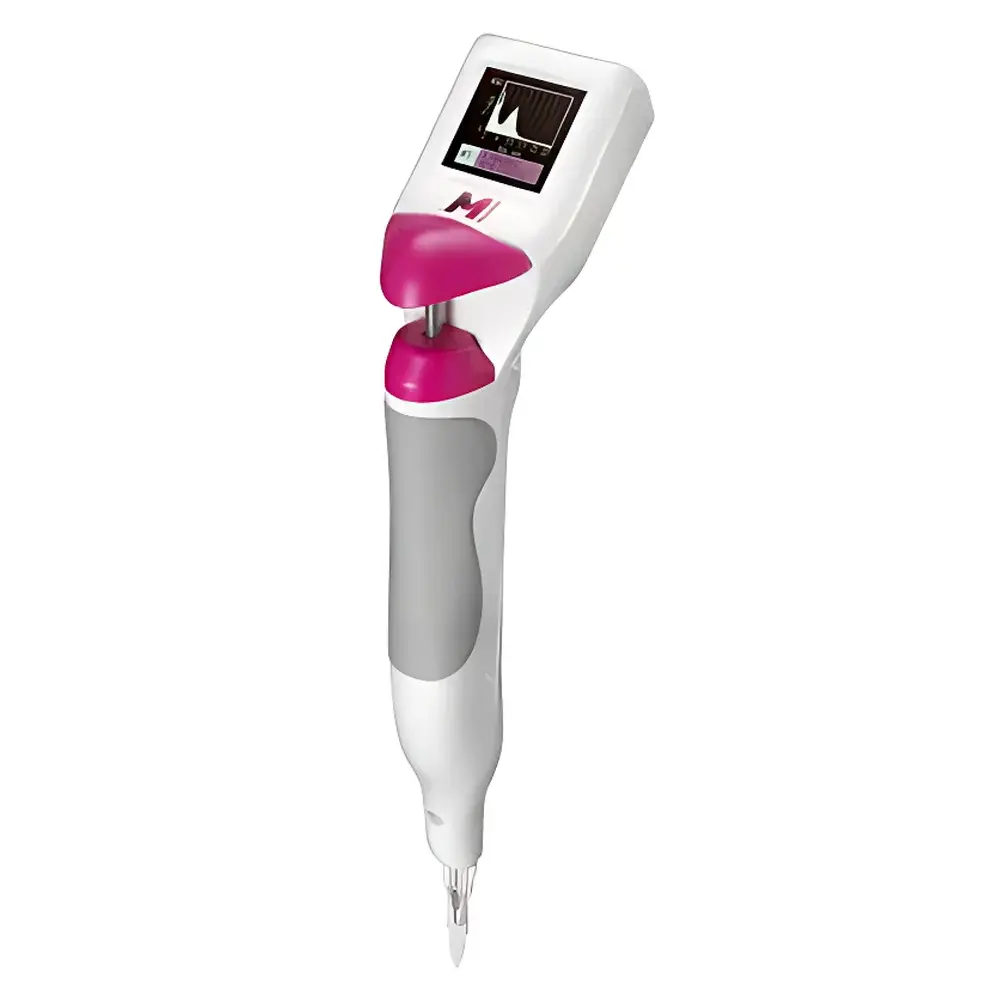
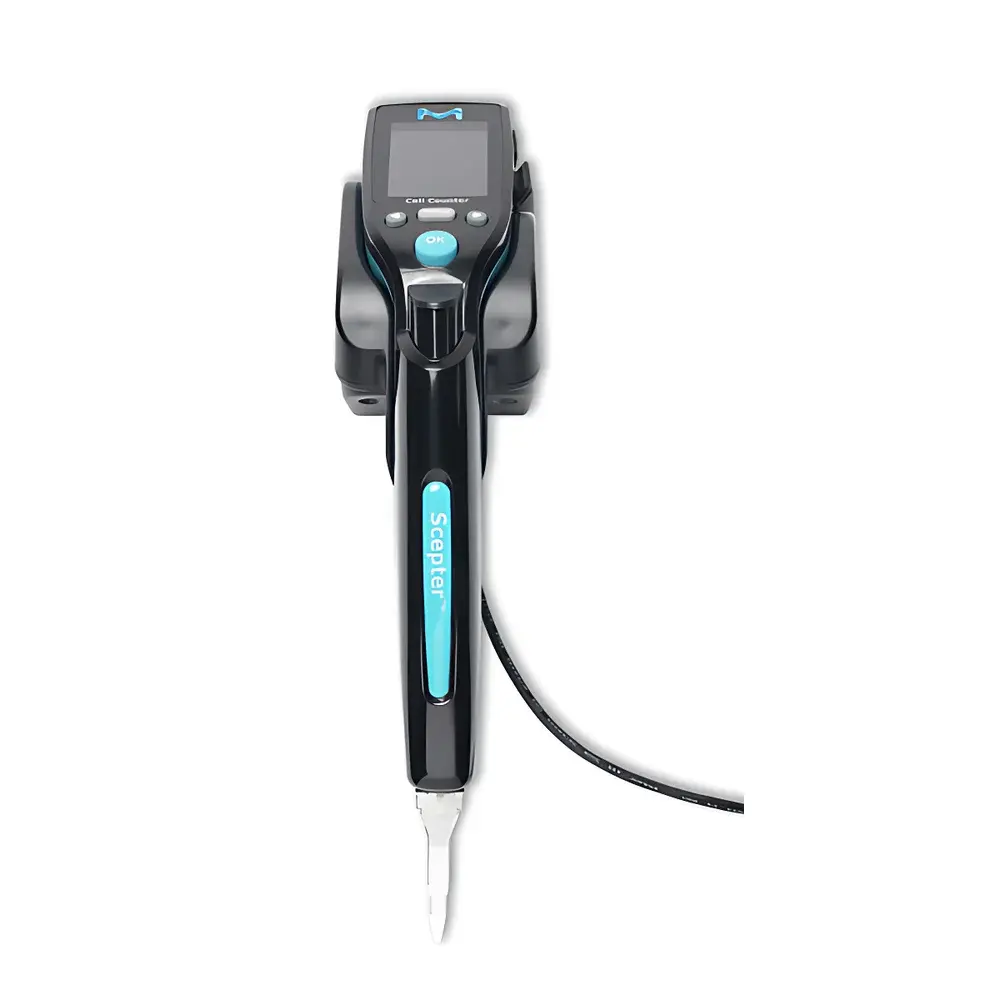
The Millipore Scepter 3.0 Handheld Cell Counter is an engineered solution for rapid, operator-independent cell quantification in routine and research-grade cell culture laboratories. It operates on the Coulter principle—measuring changes in electrical impedance as individual cells pass through a microfluidic sensing aperture—enabling precise, label-free enumeration of viable and non-viable cells without reliance on optical contrast, staining, or subjective thresholding. Unlike image-based counters, which suffer from focus drift, debris misclassification, and user-dependent gating, the Scepter 3.0 delivers high reproducibility across operators, instruments, and timepoints by virtue of its physics-based detection modality. Its handheld form factor integrates a calibrated microfluidic cartridge, embedded electronics, and a high-resolution OLED display into a single, sterilizable unit—designed explicitly for seamless operation inside biosafety cabinets and laminar flow hoods.
Key Features
- Label-free, reagent-free counting: Eliminates need for trypan blue or fluorescent dyes, reducing assay variability and biosafety handling requirements.
- Microfluidic Coulter sensing: Uses a precision-machined 70-µm aperture to resolve cell volume distribution with sub-microliter sample consumption (5 µL).
- Real-time histogram analysis: Displays live cell size distribution histograms with adjustable gate settings for viability assessment based on diameter thresholds.
- Ergonomic, glove-compatible design: Lightweight (≈220 g), IP54-rated housing with tactile buttons and angled display optimized for use under laminar airflow.
- Battery-powered portability: Rechargeable lithium-ion battery supports >8 hours of continuous operation; no external power supply required during benchtop use.
- On-device data storage: Stores up to 1,000 sample records with timestamp, operator ID, and full histogram metadata—exportable via USB-C to CSV or PDF.
Sample Compatibility & Compliance
The Scepter 3.0 accommodates suspension-adapted mammalian cell lines (e.g., CHO, HEK293, Jurkat), primary lymphocytes, hybridomas, and certain yeast strains within the 10–30 µm detection range. It is validated for use with standard culture media (e.g., DMEM, RPMI-1640) containing ≤10% FBS and common dissociation reagents (e.g., trypsin-EDTA, Accutase). No centrifugation or washing steps are required prior to measurement. The device meets electromagnetic compatibility (EMC) standards per IEC 61326-1 and is designed to support laboratory quality systems aligned with ISO/IEC 17025, USP <1043>, and FDA 21 CFR Part 11 when paired with controlled data export protocols and user access management.
Software & Data Management
Data generated by the Scepter 3.0 is stored internally with full traceability: each record includes date/time stamp, operator identifier (user-defined), sample ID, mean diameter (µm), concentration (cells/mL), coefficient of variation (%CV), and full-size histogram. Export is performed via encrypted USB-C transfer to Windows or macOS systems. Optional Scepter Software Suite (v2.1+) enables batch reporting, trend analysis across passages or bioreactor runs, and integration with LIMS via standardized CSV schema. Audit trail functionality logs all parameter changes, result deletions, and firmware updates—supporting GxP-aligned documentation practices.
Applications
- Cell passage decision-making: Quantify yield and viability post-trypsinization to standardize seeding density across experiments.
- Bioprocess monitoring: Track growth kinetics in shake flasks or small-scale bioreactors without offline centrifugation.
- Transfection efficiency assessment: Compare pre- and post-transfection counts to normalize reporter expression data.
- QC release testing: Verify cell concentration and size uniformity prior to cryopreservation or assay setup.
- Educational labs: Teach fundamental principles of impedance-based cytometry and statistical sampling in undergraduate life science curricula.
FAQ
Does the Scepter 3.0 require calibration before each use?
No—each disposable microfluidic cartridge is factory-calibrated and laser-verified. A single-point verification using the included control bead suspension is recommended weekly or after extended storage.
Can it distinguish between live and dead cells without dye?
It does not differentiate viability intrinsically; however, consistent size shifts associated with membrane integrity loss (e.g., swelling or shrinkage) can be used empirically to infer viability trends when correlated with orthogonal assays.
Is the device compatible with viscous or clumped samples?
Samples must be single-cell suspensions. Aggregates >30 µm will clog the aperture; gentle pipetting or filtration through a 40-µm mesh is advised prior to loading.
How is data integrity ensured during export?
All exported files include digital signatures and embedded metadata. When used with Scepter Software Suite, export events are logged with user credentials and timestamps, satisfying basic 21 CFR Part 11 record retention requirements.
What maintenance is required beyond cartridge replacement?
Routine cleaning involves wiping the exterior with 70% ethanol; aperture cleaning is automated via the built-in flush cycle after each measurement—no disassembly or service technician intervention is needed.