
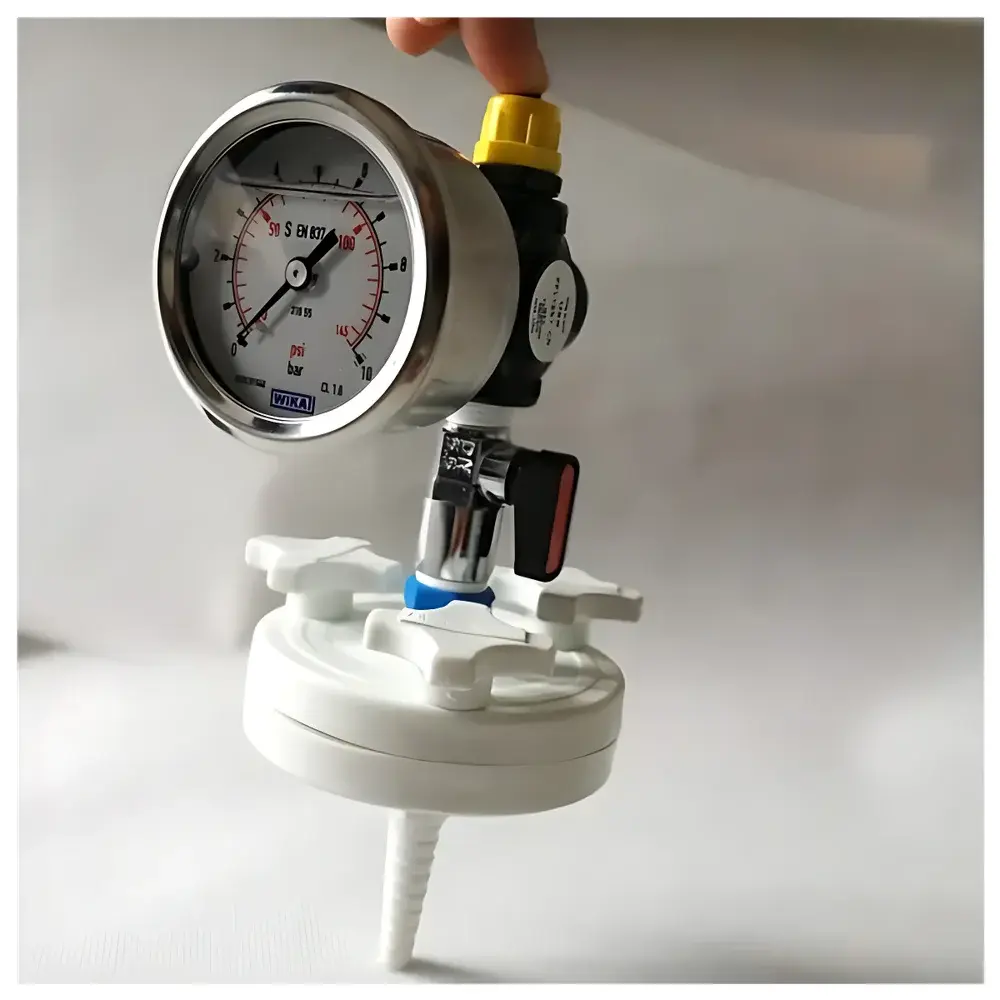
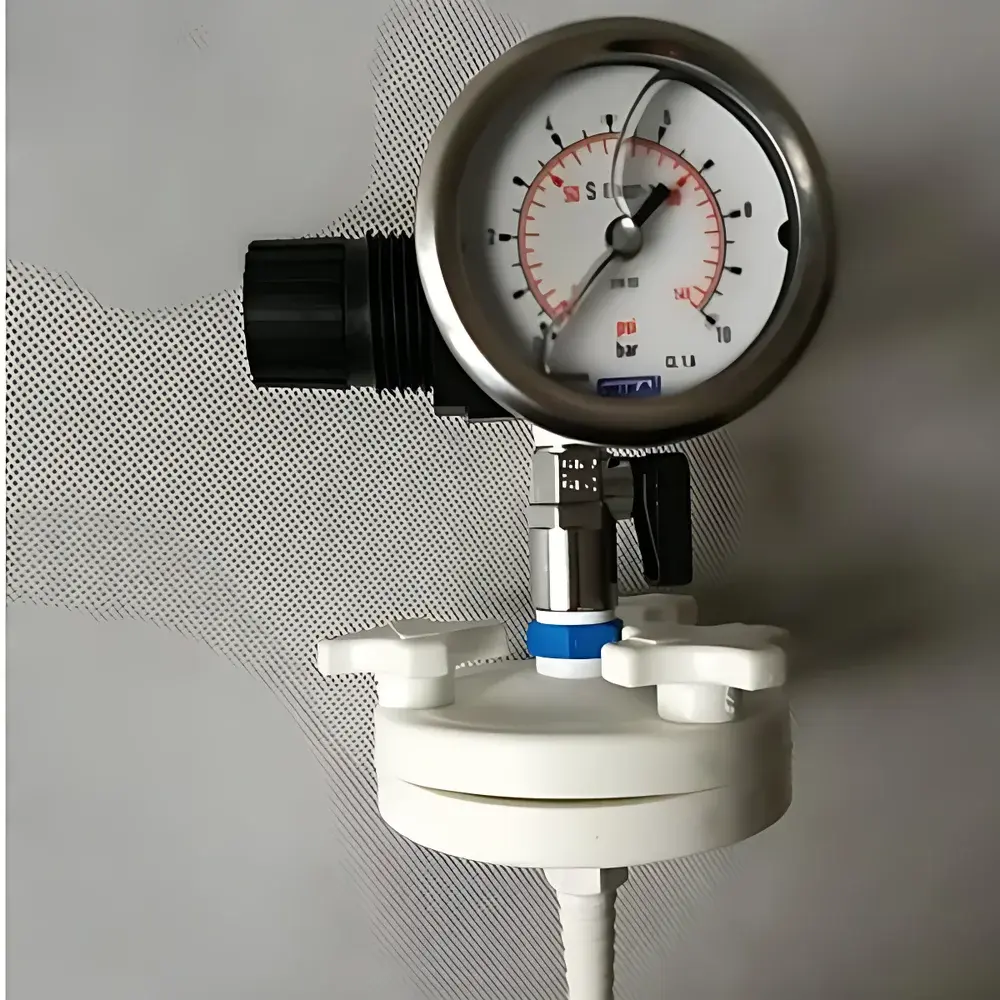
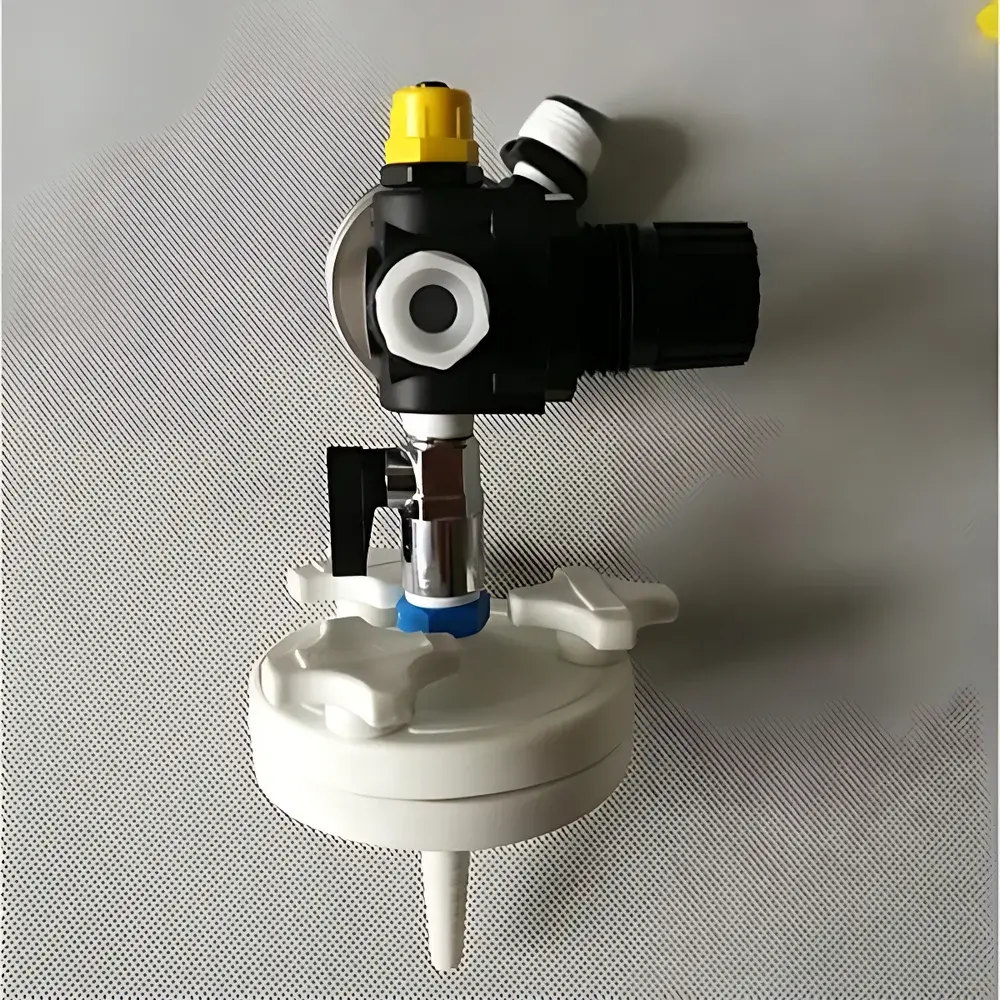
Millipore SDI Tester ZLFI00001 – Silt Density Index Analyzer for Reverse Osmosis Feed Water Assessment
| Brand | Starwood |
|---|---|
| Model | ZLFI00001 |
| Membrane Diameter | 47 mm |
| Membrane Pore Size | 0.45 µm |
| Test Pressure | 2.0–2.2 bar (29–32 psi) |
| SDI Calculation Interval | 0–5–15 min |
| Compliance | ASTM D4189-95 |
| Includes | Pressure Regulator, 47 mm Filter Holder, ASTM-Compliant Mixed Cellulose Ester (MCE) Membranes |
| Accessories Required | 500 mL Graduated Cylinder (±5 mL graduation), Stopwatch (±0.2 s resolution) |
Overview
The Millipore SDI Tester ZLFI00001 is a precision-engineered manual silt density index (SDI) analyzer designed for quantitative assessment of colloidal and particulate fouling potential in feed water streams destined for reverse osmosis (RO) and nanofiltration (NF) membrane systems. SDI quantifies the rate of flux decline across a standardized 0.45 µm mixed cellulose ester (MCE) membrane under constant pressure (2.0–2.2 bar), as defined by ASTM D4189-95. This empirical index provides a reproducible, field-deployable metric for evaluating pre-treatment efficacy and predicting membrane fouling behavior. Unlike turbidity or particle count, SDI integrates both physical retention and time-dependent hydraulic resistance—making it uniquely suited for operational decision-making in desalination, pharmaceutical water systems, power plant makeup water, and semiconductor ultrapure water (UPW) facilities. The instrument’s modular architecture ensures compliance with GLP-aligned test protocols and supports traceable, auditable data collection when paired with documented procedural controls.
Key Features
- Integrated pressure regulation system with calibrated analog pressure gauge (range: 0–4 bar), enabling stable 2.0–2.2 bar test conditions per ASTM D4189-95.
- Dedicated 47 mm stainless-steel filter holder with O-ring sealed, two-part clamping mechanism—designed to eliminate bypass leakage and ensure uniform membrane seating.
- Supplied with a certified batch of ASTM-compliant mixed cellulose ester (MCE) membranes (0.45 µm pore size, 47 mm diameter), individually packaged to prevent contamination and moisture loss.
- Modular valve configuration (inlet shutoff, bleed port, flow control) permits rapid system priming, air removal, and repeatable start-of-test initiation.
- Vertical orientation design minimizes gravitational bias during filtration and aligns with standard laboratory practice for SDI testing.
- No external power, electronics, or software required—enabling operation in remote locations, mobile labs, or cleanroom environments where electromagnetic interference must be avoided.
Sample Compatibility & Compliance
The ZLFI00001 accepts untreated or pre-treated feed waters—including surface water, groundwater, clarified effluent, seawater pretreated with coagulation/flocculation, and recirculated process water—provided suspended solids concentration remains within the measurable range of the method (SDI ≤ 100). It is incompatible with viscous or highly emulsified samples that may occlude the 0.45 µm membrane instantaneously. All components comply with ISO 9001-certified manufacturing standards. The test procedure satisfies regulatory expectations for RO feed qualification under USP <1231> “Water for Pharmaceutical Purposes”, FDA 21 CFR Part 211 (cGMP for finished pharmaceuticals), and ISO 14644-1 cleanroom water monitoring guidelines. Membrane lot traceability, calibration certificate for pressure gauge (NIST-traceable), and full ASTM D4189-95 conformance documentation are available upon request.
Software & Data Management
As a fully manual, non-instrumented test platform, the ZLFI00001 does not incorporate embedded firmware or digital output. However, its design inherently supports structured data capture compatible with electronic lab notebooks (ELNs) and LIMS integration. Users record t₀, t₅, and t₁₅ manually using a stopwatch and graduated cylinder; SDI is calculated via the standardized formula: SDI = 100 × (tₐ − t₀) / (a × tₐ), where a = 5 or 15 minutes. To meet 21 CFR Part 11 requirements for audit trails, laboratories routinely document test parameters—including membrane lot number, operator ID, ambient temperature, sample source ID, and raw timing data—in controlled paper forms or validated ELN templates. Optional accessories (e.g., digital stopwatch with timestamp logging, barcode-scannable membrane packaging) facilitate alignment with GxP-compliant workflows.
Applications
- Pre-commissioning validation of multimedia filters, cartridge filters, and ultrafiltration (UF) systems prior to RO train startup.
- Routine monitoring of RO feed water quality in municipal desalination plants to trigger backwash cycles or coagulant dosage adjustments.
- Investigation of seasonal fouling trends in surface water intakes—correlating SDI spikes with algal blooms or sediment resuspension events.
- Verification of membrane integrity after cleaning-in-place (CIP) procedures by comparing pre- and post-CIP SDI values.
- Supporting root-cause analysis during RO performance degradation investigations—differentiating particulate fouling from scaling or biofouling mechanisms.
- Training tool for water treatment technicians on fundamental membrane fouling principles and ASTM-standardized test methodology.
FAQ
What is the maximum allowable SDI for RO feed water?
Most RO membrane manufacturers specify an SDI ≤ 5 as the upper operational limit for sustained system performance; values >5 indicate inadequate pretreatment and elevated risk of irreversible membrane fouling.
Why is a 0.45 µm membrane used instead of other pore sizes?
The 0.45 µm pore size was selected in ASTM D4189-95 because it preferentially captures colloids and hydrated organic aggregates—key contributors to RO membrane fouling—while permitting passage of most dissolved ions and low-MW organics that do not contribute to hydraulic resistance.
Can I reuse the SDI membrane for multiple tests?
No. ASTM D4189-95 mandates single-use membranes to prevent carryover contamination, residual flux memory, and inconsistent wetting characteristics that compromise result reproducibility.
What should I do if t₅ exceeds 5 × t₀?
Per ASTM guidance, this indicates severe fouling; the test is terminated early and reported as “SDI > 100” or “Out of Range”, signaling immediate pretreatment review and possible offline particle characterization.
Is vertical orientation strictly required during testing?
Yes. Deviation from vertical alignment introduces hydrostatic head variation across the membrane surface, violating the constant-pressure assumption of the ASTM method and introducing systematic error in flux decay measurement.







