
Minhope MH3010-E Dioxin Sampling Probe for Stack Emissions
| Brand | Minhope |
|---|---|
| Model | MH3010-E |
| Construction Material | Titanium Alloy Probe Body |
| Heating Zones | Dual-Zone (Probe Tip & Filter Holder) |
| Compliance | HJ 77.2–2008, HJ/T 365–2007, GB/T 16157–1996, JJG 680–2007, JJG 968–2002 |
| Application | Isokinetic Sampling of Gas-Phase and Particulate-Bound Dioxins/Furans from Municipal Solid Waste Incinerators and Hazardous Waste Combustors |
| Operating Temperature Range | Ambient to 250 °C (adjustable, ±1 °C stability) |
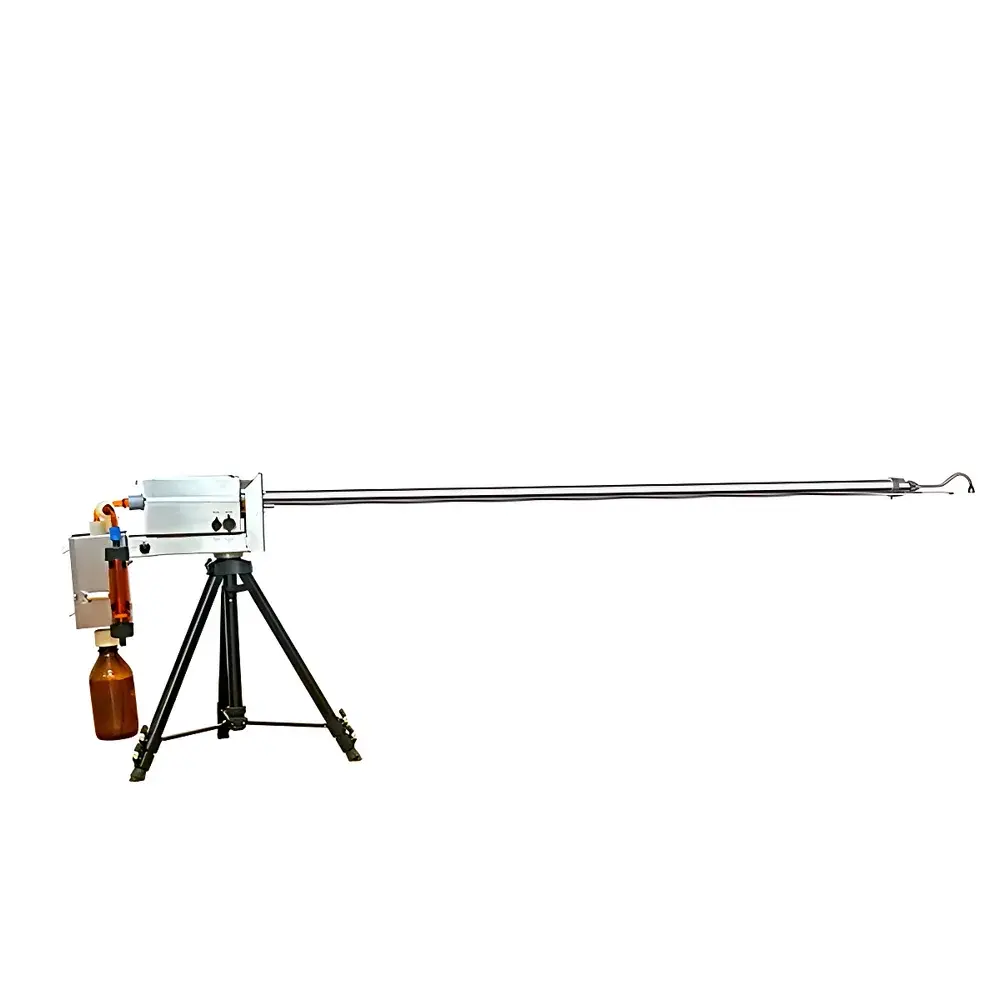
| Probe Length | Standard 1.2 m (custom lengths available) |
| Filter Holder | Quartz Fiber Filter + Polyurethane Foam (PUF) Sorbent Trap |
| Pitot Tube | Rotatable, Stainless Steel, Integrated with Differential Pressure Sensor |
| Data Interface | Analog 4–20 mA outputs for temperature, velocity, and static/dynamic pressure |
Overview
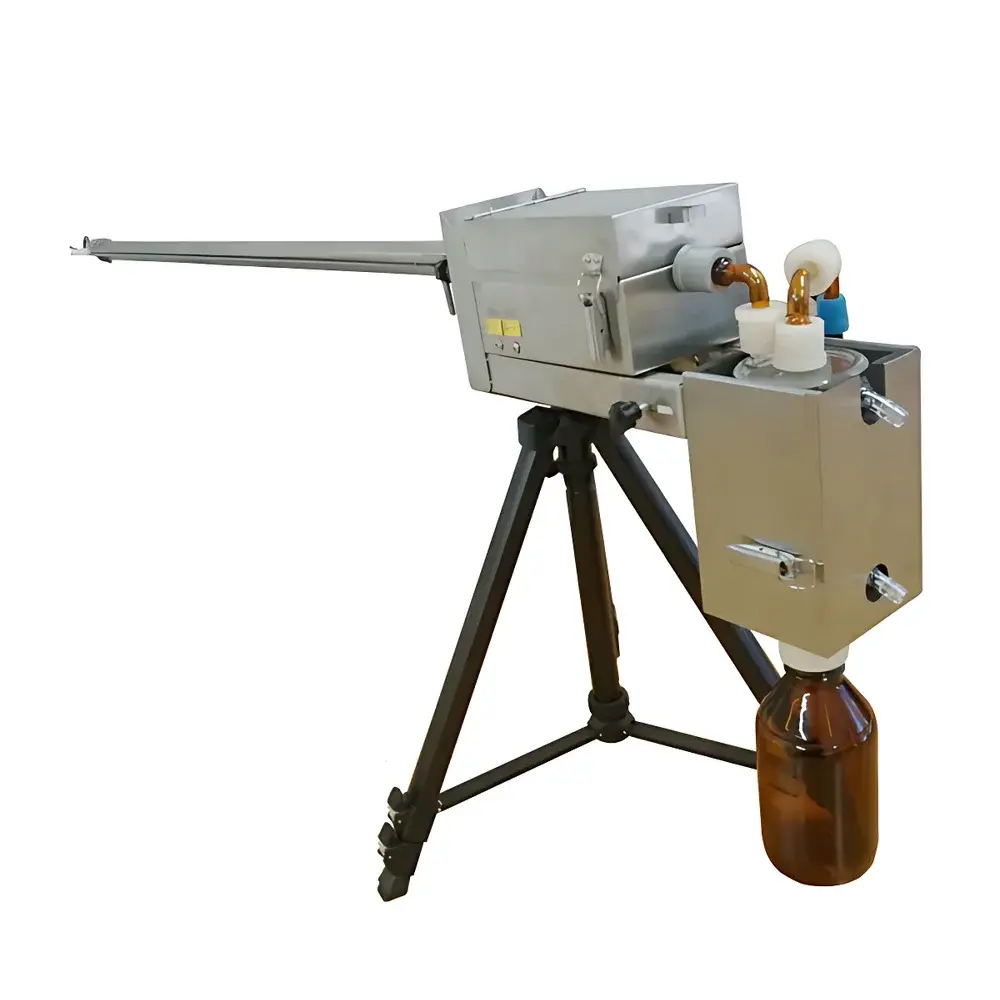
The Minhope MH3010-E Dioxin Sampling Probe is a field-deployable, isokinetic stack sampling system engineered specifically for the quantitative collection of dioxin and furan congeners—both particle-bound and gas-phase—in high-temperature flue gas streams. Designed in strict accordance with Chinese environmental monitoring standards including HJ 77.2–2008 (determination of dioxins in ambient air and exhaust gas by isotope-dilution HRGC-HRMS), HJ/T 365–2007 (monitoring technical specifications for dioxin emissions from hazardous waste incineration), and GB/T 16157–1996 (sampling methodology for particulate matter and gaseous pollutants from stationary sources), the MH3010-E ensures regulatory-compliant sample integrity across diverse combustion facilities. Its operational principle relies on real-time velocity-matched sampling: the integrated rotatable Pitot tube continuously measures dynamic and static pressure differentials to calculate stack gas velocity, while the dual-zone heating system maintains the probe tip and filter/PUF assembly at precisely controlled temperatures (up to 250 °C) to prevent condensation, adsorption loss, or thermal degradation of thermally labile dioxin species.
Key Features
- Titanium alloy probe body: Offers exceptional corrosion resistance in acidic, chloride-rich flue gases typical of municipal solid waste (MSW) incineration, while reducing overall weight for improved operator ergonomics during extended field deployments.
- Dual independent heating zones: Separate PID-controlled thermal regulation for the sampling nozzle (pre-filter zone) and the quartz fiber filter + PUF sorbent trap ensures uniform thermal management without cold spots—critical for preserving the speciation profile of tetra- through octa-chlorinated dibenzo-p-dioxins/furans.
- Rotatable Pitot tube assembly: Enables accurate isokinetic sampling in both horizontal and vertical duct configurations without repositioning the entire probe; calibrated differential pressure transducers provide traceable velocity data required for volumetric flow normalization.
- Modular quick-connect design: Filter holder, heater sleeves, thermocouple ports, and Pitot manifold are mechanically isolated and tool-free detachable—facilitating rapid maintenance, cleaning, and method validation between sampling campaigns.
- Integrated temperature and velocity telemetry: Analog 4–20 mA outputs support direct interfacing with certified data acquisition systems (DAS) compliant with GLP/GMP audit requirements, enabling full traceability of sampling conditions per run.
Sample Compatibility & Compliance
The MH3010-E is validated for use with standard EPA Method 23-compatible sampling trains and fully compatible with HJ 77.2–2008 analytical workflows involving isotope dilution, Soxhlet extraction, multi-stage clean-up (acid silica, alumina, carbon columns), and HRGC-HRMS analysis. It supports simultaneous capture of particulate-phase dioxins on quartz filters (pre-baked at 500 °C) and vapor-phase congeners on polyurethane foam (PUF) plugs. All wetted materials—including O-rings, gaskets, and internal tubing—are selected for low extractables and thermal stability under prolonged exposure to >200 °C flue gas. The system meets mechanical and metrological requirements outlined in JJG 680–2007 (particulate sampler verification) and JJG 968–2002 (gas analyzer calibration), and conforms to structural and performance criteria in HJ/T 48–1999 and GB 18485–2014 for MSW incinerator emission monitoring.
Software & Data Management
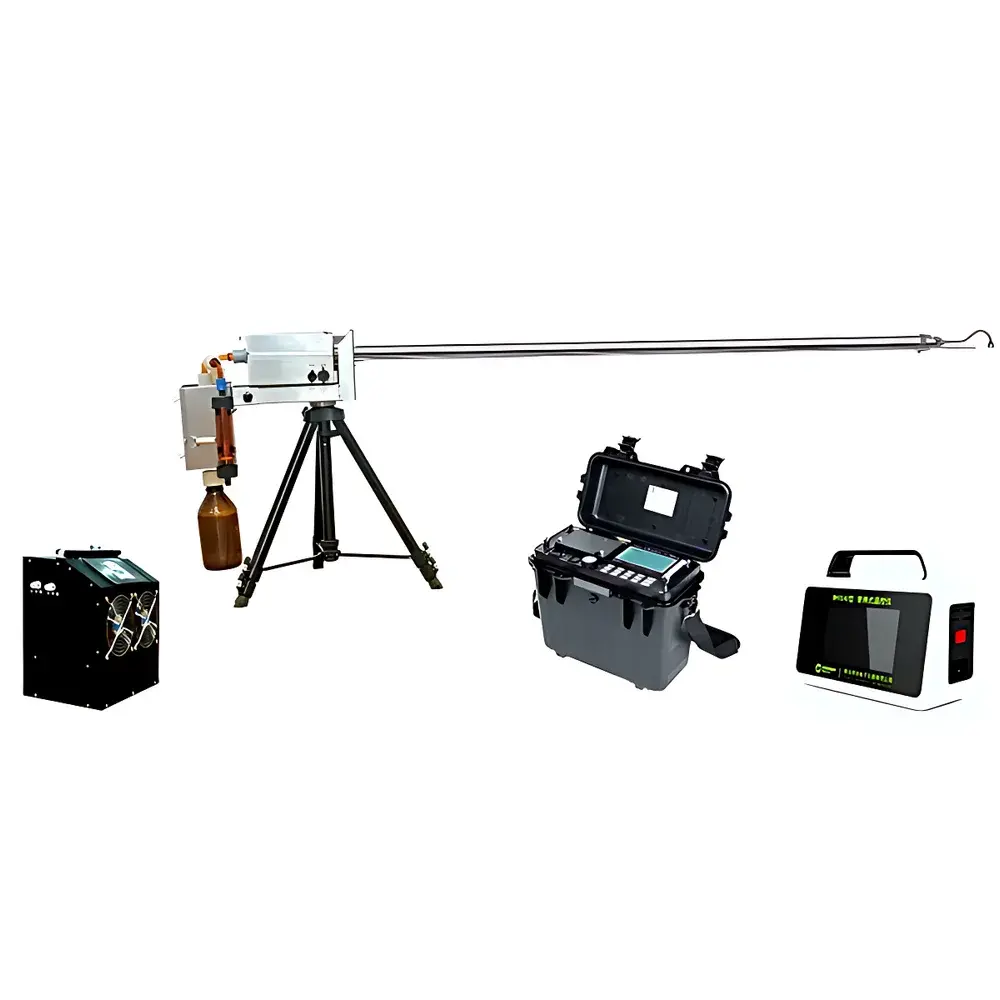
While the MH3010-E operates as a hardware-integrated sampling component rather than a standalone instrument with embedded firmware, its analog signal outputs (temperature, velocity, pressure) are designed for seamless integration into third-party certified data acquisition platforms. When paired with FDA 21 CFR Part 11–compliant DAS software (e.g., LabVIEW-based or vendor-specific stack monitoring suites), the probe enables electronic audit trails, user access controls, and automated calculation of isokinetic sampling ratios, normalized volumetric flow rates (Nm³/min), and total sampled volume—essential for reporting to provincial ecological environment departments or international verification bodies. Calibration certificates for all integrated sensors are provided with NIST-traceable documentation.
Applications
- Regulatory dioxin emission monitoring at municipal solid waste incinerators (MSWIs), medical waste incinerators, and hazardous waste treatment facilities.
- Source testing and compliance verification per GB 18485–2014 and EU Directive 2000/76/EC (incorporated via China’s national implementation framework).
- Method development and inter-laboratory comparison studies requiring reproducible, isokinetic sampling of thermally unstable organic pollutants.
- Stack characterization prior to installation of activated carbon injection or catalytic reduction systems targeting dioxin abatement.
- Research applications in combustion chemistry, thermal desorption kinetics, and gas–particle partitioning behavior of PCDD/Fs under varying flue gas compositions.
FAQ
What standards does the MH3010-E comply with for dioxin sampling?
It is engineered and verified against HJ 77.2–2008, HJ/T 365–2007, GB/T 16157–1996, JJG 680–2007, and JJG 968–2002—covering sampling methodology, instrument calibration, and emission limit enforcement contexts.
Can the probe be used for non-dioxin applications such as PAH or PCB sampling?
Yes—the isokinetic design, thermal stability, and inert titanium construction make it suitable for other semi-volatile organic compounds (SVOCs) requiring heated, velocity-matched sampling, provided filter/sorbent selection and analytical protocols are adapted accordingly.
Is the MH3010-E compatible with international HRGC-HRMS laboratories outside China?
Absolutely. Its adherence to ISO/IEC 17025-aligned sampling practices and compatibility with EPA Method 23 sample train geometry ensures full interoperability with globally accredited dioxin testing labs.
Does the system include data logging capability?
No—the MH3010-E is a sensor-integrated probe only. Continuous data recording requires connection to an external, validated data acquisition system meeting local regulatory requirements for electronic records.
What maintenance intervals are recommended for field use?
Post-sampling inspection of O-rings, filter holder seals, and heater sleeve insulation is required before each deployment; full thermal calibration and Pitot coefficient verification are advised every 50 operational hours or per quarterly QA/QC schedule.
Related Products







