
MiniPRO4 Mini Vertical Electrophoresis Tank
| Brand | Aperbio |
|---|---|
| Origin | Jiangsu, China |
| Manufacturer Type | Direct Manufacturer |
| Instrument Type | Vertical Electrophoresis Tank |
| Model | miniPRO4 / miniPRO2 |
| Gel Dimensions | 83 × 73 mm |
| Gel Capacity | Up to 4 gels simultaneously |
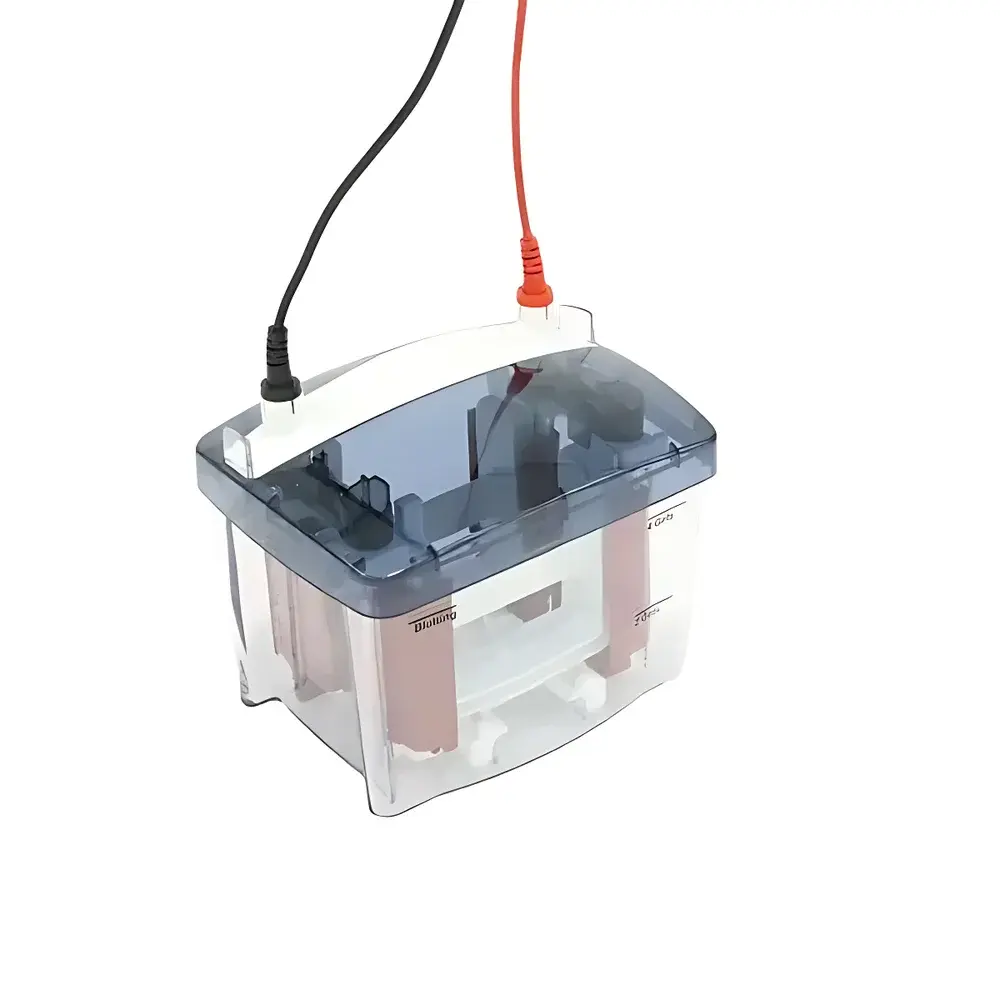
| External Dimensions | 180 × 120 × 160 mm |
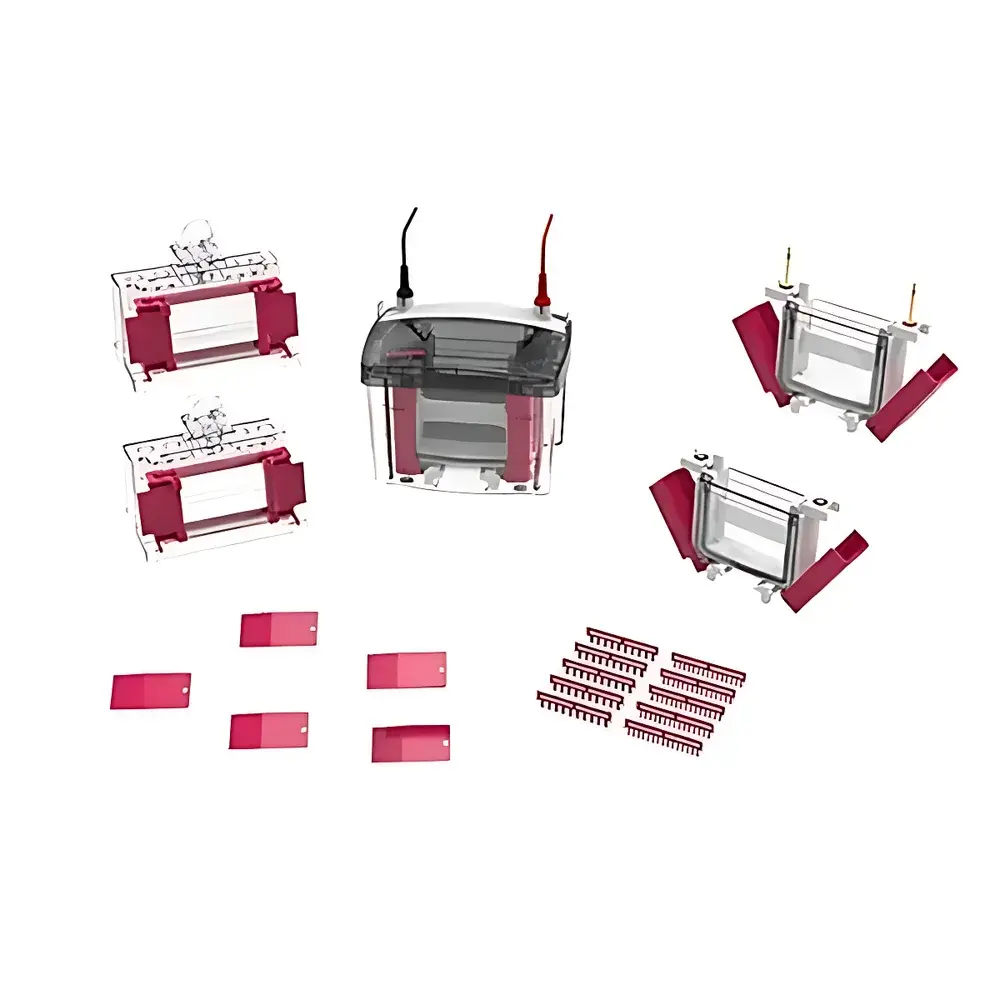
| Standard Configuration | 4 independent gel casting bases, cam-actuated alignment frame, edge-toothed combs with integrated ridge, pre-aligned glass plates with bonded sealing spacers |
Overview
The MiniPRO4 Mini Vertical Electrophoresis Tank is a compact, precision-engineered system designed for routine SDS-PAGE, native PAGE, and Western blotting applications in molecular biology, protein biochemistry, and quality control laboratories. Operating on the principle of constant-voltage or constant-current electrophoretic separation in polyacrylamide gels, the MiniPRO4 delivers reproducible migration profiles across multiple small-format gels (83 × 73 mm) without cross-contamination or buffer leakage. Its vertical architecture enables high-resolution protein band separation with minimal thermal distortion, while its modular design supports both hand-cast and pre-cast gels—ensuring compatibility with standard laboratory workflows and regulatory documentation requirements.
Key Features
- Simultaneous processing of up to four 83 × 73 mm gels within one run—reducing inter-gel variability and increasing throughput for comparative analysis.
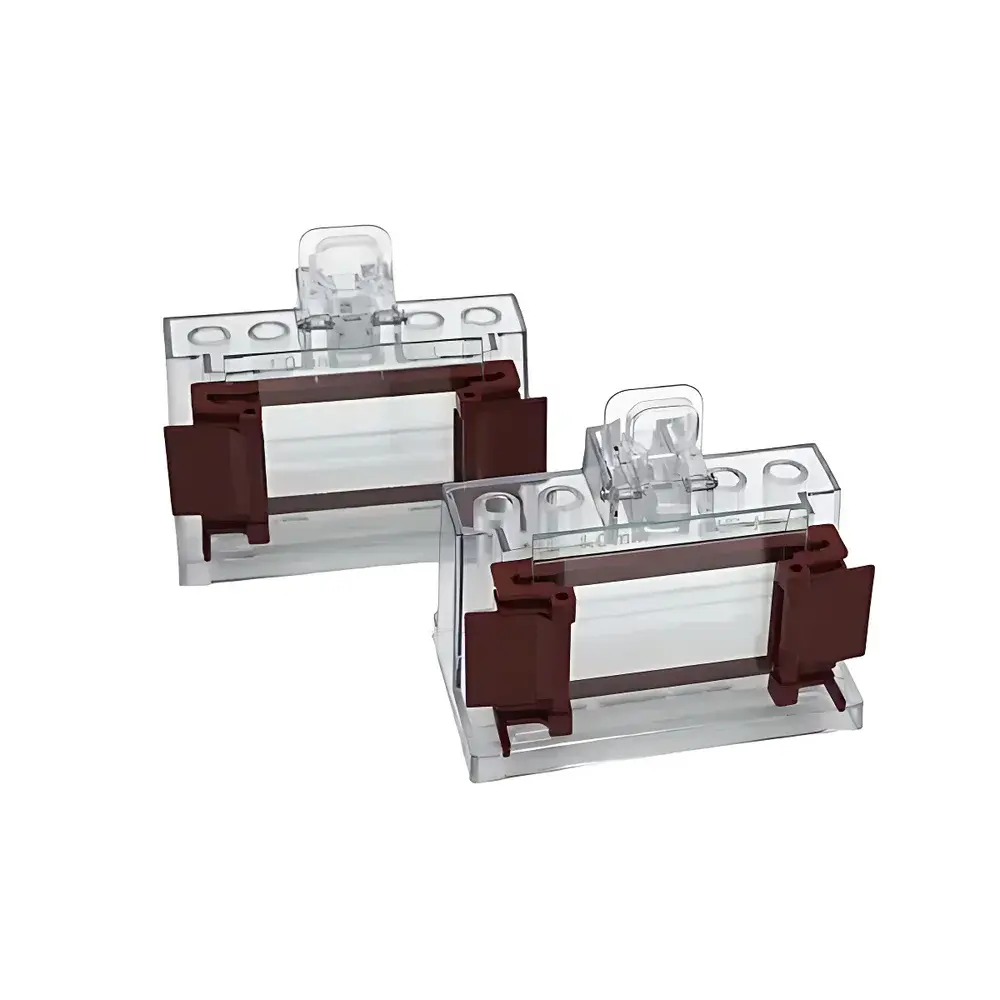
- Integrated cam-actuated gel casting frame ensures precise alignment of short and long glass plates prior to polymerization, minimizing gel warping and improving band sharpness.
- Sealing spacers permanently bonded to the long glass plate eliminate lateral misalignment during assembly and prevent buffer leakage—a common source of failed runs and inconsistent current distribution.
- Four independent, low-profile gel casting bases allow flexible placement on crowded benchtops; each base accommodates full-height comb insertion and provides stable support during acrylamide polymerization.
- Edge-toothed combs feature an internal ridge that creates an air-tight seal between the gel surface and ambient atmosphere—suppressing oxygen inhibition at the gel interface and ensuring uniform polymerization across the entire matrix.
- Chemically resistant ABS housing withstands repeated exposure to SDS, TEMED, ammonium persulfate, and ethanol-based cleaning agents—supporting long-term use under GLP-compliant maintenance protocols.
Sample Compatibility & Compliance
The MiniPRO4 is validated for use with standard Tris-Glycine, Tris-Tricine, and Bis-Tris SDS-PAGE buffers, as well as native electrophoresis systems requiring non-denaturing conditions. It accepts commercially available pre-cast gels (e.g., Bio-Rad Criterion-compatible formats) and accommodates custom hand-poured gels ranging from 8% to 20% T acrylamide concentration. All components comply with ISO 9001-certified manufacturing practices. While not CE-marked for IVD use, the system meets general laboratory equipment safety standards per IEC 61010-1 for electrical safety and mechanical stability. Documentation packages include calibration verification records, material traceability logs, and assembly schematics suitable for internal audit and method validation files.
Software & Data Management
As a benchtop electrophoresis tank, the MiniPRO4 operates without embedded firmware or proprietary software. It is fully compatible with third-party imaging systems—including ChemiDoc MP, Azure c600, and UVP BioSpectrum—enabling seamless integration into existing digital workflow pipelines. Raw gel images captured post-electrophoresis may be processed using open-standard tools such as Image Lab (Bio-Rad), Fiji/ImageJ, or AlphaView SA, all of which support batch analysis, molecular weight estimation, and densitometric quantification. For regulated environments, users may implement electronic lab notebook (ELN) integration via exported TIFF/PNG outputs and associated metadata (run date, voltage/time settings, gel lot numbers), satisfying basic FDA 21 CFR Part 11 traceability requirements when paired with appropriate access controls and audit trail configurations.
Applications
- Routine protein separation in academic teaching labs and industrial QC testing labs.
- Preparative electrophoresis for downstream mass spectrometry sample preparation.
- Validation of recombinant protein purity and integrity during upstream bioprocess development.
- Comparative expression profiling across multiple cell lysates or tissue extracts under identical electrophoretic conditions.
- Method transfer studies where reproducibility across instruments and operators must be demonstrated per ICH Q5E guidelines.
- Training platforms for electrophoresis fundamentals—including buffer chemistry, gel polymerization kinetics, and current–voltage relationships.
FAQ
Can the MiniPRO4 accommodate mini-gels larger than 83 × 73 mm?
No—the physical chamber dimensions and electrode spacing are optimized exclusively for gels measuring 83 mm (height) × 73 mm (width). Attempting larger formats may result in uneven field distribution and compromised resolution.
Is the MiniPRO4 compatible with gradient gels?
Yes—its sealed casting frame and ridge-equipped combs support stable gradient formation during acrylamide polymerization, provided gradient mixers and dual-syringe delivery systems are used externally.
What power supply models are recommended for optimal performance?
The system is compatible with any DC power supply delivering 0–300 V and 0–400 mA output; typical operating ranges are 100–200 V at 25–35 mA per gel, depending on buffer conductivity and gel thickness.
Are replacement parts such as glass plates and combs available separately?
Yes—Aperbio supplies OEM-matched short/long glass plates (with pre-bonded spacers), edge-toothed combs (10-, 15-, and 20-well variants), and silicone gasket kits through authorized distributors and direct technical support channels.
Does the MiniPRO4 meet ISO/IEC 17025 requirements for accredited testing labs?
While the instrument itself is not certified to ISO/IEC 17025, its design enables users to establish documented calibration procedures, performance verification tests (e.g., resistance measurement, current stability checks), and preventive maintenance logs required for accreditation scope inclusion.
Related Products




