
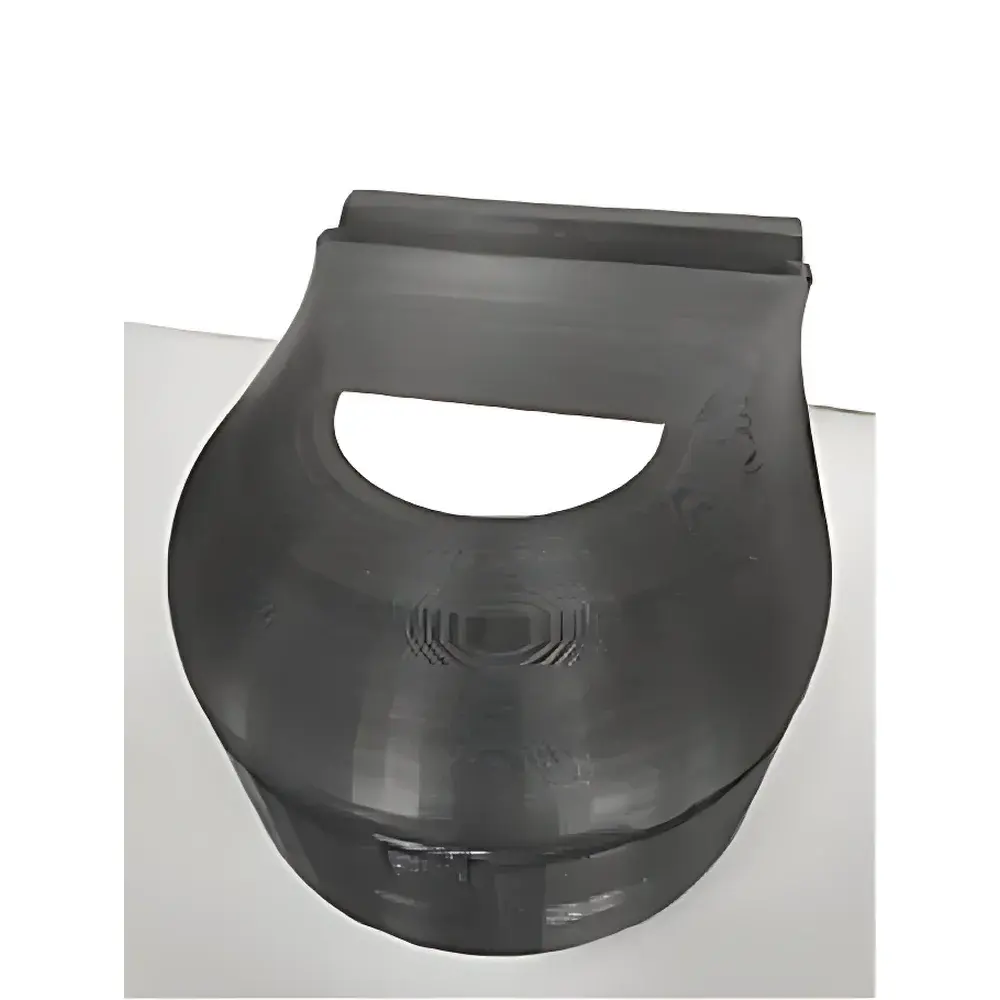
MIPS Portable Quartz Crystal Microbalance (QCM) System
| Brand | MIPS |
|---|---|
| Origin | Singapore |
| Manufacturer Type | Authorized Distributor |
| Origin Category | Imported |
| Model | MIPS |
| Pricing | Available Upon Request |
Overview
The MIPS Portable Quartz Crystal Microbalance (QCM) is an advanced, benchtop-ready electrochemical sensing platform engineered for real-time, label-free quantification of nanogram-level mass changes at solid–liquid or solid–gas interfaces. Operating on the fundamental principle of piezoelectric resonance, the system exploits the inverse piezoelectric effect: when a thin-film quartz crystal (typically AT-cut, 5–10 MHz fundamental frequency) is excited at its resonant frequency, any mass adsorbed onto its electrode surface induces a measurable shift in resonance frequency (Δf), governed by the Sauerbrey equation (Δf = −Cf·Δm, where Cf is the mass sensitivity constant). Simultaneously, energy dissipation (ΔD) is monitored via impedance analysis or decay time measurement—enabling discrimination between rigidly bound and viscoelastic layers. This dual-parameter (frequency + dissipation) capability distinguishes the MIPS QCM from conventional single-frequency systems and aligns it with the operational rigor of QCM-D (Quartz Crystal Microbalance with Dissipation monitoring) platforms used in peer-reviewed biophysical studies.
Key Features
- Integrated microfluidic test chamber with precision-machined gold-coated quartz sensor modules (5 MHz standard; optional 10 MHz or harmonic overtones available)
- Dual-channel and multi-channel configurations supported—enabling reference-compensated measurements and parallel kinetic profiling
- Onboard miniature peristaltic pumps with programmable flow rate control (0.01–1.0 mL/min) for reproducible sample delivery and buffer exchange
- Embedded electronics featuring low-noise oscillator circuitry, high-resolution frequency counter (±0.1 Hz resolution), and real-time dissipation monitoring (Q-factor or D-value calculation)
- Rugged, portable chassis designed for lab-to-field deployment—meets IEC 60529 IP54 environmental rating for dust and splash resistance
- USB-C interface compliant with USB 2.0 specifications; fully compatible with Windows-based host systems without proprietary drivers
Sample Compatibility & Compliance
The MIPS QCM accommodates aqueous, organic, and mixed-solvent samples across pH 2–12 and temperature ranges of 15–45 °C (with optional Peltier-controlled module). Sensor chips feature evaporated 100 nm gold electrodes on polished quartz substrates, supporting standard thiol-based self-assembled monolayers (SAMs), polymer brushes, lipid bilayers, and antibody immobilization chemistries. The system architecture supports Good Laboratory Practice (GLP) workflows: all raw frequency/dissipation data are timestamped, digitally signed, and stored in open-format CSV/TSV files. Audit trails—including user login, parameter changes, and calibration events—are retained locally and exportable for regulatory review. While not certified to ISO/IEC 17025, the instrument’s measurement traceability follows NIST-traceable quartz crystal calibration protocols and conforms to ASTM E2581-21 guidelines for QCM-based thin-film characterization.
Software & Data Management
The bundled QCM Control Suite (v3.2+) provides intuitive experiment setup, real-time visualization of Δf(t) and ΔD(t) curves, and automated baseline correction. Kinetic fitting modules support Langmuir, conformational change, and Voigt-based viscoelastic modeling. All datasets are saved with embedded metadata (sensor ID, flow rate, temperature, date/time), ensuring FAIR (Findable, Accessible, Interoperable, Reusable) compliance. Export options include PNG/SVG plots, MATLAB .mat files, and Excel-compatible workbooks. The software adheres to FDA 21 CFR Part 11 requirements for electronic records—featuring role-based access control, electronic signatures, and immutable audit logs. No cloud storage or telemetry is enabled by default; all processing occurs locally unless explicitly configured by the user.
Applications
- Real-time monitoring of protein–ligand binding kinetics (e.g., antibody–antigen, enzyme–inhibitor) under physiological buffer conditions
- Characterization of polymeric hydrogel swelling/deswelling dynamics and stimuli-responsive behavior
- In situ detection of heavy metal ions (e.g., Hg²⁺, Pb²⁺) using functionalized aptamer or peptide monolayers
- Quantitative analysis of biofilm formation and antimicrobial agent efficacy on medical device surfaces
- Thin-film deposition control during electrochemical polymerization or layer-by-layer (LbL) assembly
- Environmental monitoring of airborne particulates via functionalized sensors in gas-phase mode
FAQ
What is the typical mass detection limit for the MIPS QCM in aqueous solution?
The theoretical mass resolution is ~0.05 ng/cm² for a 5 MHz crystal under optimal signal-to-noise conditions—consistent with published QCM-D performance benchmarks.
Can I use non-gold-coated quartz crystals with this system?
The hardware supports custom sensor modules; however, only gold-coated AT-cut crystals supplied by MIPS or certified third-party vendors are covered under warranty and calibrated firmware support.
Is the system compatible with electrochemical impedance spectroscopy (EIS) integration?
Yes—the microfluidic cell includes auxiliary electrode contacts, enabling synchronized QCM/EIS acquisition when paired with a compatible potentiostat (e.g., BioLogic SP-300 or Metrohm Autolab PGSTAT302N).
Does the MIPS QCM support temperature-controlled measurements?
A Peltier-based thermal module (±0.1 °C stability) is available as an optional add-on, enabling Arrhenius analysis and thermodynamic binding studies.
How often does the system require recalibration?
Frequency calibration is performed at factory using NIST-traceable standards; field recalibration is not required under normal operation—only recommended after physical shock or sensor replacement.




