
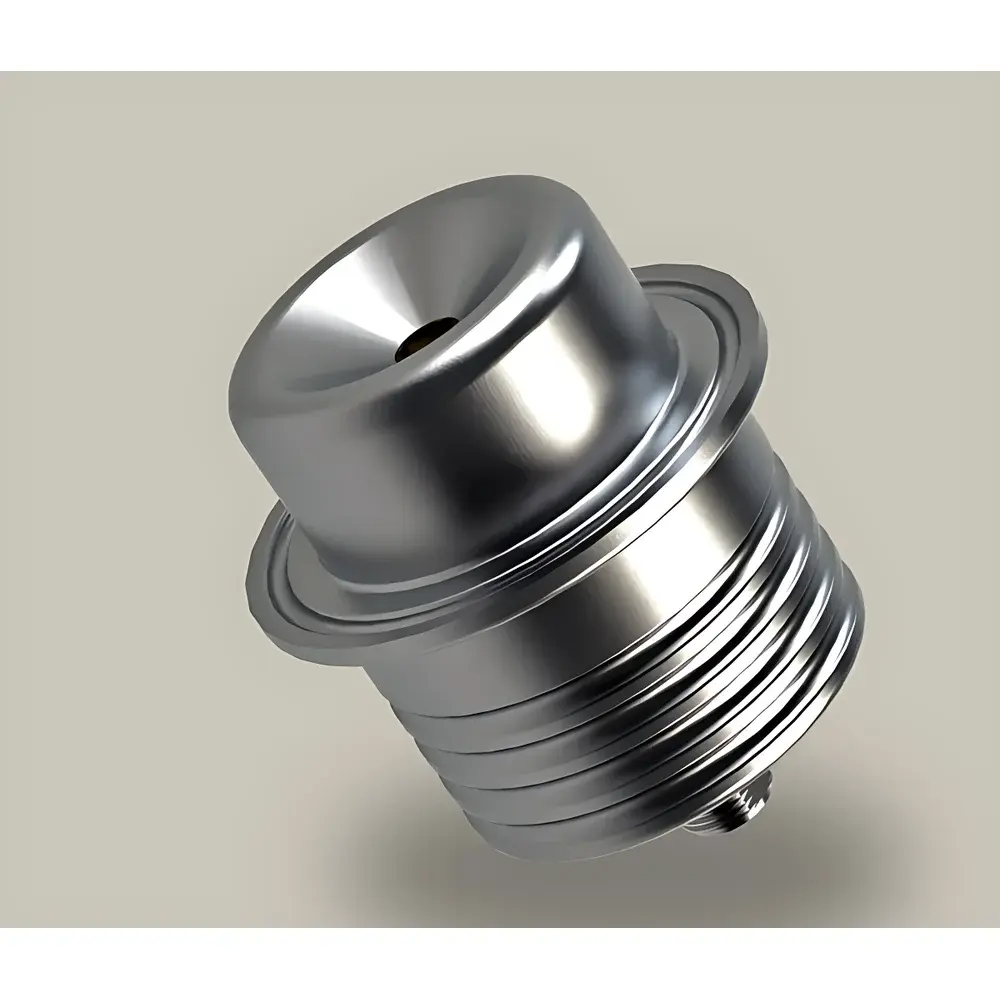
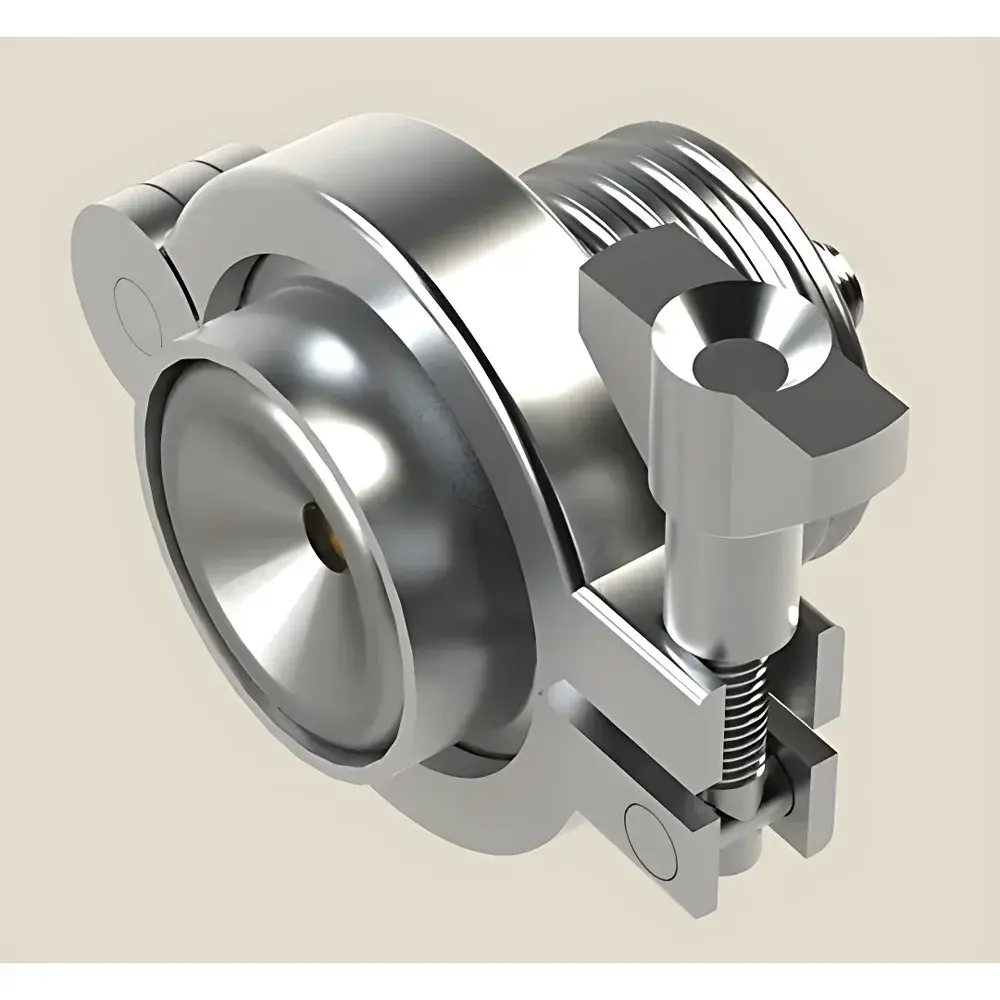
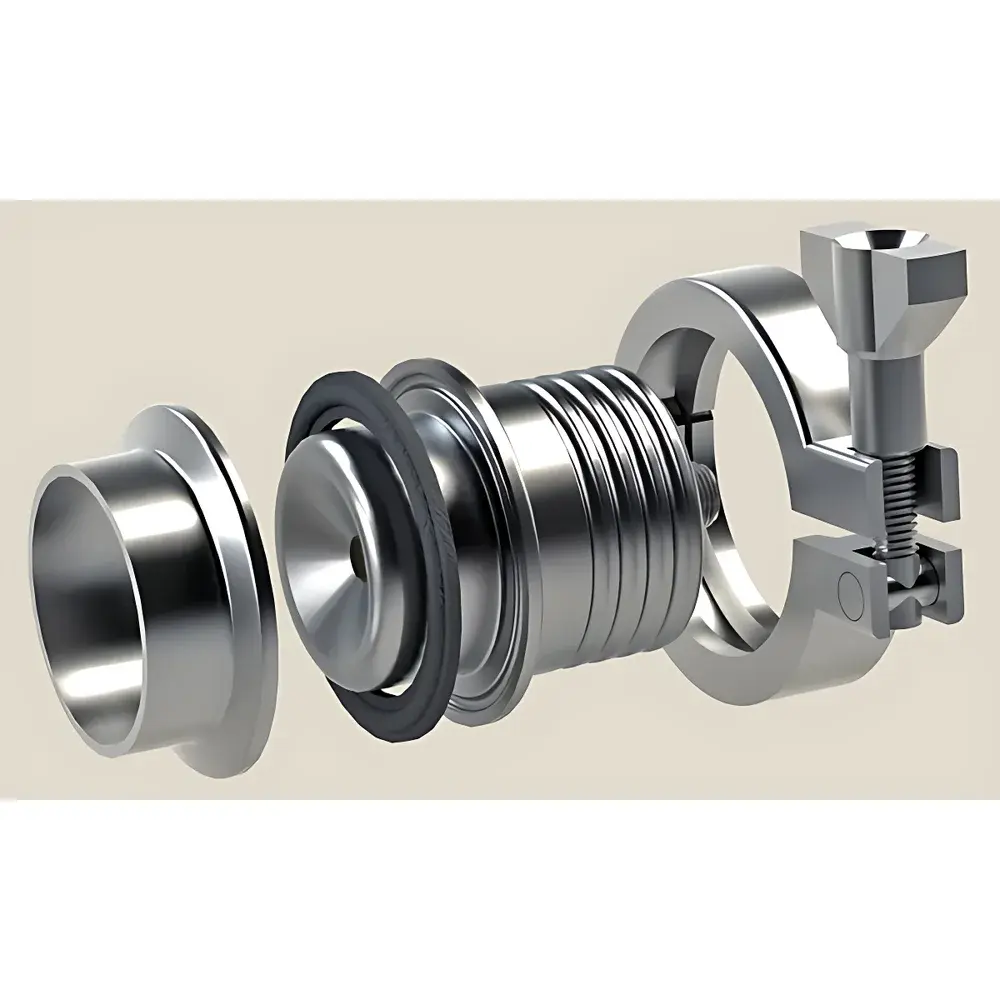
MISCO VIP2-3A Sanitary Inline Refractometer
| Brand | MISCO |
|---|---|
| Origin | USA |
| Model | VIP2-3A-2.0/2.5 |
| Product Type | Inline Refractometer |
| Temperature Control | Yes |
| Digital Display | Yes |
| Refractive Index Range | 1.3330 to 1.5000 nD₂₀ |
| Brix Range | 0–85 °Brix |
| Resolution | 0.0001 nD₂₀ (0.1 °Brix) |
| Accuracy | ±0.0001 nD₂₀ (±0.1 °Brix) |
| Optical Material | Sapphire |
| Wetted Parts | Passivated 316L Stainless Steel |
| Light Source | Precision LED @ 589.3 nm |
| IP Rating | IP68 |
| Certifications | 3-A Sanitary, CE, FCC |
| Operating Temperature | −20 to 100 °C |
| Pressure Rating | 0–20.68 bar (0–300 psi) |
| Power Supply | 5–24 VDC (3 VDC optional) |
| Dimensions | 61 mm H × 64.1 mm max Ø |
| Weight | 0.45 kg |
Overview
The MISCO VIP2-3A Sanitary Inline Refractometer is an industrial-grade, real-time process analytical instrument engineered for continuous, non-invasive measurement of refractive index (nD₂₀) and derived concentration units—including Brix, % w/w, specific gravity, freezing point depression, and custom-defined scales—in hygienic fluid processing environments. Based on the principle of critical-angle total internal reflection, the VIP2-3A employs a high-stability, temperature-compensated sapphire optical interface to deliver traceable, repeatable measurements directly in-line—without sampling, flow cells, or bypass loops. Its fully embedded microprocessor architecture executes real-time temperature correction using built-in Pt100 RTD sensing, applies scale-specific nonlinear compensation models, and outputs calibrated values directly to PLCs, DCS, or SCADA systems. Designed exclusively for sanitary applications, the sensor meets the full mechanical, material, surface finish, and cleanability requirements defined by 3-A Sanitary Standards, Inc., making it suitable for use in FDA-regulated, GMP-compliant, and USDA-inspected facilities across dairy, beverage, food, and biopharmaceutical manufacturing.
Key Features
- 3-A Sanitary Certification: Validated against SS-10-07 (Process Refractometers) for design integrity, crevice-free geometry, electropolished 316L stainless steel construction (Ra ≤ 0.4 µm), and steam-in-place (SIP)/clean-in-place (CIP) compatibility.
- IRIS™ Intelligent Sensor Architecture: All signal processing, temperature compensation, scale conversion, and communication logic reside within the sensor head—eliminating external controllers, reducing footprint, and minimizing failure points.
- Sapphire Optical Interface: Chemically inert, scratch-resistant sapphire prism (Mohs hardness 9) ensures long-term optical stability in abrasive, high-solids, or caustic process streams.
- Multi-Scale Programmability: Factory-configurable from MISCO’s library of >2,500 validated calibration scales—including USP, ASTM, ISO, and industry-specific formulations—with support for user-defined polynomial or lookup-table-based conversions.
- Dual Communication Flexibility: Selectable analog output (4–20 mA or 0–10 V DC) or digital RS232 ASCII output; compatible with MISCO Inline Connect™ software for USB-based configuration, zero/span calibration, and firmware updates on Windows® platforms.
- Robust Environmental Ratings: IP68 ingress protection, operating pressure up to 300 psi (20.68 bar), and thermal stability across −20 to 100 °C enable deployment in demanding CIP/SIP cycles and high-pressure homogenization lines.
Sample Compatibility & Compliance
The VIP2-3A is qualified for direct contact with liquids and semi-liquids in regulated sanitary processes, including milk, whey, juice concentrates, fermentation broths, buffer solutions, and cleaning agents. All wetted surfaces are fabricated from passivated 316L stainless steel per ASTM A967 and electropolished to Ra ≤ 0.4 µm, satisfying 3-A SS-10-07 clause 4.3.2. The sapphire prism is hermetically sealed with FDA-compliant elastomers (EPDM or Viton®, depending on model variant). The device carries CE marking per EU Machinery Directive 2006/42/EC and EMC Directive 2014/30/EU, and complies with FCC Part 15 Class A emissions limits. It supports audit readiness for 21 CFR Part 11 (via optional electronic log export), Annex 11, and EU GMP Chapter 4 requirements when integrated with validated data acquisition systems.
Software & Data Management
MISCO Inline Connect™ is a Windows-based configuration utility enabling secure, local setup without network exposure. Users can assign output scaling, adjust temperature compensation parameters, perform two-point calibration (using NIST-traceable sucrose or sodium chloride standards), and export calibration logs with timestamps, operator IDs, and environmental metadata. The software supports CSV export for integration into LIMS or MES platforms and retains full revision history for change control. When deployed in validated environments, the VIP2-3A supports ALCOA+ data integrity principles: attributable (user login), legible (ASCII text), contemporaneous (real-time timestamping), original (raw sensor data retained), accurate (checksum-verified transmission), complete (full audit trail), consistent (ordered chronology), enduring (non-erasable storage), and available (readily retrievable during inspections).
Applications
- Dairy Processing: Real-time Brix monitoring during ultrafiltration, reverse osmosis, and evaporation; lactose crystallization endpoint detection; standardized milk solids concentration control.
- Beverage Production: Syrup blending verification, pasteurization hold-time validation via sugar concentration drift, and alcohol-by-volume (ABV) estimation in low-alcohol fermentations.
- Biopharmaceutical Manufacturing: Cell culture media preparation, buffer exchange verification, and downstream purification step monitoring (e.g., diafiltration cut-off confirmation).
- Food Processing: Jam and sauce consistency control, vinegar acidity correlation, and starch hydrolysate DE (dextrose equivalent) trending.
- CIP Monitoring: Alkaline cleaner concentration tracking and acid rinse neutralization endpoint detection via refractive index inflection points.
FAQ
What does 3-A certification signify for a refractometer?
3-A certification confirms that the instrument has undergone independent third-party verification per SS-10-07 for sanitary design, including crevice-free construction, electropolished surfaces, weld quality, drainability, and material compliance—enabling regulatory acceptance by USDA, FDA, and global food safety auditors.
Can the VIP2-3A be calibrated in situ without removal from the line?
Yes. Using MISCO Inline Connect™ and certified reference standards (e.g., 10.00% w/w sucrose at 20 °C), users can execute zero and span calibrations while the sensor remains installed under process conditions.
Is temperature compensation automatic and traceable?
Yes. An integrated Pt100 RTD provides real-time fluid temperature measurement; compensation follows the IUPAC-recommended Sellmeier equation with scale-specific coefficients, all traceable to NIST SRM 84g sucrose solutions.
How is data integrity ensured for GxP environments?
The sensor itself does not store data, but its ASCII output includes timestamped, checksummed readings. When paired with a compliant DAS, full 21 CFR Part 11 audit trails—including calibration events, parameter changes, and alarm logs—are maintainable.
What maintenance is required beyond periodic calibration?
No routine optical cleaning or alignment is needed. Sapphire’s hardness and chemical resistance ensure stable performance over years of CIP/SIP cycling; only annual verification against traceable standards is recommended per ISO/IEC 17025-aligned QA protocols.





