
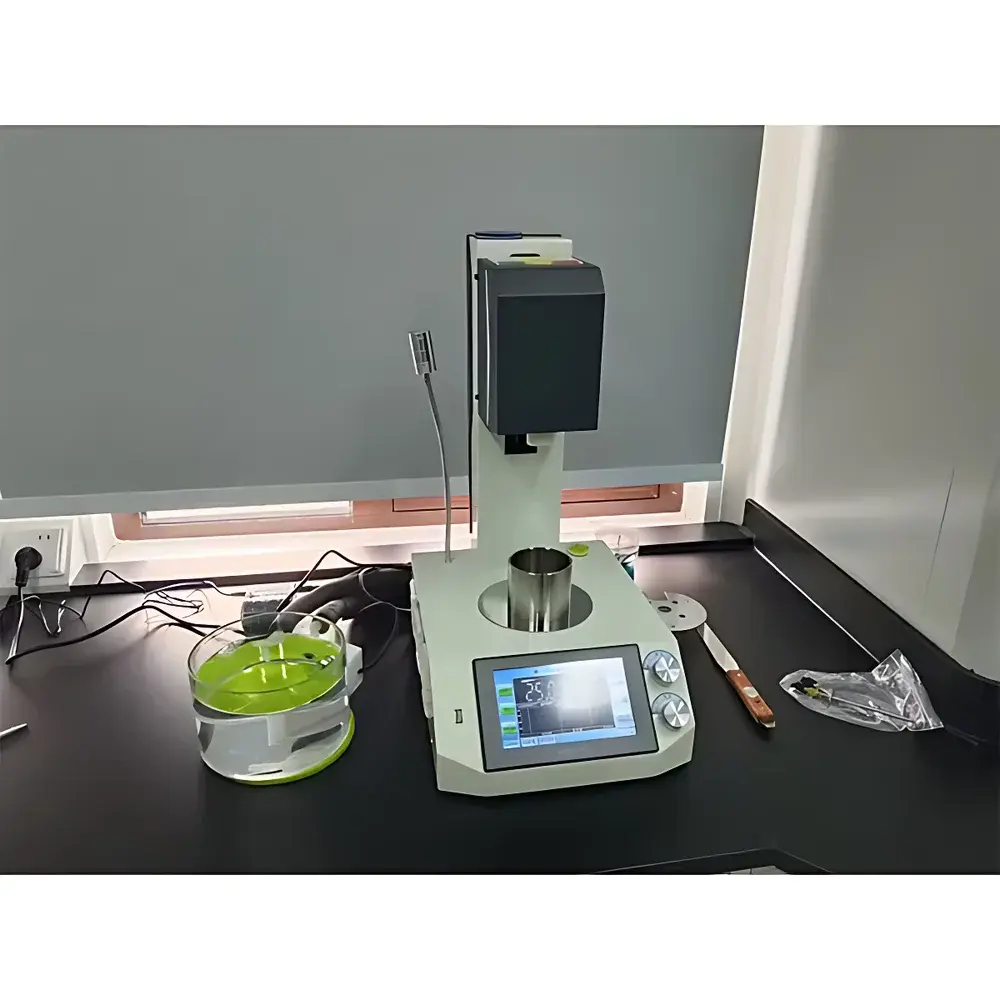
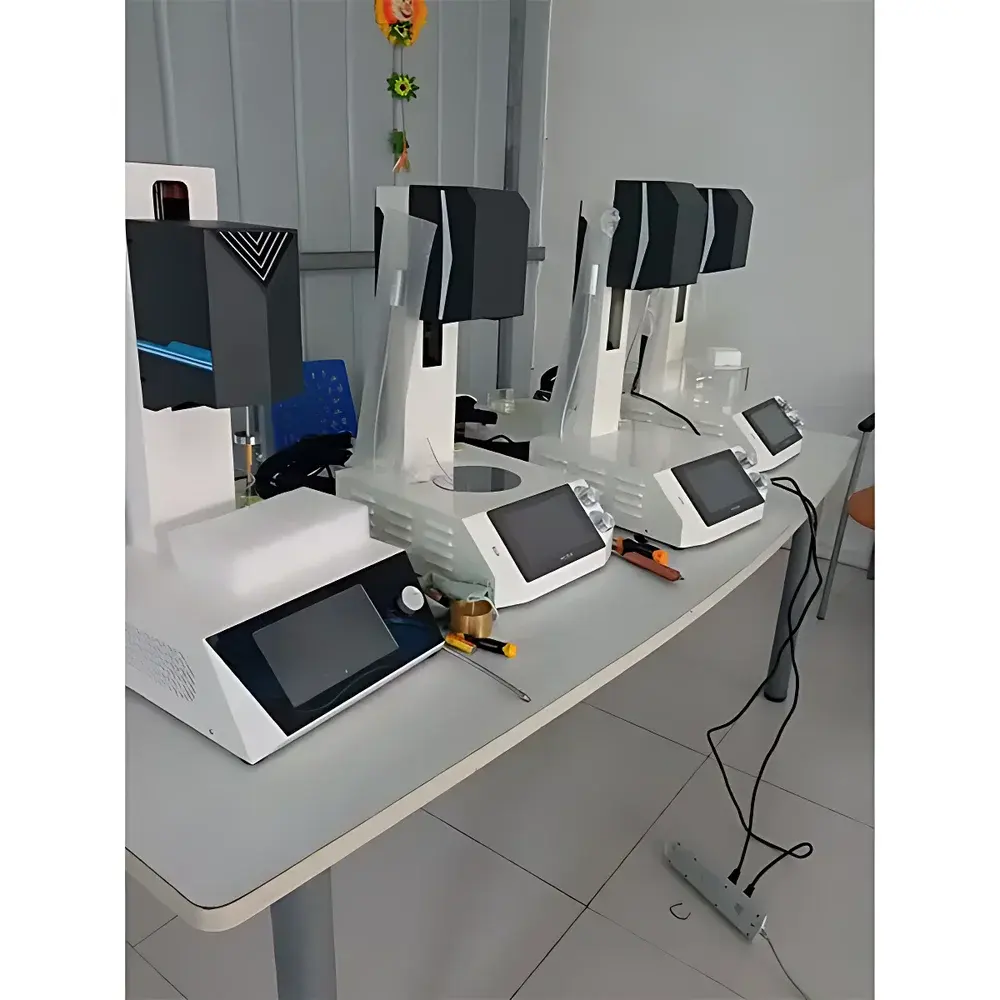
MITONG SYP-0595 Penetrometer for Thread Sealant Grease
| Brand | MITONG (Shanghai Mitong Instrument Co., Ltd.) |
|---|---|
| Origin | Shanghai, China |
| Model | SYP-0595 |
| Measurement Range | 0–650 Penetration Units (0.1 mm) |
| Minimum Readout | 0.1 Penetration Unit |
| Resolution | 0.01 mm |
| Penetration Accuracy | ±1 Penetration Unit |
| Timing Options | 5 s, 8 s, 10 s, 12 s, 30 s, 60 s (timing error < ±0.1 s) |
| Standard Cone Mass | 102.5 ± 0.05 g |
| Power Supply | AC 220 ± 10% V, 50 Hz, ≤300 W |
| Dimensions | 280 × 350 × 700 mm (L×W×H) |
Overview
The MITONG SYP-0595 Penetrometer for Thread Sealant Grease is a precision mechanical testing instrument engineered for standardized determination of penetration depth in semi-solid and viscoelastic materials—primarily high-temperature, high-pressure thread sealant greases such as SH/T 0595-1994 7405-grade formulations. It operates on the fundamental principle of ASTM D217 / ISO 2137 / GB/T 269 cone penetration methodology: a standardized conical indenter of defined mass (102.5 ± 0.05 g), geometry, and tip angle is allowed to descend under gravity into a conditioned sample for a precisely controlled duration (selectable from 5 to 60 seconds). The resulting penetration depth—measured in units of 0.1 mm—is directly correlated with material consistency, structural rigidity, and shear resistance. This metric serves as a critical quality control parameter for classifying sealant grades (e.g., first-class vs. qualified grade per SH/T 0595-1994, requiring 300–340 penetration units), validating batch uniformity, and ensuring functional performance under operational sealing loads.
Key Features
- Digital penetration readout with 0.01 mm resolution and ±1 unit accuracy—fully compliant with GB/T 269, GB/T 4509-2010, and JTG E20-2011 T0604-2011 test protocols.
- Six preset timing intervals (5, 8, 10, 12, 30, 60 s), each calibrated to ±0.1 s tolerance, enabling precise replication of standard test durations across laboratories.
- Motorized dual-stage vertical adjustment system—coarse and fine positioning—ensures repeatable, orthogonal alignment of the cone tip to the specimen surface, minimizing operator-induced angular deviation.
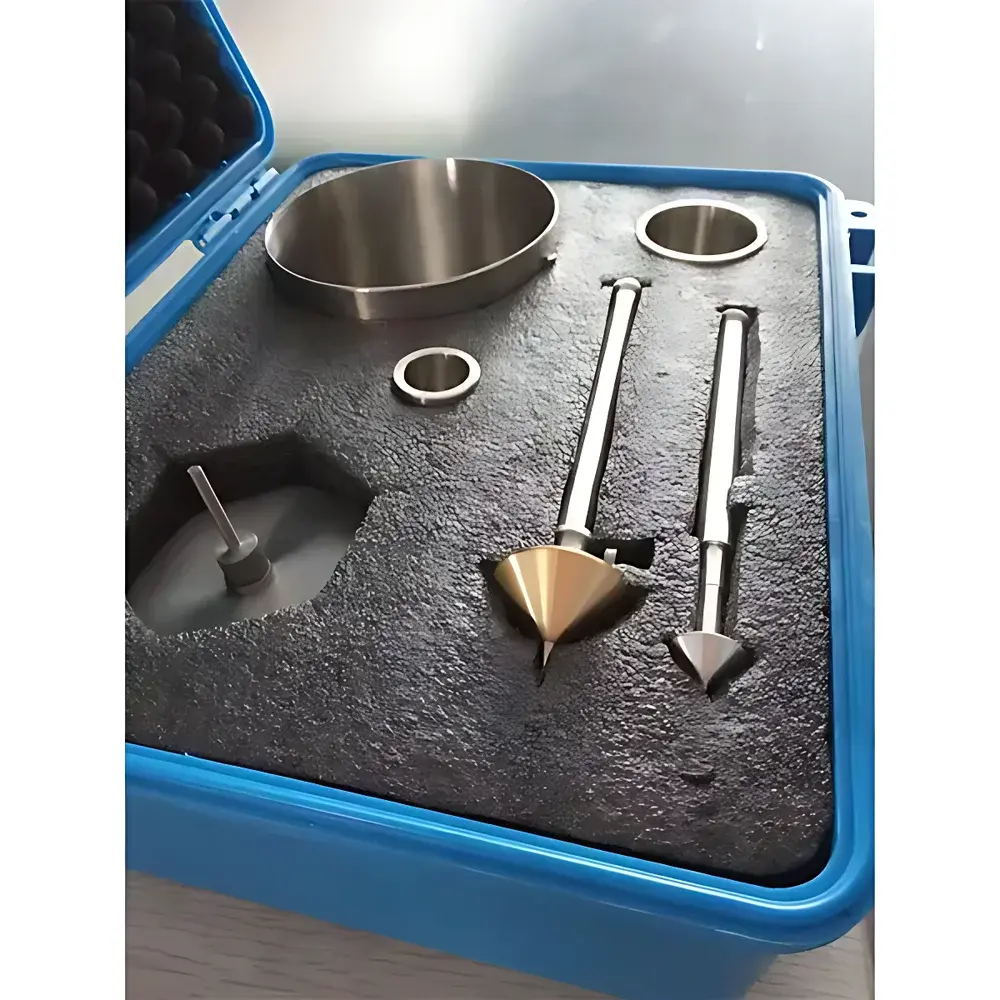
- Interchangeable cone configurations: standard full cone (102.5 ± 0.05 g), optional ½-cone and ¼-cone assemblies for specialized low-penetration or high-viscosity applications.
- Integrated cold-light illumination and magnifier assist visual verification of cone contact and surface leveling prior to test initiation—critical for minimizing boundary effects in shallow-penetration measurements.
- Modular design supports seamless integration with optional accessories: thermostatically controlled water bath (5–40 °C), mechanical grease worker (60 strokes), automatic 100,000-cycle shear device, and standardized sample cups per ASTM D217 and GB/T 4509.
Sample Compatibility & Compliance
The SYP-0595 is validated for use with thread sealant greases conforming to SH/T 0595-1994 and lubricating greases tested per GB/T 269 and GB/T 4509. Its mechanical architecture permits reliable measurement across diverse semi-solid matrices—including petroleum-based greases, synthetic elastomeric sealants, food-grade fats (e.g., butter, margarine, cheese), pharmaceutical ointments, cosmetic gels, and construction sealants—provided specimens are pre-conditioned at specified temperatures (typically 25 °C unless otherwise defined by method). All hardware components—including cone mass, geometry, and drop height—meet dimensional tolerances mandated by ISO 2137 Annex A and ASTM D217 Section 6. The instrument’s mechanical repeatability and traceable calibration path support GLP-compliant documentation requirements; while not inherently 21 CFR Part 11–enabled, its deterministic analog-digital signal chain facilitates audit-ready manual data recording in regulated environments.
Software & Data Management
The SYP-0595 incorporates an embedded microcontroller-based digital display module with registered software copyright (Certificate No. 6097415), providing real-time penetration value output without external PC dependency. Data logging is performed manually via operator transcription into laboratory notebooks or LIMS-compatible spreadsheets. For enhanced traceability, users may integrate the instrument with third-party data acquisition systems using RS-232 or analog voltage output (optional interface kit available). All timing parameters, cone selection, and test duration settings are retained in non-volatile memory between power cycles. While no proprietary analysis suite is bundled, raw penetration values are fully compatible with statistical process control (SPC) platforms for trend analysis, capability studies (Cpk), and specification compliance reporting per ISO/IEC 17025 Clause 7.7.
Applications
- Quality assurance of high-performance thread sealants used in oilfield tubular connections, pipeline flanges, and aerospace hydraulic fittings.
- Routine QC testing of NLGI-grade lubricating greases in manufacturing and refinery labs.
- Consistency evaluation of edible fats and dairy products in food R&D and regulatory compliance labs (e.g., AOAC Method 966.07 adaptations).
- Formulation development of polymer-based sealants, bituminous mastics, and architectural caulks.
- Teaching and method validation in university materials science and tribology laboratories.
FAQ
What standards does the SYP-0595 comply with?
It meets the mechanical and procedural requirements of SH/T 0595-1994, GB/T 269, GB/T 4509-2010, and JTG E20-2011 T0604-2011. Cone geometry and mass adhere to ISO 2137 Annex A and ASTM D217 Section 6 specifications.
Can the instrument measure samples below 25 °C?
Yes—when paired with the optional thermostatic water bath (5–40 °C range), it supports low-temperature penetration testing per ASTM D1321 or modified GB/T 4509 protocols.
Is calibration traceable to national standards?
The cone mass is certified against NIM (National Institute of Metrology, China) traceable weights; displacement transducers are factory-calibrated using gauge blocks certified to ISO 3650. Users must perform periodic verification using reference standard greases (e.g., NIST SRM 1960).
Does the system support automated data export?
The base configuration outputs numeric values only. RS-232 or 0–5 V analog output modules are available as optional upgrades for direct integration into SCADA or LIMS environments.
What maintenance is required?
Daily cleaning of cone and sample cup; monthly verification of motorized lift alignment and timing accuracy; annual recalibration of the digital displacement sensor and cone mass verification per ISO/IEC 17025 procedures.




