
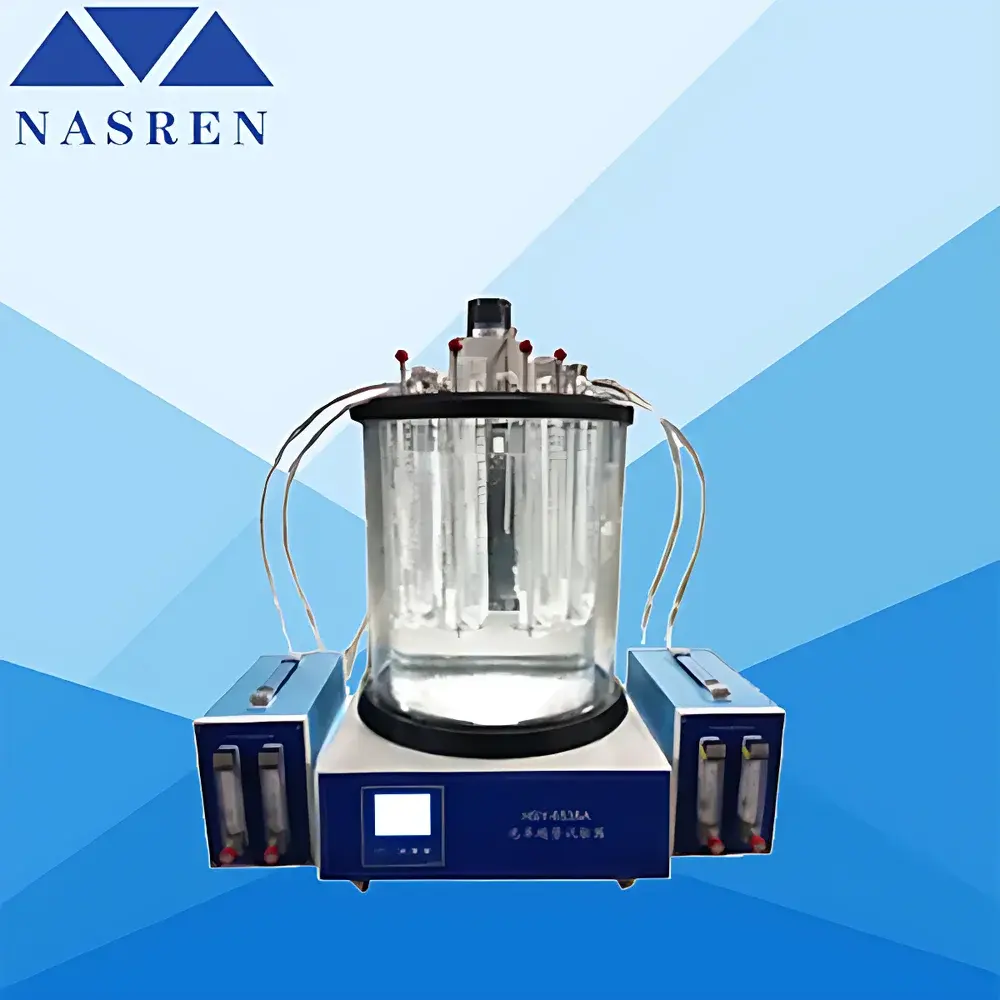
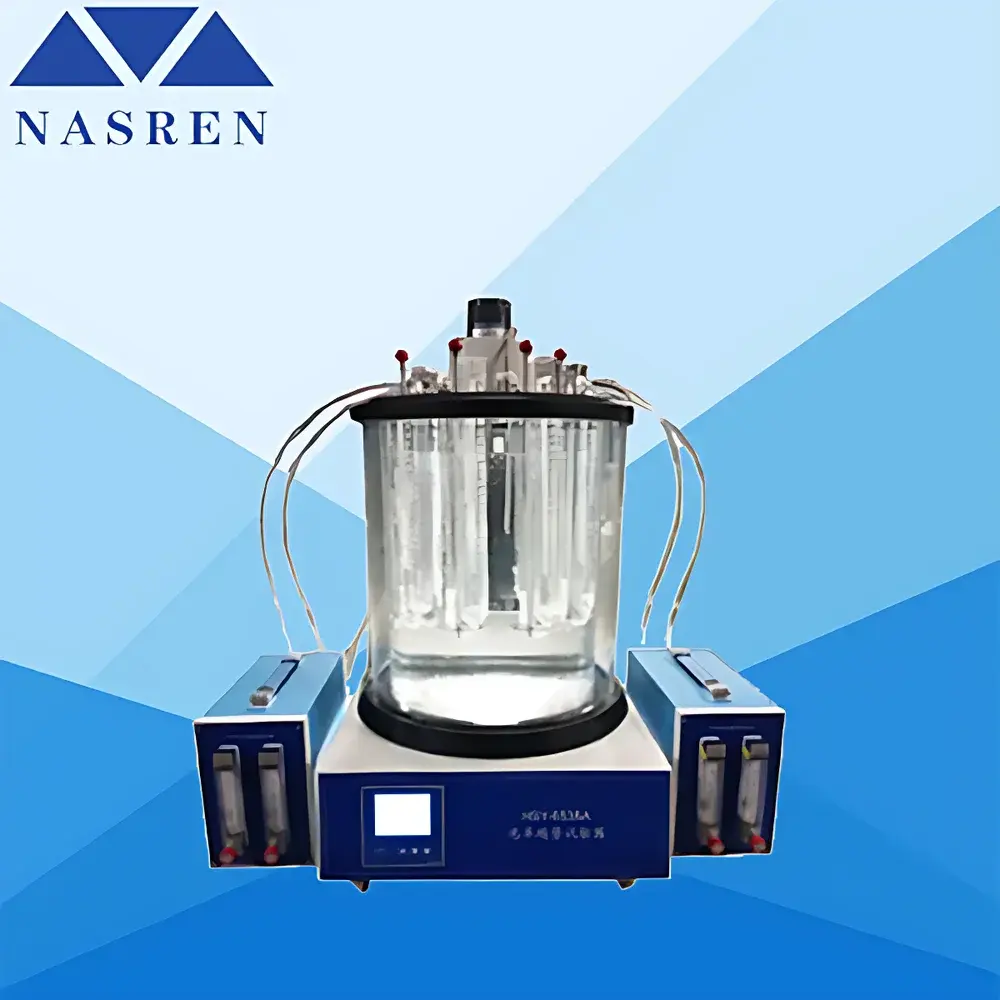
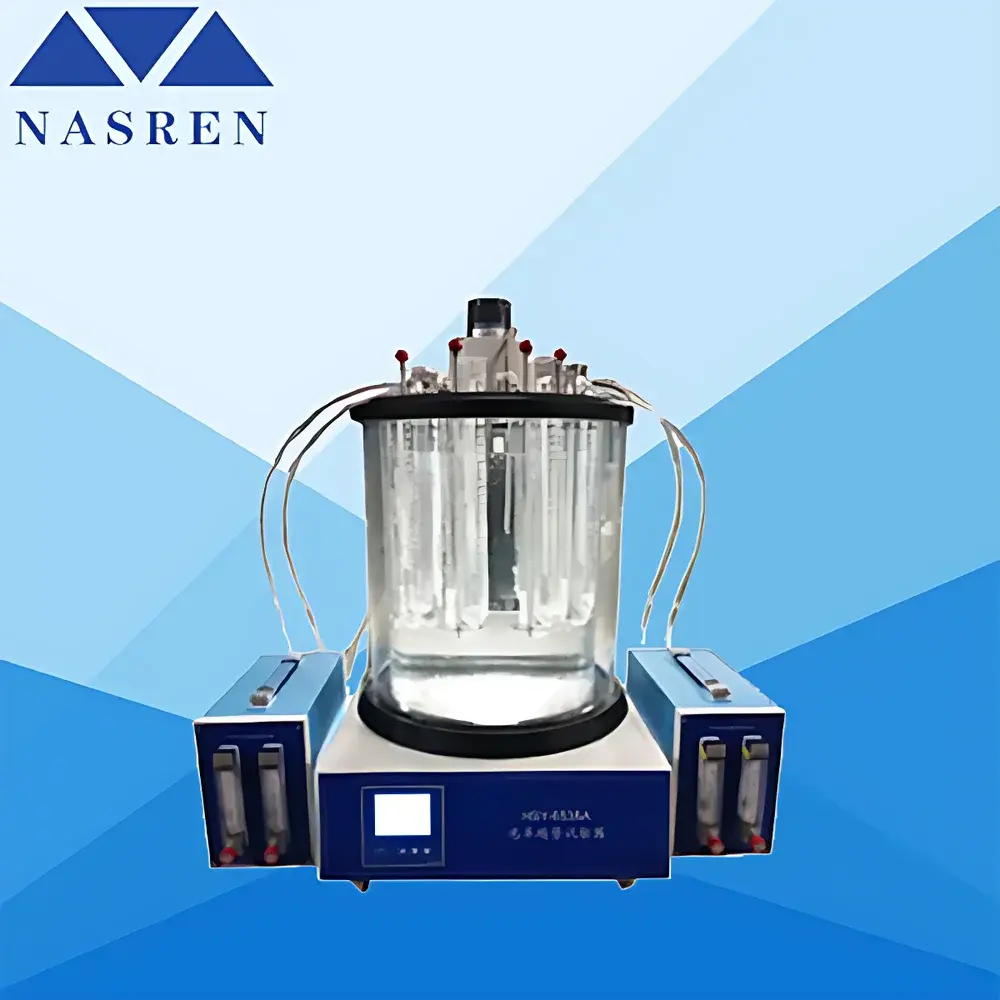
MITONG SYP-6538A Four-Channel MDEA Solution Foam Trend Analyzer
| Brand | MITONG |
|---|---|
| Model | SYP-6538A |
| Type | Foam Trend Analyzer |
| Channels | 4 |
| Temperature Control Range | Ambient to 100 °C |
| Temperature Stability | ±0.1 °C |
| Bath Capacity | 27 L (Dual-Cylinder Design) |
| Gas Flow Rate | 300 mL/min (N₂) |
| Stirring Motor | 6 W, 1200 rpm |
| Foaming Tube | Borosilicate Glass with Graduations & Fritted Disc |
| Temperature Sensor | Pt100 Industrial Platinum Resistance Thermometer |
| Power Supply | AC 220 V ±10 %, 50 Hz ±5 % |
| Max. Power Consumption | ≤1800 W |
| Operating Environment | −10 °C to +35 °C, RH <85 % |
Overview
The MITONG SYP-6538A Four-Channel MDEA Solution Foam Trend Analyzer is a dedicated benchtop instrument engineered for quantitative assessment of foam generation and stability in amine-based gas treating solvents—particularly methyldiethanolamine (MDEA) formulations used in selective sour gas sweetening processes. It operates on the principle of controlled gas sparging: nitrogen gas is delivered at a calibrated flow rate (300 mL/min) through a standardized fritted disc into a precisely measured volume of MDEA solution contained within vertically oriented, graduated borosilicate glass foaming tubes. The resulting foam height is recorded over time under thermostatically stabilized conditions, enabling reproducible evaluation of foam initiation, maximum rise, collapse kinetics, and residual foam volume. This methodology aligns with empirical industrial protocols for screening antifoam additives, comparing solvent formulations, and diagnosing field-scale foaming incidents in amine units. The system’s dual-cylinder 27 L water bath provides uniform thermal mass and high-stability temperature control (±0.1 °C) across all four parallel test channels—critical for inter-sample comparability and long-duration stability testing.
Key Features
- Four independent, simultaneously operable test channels—enabling comparative analysis of up to four MDEA formulations or additive concentrations in a single run.
- Dual-cylinder constant-temperature bath architecture: inner stainless steel tank surrounded by an outer acrylic insulating jacket, minimizing thermal gradients and improving energy efficiency.
- High-precision digital temperature control system based on Pt100 platinum resistance sensor and adaptive PID algorithm, ensuring stable setpoint maintenance from ambient to 100 °C.
- Integrated magnetic stirring (1200 rpm, 6 W) for homogeneous solution conditioning prior to gas introduction—reducing sedimentation effects and ensuring consistent liquid-phase properties.
- Calibrated rotameter-based nitrogen flow control (300 mL/min), compliant with standard gas-sparging protocols for amine foam testing.
- Optically clear, scale-etched borosilicate glass foaming tubes (4 pcs), each fitted with a standardized sintered glass frit (porosity grade G3) to ensure repeatable bubble size distribution and interfacial gas dispersion.
- Intuitive human–machine interface with Chinese-language LCD display and tactile membrane keys—designed for routine operation in QC laboratories without specialized software training.
Sample Compatibility & Compliance
The SYP-6538A is optimized for aqueous MDEA solutions (typically 20–50 wt% concentration), including blends with co-solvents (e.g., piperazine, DEA), corrosion inhibitors, and antifoam agents. It accommodates sample volumes between 50–150 mL per tube, with foam height measurements readable directly from engraved graduations (0–300 mm range). While not certified to a specific international standard, the instrument’s operational parameters—gas flow rate, temperature tolerance, tube geometry, and frit specification—are consistent with internal test methods adopted by major gas processing operators and referenced in technical literature such as GPA RP 2560 and ISO 6974-2 (for related amine system characterization). Its design supports GLP-aligned documentation practices when paired with external data loggers or manual entry into validated laboratory notebooks.
Software & Data Management
The SYP-6538A operates as a standalone hardware platform with no embedded PC or proprietary software. All parameter inputs (target temperature, run duration, channel activation) are entered via front-panel controls; real-time bath temperature is displayed continuously. Data acquisition—including foam height versus time—is performed manually using the included mechanical stopwatch and visual observation. For traceability, users are advised to record observations in structured templates compliant with 21 CFR Part 11 requirements (e.g., electronic lab notebooks with audit trails) when integrated into regulated environments. Optional third-party digital calipers or machine vision systems may be mounted externally for automated height tracking, though such configurations fall outside the manufacturer’s scope of validation.
Applications
- Ranking relative foaming propensity of MDEA-based solvent formulations under standardized N₂ sparging conditions.
- Evaluating efficacy and dosage optimization of silicone- or polyether-based antifoam agents in pilot- or field-representative solutions.
- Investigating temperature-dependent foam stability—e.g., quantifying collapse acceleration above 45 °C to inform reboiler duty assessments.
- Supporting root-cause analysis of plant upsets by correlating lab-scale foam trends with field data (e.g., foam carryover, tray flooding).
- Performing cold-bath auxiliary functions: the thermally stable dual-cylinder bath can serve as a precision temperature-controlled environment for viscosity measurements, density determinations, or other low-temperature physical property tests requiring ±0.1 °C stability.
FAQ
What gases are compatible with the SYP-6538A?
Nitrogen is the recommended and calibrated gas. Compressed air may be used only if oil-free and moisture-scavenged; however, oxygen presence may accelerate oxidative degradation of amine samples and is not advised for long-term stability studies.
Can the instrument be used for non-MDEA solvents?
Yes—the core methodology applies to any aqueous amine system (e.g., MEA, DEA, DGA) or surfactant-containing solution where gas-induced foam behavior is relevant; users must validate tube compatibility and flow calibration for highly viscous or corrosive media.
Is temperature ramping supported?
No—the system maintains a single user-defined setpoint. Dynamic temperature profiling requires external programmable chillers or heaters interfaced via analog output (not supplied).
How is foam height measured?
Visually, against the engraved millimeter scale on each borosilicate tube; observers record maximum height at defined time intervals (e.g., t = 0, 30, 60, 120, 300 s) using the included mechanical stopwatch.
What maintenance is required?
Regular cleaning of glassware with mild detergent and deionized water; periodic verification of Pt100 sensor calibration using a reference thermometer; inspection of frit integrity and replacement if clogged or cracked.



