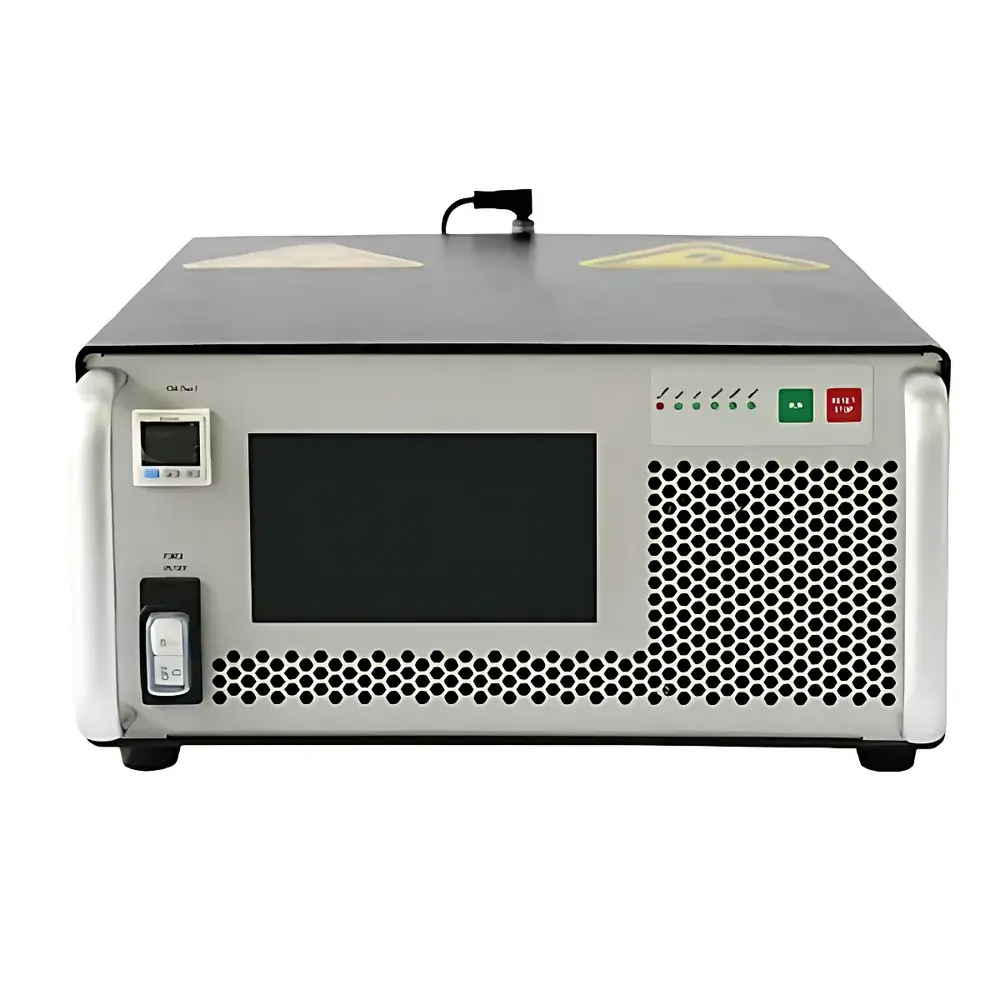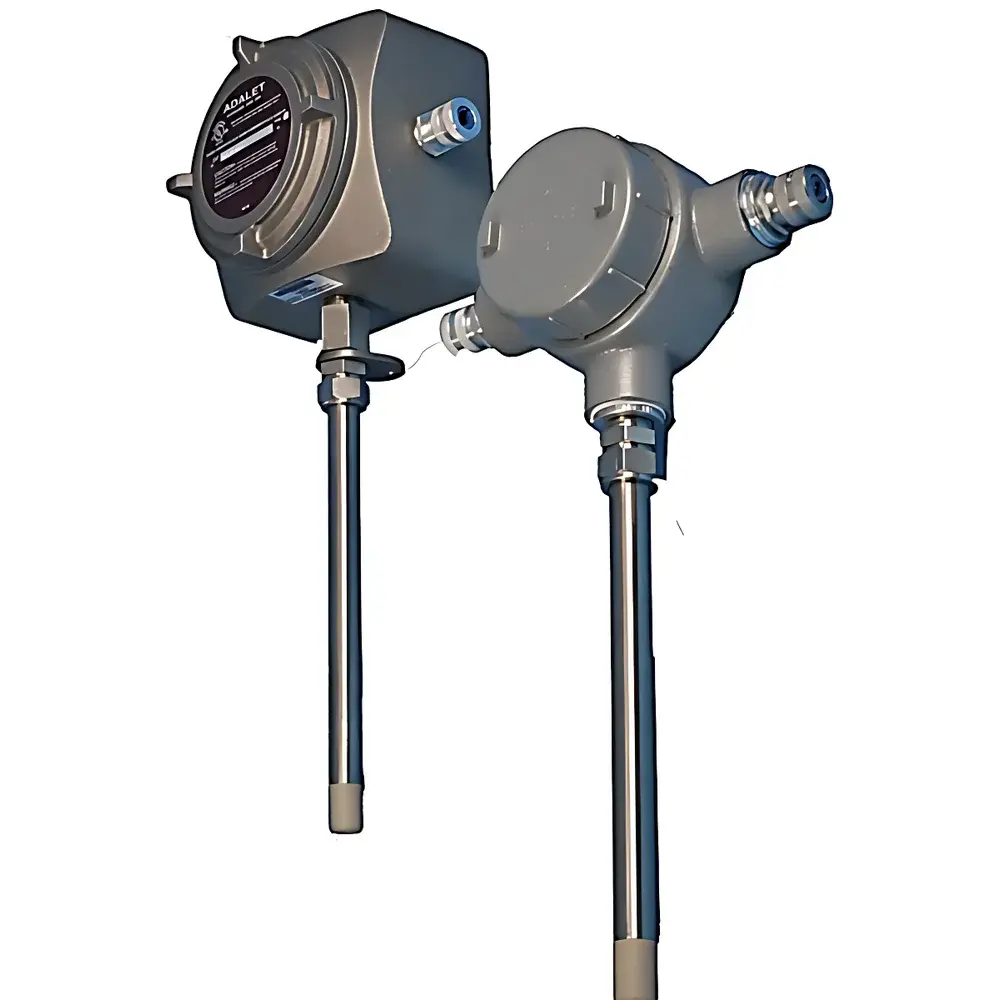
Monitek Ultrasonic Turbidity Analyzer
| Brand | Galvanic |
|---|---|
| Origin | USA |
| Model | Monitek Ultrasonic |
| Measurement Principle | Ultrasonic Reflectance |
| Frequency Options | 5 MHz / 15 MHz |
| Enclosure Rating | NEMA 4X / IP65 |
| Max Process Pressure | 20 bar (customizable higher) |
| Max Process Temperature | 90°C (110°C with air cooling) |
| Sensor Material | 316 SS / PEEK |
| Sensor Length | ~300 mm (custom lengths available) |
| Cable Length | 100 m |
| Measurable Range | 0–100 ppm to 0–10,000 ppm (configurable |
| Output Units | ppm, mg/L, %, EBC, etc. |
| Accuracy | ±1% |
| Hazardous Area Certifications | Ex Zone I, Ex Zone II, Class 1 Div. 1 |
| Maintenance | No consumables |
| Installation | Retractable probe via 1" ball valve adapter |
Overview
The Monitek Ultrasonic Turbidity Analyzer is an industrial-grade online process analyzer engineered for robust, interference-free measurement of suspended solids concentration in challenging liquid streams. Unlike optical turbidity sensors—whose performance degrades in colored, opaque, or fouling-prone media—the Monitek system employs high-frequency ultrasonic reflectance technology operating at 5 MHz and 15 MHz. This principle relies on the differential acoustic impedance between suspended particles and the continuous phase, generating measurable backscatter signals proportional to particle mass concentration—not optical transmission or scattering. As a result, measurements remain stable regardless of liquid color, dye content, UV sensitivity, or surface film formation. The system comprises a rugged, retractable ultrasonic transducer probe and a dedicated signal-processing transmitter, designed for permanent installation in pressurized pipelines, reactors, open channels, or storage tanks. Its ability to operate continuously under process conditions up to 20 bar and 90°C (110°C with optional air-cooling) makes it suitable for demanding applications in oil & gas, chemical manufacturing, wastewater treatment, and food & beverage processing.
Key Features
- Ultrasonic reflectance measurement eliminates dependence on optical properties—immune to color, turbidity, fluorescence, or coating buildup
- Self-cleaning transducer surface via high-frequency ultrasonic pulsing reduces maintenance intervals and prevents drift from biofilm or particulate adhesion
- Retractable probe design with 1” ball valve interface enables hot-tap insertion and removal without process shutdown (rated for ≤5 bar during service; full 20 bar operational rating)
- Configurable dual-frequency operation (5 MHz for coarse/flocculated suspensions; 15 MHz for fine colloidal particles) optimizes resolution across diverse particle size distributions
- NEMA 4X / IP65-rated transmitter housing ensures reliable operation in wet, dusty, or washdown environments
- No consumables or optical components—solid-state architecture delivers long-term stability and low total cost of ownership
- Hazardous area certifications include ATEX Ex Zone I & II and UL Class I Div. 1, enabling deployment in classified process zones
- Wide dynamic range: factory-configurable from 0–100 ppm to 0–10,000 ppm (or up to 1% TSS), with selectable output units (ppm, mg/L, %, EBC)
Sample Compatibility & Compliance
The Monitek Ultrasonic Turbidity Analyzer is validated for use in heterogeneous liquid matrices where optical methods fail—including emulsified oil-in-water systems, dark-colored process liquors (e.g., molasses, tannin-rich effluents), light-sensitive pharmaceutical intermediates, and highly viscous or aerated slurries. It complies with mechanical and electrical safety standards per IEC 61000-6-2/6-4 (EMC), IEC 60529 (IP rating), and ISO 9001-certified manufacturing protocols. For regulated industries, the transmitter supports configurable audit trails, user-level access control, and data logging aligned with GLP/GMP documentation requirements. While not intrinsically calibrated to ASTM D7315 or ISO 7027 (optical turbidity standards), its ultrasonic methodology satisfies functional equivalency for process control per ASTM D3977 (suspended solids by gravimetric analysis) when correlated against lab reference methods.
Software & Data Management
The integrated transmitter provides analog (4–20 mA) and digital (RS-485 Modbus RTU) outputs, enabling seamless integration into DCS, SCADA, or MES platforms. Optional web-enabled firmware allows remote configuration via secure HTTP(S) interface, including span calibration, unit conversion, damping adjustment, and alarm threshold setting. All configuration changes are timestamped and logged with operator ID, supporting FDA 21 CFR Part 11 compliance when deployed with appropriate system validation documentation. Data history is retained onboard for ≥30 days (configurable), with export capability via USB or Modbus polling. Calibration verification routines include zero-check with clean reference fluid and span verification using traceable suspension standards.
Applications
- Real-time monitoring of oil-in-water concentration in produced water streams and refinery desalters
- Control of polymer flocculant dosing in municipal and industrial wastewater clarification
- In-line detection of catalyst fines or metal hydroxide precipitates in chemical synthesis reactors
- Quality assurance of clarified juice or beer post-filtration where optical sensors foul rapidly
- Monitoring of suspended solids in pulp & paper white water circuits and coating pigment dispersions
- Leak detection in heat exchanger bundles via sudden rise in coolant turbidity
FAQ
How does ultrasonic turbidity differ from optical turbidity measurement?
Ultrasonic turbidity quantifies particle concentration via acoustic backscatter amplitude and time-of-flight analysis, independent of light absorption or scattering. Optical methods require transparent media and degrade with color, bubbles, or lens fouling—ultrasonic operation avoids these limitations entirely.
Can the sensor be installed in high-pressure steam lines?
No—the sensor is rated for liquid-phase applications up to 20 bar and 90°C (110°C with active air cooling). It is not designed for direct steam exposure or gas-phase measurement.
Is third-party calibration certification available?
Yes. Galvanic offers NIST-traceable calibration services using ISO/IEC 17025-accredited laboratories, including uncertainty reporting and certificate of conformance for critical installations.
What maintenance is required over a 5-year service life?
Annual verification against a process-matched reference sample is recommended. No routine cleaning, lamp replacement, or optical alignment is needed due to the non-optical, self-cleaning transducer design.