mRNA Synthesis Automation System by X-Imaging
| Brand | X-Imaging |
|---|---|
| Origin | Shanghai, China |
| Manufacturer Type | OEM Manufacturer |
| Region of Origin | Domestic (China) |
| Model | mRNA Synthesis Automation System |
| Pricing | Available Upon Request |
Overview
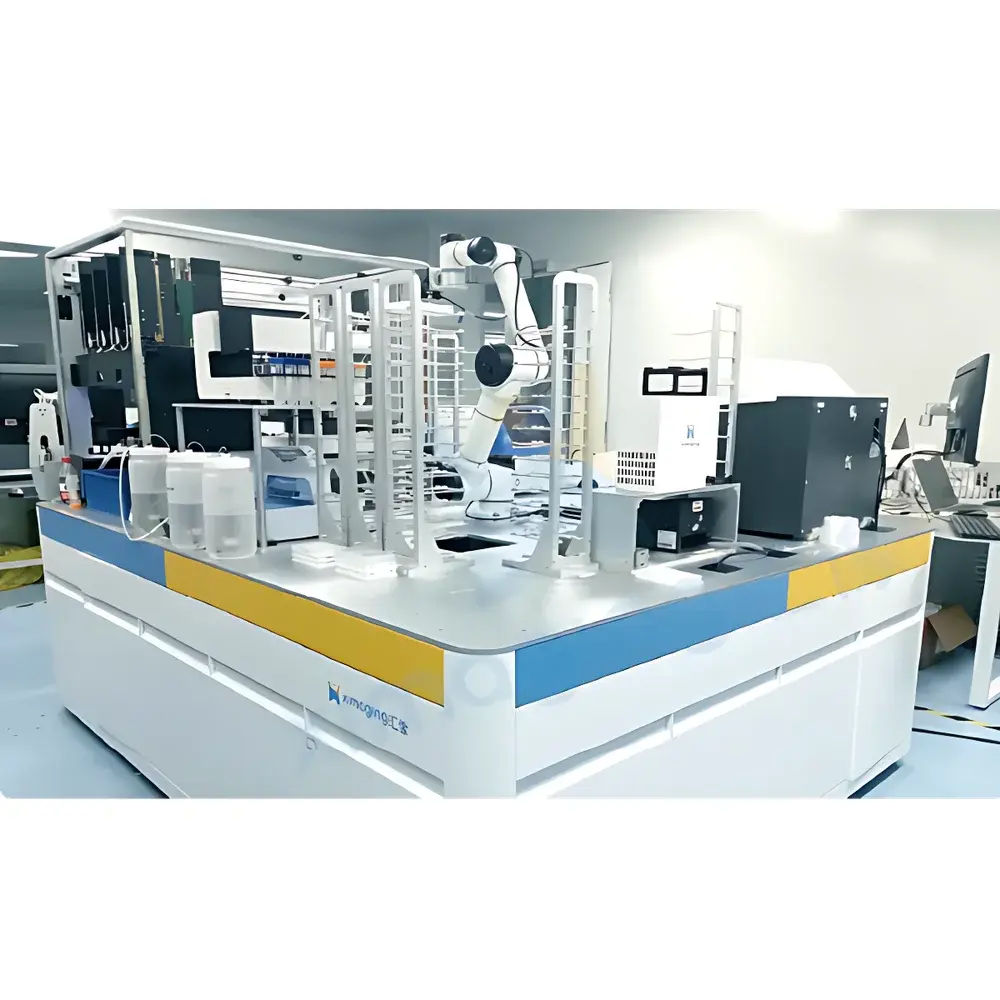
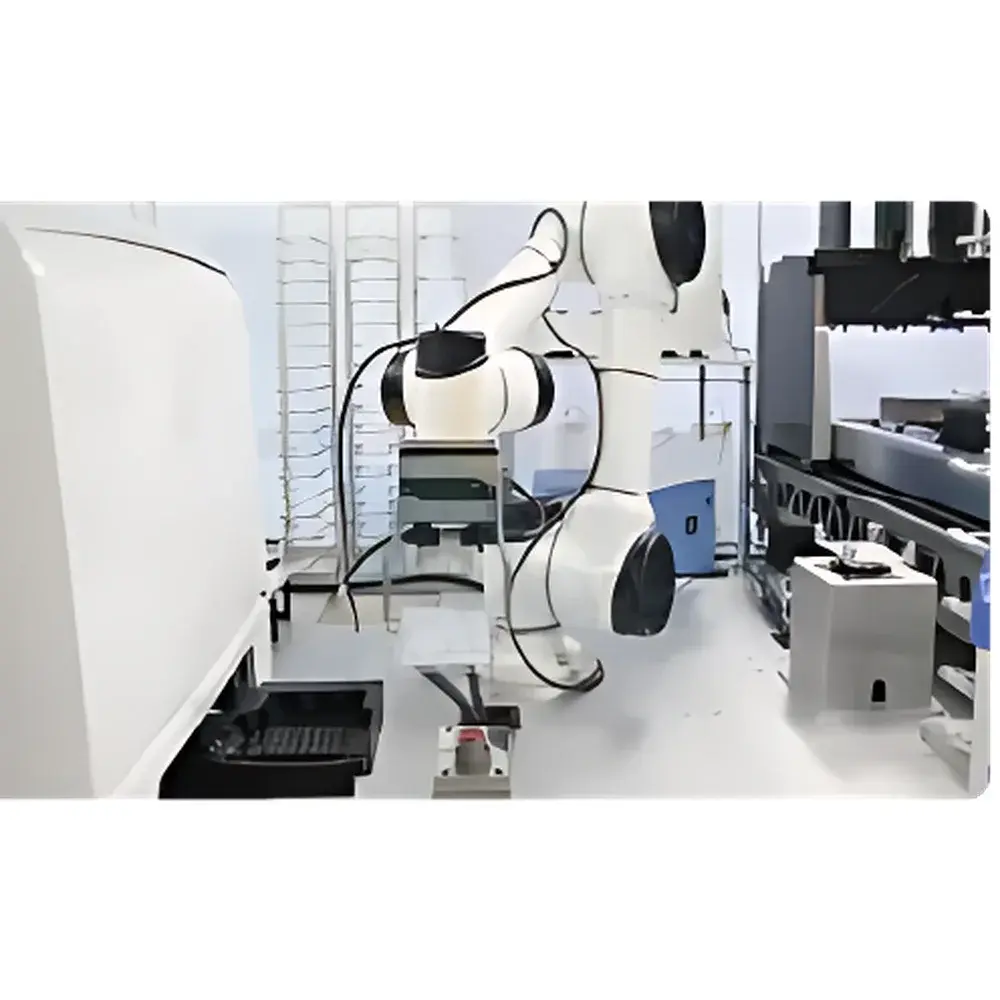
The X-Imaging mRNA Synthesis Automation System is an integrated laboratory automation platform engineered for end-to-end execution of in vitro transcription (IVT)-based mRNA production workflows. Built upon modular liquid handling robotics, temperature-controlled reaction modules, and integrated nucleic acid purification units, the system implements a closed, programmable process chain grounded in molecular biology best practices. It executes sequential steps—including plasmid linearization (via restriction enzyme digestion or CRISPR-Cas12a cleavage), post-digestion cleanup, spectrophotometric/fluorometric quantification and normalization, IVT reaction setup, DNase I treatment, LiCl or silica-membrane-based mRNA purification, enzymatic capping and poly(A) tailing (optional module integration), and cap/poly(A) integrity assessment via microfluidic electrophoresis or capillary gel electrophoresis (CGE). Designed for GMP-aligned research environments, the system operates under controlled ambient conditions and supports 24-hour unattended operation with real-time status monitoring and hardware-level error logging.
Key Features
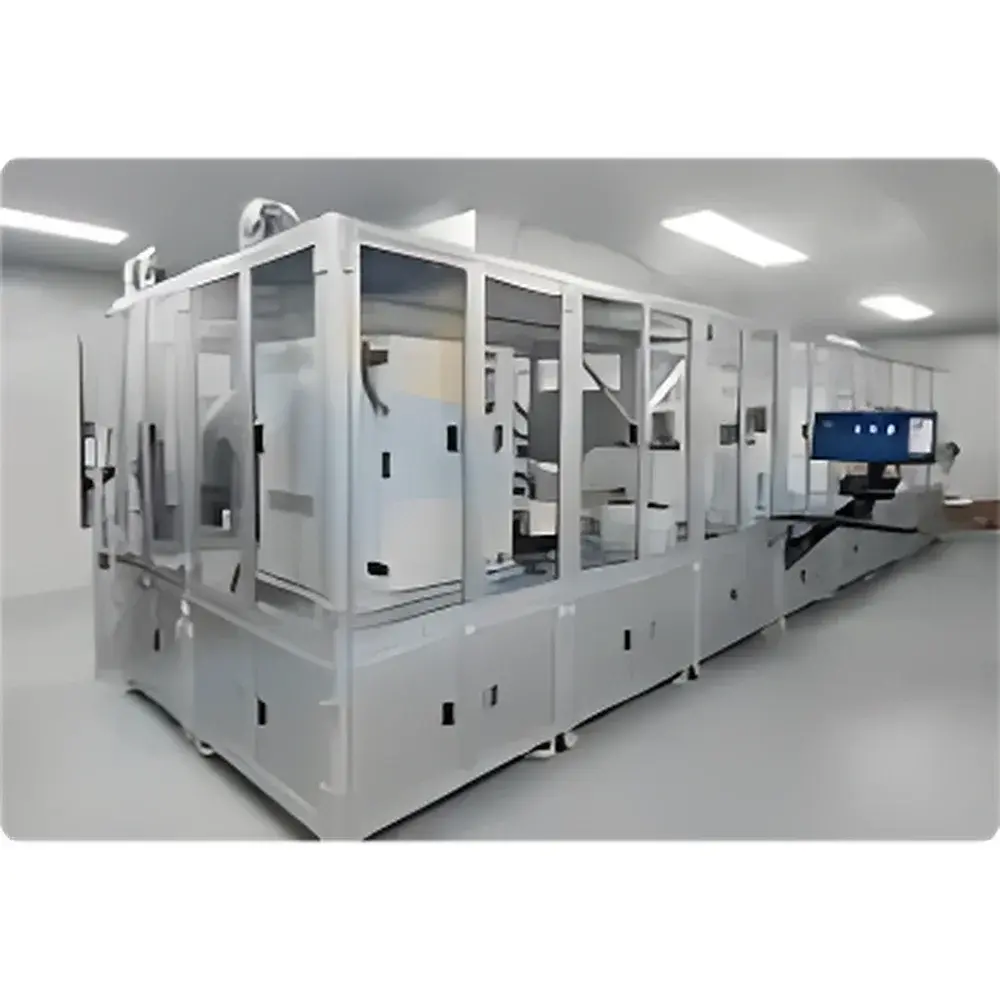
- Modular architecture with independent HEPA-filtered workstations—each dedicated to specific workflow segments (e.g., DNA handling, IVT, RNA purification)—to minimize cross-contamination and RNase-mediated degradation
- Programmable protocol engine supporting custom script development in Python-based API, enabling adaptation to novel IVT templates, modified NTPs, or non-canonical capping analogs
- Integrated sample tracking via 2D barcode scanning at every transfer step; full audit trail compliant with ALCOA+ principles (Attributable, Legible, Contemporaneous, Original, Accurate, Complete, Consistent, Enduring, Available)
- Onboard UV-Vis and fluorescent nucleic acid quantification (dsDNA/RNA-specific dyes), eliminating manual dilution and spectrophotometer dependency
- Automated reagent inventory management with low-volume alerting and expiration date tracking synchronized to LIMS interfaces
- Fail-safe liquid level sensing, tip collision detection, and pressure-based pipetting verification to ensure volumetric accuracy across 1–1000 µL ranges
Sample Compatibility & Compliance
The system accommodates standard E. coli glycerol stocks, miniprep/maxiprep plasmid preps (≤500 µg), and lyophilized or solution-phase enzymes and nucleotides. Compatible with common IVT kits (e.g., T7/T3/SP6-based systems), cap analogs (CleanCap® AG, ARCA), and poly(A) polymerases. All fluidic pathways are RNase-free certified (DEPC-treated or single-use disposable components). The platform meets ISO 13485 design control requirements for Class I IVD instruments and supports configuration for 21 CFR Part 11-compliant electronic records and signatures when deployed with validated software modules. Documentation packages include IQ/OQ protocols and traceable calibration certificates for onboard sensors.
Software & Data Management
Controlled via X-Imaging’s proprietary SynthOS™ v3.2 software suite, the system provides role-based access control (RBAC), versioned protocol libraries, and encrypted local database storage. Raw instrument logs, run metadata, and QC metrics (e.g., A260/A280 ratios, yield, fragment size distribution) are exportable in CSV, JSON, and SDMX-ML formats. Native HL7 and ASTM E1384 interfaces enable bidirectional synchronization with enterprise LIMS (e.g., LabVantage, Thermo Fisher SampleManager) and ELN platforms (e.g., Benchling, LabArchives). Audit trails retain all user actions, parameter changes, and system events for ≥36 months per GLP/GMP retention policies.
Applications
- Preclinical screening of mRNA constructs for therapeutic antibodies, replacement proteins (e.g., CFTR, alpha-1-antitrypsin), and immunomodulators (e.g., OX40L, IL-12)
- Rapid prototyping of self-amplifying mRNA (saRNA) and circular RNA (circRNA) templates requiring specialized linearization and ligation steps
- Development of siRNA and shRNA expression cassettes where promoter-driven transcription and hairpin processing are automated
- Process characterization studies supporting regulatory filings—particularly for comparability assessments across batch sizes (1–10 mg scale)
- Academic core facility deployment for shared-resource mRNA synthesis services with multi-user scheduling and cost-allocation reporting
FAQ
Does the system support co-transcriptional capping?
Yes—when configured with the optional Cap-On-Demand module, it enables CleanCap®-type trinucleotide capping during IVT initiation using dual-enzyme kinetics control.
Can it integrate with third-party analytical instruments?
Yes—via standardized USB/RS232/Ethernet interfaces and vendor-agnostic command protocols (SCPI-compatible), it triggers HPLC, qPCR, or NanoString nCounter runs upon mRNA purification completion.
What is the maximum throughput per 24-hour cycle?
Up to 96 independent mRNA synthesis reactions (10–50 µg each) using 96-well plate format; throughput scales linearly with deck configuration and reagent loading strategy.
Is remote monitoring supported?
Yes—SynthOS™ includes TLS-secured web dashboard with live video feed from onboard cameras, real-time temperature/humidity telemetry, and SMS/email alerts for critical faults.
How is RNase contamination prevented during long-duration runs?
Through continuous HEPA recirculation (ISO Class 5 at point-of-use), disposable fluid paths, and scheduled UV-C irradiation cycles between runs—validated per ISO 14644-1.
Related Products