
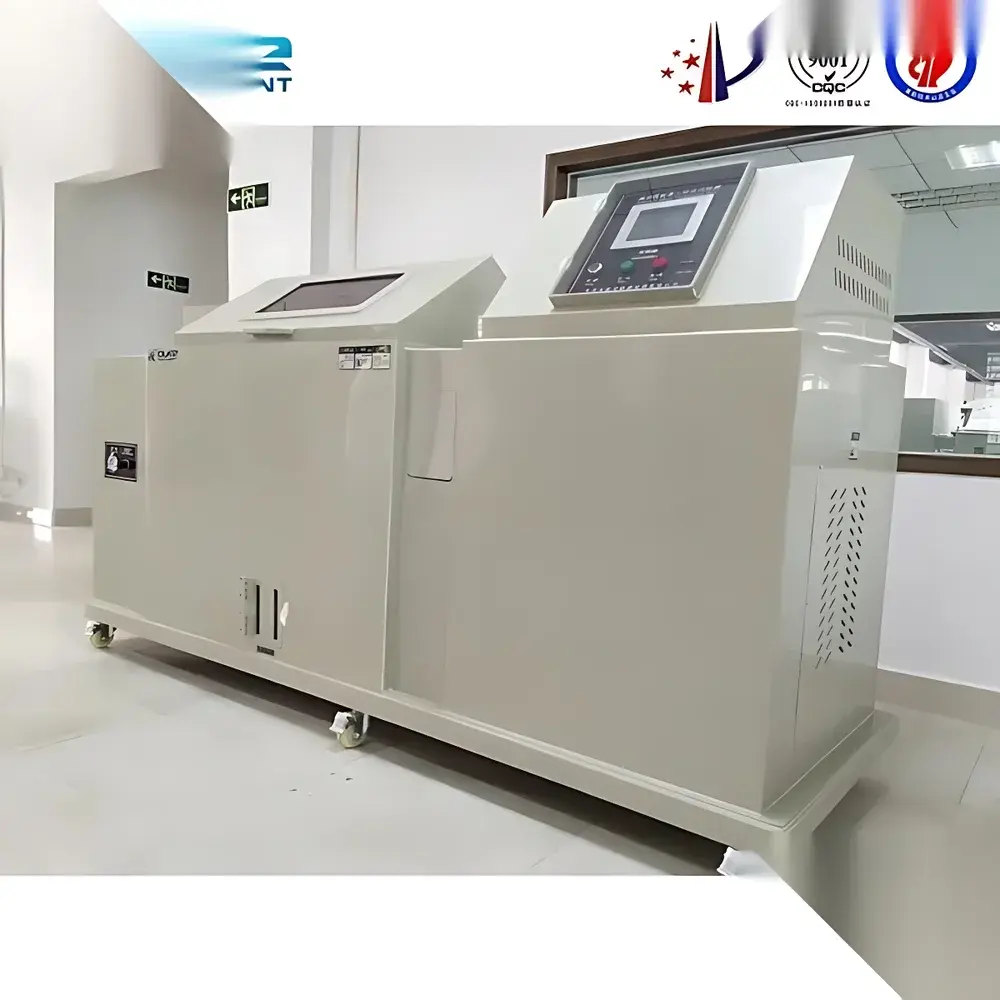
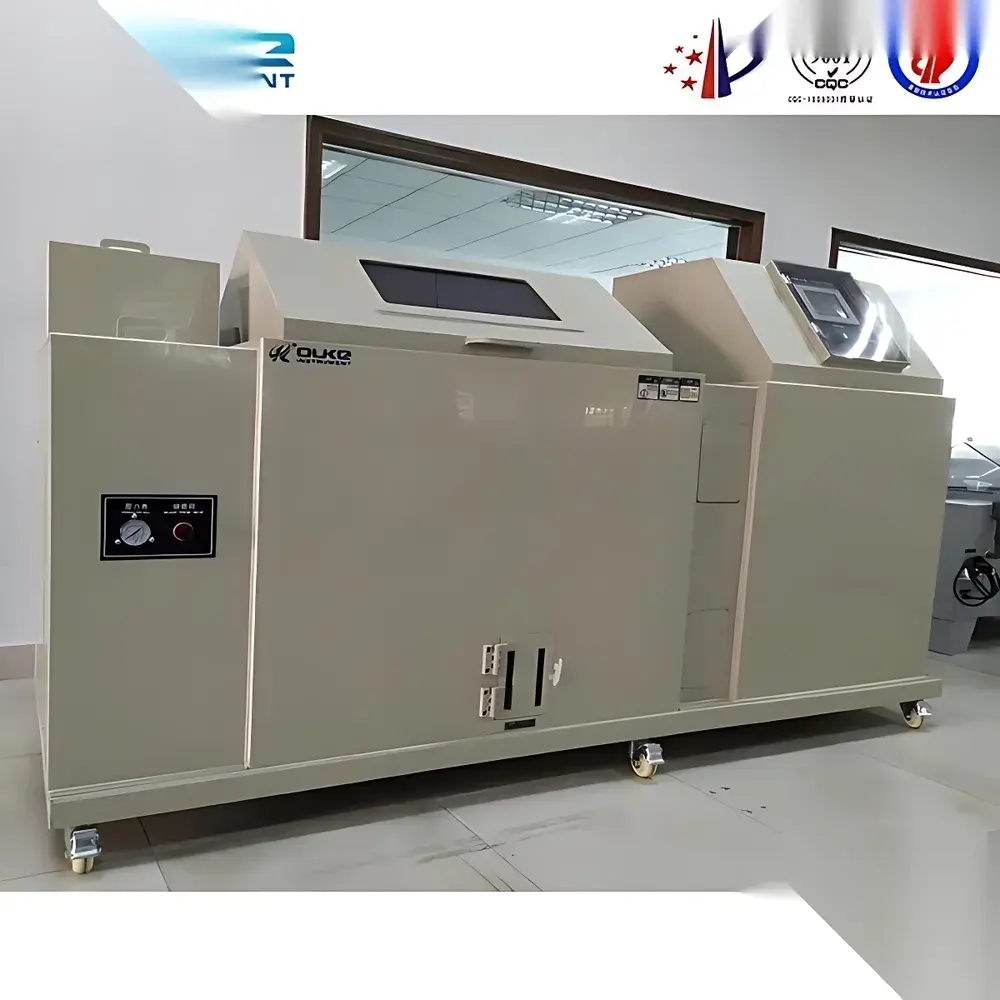
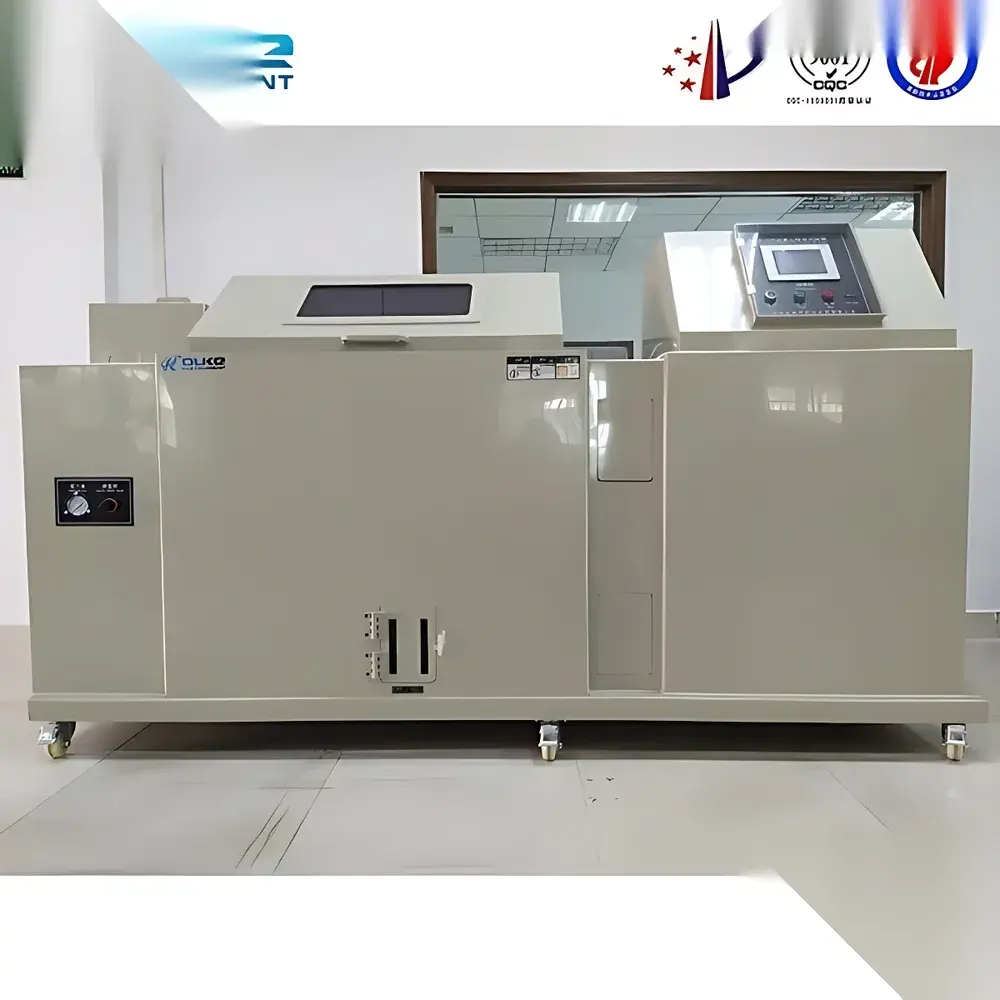
Multi-Environmental Corrosion Test Chamber for Temperature, Humidity, and Sulfur Dioxide Exposure
| Temperature Range | RT+10°C to 50°C |
|---|---|
| Humidity Range | 85–98% RH |
| Temperature Uniformity | ≤ ±2°C |
| Temperature Stability | ≤ ±0.5°C |
| SO₂ Generation Method | Compressed Gas Cylinder |
| SO₂ Concentration Range | 0.05–1.0% v/v |
| Compliance | ASTM B117, ISO 6988, IEC 60068-2-60, GB/T 2423.33 |
Overview
The Multi-Environmental Corrosion Test Chamber for Temperature, Humidity, and Sulfur Dioxide Exposure is an engineered environmental simulation system designed to evaluate material degradation under controlled, accelerated corrosive conditions. It integrates precise regulation of temperature, relative humidity, and sulfur dioxide (SO₂) gas concentration—enabling standardized assessment of corrosion resistance in metallic substrates, protective coatings, electronic components, and industrial hardware. Based on the fundamental principles of electrochemical corrosion acceleration, this chamber replicates aggressive atmospheric environments where SO₂ acts as a catalyst for sulfation, acid formation, and oxide layer breakdown—particularly relevant to urban/industrial pollution exposure scenarios. The system operates in strict accordance with internationally recognized test standards including ASTM B117 (salt spray), ISO 6988 (SO₂ corrosion), and IEC 60068-2-60 (mixed flowing gas testing), ensuring data comparability across global R&D, quality assurance, and regulatory validation workflows.
Key Features
- Triple-parameter independent control: Simultaneous, stable regulation of temperature (RT+10°C to 50°C), humidity (85–98% RH), and SO₂ concentration (0.05–1.0% v/v) via closed-loop feedback systems.
- Gas delivery architecture: High-purity SO₂ supplied from certified compressed gas cylinders; flow rate and concentration precisely metered using calibrated rotameters with float-type visual indicators.
- Corrosion-resistant internal construction: Chamber interior fabricated from PP (polypropylene) or PVDF-lined stainless steel; gas distribution manifold and internal ducting made of fluorosilicone or perfluoroelastomer tubing to prevent chemical permeation and aging.
- Intelligent controller interface: Touch-sensitive membrane keypad with embedded microprocessor; supports programmable multi-step test profiles, real-time parameter logging, and automatic error diagnostics.
- Robust safety infrastructure: Dual-stage protection includes over-temperature cutoff, low-water-level detection, phase failure monitoring, ground-fault circuit interruption (GFCI), and non-fuse circuit breakers—meeting IEC 61000-4 electromagnetic compatibility requirements.
- Energy-efficient thermal management: PID-controlled heating elements combined with insulated double-wall construction minimize thermal drift and external heat radiation.
Sample Compatibility & Compliance
This chamber accommodates standard test specimens up to 600 mm × 600 mm × 500 mm (W×D×H), including coated metal panels, PCB assemblies, fasteners, automotive trim parts, and stainless steel utensils. Specimen racks are adjustable and constructed from inert PTFE-coated stainless steel to avoid galvanic interference. All operational protocols align with GLP (Good Laboratory Practice) documentation requirements, supporting audit-ready traceability for ISO/IEC 17025-accredited laboratories. Test reports generated by the system comply with FDA 21 CFR Part 11 electronic record integrity criteria when paired with optional audit-trail-enabled software modules.
Software & Data Management
The integrated controller provides local data storage for up to five years of continuous operation logs—including timestamped temperature, humidity, SO₂ concentration, alarm events, and power interruption records. Optional PC-based software enables remote monitoring via Ethernet or RS-485, automated report generation (PDF/CSV), and integration into enterprise LIMS platforms. Data export supports ISO/IEC 17025-compliant calibration traceability through NIST-traceable sensor verification protocols. Firmware updates maintain alignment with evolving IEC 60068-2 series revisions and regional regulatory amendments.
Applications
- Accelerated corrosion screening of zinc-plated steel, aluminum alloys, and passivated stainless steels per ASTM G85 Annex A2 (SO₂-acidified salt fog).
- Comparative evaluation of organic coating systems (epoxy, polyurethane, PVDF) for architectural cladding and marine equipment.
- Reliability validation of consumer electronics enclosures, connectors, and printed circuit board finishes under simulated industrial atmospheres.
- Process qualification of electroplating, anodizing, and conversion coating lines in Tier-1 automotive and aerospace supply chains.
- Material selection support for HVAC components, foodservice equipment, and medical device housings exposed to high-humidity, chemically aggressive environments.
FAQ
What standards does this chamber support for SO₂ corrosion testing?
It fully complies with ISO 6988, IEC 60068-2-60, and ASTM G85 Annex A2—enabling reproducible mixed-gas corrosion assessments.
Can the chamber operate without SO₂ injection while maintaining temperature/humidity control?
Yes. The system allows standalone climatic conditioning (temperature + humidity) or selective SO₂ introduction, configurable via the controller’s mode selection menu.
Is third-party calibration certification available?
Factory-calibrated sensors include NIST-traceable certificates; optional UKAS-accredited field calibration services are available upon request.
How is exhaust gas treated before release?
An integrated alkaline scrubber (NaOH solution-based) neutralizes residual SO₂ prior to venting, meeting OSHA PEL and local EPA emission thresholds.
What maintenance intervals are recommended for long-term reliability?
Monthly inspection of gas seals and tubing integrity; quarterly verification of humidity sensor accuracy; annual full-system performance validation per ISO/IEC 17025 Annex C guidelines.
Related Products



