
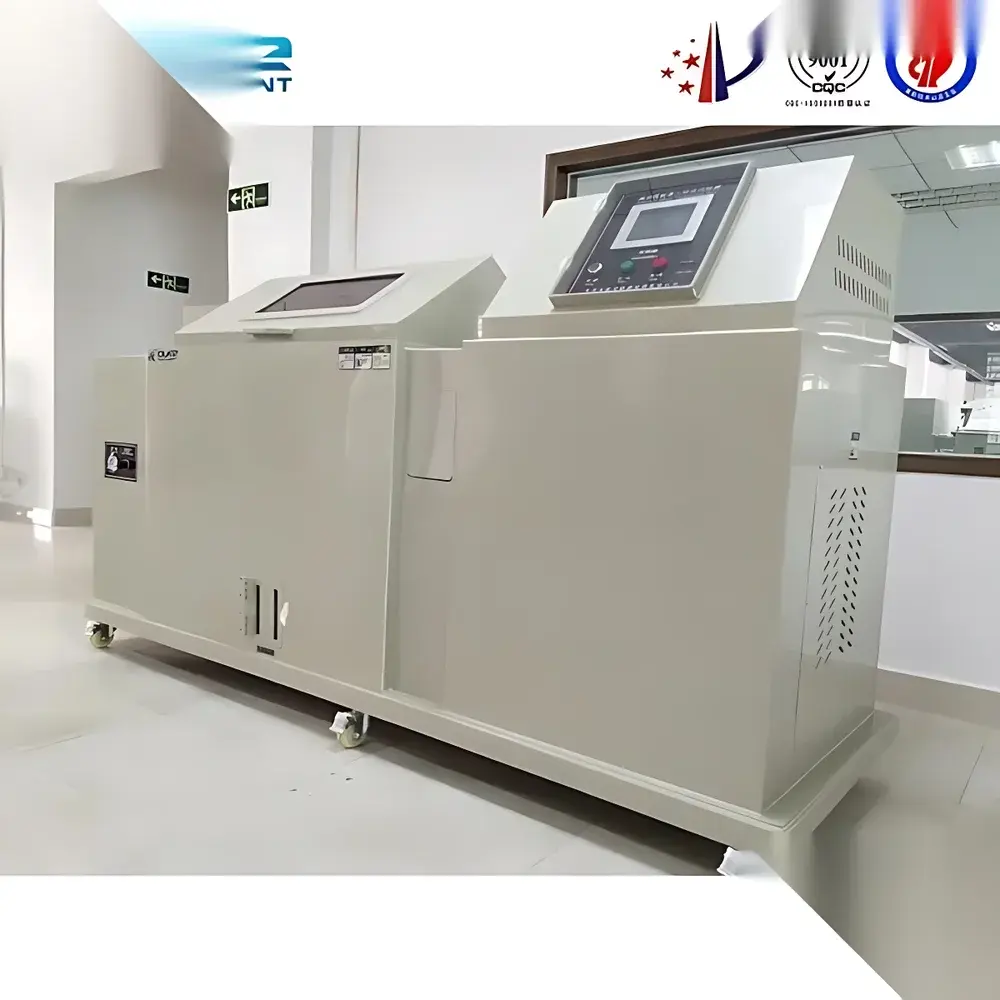
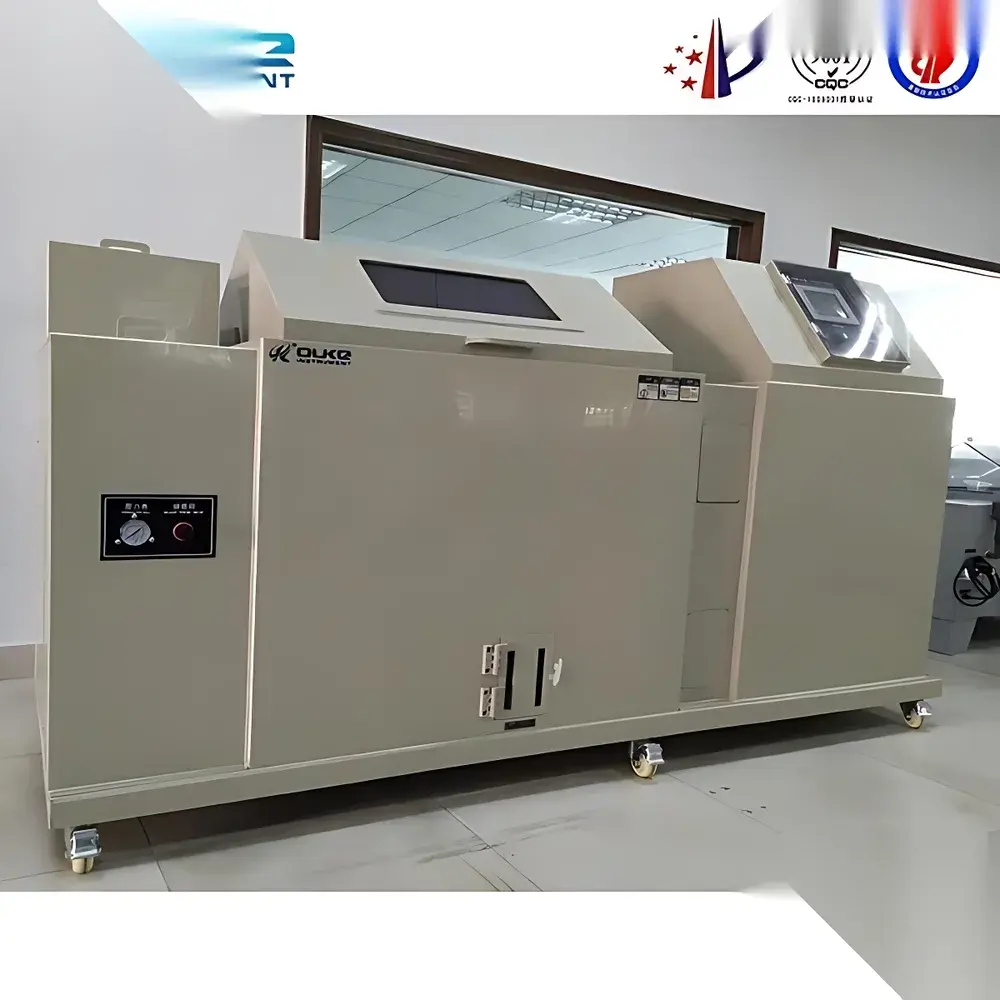
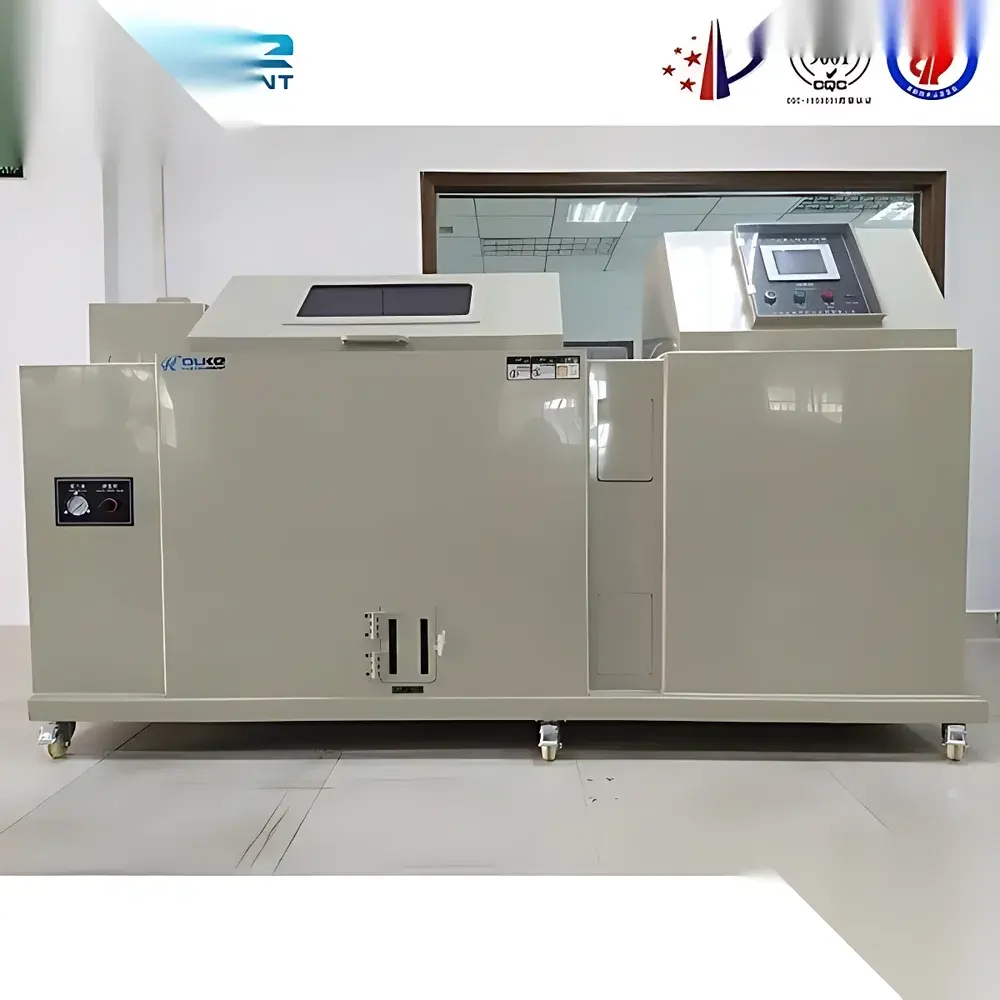
Multi-Function Salt Spray Corrosion Test Chamber
| Brand | OEM / Custom Brand |
|---|---|
| Origin | Imported |
| Manufacturer Type | Authorized Distributor |
| Price | USD 12,500 (FOB) |
| Compliance | ASTM B117, ISO 9227, IEC 60068-2-11, GB/T 2423.17, JIS Z 2371, DIN 50021 |
Overview
The Multi-Function Salt Spray Corrosion Test Chamber is an engineered environmental test system designed to simulate accelerated corrosive conditions for evaluating the salt resistance performance of metallic coatings, electroplated surfaces, automotive components, marine hardware, and electronic enclosures. Based on the standardized salt fog (neutral salt spray, NSS) principle—where atomized 5% NaCl solution is continuously dispersed into a temperature-controlled chamber—the chamber supports both static and cyclic corrosion testing protocols. Its dual-chamber architecture enables seamless integration of salt spray with controlled humidity and temperature phases, facilitating compliance with composite corrosion standards such as ISO 14993 and ASTM G85 Annex A5 (modified salt spray with drying/humidity cycles). The system operates within a regulated test space maintained at 35 ± 2 °C during NSS mode, with precise saturation tank temperature control ensuring stable fog generation and reproducible deposition rates (1.0–2.0 mL/80 cm²/h, per ASTM B117).
Key Features
- Corrosion-Resistant Pressure Saturator: Constructed from high-purity gray PVC with optimized cylindrical geometry—engineered to withstand sustained exposure to saturated steam at 47 ± 1 °C, eliminating rust formation and thermal degradation issues associated with stainless steel saturators.
- Optical-Grade Viewing Lid: 5 mm-thick imported acrylic lid formed via cold-bending into a 100° ridge profile; condensate flows along the inclined surface into a sealed gutter, preventing droplet contamination of test specimens.
- Adjustable Sample Support System: V-shaped gray PVC racks combined with 10 mm-diameter tempered glass rods allow precise specimen orientation between 15° and 30°, conforming to ISO 9227 positioning requirements for uniform fog exposure.
- Tower-Type Atomization System: Uniform conical spray pattern generated via vertical tower nozzles; adjustable nozzle-to-specimen distance and continuous operation time (0–999 h) support long-duration validation protocols.
- Quartz Glass Nozzles: Precision-borosilicate quartz nozzles fabricated using Bernoulli-effect aerodynamic design; smooth internal bore minimizes crystallization buildup—validated for >10,000 hours of operational life under routine maintenance.
- Intelligent Control Architecture: PID-based digital controller with PT100 sensor input (±0.1 °C accuracy), dual-stage pressure regulation, redundant overtemperature protection (mechanical + electronic), and integrated safety interlocks for low-water, phase-loss, and thermal runaway conditions.
Sample Compatibility & Compliance
The chamber accommodates flat panels, fasteners, printed circuit boards, coated substrates, and small-assembled devices up to 600 × 450 × 400 mm (W × D × H). All wetted components—including saturator, spray tower, and sample supports—are non-metallic and chemically inert to 5% NaCl solution, preventing cross-contamination and electrolytic interference. The system is fully compliant with international corrosion testing standards including ASTM B117 (NSS), ISO 9227 (NSS/AASS/CASS), IEC 60068-2-11, GB/T 2423.17, JIS Z 2371, and DIN 50021. Design and manufacturing follow GB 10587 “General Technical Conditions for Environmental Testing Equipment”, ensuring structural integrity, thermal stability, and long-term metrological traceability.
Software & Data Management
Equipped with embedded RS485/Modbus RTU interface and optional Ethernet connectivity, the controller supports remote monitoring and data logging via third-party SCADA or LIMS platforms. Real-time temperature, saturator pressure, and runtime are recorded at user-defined intervals (1–60 min) with timestamped CSV export. Audit trail functionality complies with GLP and GMP documentation requirements, while configurable alarm thresholds and event-triggered email/SMS notifications (via gateway module) ensure uninterrupted test integrity. Firmware adheres to IEC 62443 cybersecurity principles for industrial control systems.
Applications
This chamber serves quality assurance laboratories in automotive Tier-1 suppliers (e.g., corrosion validation of brake calipers and chassis components), electronics manufacturers (IPC-A-610-compliant coating verification), aerospace MRO facilities (fastener passivation testing), and plating service providers (ASTM B633 zinc coating durability assessment). It is routinely deployed for supplier qualification audits, R&D material screening, and regulatory submission testing supporting ISO/TS 16949, AS9100, and FDA 21 CFR Part 11–aligned workflows.
FAQ
What standards does this chamber support beyond ASTM B117?
It fully meets ISO 9227 (NSS, AASS, CASS), IEC 60068-2-11, GB/T 2423.17, JIS Z 2371, and DIN 50021, with optional upgrade kits available for cyclic corrosion testing per ASTM G85 Annexes A1–A5.
Can the chamber perform humidity-only or drying-only cycles?
Yes—the dual-zone control architecture allows independent regulation of chamber temperature and relative humidity (20–98% RH, 10–60 °C), enabling standalone damp heat or dry storage phases within programmable multi-step test profiles.
Is calibration certification included with delivery?
Each unit ships with factory calibration report traceable to NIST standards for temperature (PT100) and saturator pressure sensors, valid for 12 months; ISO/IEC 17025-accredited on-site calibration services are available upon request.
What maintenance intervals are recommended for quartz nozzles?
Nozzle inspection and ultrasonic cleaning are advised every 500 operating hours; full replacement is recommended after 10,000 hours or if flow rate deviation exceeds ±5% from baseline.
Does the system support automated test reporting for ISO 17025 compliance?
Yes—integrated data logging with electronic signature, version-controlled firmware, and tamper-evident audit trails satisfy ISO/IEC 17025 Clause 7.7 and FDA 21 CFR Part 11 Subpart B requirements for electronic records and signatures.



