
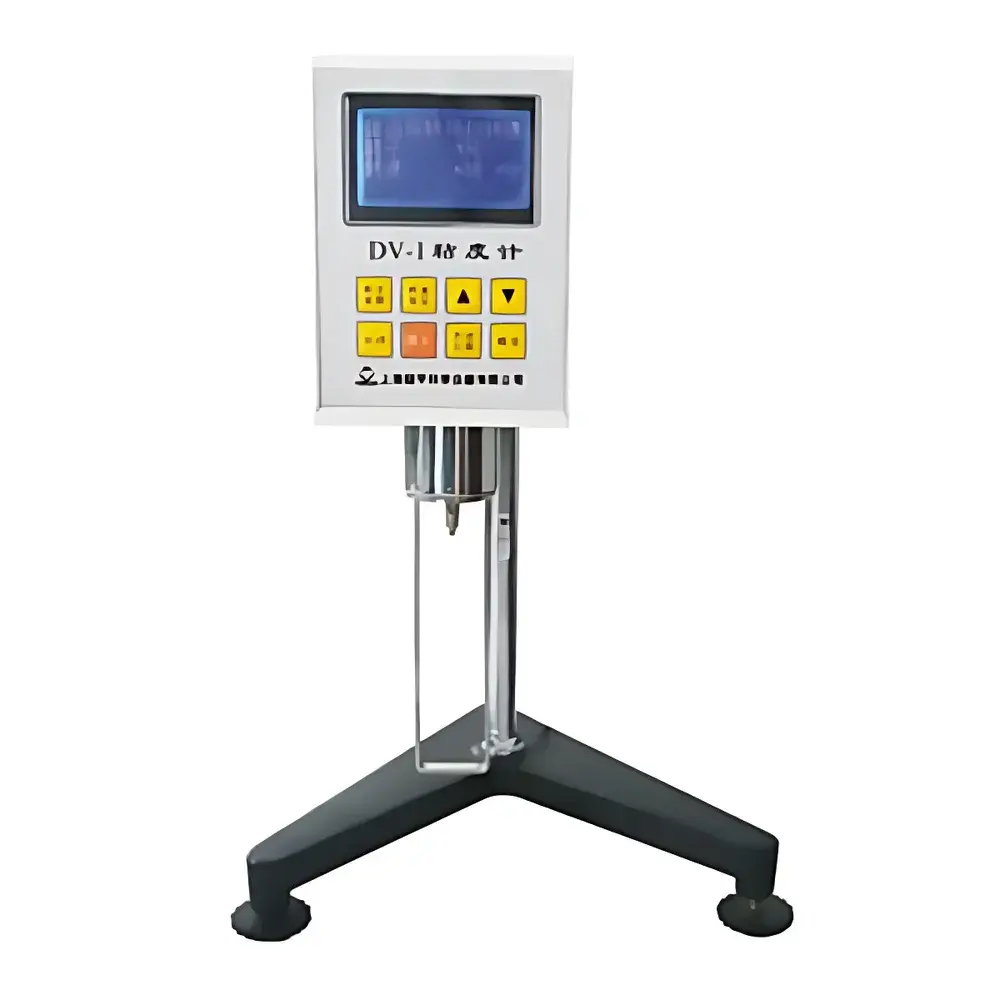
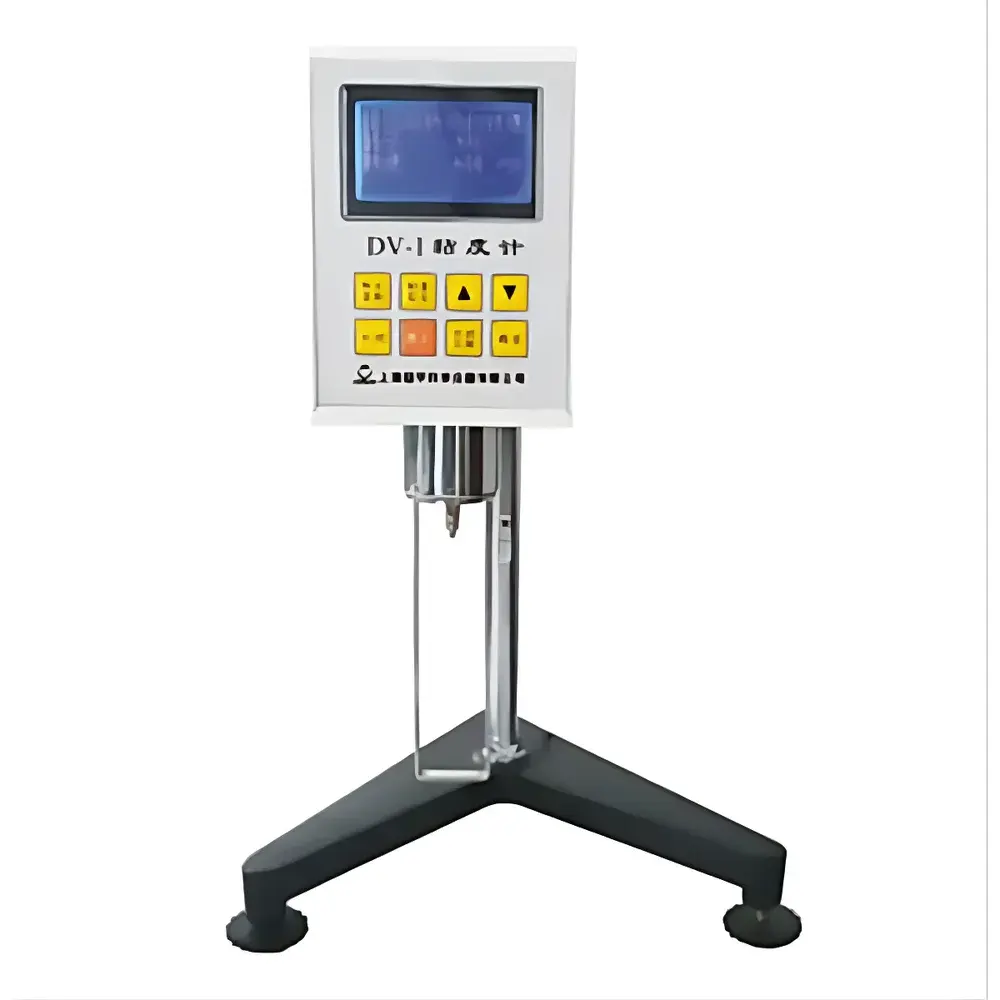
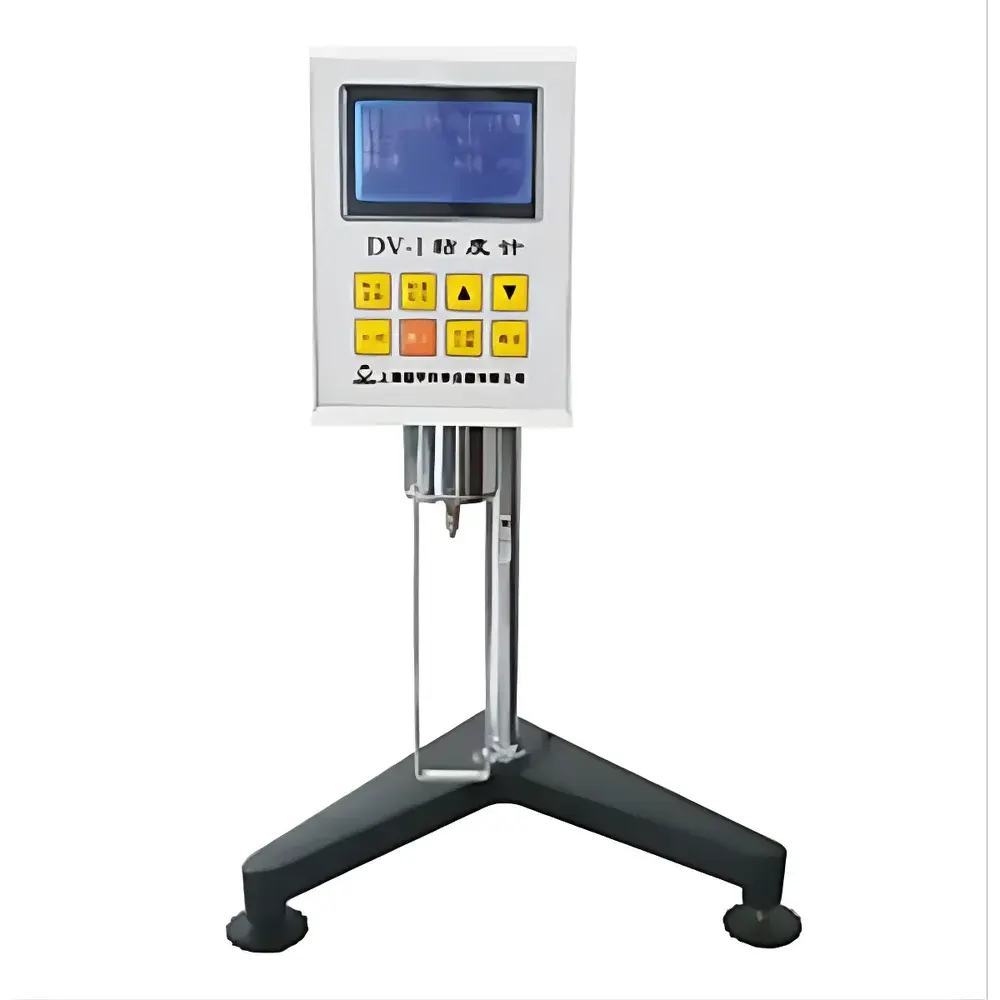
MyiP DV-1 Digital Rotational Viscometer
| Brand | MyiP |
|---|---|
| Origin | Shanghai, China |
| Model | DV-1 |
| Instrument Type | Benchtop Fixed Rotational Viscometer |
| Viscosity Range | 1–2×10⁶ mPa·s |
| Accuracy | ±2% (for Newtonian fluids) |
| Speed Settings | 0.3, 0.6, 1.5, 3, 6, 12, 30, 60 rpm |
| Spindles | LV#1, #2, #3, #4 |
| Operating Environment | Ambient temperature |
| Compliance | Conforms to GB/T 265 and JJG 1002 national standards for kinematic and dynamic viscosity measurement |
Overview
The MyiP DV-1 Digital Rotational Viscometer is a benchtop, microprocessor-controlled instrument engineered for precision measurement of dynamic viscosity in Newtonian and mildly non-Newtonian fluids. Based on the principle of rotational viscometry—where torque required to rotate a spindle at a defined angular velocity within a fluid is directly proportional to its shear viscosity—the DV-1 employs a calibrated stepper motor and high-stability torsion sensor to quantify viscous resistance under controlled shear conditions. Designed for routine quality control and laboratory-scale R&D applications, it delivers repeatable results across a broad dynamic range (1–2×10⁶ mPa·s), supporting standardized test protocols aligned with Chinese national metrological verification regulations (JJG 1002) and fluid characterization standards (GB/T 265). Its fixed-speed, multi-spindle architecture ensures operational simplicity without compromising traceability or reproducibility in ambient-temperature environments.
Key Features
- Microprocessor-driven speed control with eight preset rotational speeds (0.3–60 rpm), enabling selection of appropriate shear rates for diverse sample rheologies.
- Digital LCD display with real-time viscosity readout in mPa·s (cP), eliminating parallax error and improving data legibility during extended testing sessions.
- Four standard LV spindles (#1–#4) included, each geometrically optimized for distinct viscosity sub-ranges—ensuring optimal torque resolution and minimizing wall-effect errors.
- Robust mechanical architecture with low-inertia drive system and thermally stable sensor housing, minimizing drift during prolonged operation.
- Compliance-ready design: supports manual calibration verification per JJG 1002 procedures using certified reference oils; audit trail documentation supported via external logging.
- No integrated temperature control—intended for use in thermally stabilized laboratories where ambient temperature is maintained within ±0.5 °C during measurement (per ISO 2555 guidance).
Sample Compatibility & Compliance
The DV-1 is validated for homogeneous liquids exhibiting near-Newtonian behavior—including solvent-based coatings, polymer solutions, edible oils, adhesives, and aqueous suspensions—with minimal thixotropic or time-dependent response. It is not suitable for highly elastic, yield-stress, or strongly shear-thinning materials requiring controlled shear ramping or oscillatory analysis. All measurements must be performed in accordance with GB/T 265 (petroleum products) and JJG 1002 (verification regulation for rotational viscometers), which define spindle immersion depth, container geometry (600-mL low-form Griffin beaker recommended), and pre-rotation equilibration time (≥30 s). While not FDA 21 CFR Part 11–compliant out-of-the-box, raw viscosity outputs may be imported into validated LIMS or ELN platforms supporting electronic record retention and reviewer approval workflows.
Software & Data Management
The DV-1 operates as a standalone instrument with no embedded data storage or USB/RS-232 connectivity. Viscosity values are displayed and retained only on the front-panel LCD until overwritten by subsequent readings. For regulatory or archival purposes, users are advised to manually record results—including spindle ID, speed setting, and ambient temperature—into paper-bound logbooks or validated electronic systems. Optional third-party software interfaces (e.g., LabVIEW-compatible DAQ modules) can be configured via analog voltage output (0–5 V DC proportional to viscosity), subject to user-developed calibration mapping and validation per ISO/IEC 17025 requirements.
Applications
- QC release testing of industrial coatings and inks: verifying batch-to-batch consistency against specification limits (e.g., ASTM D1084 for latex paints).
- Food processing: monitoring viscosity stability of syrups, dairy emulsions, and starch gels during thermal treatment cycles.
- Adhesive formulation: screening base resin dilutions and crosslinker ratios prior to rheological profiling on advanced rotational rheometers.
- Pharmaceutical excipient qualification: assessing apparent viscosity of simple liquid dosage forms (e.g., glycerin-based elixirs) under USP <911> guidance.
- Academic teaching labs: introducing core concepts of shear stress, shear rate, and Newton’s law of viscosity through hands-on experiments with calibrated reference fluids.
FAQ
What spindle should I use for a sample with an estimated viscosity of ~50,000 mPa·s?
Select LV#3 spindle at 6 rpm or LV#4 at 3 rpm to maintain torque within the optimal 10–90% full-scale range and minimize measurement uncertainty.
Does the DV-1 support automatic temperature compensation?
No. The instrument lacks integrated temperature sensing or Peltier control; users must stabilize sample temperature externally and record ambient conditions separately.
Can I validate the DV-1 against NIST-traceable standards?
Yes—using certified viscosity reference oils (e.g., Cannon-Fenske or Brookfield standards) per JJG 1002 verification protocol; full calibration certificate requires accredited metrology lab services.
Is the DV-1 suitable for measuring non-Newtonian fluids like ketchup or toothpaste?
Not reliably. Its fixed-speed operation cannot capture shear-rate dependence; such materials require controlled shear-rate sweeps or yield stress determination using a rheometer with programmable motor control.
How often should I perform verification checks?
Before each daily use session when employed for QC; additionally after any physical impact, spindle replacement, or extended idle periods exceeding 30 days.



