
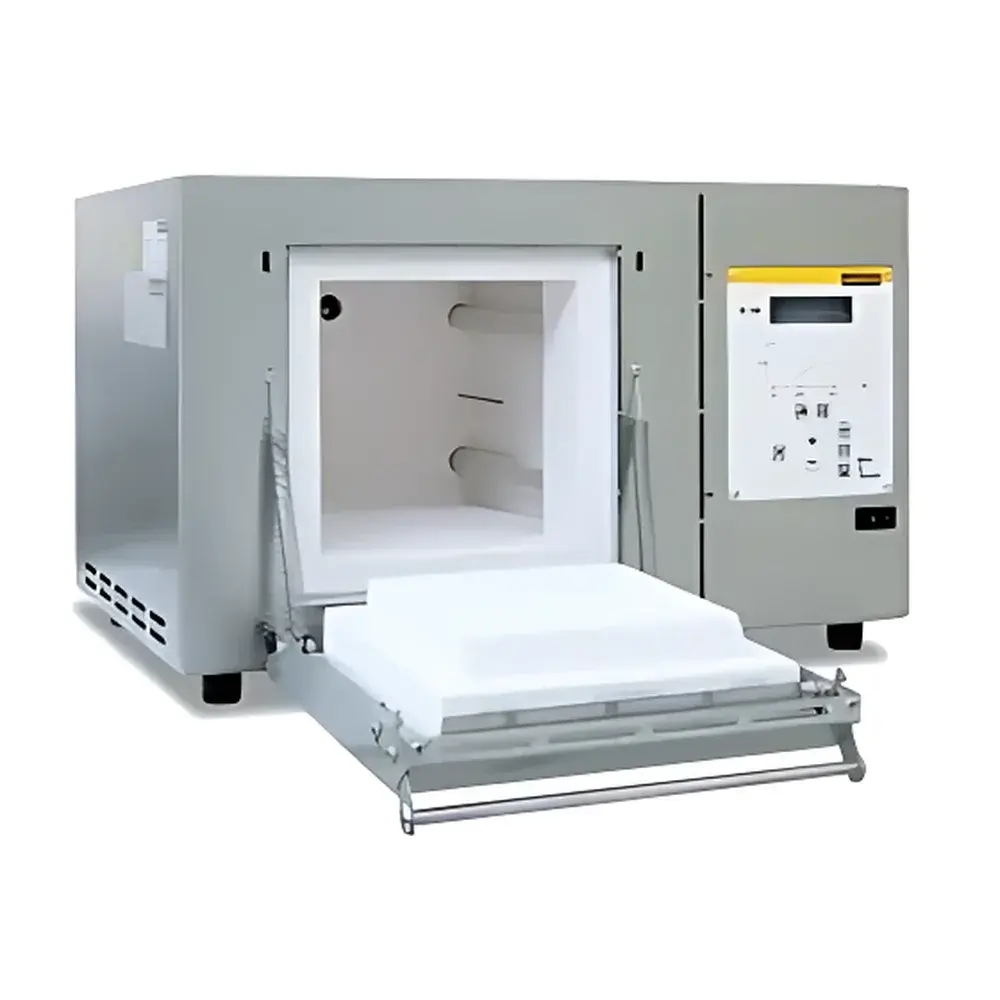
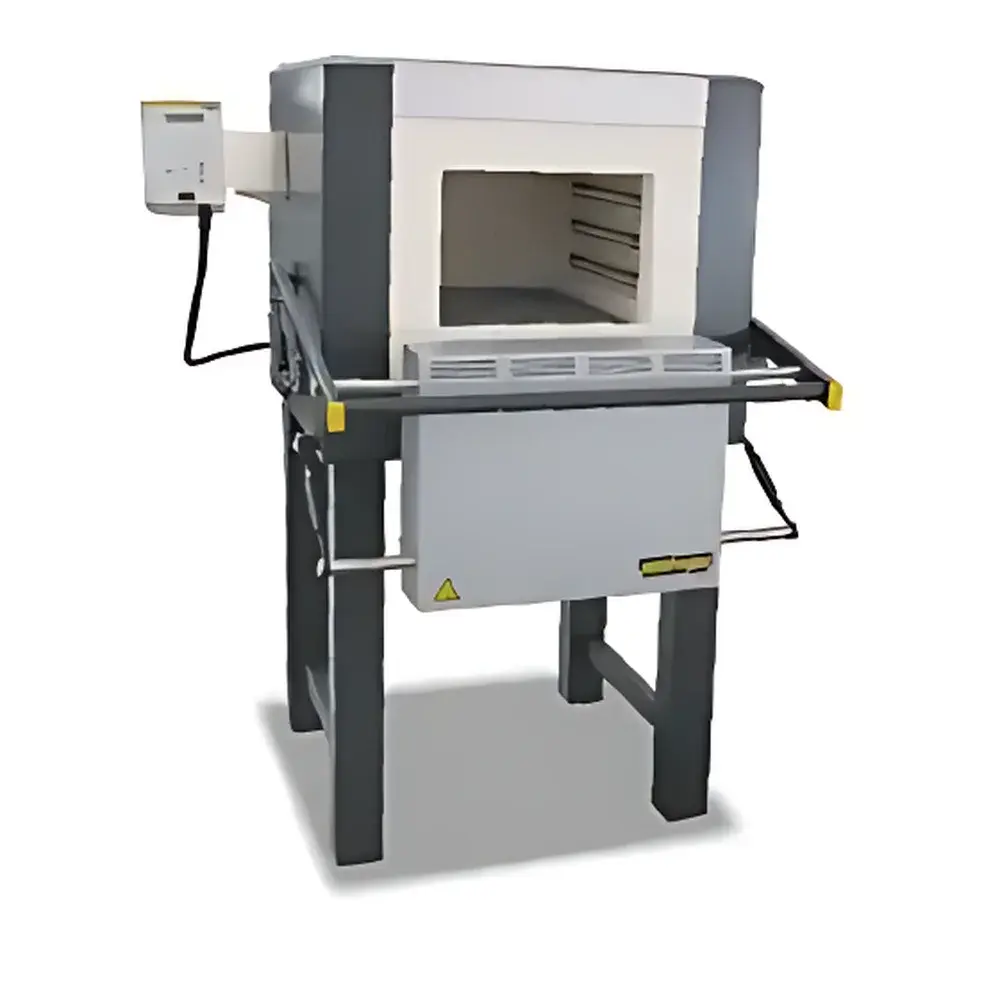
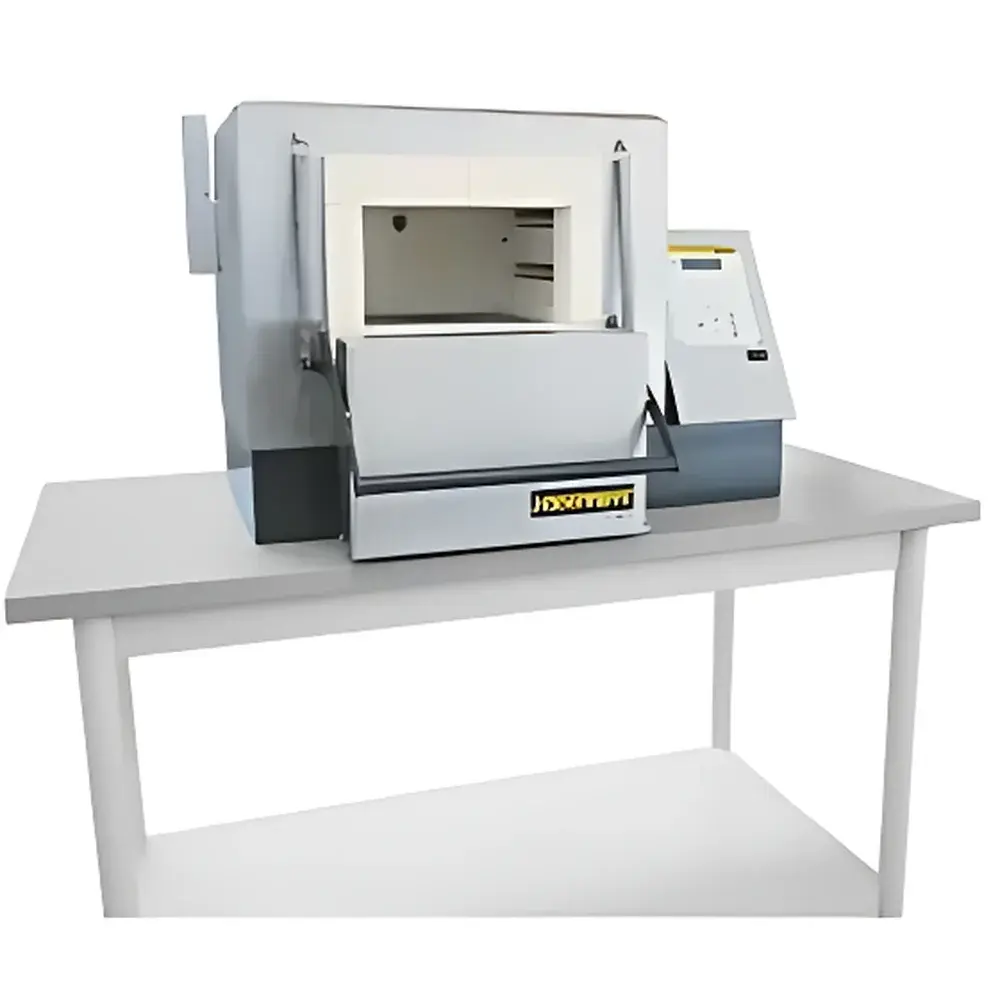
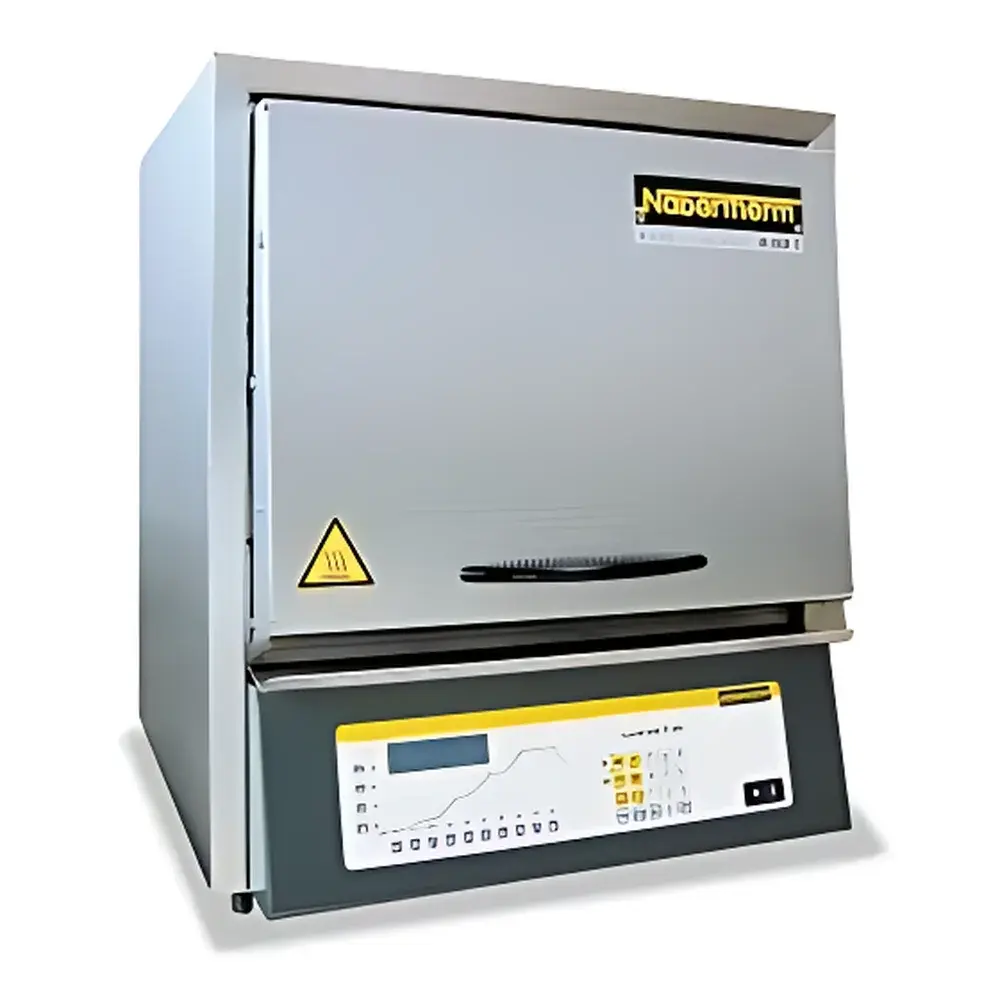
Nabertherm HTC Series High-Temperature Box Muffle Furnace, German-Made
| Origin | Germany |
|---|---|
| Type | Box-Type Muffle Furnace |
| Max Operating Temperature | 1400 °C / 1500 °C / 1600 °C |
| Temperature Uniformity | ±1 °C |
| Heating Element | Silicon Carbide (SiC) Rods |
| Internal Chamber Dimensions | 170 × 290 × 170 mm |
| Max Power Input | 13.0 kW |
| Ramp Time to Max Temperature | ≤45 min |
| Construction | Dual-Wall Stainless Steel Housing with Ceramic Fiber Insulation |
| Compliance | EN 60519-2 (Thermal Protection Class 2), CE Marked |
Overview
The Nabertherm HTC Series is a precision-engineered high-temperature box muffle furnace designed for demanding laboratory and R&D applications requiring thermal stability, repeatability, and long-term operational integrity at elevated temperatures. Built in Germany and manufactured to DIN/EN quality standards, this furnace employs resistive heating via high-purity silicon carbide (SiC) rods — a proven solution for sustained operation up to 1600 °C in oxidizing atmospheres. Unlike resistance-wire furnaces limited to ≤1400 °C, the SiC-based architecture enables superior thermal resilience, minimal element degradation over time, and consistent heat distribution across the working chamber. The furnace operates under atmospheric conditions by default but supports optional gas inlet/outlet ports for controlled atmosphere experiments (e.g., air, inert N₂, or low-O₂ environments). Its robust dual-wall stainless steel housing incorporates multi-layer ceramic fiber insulation, reducing external surface temperature while maximizing energy efficiency and operator safety.
Key Features
- Three standard maximum temperature configurations: 1400 °C, 1500 °C, and 1600 °C — selectable per model variant (HTC 08/14, HTC 08/15, HTC 08/16)
- Silicon carbide (SiC) heating elements mounted vertically on both side walls for symmetrical radiant heat transfer and improved temperature homogeneity (±1 °C at setpoint)
- Dual-wall construction with high-density ceramic fiber insulation (low thermal conductivity < 0.09 W/m·K at 1000 °C) minimizes standby losses and maintains outer casing temperature below 60 °C during continuous operation
- Modular solid-state relay (SSR) power control system ensures precise phase-angle firing of SiC elements, eliminating mechanical contact wear and enabling smooth, noiseless regulation
- Configurable door mechanisms: top-hinged tilt door (optimized for horizontal sample loading) or vertical lift door (reduces operator exposure to radiant heat during access)
- Integrated adjustable air inlet (front door) and exhaust port (rear wall) for passive atmosphere management and volatile byproduct removal
- Overtemperature protection via independent bimetallic limit switch compliant with EN 60519-2 Thermal Protection Class 2 — automatically de-energizes heating circuit if internal sensor failure or runaway condition is detected
Sample Compatibility & Compliance
The HTC furnace accommodates standard crucibles (alumina, silica, platinum), ceramic boats, and refractory trays within its 170 × 290 × 170 mm usable chamber volume (8.4 L). It is compatible with ASTM E1112 (Standard Practice for Calibration of High-Temperature Furnaces), ISO/IEC 17025-accredited calibration protocols, and GLP-compliant thermal validation workflows. All electrical components meet CE requirements under the Low Voltage Directive (2014/35/EU) and Electromagnetic Compatibility Directive (2014/30/EU). Optional traceable calibration certificates (including TUS — Temperature Uniformity Survey per AMS2750E) are available upon request. The furnace supports integration into regulated environments governed by FDA 21 CFR Part 11 when paired with Nabertherm’s THERMOCOMFORT® software and audit-trail-enabled controllers.
Software & Data Management
The HTC series is compatible with Nabertherm’s THERMOCOMFORT® control platform — a Windows-based interface supporting multi-segment ramp-soak profiles, real-time graphing, data logging (≥1 Hz sampling), and export to CSV/PDF formats. When equipped with the optional TC-3000 controller, the system provides full audit trail functionality, electronic signatures, and user-access level management aligned with 21 CFR Part 11 requirements. All recorded thermal cycles include timestamped metadata: operator ID, program name, thermocouple type (Type S or B), and deviation alerts. Remote monitoring via Ethernet or RS485 Modbus RTU allows centralized supervision in multi-furnace labs without compromising data integrity.
Applications
- Thermal gravimetric analysis (TGA) sample pre-treatment and ashing (e.g., ASTM D3174, ISO 1171)
- Ceramic sintering, metal oxide calcination, and catalyst activation protocols
- Residue determination in pharmaceutical excipients (USP , EP 2.2.34)
- Calibration of reference materials and secondary thermocouples
- Heat treatment studies in metallurgy and advanced materials research (e.g., grain growth kinetics, phase transformation onset)
- Pre-firing of refractory molds and investment casting shells
FAQ
What heating technology does the HTC furnace use, and why is SiC preferred for high-temperature operation?
It uses vertically mounted silicon carbide (SiC) rods, which offer superior oxidation resistance, mechanical rigidity, and stable resistivity up to 1600 °C in air — unlike Fe-Cr-Al or Ni-Cr alloys that degrade rapidly above 1200 °C.
Is the furnace suitable for inert or reducing atmospheres?
The base configuration is rated for air operation only. For inert or reducing gas environments, optional quartz or alumina tube inserts and sealed flange kits must be specified at order — consult technical documentation for material compatibility limits.
How is temperature uniformity validated across the working zone?
Nabertherm performs factory TUS testing per AMS2750E Zone 2 specifications using nine calibrated Type S thermocouples; reports include min/max/mean deviation and uniformity map — available as an add-on service.
Can multiple HTC units be networked for synchronized operation?
Yes — via Modbus TCP/IP or RS485 daisy-chaining using the TC-3000 controller, enabling coordinated ramp rates, shared setpoints, and centralized alarm aggregation in process control systems.
What maintenance is required for SiC heating elements?
SiC rods require no periodic replacement under normal use; however, visual inspection every 200 operating hours is recommended. Degradation manifests as localized whitening or cracking — replacement is straightforward using standardized mounting hardware and requires no recalibration.



