
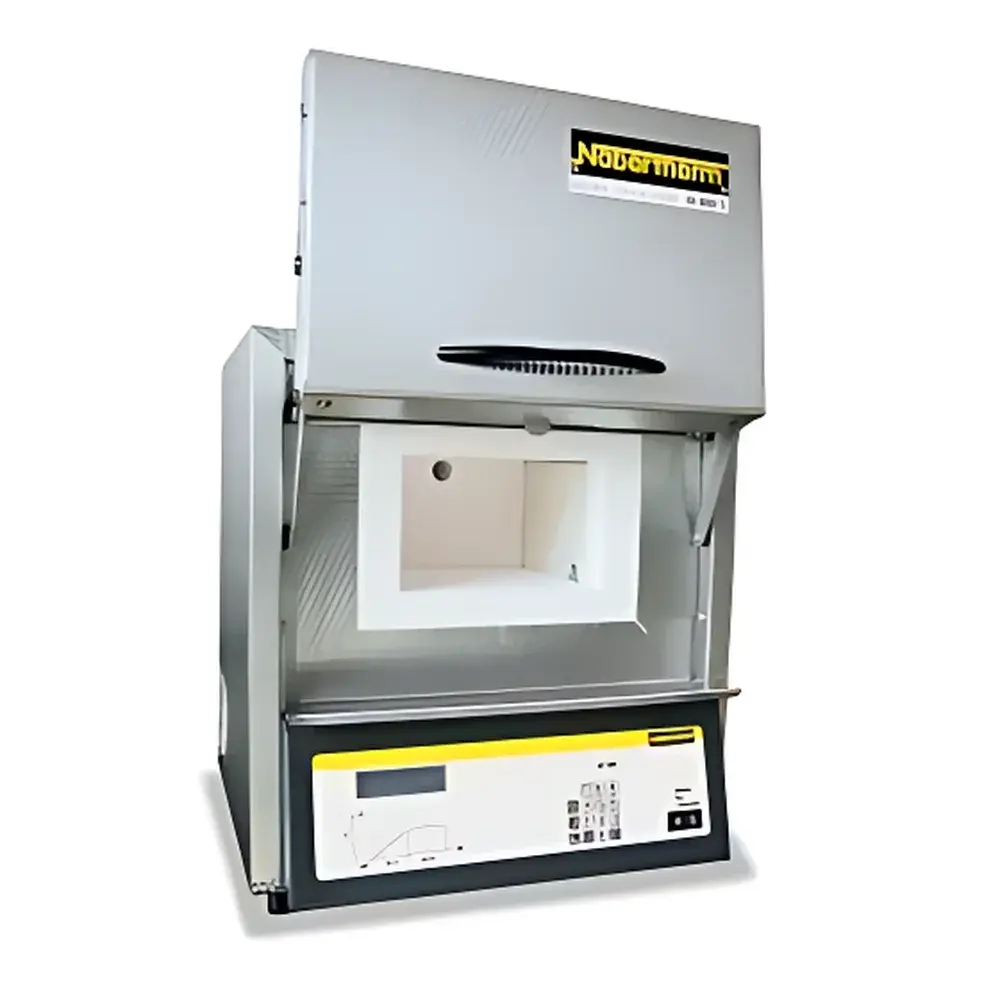
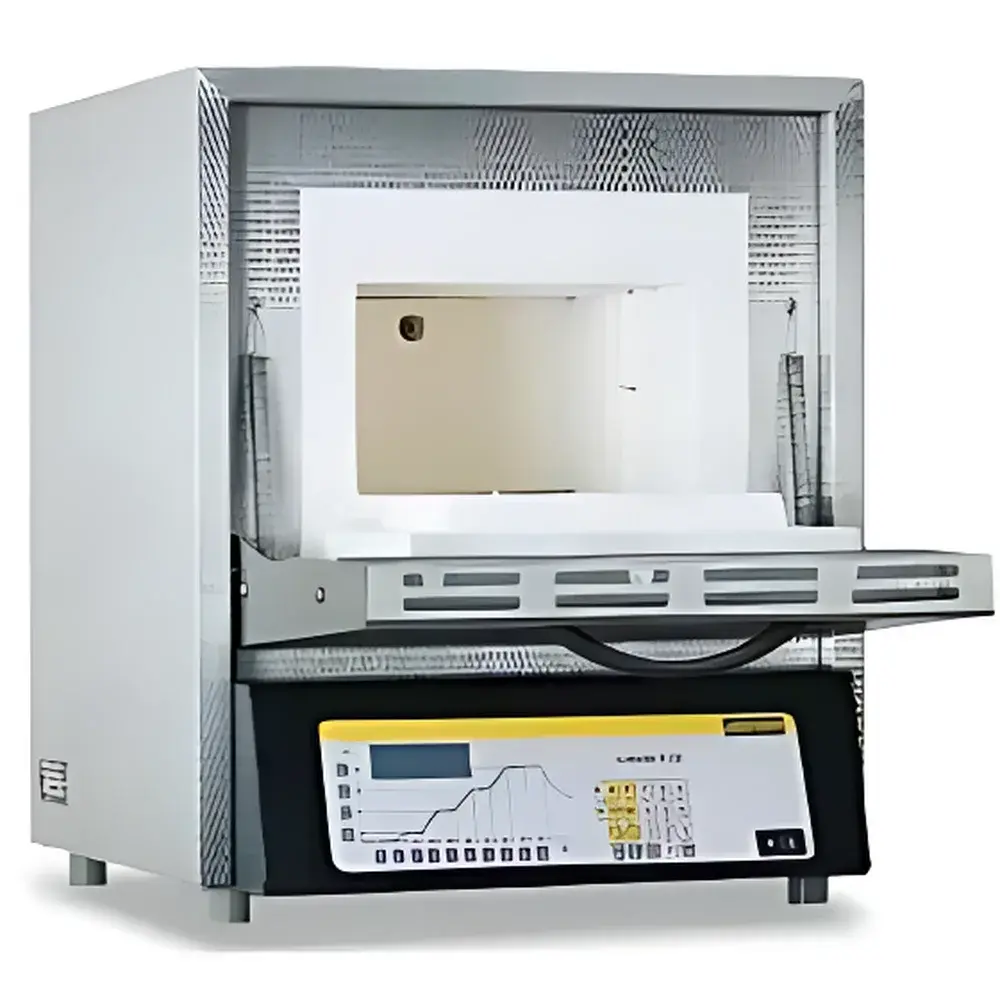
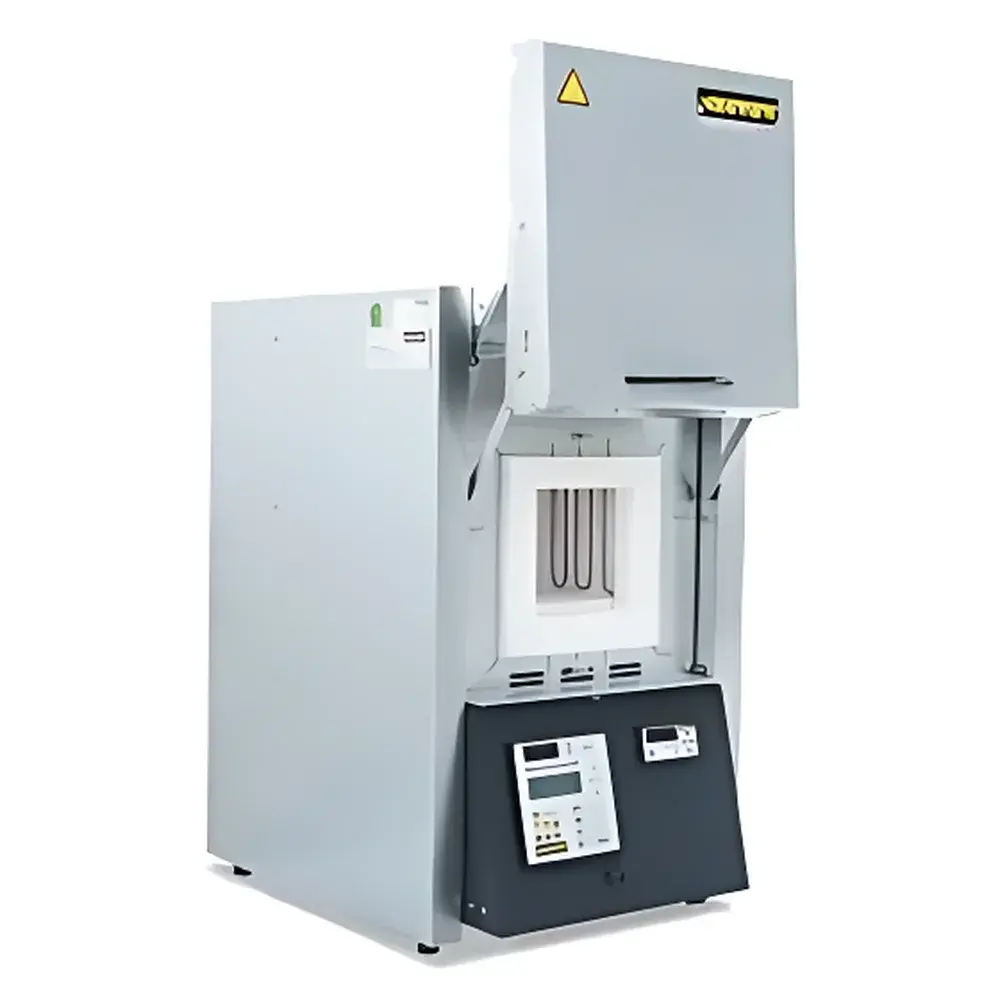
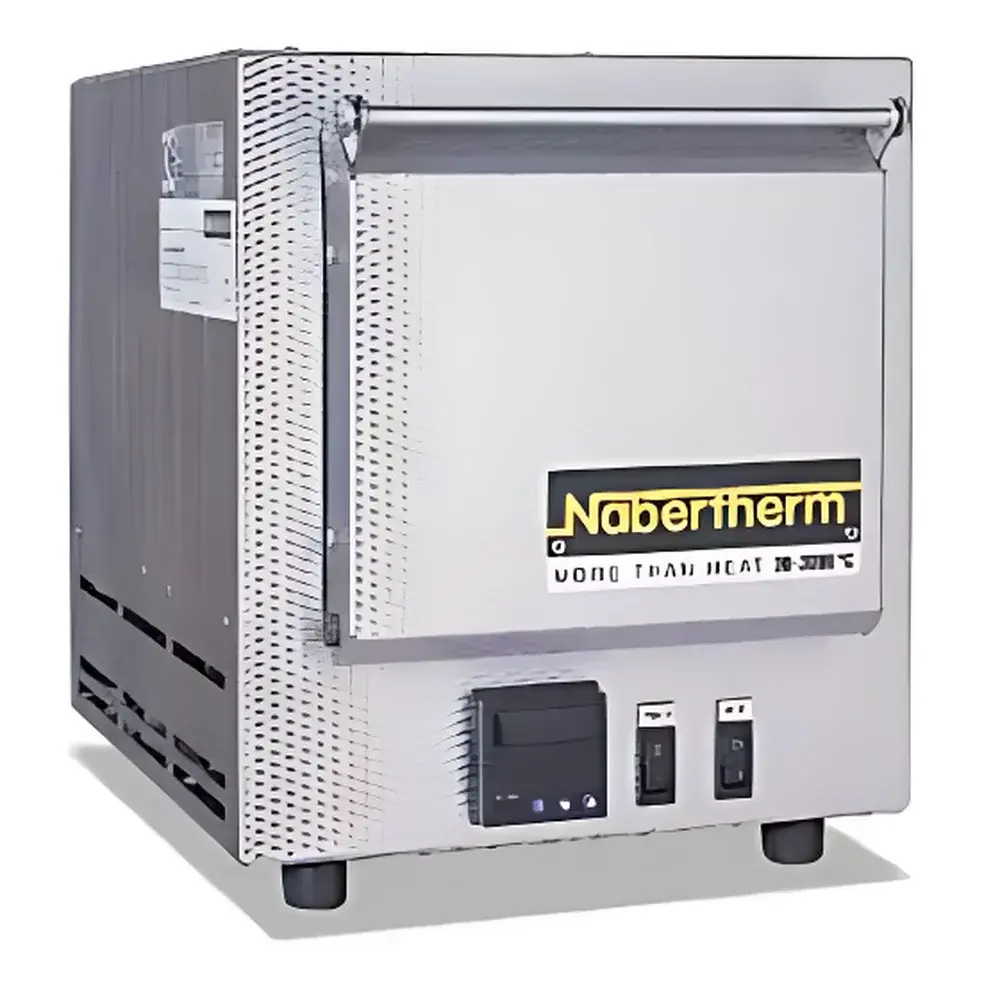
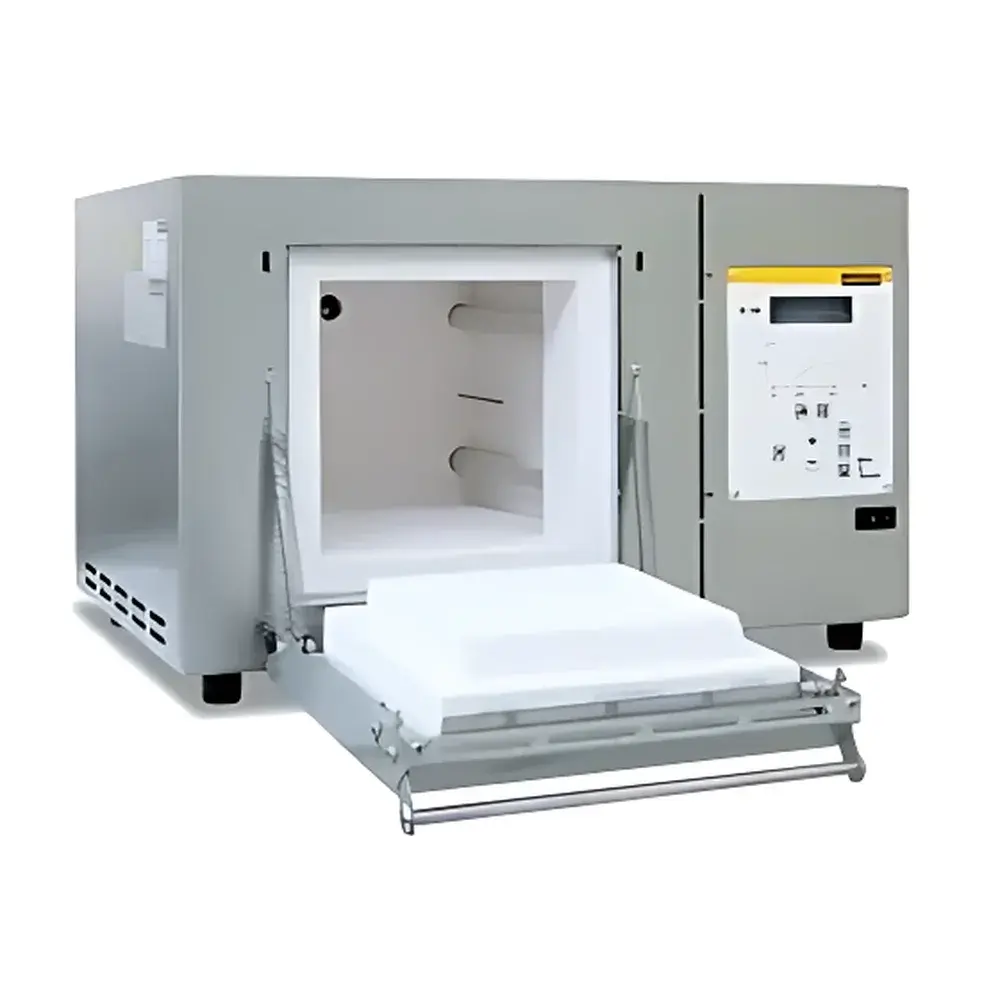
Nabertherm L1/12-LT40/12 Compact Muffle Furnace
| Origin | Germany |
|---|---|
| Type | Box-type Muffle Furnace |
| Max. Temperature | 1200 °C |
| Temperature Uniformity | ±1 °C |
| Heating Method | Embedded Resistance Wire in Ceramic Heating Panels |
| Internal Volume | 1–40 L |
| Power Rating | 1.2–6 kW |
| Ramp Time to Max Temp | ≤30 min |
| Construction | Double-walled Stainless Steel (V2A) Housing with Vacuum-Insulated Fiber Modules |
| Door Options | Flip-up or Lift-up Configuration |
| Safety Compliance | EN 60519-2, Thermal Protection Class 2 |
| Software Control | Compatible with Controltherm MV Process Management Suite |
Overview
The Nabertherm L1/12–LT40/12 series represents a rigorously engineered line of compact laboratory muffle furnaces designed for precision thermal processing in research, quality control, and routine analytical workflows. Operating on the principle of radiant heat transfer via ceramic-encapsulated resistance heating elements, these furnaces deliver exceptional temperature stability and spatial uniformity across the working chamber—critical for applications such as ashing, calcination, sintering, heat treatment of ceramics and metals, and residue determination per standardized methods (e.g., ASTM E1868, ISO 1171, USP ). Unlike conventional coil-heated units, the dual- or triple-sided ceramic heating panel architecture minimizes thermal gradients and eliminates direct exposure of heating elements to volatile combustion byproducts, significantly extending service life and reducing maintenance frequency. All models are manufactured in Germany under stringent DIN EN ISO 9001 quality management protocols and conform to European electrical safety standard EN 60519-2 for industrial electroheating equipment.
Key Features
- Temperature range up to 1200 °C with ±1 °C controller accuracy and ≤±3 °C chamber uniformity at setpoint (measured at 5 reference points per IEC 60519-2 Annex D)
- Ceramic heating panels with embedded NiCr resistance wire—chemically inert, mechanically robust, and fully protected against splashes, vapors, and particulate deposition
- Vacuum-insulated fiber module lining ensures rapid heat-up (≤30 min to 1200 °C), low external surface temperature (<60 °C at ambient), and high energy efficiency
- Double-walled stainless steel (1.4301/V2A) housing with reinforced structural integrity and corrosion-resistant finish
- Two ergonomic door configurations: flip-up (L-type) for easy horizontal sample placement; lift-up (LT-type) to eliminate contact with hot surfaces during loading/unloading
- Integrated adjustable air inlet and rear-mounted exhaust port—enabling controlled atmosphere operation with inert (N₂, Ar) or reactive (O₂, CO) gases
- Overtemperature protection via independent mechanical limit switch (EN 60519-2 Class 2 thermal cutoff) with user-defined disconnection threshold
- Low-noise solid-state relay switching and EMI-suppressed power electronics compliant with EN 61000-6-3
Sample Compatibility & Compliance
The L1/12–LT40/12 series accommodates crucibles, boats, and trays made from alumina, silicon carbide, quartz, and platinum-group alloys—compatible with standard ASTM, ISO, and pharmacopeial sample containers. Chamber volumes (1–40 L) support single-sample validation runs as well as batched throughput for QC laboratories operating under GLP or GMP frameworks. The furnace meets essential requirements for regulatory traceability: optional gas interfaces support purge validation per FDA 21 CFR Part 11 Annex 11 when integrated with qualified process controllers; all thermal profiles generated via Controltherm MV software include audit-trail-enabled timestamping, operator ID logging, and electronic signature capability. Full documentation packages—including Factory Acceptance Test (FAT) reports, calibration certificates (traceable to PTB), and CE Declaration of Conformity—are supplied with each unit.
Software & Data Management
Controltherm MV is a validated Windows-based process control suite enabling full lifecycle thermal protocol management: from recipe definition (ramp/soak/hold sequences, gas flow scheduling, cooling rate modulation) to real-time monitoring, automated data export (CSV, PDF, XML), and secure archival. The software supports multi-furnace synchronization, alarm escalation (email/SMS), and integration with LIMS via OPC UA or Modbus TCP. All data files comply with ALCOA+ principles (Attributable, Legible, Contemporaneous, Original, Accurate, Complete, Consistent, Enduring, Available) and may be exported in 21 CFR Part 11-compliant format upon configuration. Firmware updates and diagnostic logs are remotely accessible via encrypted HTTPS interface.
Applications
- Gravimetric analysis: ash content determination (AOAC 923.03, ISO 2171), loss-on-ignition (LOI) testing in geology and cement QA
- Thermal pre-treatment of catalysts, battery electrode materials, and functional ceramics prior to XRD/XRF characterization
- Calibration of thermocouples and RTDs per ASTM E230/E220 using fixed-point metal baths
- Heat aging studies of polymers and composites per ISO 2578 and ASTM D3045
- Residue analysis in pharmaceutical excipients and active ingredients (USP , Ph. Eur. 2.2.35)
- Pre-sintering of dental zirconia blanks and orthopedic bioceramics under controlled oxygen partial pressure
FAQ
What is the maximum recommended continuous operating temperature?
The L1/12–LT40/12 series is rated for continuous operation at 1200 °C. Sustained use above this limit will accelerate degradation of ceramic insulation and compromise temperature uniformity.
Can the furnace be operated under vacuum or inert gas?
Yes—standard gas inlet and exhaust ports allow connection to regulated gas supply systems or vacuum pumps. Optional catalytic exhaust afterburners and water-cooled flange adapters are available for hazardous off-gas handling.
Is third-party calibration included with delivery?
Each unit ships with a factory calibration certificate traceable to Physikalisch-Technische Bundesanstalt (PTB). On-site IQ/OQ/PQ validation services and annual recalibration are offered through Nabertherm’s global service network.
How does the double-wall construction improve safety and efficiency?
The air gap between inner and outer stainless steel shells acts as a passive thermal barrier—reducing external skin temperature by >40% versus single-wall designs and minimizing ambient heat load in temperature-sensitive lab environments.
What controller options are available beyond the standard digital PID?
Optional upgrades include programmable 16-segment ramp-soak controllers, Ethernet-enabled PLC interfaces, and ATEX-certified versions for Zone 2 hazardous areas.



