
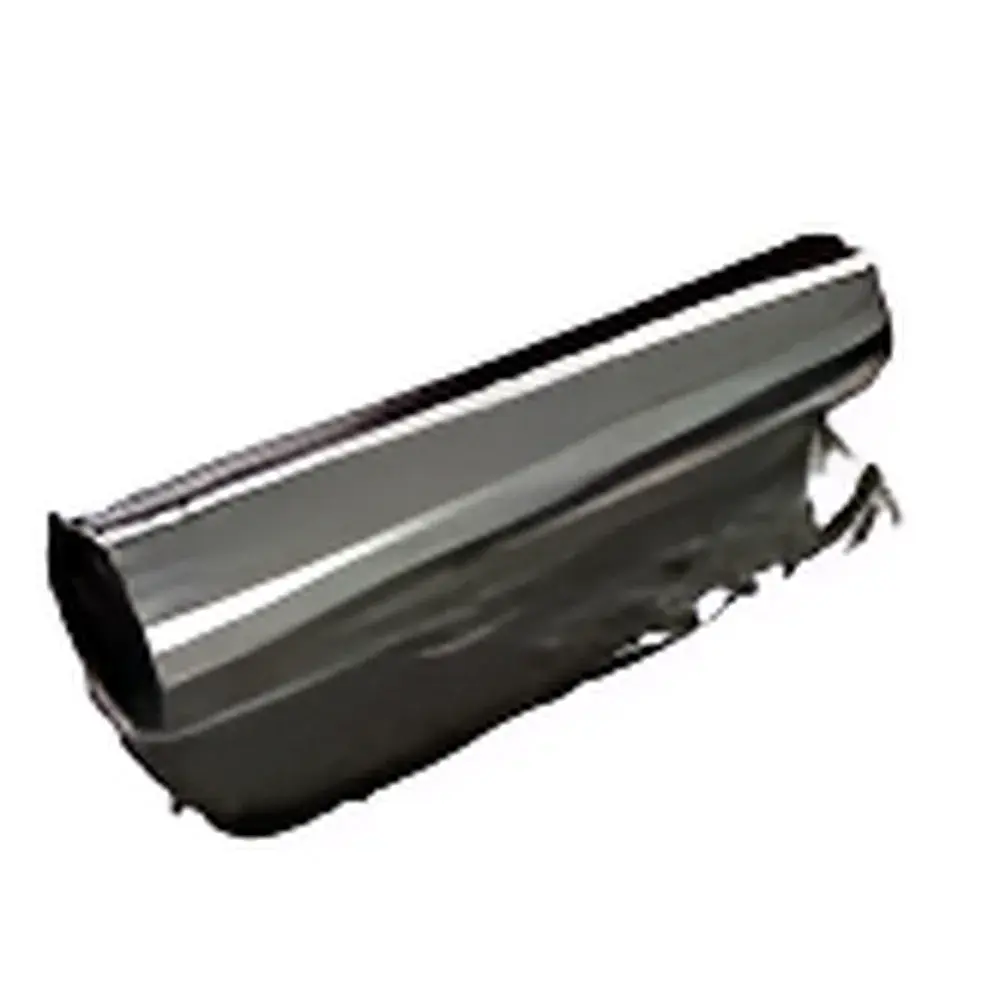
Nabertherm Quenching Foil for Oxidation-Free Annealing and Hardening
| Brand | Nabertherm |
|---|---|
| Origin | Germany |
| Product Type | Disposable High-Temperature Quenching Foil |
| Max Operating Temperature | 1200 °C |
| Compliance | Suitable for ASTM A370, ISO 6892-1, and EN 10002-1 thermal treatment protocols |
| Material | Oxygen-impermeable aluminosilicate-based metallized ceramic foil |
| Thickness | ~0.15 mm (typical) |
| Packaging | Roll format, custom-cut sheets available |
Overview
The Nabertherm Quenching Foil is a precision-engineered, single-use high-temperature barrier material designed for controlled atmosphere thermal processing in laboratory and pilot-scale metallurgical applications. Unlike conventional inert-gas purged furnaces or vacuum systems, this foil enables oxidation-free annealing, solution heat treatment, and quench-hardening of ferrous and non-ferrous alloys—without requiring complex gas infrastructure or vacuum chamber integration. The foil functions by forming a hermetic, oxygen-diffusion-resistant envelope around the specimen prior to insertion into a standard muffle furnace (e.g., Nabertherm L 5/11, HT 16/16, or similar). During heating, the metallized ceramic matrix remains dimensionally stable up to 1200 °C, suppressing surface decarburization, scale formation, and intergranular oxidation—critical for preserving microstructural integrity in high-purity steels, tool steels, nickel-based superalloys, and titanium grades.
Key Features
- Hermetic oxygen barrier: Aluminosilicate substrate with integrated metallic interlayer (typically aluminum or nickel-based) provides <10−9 cm³·cm/(cm²·s·Pa) oxygen permeability at 1000 °C, verified per ASTM E1223
- Thermal stability: Maintains structural coherence and sealing integrity from ambient to 1200 °C; no outgassing or volatile residue generation under inert or reducing atmospheres
- Controlled cooling compatibility: Enables rapid intra-foil quenching via direct immersion in oil, polymer, or brine—eliminating furnace door opening and thermal shock to chamber insulation
- Traceability-ready: Each foil roll carries batch-specific certification of conformance (CoC), including thermal expansion coefficient (α = 4.2 × 10⁻⁶ K−1, 20–1000 °C) and ash content (<0.05 wt%) per ISO 17025-accredited testing
- Lab-integrated workflow: Compatible with standard Nabertherm furnace controllers; requires no hardware modification or additional sensors
Sample Compatibility & Compliance
This foil is validated for specimens ≤ 150 mm in maximum dimension and ≤ 2.5 kg mass per envelope. It supports standardized test specimens per ASTM E8/E8M (tensile bars), ASTM E18 (hardness coupons), and ISO 6506-1 (Brinell hardness blocks). The material meets RoHS Directive 2011/65/EU and is free of halogenated binders or heavy-metal catalysts. When used in conjunction with Nabertherm muffle furnaces operating under GLP-compliant SOPs, the system satisfies audit requirements for ISO/IEC 17025:2017 Clause 7.2.2 (method validation) and ASTM E29 (significant digits in thermal treatment reporting). Documentation includes furnace temperature uniformity mapping (±1.5 °C across 100 mm zone at 1100 °C) referenced to PtRh10–Pt thermocouples calibrated per ISO/IEC 17025.
Software & Data Management
While the foil itself is passive, its use integrates seamlessly with Nabertherm’s THERMOCOM software suite (v5.4+). Users log foil batch numbers, specimen IDs, and envelope sealing timestamps directly into thermal cycle records. The software enforces mandatory fields for atmosphere type (N2, Ar, or vacuum pre-seal), ramp rate (≤15 K/min recommended), hold time (minimum 30 min at target T), and quench initiation trigger—enabling full 21 CFR Part 11–compliant electronic signatures and audit trails. Raw temperature vs. time profiles are archived with embedded foil lot metadata, supporting retrospective analysis of surface oxide thickness correlation using post-test SEM-EDS cross-sections.
Applications
- Precision heat treatment of bearing steels (e.g., 52100, M50) where subsurface carbide distribution must remain unaltered
- Research-scale aging studies on precipitation-hardened aluminum alloys (e.g., AA7075-T651) requiring repeatable β′ phase nucleation kinetics
- Calibration artifact preparation: Fabrication of certified reference samples for hardness and tensile standards labs
- Failure analysis labs performing root-cause investigation of intergranular corrosion in austenitic stainless steels (e.g., AISI 316L)
- University metallurgy programs conducting comparative studies on grain growth inhibition mechanisms in nanocrystalline Fe–Cu alloys
FAQ
Can this foil be reused after a single thermal cycle?
No. Structural integrity and oxygen barrier performance degrade irreversibly after exposure to peak temperatures ≥1000 °C due to interfacial diffusion and microcrack propagation; reuse is strictly prohibited per Nabertherm Technical Bulletin TB-QF-2023-04.
Is foil sealing compatible with automated sample handling systems?
Yes—custom die-cut foil blanks with pre-applied high-temp ceramic adhesive (rated to 1300 °C) are available for integration with robotic grippers and vacuum seal stations.
Does the foil require pre-baking before first use?
No. All batches undergo factory outgassing at 850 °C for 2 h under argon and are sealed in nitrogen-purged foil pouches; immediate use is permitted.
How is foil performance validated between batches?
Each production lot undergoes independent verification by TÜV Rheinland (Certificate No. RHE-2024-QF-XXXXX) including helium leak testing, XRD phase analysis, and thermal cycling fatigue assessment over 50 cycles.
Can the foil be used in vacuum furnaces?
It is not recommended. Vacuum conditions may induce delamination of the metallized layer; the foil is optimized for positive-pressure inert-gas or air environments only.



