
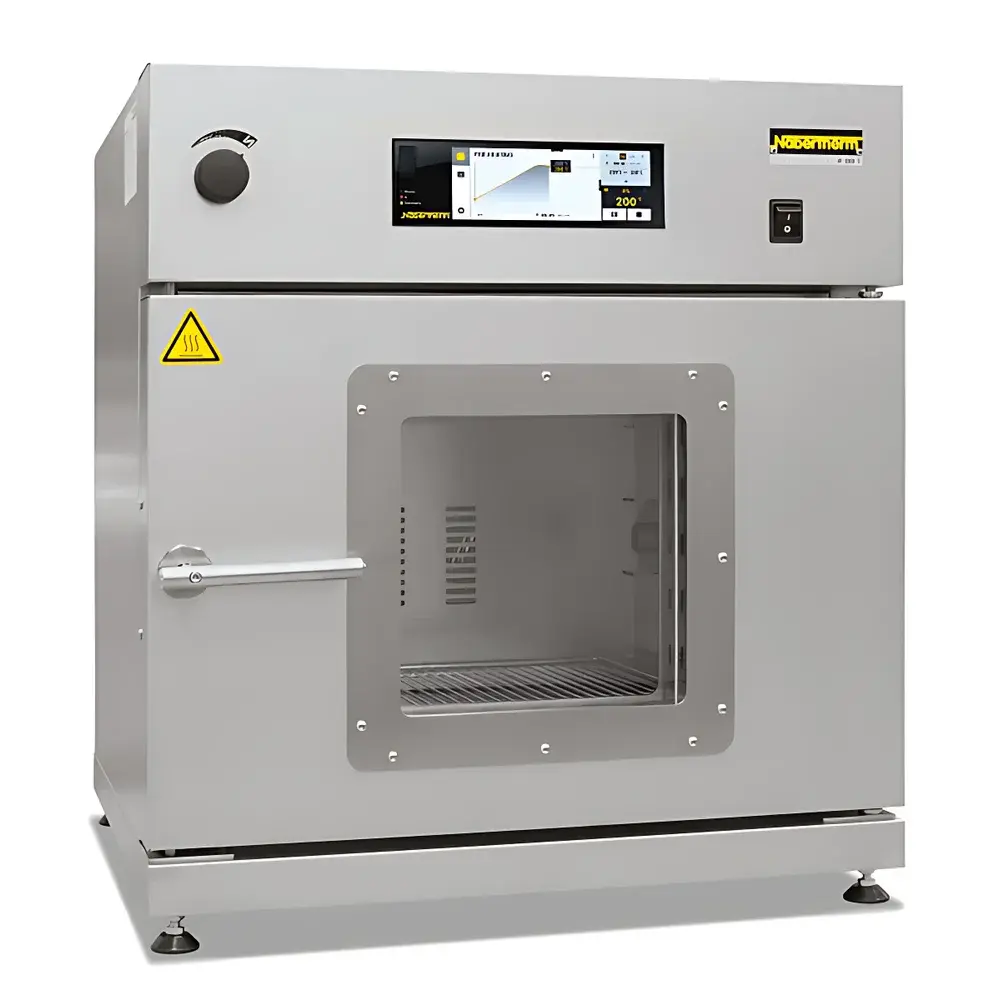
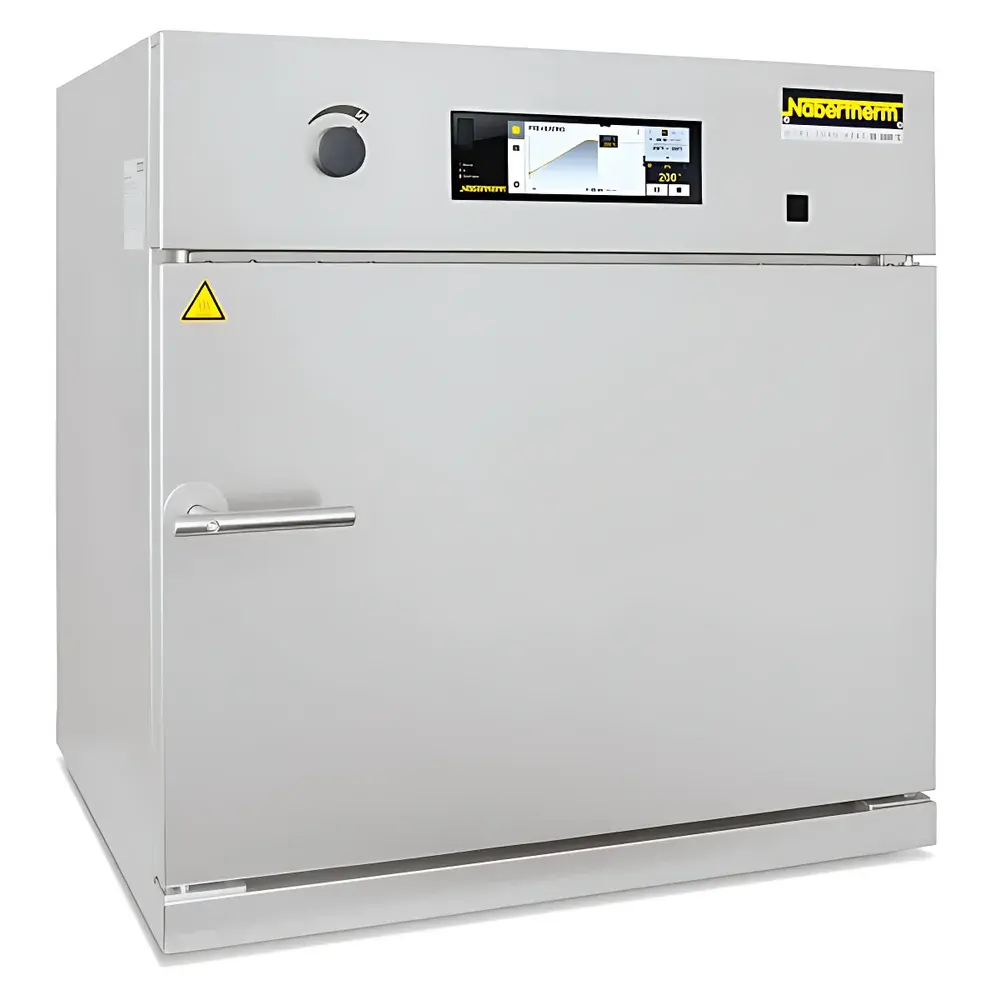
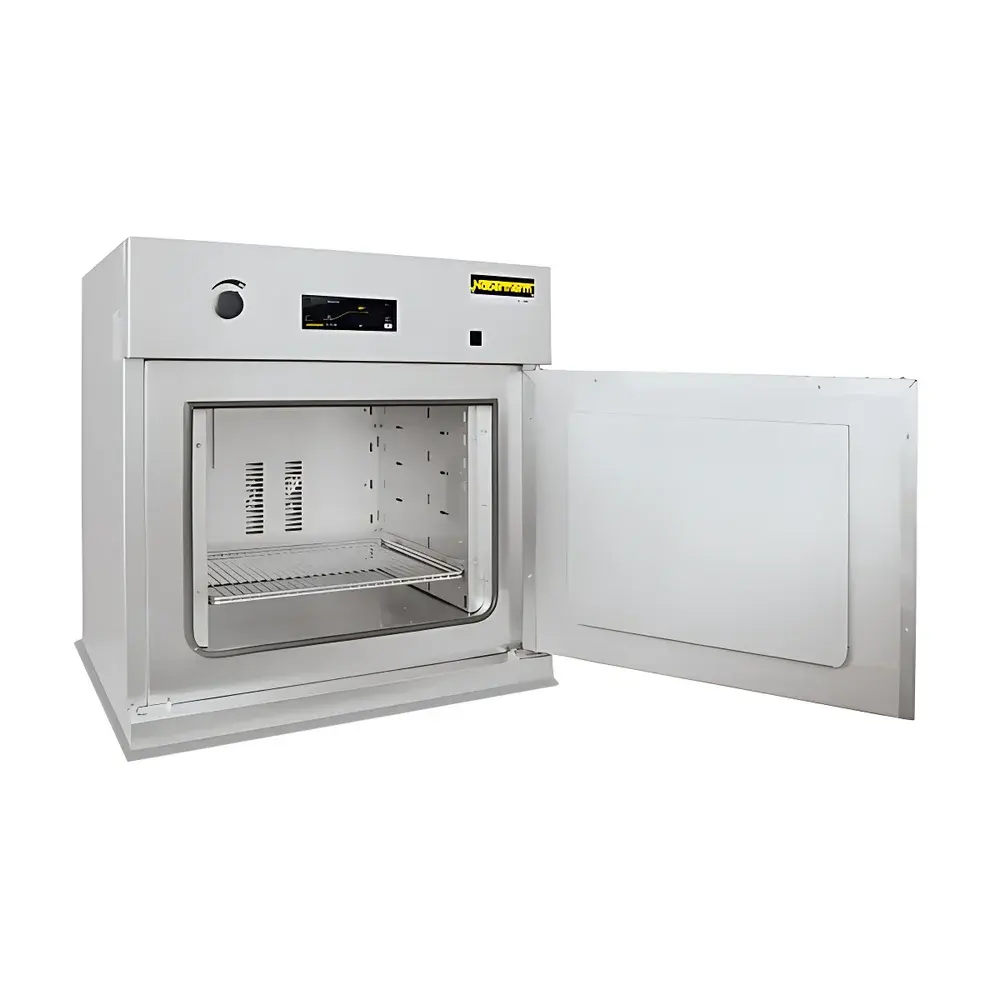
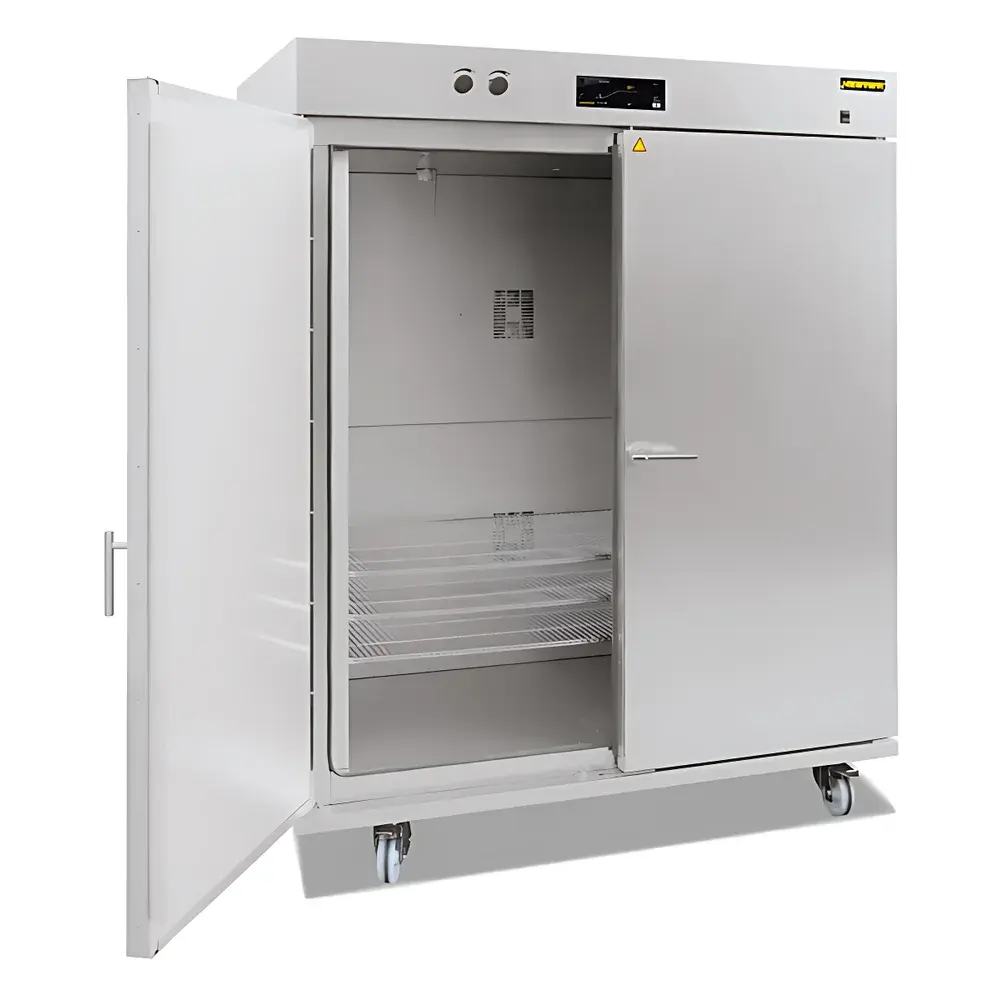
Nabertherm TR 60 Forced-Convection Drying Oven
| Brand | Nabertherm |
|---|---|
| Origin | Germany |
| Model | TR 60 |
| Instrument Type | General-Purpose Laboratory Drying Oven |
| Temperature Range | +5 °C above ambient to 300 °C |
| Temperature Uniformity | ±1 °C |
| External Dimensions (W×D×H) | 700 × 610 × 710 mm |
| Internal Chamber Dimensions (W×D×H) | 450 × 390 × 350 mm |
| Chamber Volume | 60 L |
| Chamber Material | AISI 304 stainless steel (DIN 1.4301) |
| Heating Method | Resistive wire heating |
| Power Supply | 3 kW, single-phase |
| Net Weight | 90 kg |
| Air Circulation | Horizontal forced convection with adjustable-speed fan |
| Controller | PID microprocessor-based, with self-diagnostic function and overtemperature protection (EN 60519-2, Class 2) |
| Compliance | EN 1539 (for solvent-containing loads, optional LS variant), compatible with AMS 2750E and FDA 21 CFR Part 11 via optional VCD software package |
Overview
The Nabertherm TR 60 is a precision-engineered, forced-convection laboratory drying oven designed for reproducible thermal processing in research, quality control, and production environments. Based on the fundamental principle of horizontal air circulation driven by a variable-speed centrifugal fan, the TR 60 ensures exceptional temperature uniformity (±1 °C) across its 60-liter stainless-steel chamber—critical for applications requiring strict thermal consistency, such as moisture content determination, pre-conditioning of samples prior to gravimetric analysis, thermal stabilization of reference materials, and low-risk sterilization protocols. Its maximum operating temperature of 300 °C, combined with resistive heating elements mounted on the rear wall and optimized airflow geometry, enables rapid heat-up times and stable thermal equilibrium under load. The oven’s architecture complies with European safety standard EN 1539 for industrial thermal processing equipment and supports integration into regulated workflows when equipped with optional validation-ready software.
Key Features
- Horizontal forced-air circulation system with infinitely adjustable fan speed, minimizing thermal stratification and ensuring uniform heat distribution
- AISI 304 stainless-steel interior chamber (DIN 1.4301), corrosion-resistant, non-porous, and compliant with ISO 8573-1 for cleanroom-compatible surface finish
- PID microprocessor controller with integrated self-diagnostic capability, real-time error logging, and dual-stage overtemperature protection per EN 60519-2 (Class 2)
- Large left-hinged swing door with quick-connect mechanism and ergonomic wide handle for frequent access without compromising seal integrity
- Standard configuration includes three removable stainless-steel grid shelves with slot-based positioning; additional trays available upon request
- Side-mounted air intake and rear exhaust duct with condensate collection tray, supporting controlled venting during solvent-evaporation processes
- Reinforced base plate engineered to EN 1539 specifications for mechanical stability during high-mass loading or extended dwell cycles
Sample Compatibility & Compliance
The TR 60 accommodates a broad range of sample formats—including Petri dishes, crucibles, glassware, polymer pellets, ceramic green bodies, and coated substrates—within its 450 × 390 × 350 mm usable chamber volume. Its chamber design permits stacking of up to three standardized trays while maintaining unobstructed airflow. For laboratories operating under Good Manufacturing Practice (GMP) or Good Laboratory Practice (GLP) frameworks, the TR 60 can be validated per ASTM E2251 (standard practice for calibration of laboratory ovens) and qualifies for inclusion in IQ/OQ/PQ protocols when paired with Nabertherm’s VCD software suite. Optional LS variants (TR 60 LS) meet enhanced safety requirements for volatile organic compound (VOC) handling per EN 1539 Annex B. The unit is CE-marked and conforms to IEC 61000-6-3 (EMC emission) and IEC 61000-6-2 (immunity) standards.
Software & Data Management
Data acquisition and process traceability are supported through the optional NTLog USB data logger, which records time-stamped temperature profiles directly to a plug-and-play USB flash drive—enabling offline review without proprietary hardware. For full regulatory compliance, the VCD (Validation Control & Documentation) software package provides electronic signature support, audit trail generation, alarm event logging, and 21 CFR Part 11–compliant user access controls. VCD facilitates automated calibration verification, deviation reporting, and export of PDF/CSV reports aligned with ISO/IEC 17025 documentation requirements. All firmware updates are delivered via secure Nabertherm update portal and verified using SHA-256 checksums.
Applications
- Moisture loss-on-drying (LOD) assays per USP and ASTM D2298
- Pre-drying of filter papers, desiccants, and analytical standards prior to weighing
- Thermal conditioning of polymers, composites, and ceramics before mechanical testing
- Stabilization of hygroscopic reagents and reference standards in metrology labs
- Low-intensity thermal decontamination of non-critical labware where steam autoclaving is unsuitable
- Accelerated aging studies for packaging materials and adhesives under controlled thermal stress
FAQ
What is the recommended calibration interval for the TR 60?
Nabertherm recommends annual calibration against NIST-traceable reference thermometers; intervals may be adjusted based on usage frequency and risk assessment per ISO/IEC 17025 Clause 6.6.
Can the TR 60 be used for drying samples containing flammable solvents?
Only the LS (solvent-safe) variant—equipped with explosion-proof components, inert gas purge interface, and enhanced ventilation—is approved for such use per EN 1539 Annex B.
Is the internal temperature sensor accessible for third-party calibration?
Yes—the PT100 sensor is mounted on the rear chamber wall and can be replaced or recalibrated using standard laboratory procedures without disassembly of structural components.
Does the TR 60 support ramp-soak programming?
The base controller supports single-setpoint operation; multi-step thermal profiles require the optional VCD software package with external PC interface.
What maintenance is required for long-term reliability?
Biannual inspection of fan bearings, cleaning of air intake filters, verification of door gasket compression, and functional check of overtemperature cutoff circuits are advised per maintenance schedule in the operator manual.



