
Nabertherm Tube Furnace with Dual-Temperature Cascade Control System
| Brand | Nabertherm |
|---|---|
| Origin | Germany |
| Equipment Type | Horizontal Tube Furnace |
| Control Modes | Chamber Temperature Control, Load Temperature Control, Cascade (Dual-Sensor) Control |
| Working Tube Materials | Silimanite (C 530), Pytagoras (C 610), High-Purity Alumina (C 799), Quartz Glass, FeCrAl Alloy |
| Max. Atmosphere Temp. | 1100–1800 °C |
| Max. Vacuum Temp. | 950–1400 °C |
| Gas-Tight Options | Yes (C 610, C 799, Quartz, FeCrAl) |
| Compliance | CE, EN 61000-6-2/6-4, IEC 61000-4-2/4/5/6 |
Overview
The Nabertherm tube furnace is a precision-engineered horizontal high-temperature thermal processing system designed for controlled atmosphere, vacuum, and inert gas applications in materials science, catalysis research, semiconductor precursor synthesis, and ceramic sintering. Its core architecture integrates a robust double-walled stainless steel housing, optimized insulation (ceramic fiber + insulating brick), and zone-specific heating elements to ensure radial and axial temperature uniformity. Unlike muffle furnaces that rely solely on chamber ambient control, this system supports three distinct temperature regulation strategies—chamber-only, load-only, and cascade dual-sensor control—each engineered for specific experimental fidelity requirements. The furnace operates on the principle of resistive heating via embedded Kanthal or FeCrAl alloy heating wires, with thermal energy transferred conductively and radiatively to the working tube and its contents. Temperature measurement employs Class 1 or Class 2 thermocouples (Type S, R, or K), calibrated per DIN EN 60584-2, ensuring traceability to national standards.
Key Features
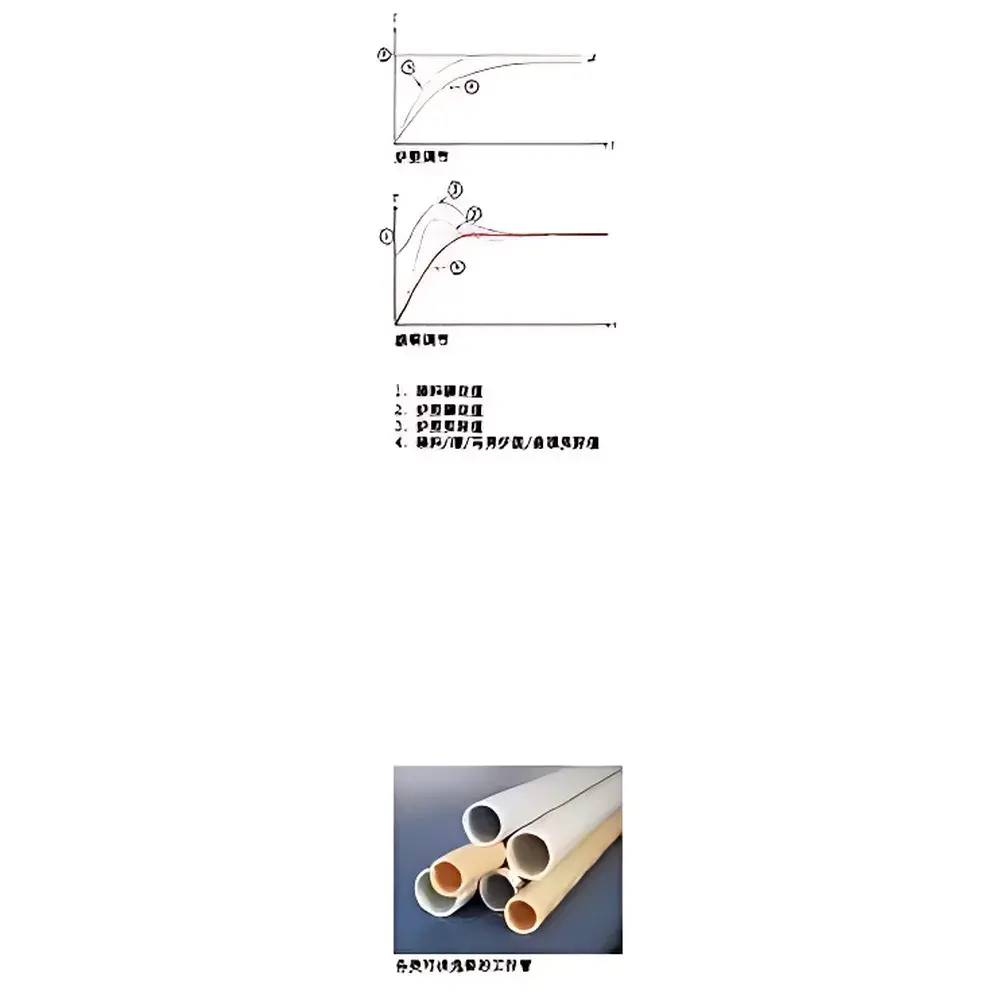
- Dual-sensor cascade control architecture enabling simultaneous feedback from both external furnace chamber and internal load positions—minimizing thermal lag and eliminating overshoot during ramp-hold-cool cycles
- Modular working tube interface compatible with standardized OD/ID dimensions (e.g., 60–120 mm OD) and flange types (CF, ISO-KF, or custom welded ports)
- Gas-tight tube options (C 610, C 799, quartz, FeCrAl) certified for leak rates ≤1×10⁻⁹ mbar·L/s under helium testing per ISO 10816-3
- Integrated overtemperature protection with independent limit controller (Type T thermocouple + mechanical cut-off) compliant with EN 60519-2 for electrical safety in industrial heating equipment
- Programmable 16-segment PID controller with ramp-soak profiles, real-time deviation monitoring, and auto-tuning functionality per DIN 19245 Part 2
- Optional integrated mass flow controllers (MFCs), pressure transducers, and gas switching manifolds for multi-atmosphere process sequencing
Sample Compatibility & Compliance
The furnace accommodates diverse sample geometries—including powder beds, crucibles (alumina, graphite, silica), wire specimens, and wafer stacks—within its working tube. Material compatibility is defined by maximum permissible service temperatures under specified atmospheres: C 799 (99.7% Al₂O₃) supports up to 1800 °C in air and 1400 °C under high vacuum (≤10⁻³ mbar); quartz tubes are restricted to ≤1100 °C in oxidizing environments and ≤950 °C under vacuum due to devitrification risk. All configurations comply with EU Machinery Directive 2006/42/EC, Electromagnetic Compatibility Directive 2014/30/EU, and RoHS 2011/65/EU. For GLP/GMP-regulated laboratories, optional 21 CFR Part 11-compliant software modules provide electronic signatures, audit trails, and user access level management.
Software & Data Management
Nabertherm’s proprietary THERMOCOMM software (v5.2+) enables remote configuration, real-time data logging at 1 Hz resolution, and export to CSV, XML, or ASTM E2917-compliant .tdms formats. It supports synchronized acquisition from up to four thermocouple inputs (chamber, load, wall, reference), calculates thermal gradients across the tube length, and generates ISO/IEC 17025-aligned calibration reports. Data integrity safeguards include cyclic redundancy checks (CRC-32), write-once-read-many (WORM) archive mode, and encrypted local storage. Optional integration with LabArchives ELN or Thermo Fisher SampleManager LIMS allows direct metadata injection into electronic lab notebooks.
Applications
- Thermal gravimetric analysis (TGA) coupling with mass spectrometry or FTIR gas analyzers
- Controlled oxidation/reduction studies of battery cathode precursors (e.g., NMC, LFP) under O₂/N₂/H₂ mixtures
- Chemical vapor infiltration (CVI) of carbon-carbon composites using methyltrichlorosilane (MTS) precursors
- High-temperature annealing of optical fibers and photonic crystal preforms
- Pre-sintering of yttria-stabilized zirconia (YSZ) electrolytes for solid oxide fuel cells (SOFCs)
- Low-oxygen firing of superconducting cuprates (e.g., YBCO) requiring precise pO₂ control down to 10⁻¹⁰ atm
FAQ
What is the difference between chamber control and cascade control in terms of thermal accuracy?
Chamber control regulates only the furnace cavity temperature, resulting in typical load-to-chamber offsets of ±5–15 °C depending on sample emissivity, mass, and gas flow. Cascade control reduces this deviation to ≤±1.5 °C by dynamically balancing heater power based on dual feedback loops.
Can quartz working tubes be used under vacuum conditions?
Yes—but only up to 950 °C and with strict adherence to vacuum ramp rates (<5 °C/min below 500 °C) to prevent thermal shock-induced microfracturing and subsequent outgassing.
Is third-party calibration certification available?
Yes. Nabertherm-accredited calibration services include as-found/as-left reports per ISO/IEC 17025, with uncertainty budgets referencing NIST-traceable SPRT standards and documented environmental correction factors.
How does the furnace handle rapid cooling requirements?
For forced cooling, optional water-jacketed outer sleeves or compressed-air quench nozzles can be integrated, achieving cooling rates up to 30 °C/min from 1200 °C to 400 °C—subject to tube material thermal shock limits.
Are custom tube flange configurations supported?
Yes. Standard CF-63, ISO-KF40, and VCR 1/4″ fittings are available; non-standard flanges (e.g., ANSI B16.5 Class 150) require engineering review and may impact lead time and pressure rating validation.



