
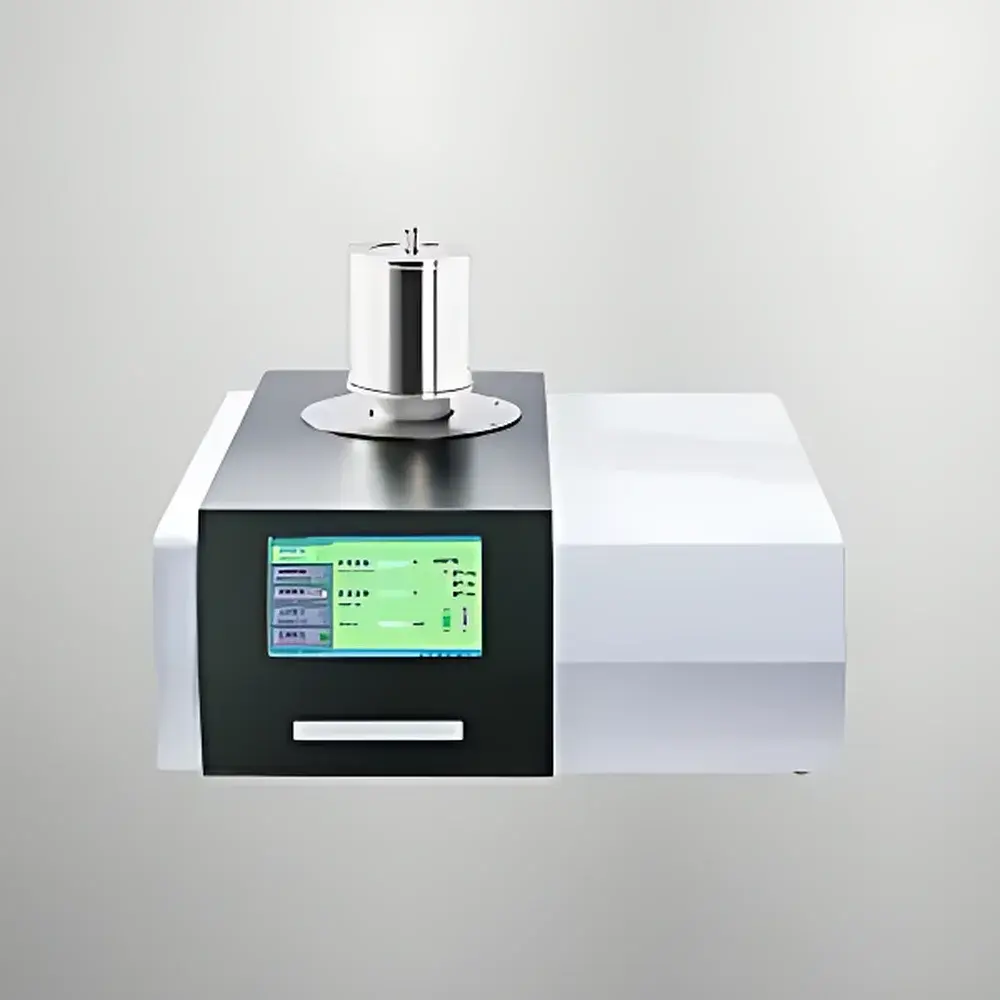
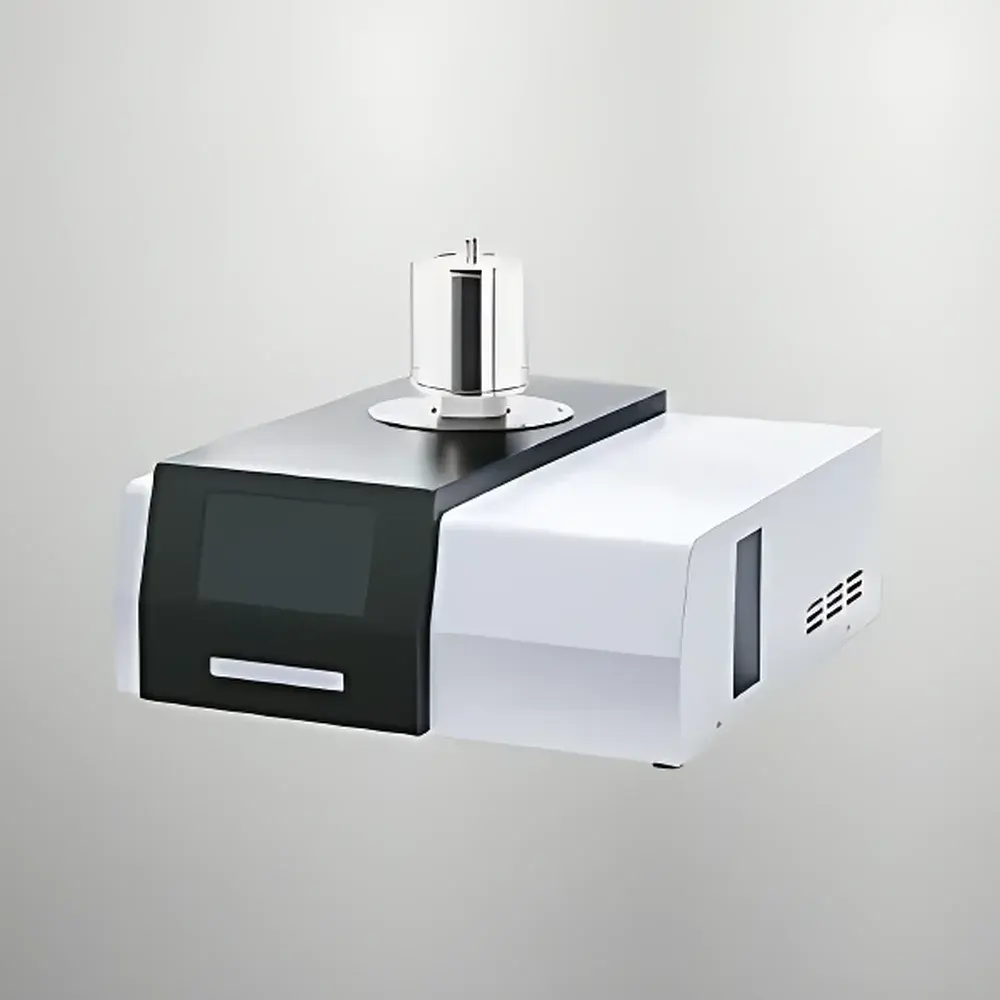
Nanjing Dazhan DTA-3320A Differential Thermal Analyzer
| Brand | Nanjing Dazhan |
|---|---|
| Origin | Jiangsu, China |
| Manufacturer Type | Direct Manufacturer |
| Origin Category | Domestic (China) |
| Model | DTA-3320A |
| Instrument Type | Differential Thermal Analyzer (DTA) |
| Temperature Range | Ambient to 1150 °C |
| Temperature Accuracy | ±0.1 °C |
| Temperature Resolution | 0.01 °C |
| Temperature Repeatability | ±0.1 °C |
| Heating/Cooling Rate | 0.1–100 °C/min |
| DTA Signal Range | 0–±2000 µV (expandable) |
| DTA Sensitivity | 0.01 µV |
| Baseline Adjustment | Adjustable slope and intercept |
| Calibration | Integrated standard reference materials with one-click temperature calibration |
| Control System | ARM-based embedded controller |
| Interface | USB 2.0 bidirectional communication |
| Display | 7-inch 24-bit color LCD touchscreen |
| Furnace Design | Top-opening vertical furnace architecture |
| Atmosphere Control | Programmable internal gas switching (N₂, Ar, air, O₂) |
| Power Supply | AC 220 V, 50 Hz (custom voltage/frequency available) |
Overview
The Nanjing Dazhan DTA-3320A Differential Thermal Analyzer is a precision benchtop instrument engineered for quantitative thermal event detection under controlled temperature programs. It operates on the fundamental principle of differential thermal analysis (DTA), wherein the temperature difference (ΔT) between a sample and an inert reference material is continuously monitored as both are subjected to identical, programmable heating or cooling profiles. Unlike heat-flux DSC, DTA directly records the thermoelectric voltage generated across a thermocouple pair—one in contact with the sample, the other with the reference—making it especially suited for detecting endothermic and exothermic transitions with high temporal resolution. The DTA-3320A is widely deployed in materials science laboratories for characterizing phase transformations (e.g., solid–solid transitions, eutectic melting, polymorphic conversion), decomposition kinetics, dehydration behavior, oxidation onset temperatures, and solid-state reaction enthalpies. Its ambient-to-1150 °C operational envelope supports ceramic, metallurgical, pharmaceutical, and geological applications where high-temperature stability and signal fidelity are critical.
Key Features
- ARM-based embedded control architecture ensures deterministic real-time temperature regulation, minimizing overshoot and improving thermal ramp linearity.
- Top-opening vertical furnace design eliminates mechanical lift mechanisms, enhancing positional repeatability, reducing thermal lag, and simplifying sample loading/unloading under inert or reactive atmospheres.
- High-stability nickel-chromium thermocouple sensors provide long-term resistance to oxidation and corrosion at elevated temperatures, maintaining signal integrity up to 1150 °C.
- 7-inch full-color capacitive touchscreen interface with intuitive icon-driven navigation enables standalone operation without external PC dependency.
- Programmable atmosphere control system supports automated gas purging and switching between N₂, Ar, synthetic air, and O₂ via solenoid valves—fully synchronized with thermal protocols.
- USB 2.0 interface enables bidirectional data streaming, firmware updates, and remote parameter configuration using the included Windows-compatible acquisition software.
Sample Compatibility & Compliance
The DTA-3320A accommodates standard alumina or platinum crucibles (typically 70–100 µL volume) and supports solid powders, granules, thin films, and compacted pellets. Sample mass range is optimized between 1–20 mg for optimal signal-to-noise ratio and thermal diffusion uniformity. The instrument complies with core requirements of ISO 11357-4 (Plastics — Differential Scanning Calorimetry — Part 4: Determination of specific heat capacity) and ASTM E794 (Standard Test Method for Melting and Crystallization Temperatures by Thermal Analysis), though formal certification documentation must be obtained separately per installation. All thermal calibration procedures utilize certified reference materials (e.g., high-purity indium, tin, zinc, and aluminum) traceable to NIST standards. Data acquisition meets GLP-compliant audit trail requirements when used with validated software configurations supporting electronic signatures and user access control.
Software & Data Management
The bundled DTAControl Suite provides real-time visualization, multi-step program definition (including isothermal holds, rate changes, and conditional triggers), baseline correction tools (linear, polynomial, and dynamic offset compensation), and peak integration using tangent-onset and peak-maximum algorithms. Raw data are stored in ASCII-compatible .DTA format with metadata headers (timestamp, operator ID, instrument serial number, calibration status). Export options include CSV, Excel (.xlsx), and universal thermal analysis formats (e.g., .Q5, .ASC) for interoperability with third-party analysis platforms such as TA Universal Analysis, Netzsch Proteus, or MATLAB-based custom scripts. Software supports FDA 21 CFR Part 11 compliance when deployed on validated Windows OS environments with role-based permissions and electronic signature workflows.
Applications
- Determination of glass transition (Tg), crystallization onset (Tc), and melting point (Tm) in polymers and amorphous pharmaceuticals.
- Thermal stability assessment of catalysts, battery electrode materials, and refractory ceramics under oxidative or inert conditions.
- Quantification of dehydration steps in hydrated salts and clays, including stepwise mass loss correlation via coupled TGA-DTA systems.
- Reaction enthalpy estimation for solid-state synthesis pathways (e.g., mechanochemical reactions, precursor decomposition in sol-gel processing).
- Quality control screening of batch-to-batch consistency in metal alloys and powder metallurgy feedstocks.
FAQ
What is the difference between DTA and DSC?
DTA measures the temperature difference (ΔT) between sample and reference under identical thermal programs, while DSC quantifies the differential heat flow required to maintain both at the same temperature. DTA is more robust at very high temperatures (>1000 °C) and less sensitive to sample mass variations.
Can the DTA-3320A be upgraded to support simultaneous TGA measurement?
No—the DTA-3320A is a dedicated DTA platform. Nanjing Dazhan offers integrated TGA-DTA instruments (e.g., model TD-3320 series) with dual-sensor furnace architecture for concurrent mass and thermal signal acquisition.
Is the temperature calibration traceable to international standards?
Yes—calibration uses NIST-traceable reference metals (In, Sn, Zn, Al) with certified transition temperatures. Users may perform on-site verification using the built-in one-click calibration function and supplied standards.
What atmosphere gases are supported, and how is gas flow controlled?
N₂, Ar, synthetic air, and O₂ are supported via programmable solenoid valve sequencing. Mass flow controllers (MFCs) are optional accessories; base configuration uses fixed-orifice flow regulation with manual needle valves.
Does the instrument support ISO/IEC 17025-compliant uncertainty reporting?
Uncertainty estimation requires supplementary metrological validation (e.g., inter-laboratory comparison, uncertainty budgeting per GUM) and is not automated in the base software. However, all raw thermal data—including timestamps, sensor voltages, and furnace setpoints—are fully recorded for downstream uncertainty analysis.



