
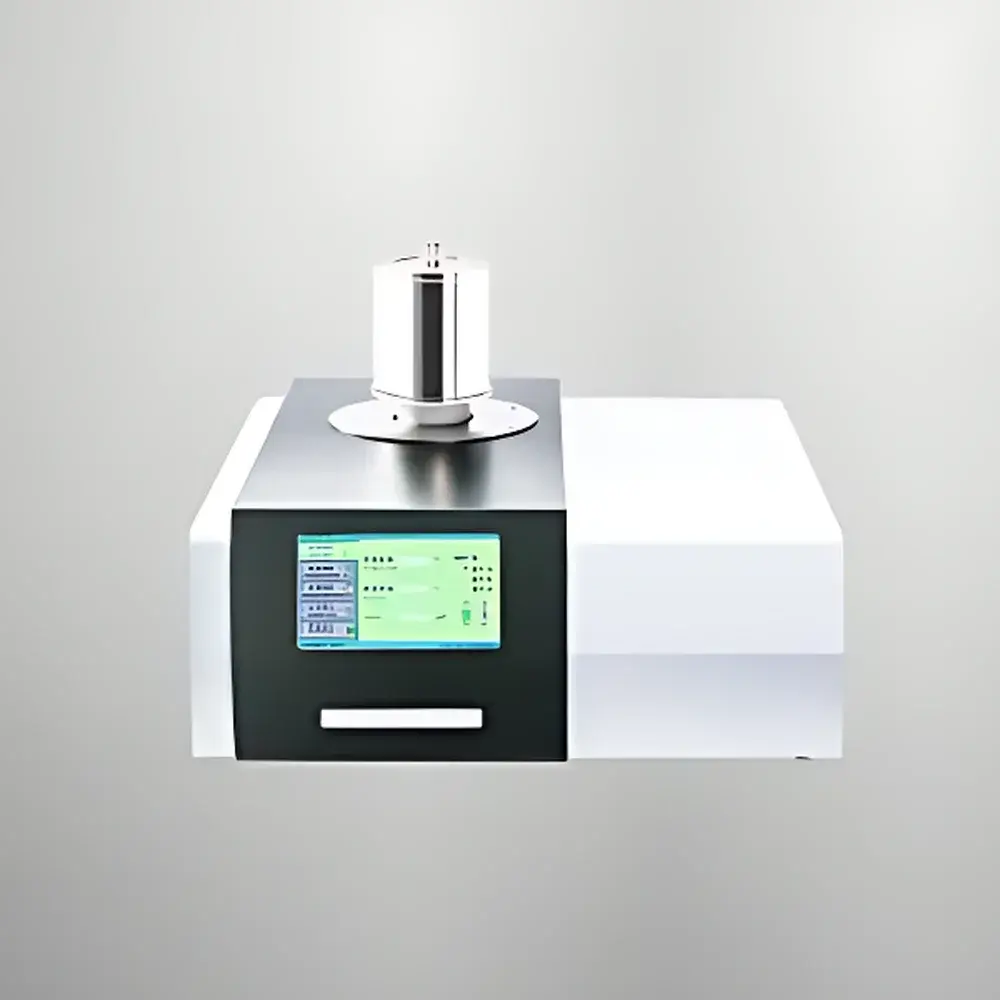
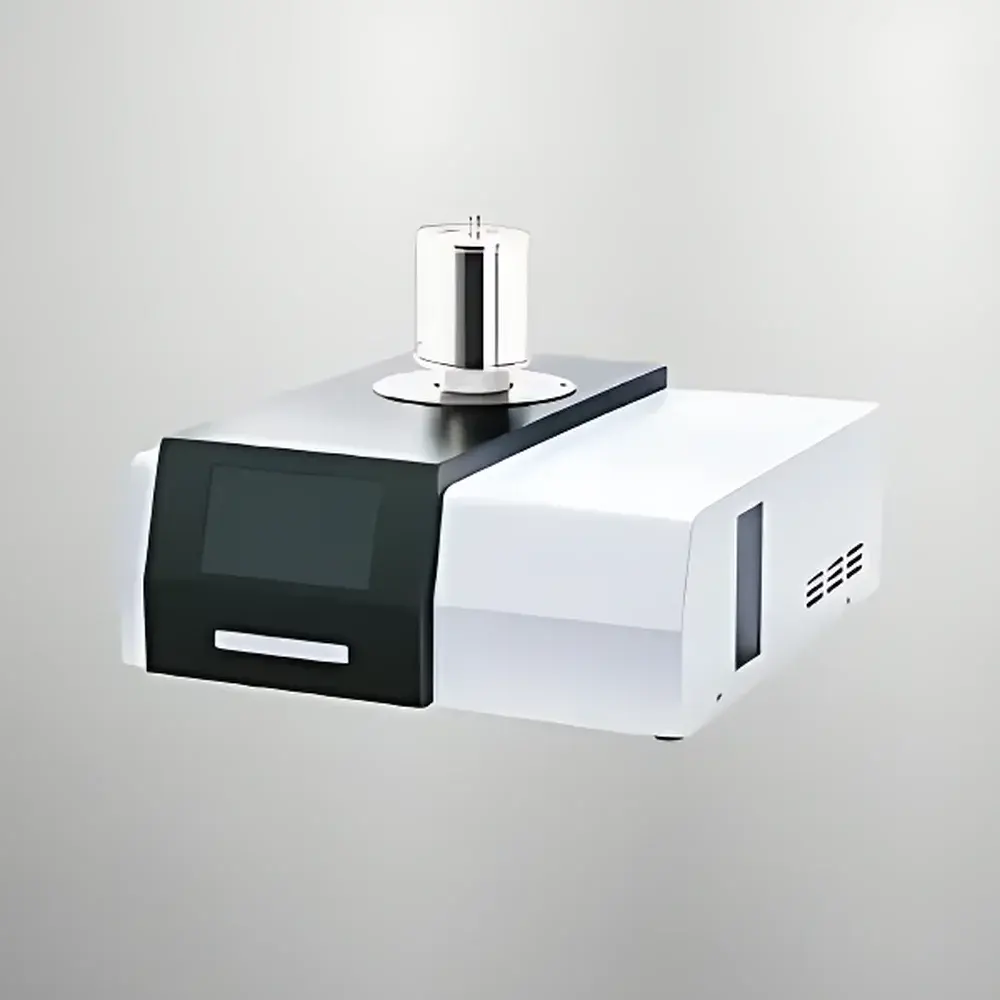
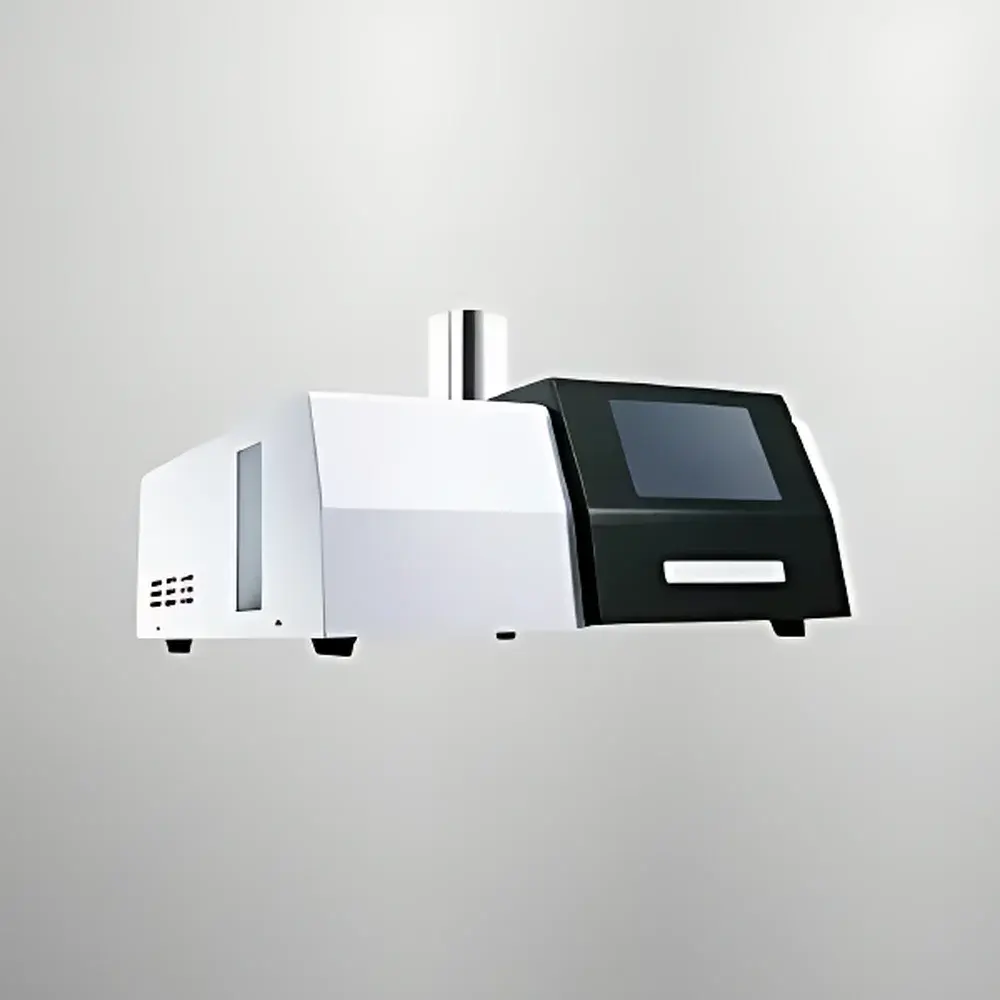
Nanjing Dazhan DZ3320A Differential Thermal Analyzer (DTA)
| Brand | Nanjing Dazhan |
|---|---|
| Origin | Jiangsu, China |
| Manufacturer Type | Manufacturer |
| Country of Origin | China |
| Model | DZ3320A |
| Sample Capacity | Single-sample |
| Instrument Type | DTA |
| Temperature Range | Ambient to 1150 °C |
| Heating/Cooling Rate | 0.1–100 °C/min |
| DTA Signal Range | 0 to ±2000 µV (expandable) |
| DTA Sensitivity | 0.01 µV |
| Temperature Resolution | 0.01 °C |
| Temperature Accuracy | ±0.1 °C |
| Temperature Repeatability | ±0.1 °C |
| Temperature Control Mode | Programmable ramp & isothermal hold |
| Furnace Design | Top-opening vertical furnace |
| Atmosphere Control | Automated internal gas switching |
| Interface | Standard USB 2.0 |
| Display | 7-inch 24-bit color TFT LCD touchscreen |
| Power Supply | AC 220 V, 50 Hz (customizable) |
Overview
The Nanjing Dazhan DZ3320A Differential Thermal Analyzer (DTA) is a precision laboratory instrument engineered for quantitative thermal event detection under controlled temperature programs. Operating on the fundamental principle of differential thermometry, the DZ3320A continuously measures the temperature difference (ΔT) between a sample and an inert reference material as both are subjected to identical, programmable thermal profiles. Unlike heat-flow-based DSC systems, DTA detects exothermic or endothermic transitions—such as phase changes, polymorphic transformations, crystallization, decomposition, oxidation, reduction, or dehydration—as deviations in ΔT versus temperature or time. This makes it particularly suitable for qualitative and semi-quantitative analysis of thermal stability, reaction onset, and transition enthalpy estimation when calibrated against certified reference materials (e.g., high-purity metals per ASTM E537 and ISO 11357-1). The instrument’s top-opening furnace architecture ensures rapid sample loading, minimal thermal lag, and high positional reproducibility—critical for comparative studies across batches or laboratories.
Key Features
- ARM-based embedded controller enabling real-time thermal regulation with <0.1 °C deviation during dynamic ramping and stable isothermal holds up to 24 hours.
- High-stability nickel-chromium thermocouple sensor pair with extended service life at temperatures up to 1150 °C, resistant to oxidation and chemical corrosion in air, nitrogen, argon, or synthetic air atmospheres.
- 7-inch full-color capacitive touchscreen interface with intuitive icon-driven navigation, supporting multi-step method creation, real-time curve overlay, and on-device baseline correction.
- USB 2.0 bidirectional communication protocol compliant with Windows-based acquisition software; supports automated data export in CSV, TXT, and universal thermal analysis formats (e.g., .Q5, .ASC).
- Programmable atmosphere control module enabling automatic switching between up to two gases (e.g., N₂ → O₂) at user-defined temperature thresholds—essential for oxidative stability testing per ASTM D3850 and ISO 871.
- Integrated calibration suite including certified indium, tin, and zinc standards; one-click temperature calibration with linear and polynomial correction options.
Sample Compatibility & Compliance
The DZ3320A accommodates standard ceramic or alumina crucibles (typically 70–100 µL capacity), supporting solid powders, granules, thin films, and compacted pellets. Liquid samples require sealed high-pressure crucibles (optional accessory). The system meets essential requirements for GLP-compliant environments: audit-trail-enabled software logs all method parameters, operator ID, calibration events, and raw signal timestamps. While not inherently 21 CFR Part 11 compliant, the instrument’s data integrity framework—including write-protected raw files, electronic signatures via optional license modules, and exportable metadata—facilitates alignment with FDA, EMA, and ICH guidelines when deployed within validated laboratory information management systems (LIMS). It adheres to core thermal analysis standards including ISO 11357-4 (DTA terminology), ASTM E473 (thermal analysis nomenclature), and GB/T 14466-2021 (Chinese national DTA specification).
Software & Data Management
Bundled acquisition and analysis software provides synchronized control of temperature programming, gas flow sequencing, and real-time signal visualization. Key analytical functions include peak onset/offset detection (tangent, inflection, half-height), baseline subtraction (linear, polynomial, or spline-fitted), integration of ΔT-area for relative enthalpy estimation, and comparative overlay of up to eight curves. Data files retain full metadata—including furnace thermocouple voltage, ambient temperature, gas status flags, and hardware configuration IDs—ensuring traceability. Export options support direct import into OriginLab, MATLAB, or Python-based analysis pipelines (via Pandas-compatible CSV). Software updates are delivered via secure HTTPS portal with version-controlled release notes and validation documentation.
Applications
- Identification and characterization of polymorphic transitions in pharmaceutical actives (e.g., α→β lactose, amorphous-to-crystalline conversion).
- Thermal degradation profiling of polymer composites, flame-retardant additives, and carbon-fiber prepregs under inert and oxidative conditions.
- Mineralogical analysis of clays, zeolites, and cementitious materials—detecting dehydroxylation, carbonate decomposition, and spinel formation.
- Quality control of catalysts and battery electrode materials (e.g., LiCoO₂, NMC) through phase purity verification and thermal runaway onset assessment.
- Educational use in materials science and physical chemistry curricula for teaching fundamental thermodynamic concepts such as latent heat, kinetic compensation effects, and Kissinger analysis.
FAQ
What is the difference between DTA and DSC?
DTA measures the temperature difference (ΔT) between sample and reference under identical heating, while DSC quantifies the differential heat flow required to maintain both at the same temperature. DTA offers higher sensitivity to small thermal events but lacks direct enthalpy quantification without calibration.
Can the DZ3320A perform simultaneous TGA-DTA measurements?
No—the DZ3320A is a dedicated DTA platform. Simultaneous thermogravimetric analysis requires a separate TGA instrument or a hybrid TGA-DTA/DSC system.
Is external cooling required for sub-ambient operation?
The standard DZ3320A operates from ambient to 1150 °C. Sub-ambient capability (e.g., –50 °C) is not supported; low-temperature DTA applications require cryogenic accessories not included in this model.
How is temperature accuracy verified during routine use?
Users perform periodic calibration using supplied reference metals (In, Sn, Zn); software calculates correction coefficients applied to all subsequent runs, with full traceability logged in the audit trail.
Does the instrument support automated sample changers?
No—this is a single-position manual-loading system. High-throughput screening requires external robotic integration, which is not natively supported.



