
NanoMagnetics LT-AC/DC Benchtop Hall Effect Measurement System
| Brand | NanoMagnetics |
|---|---|
| Origin | United Kingdom |
| Model | LT-AC/DC |
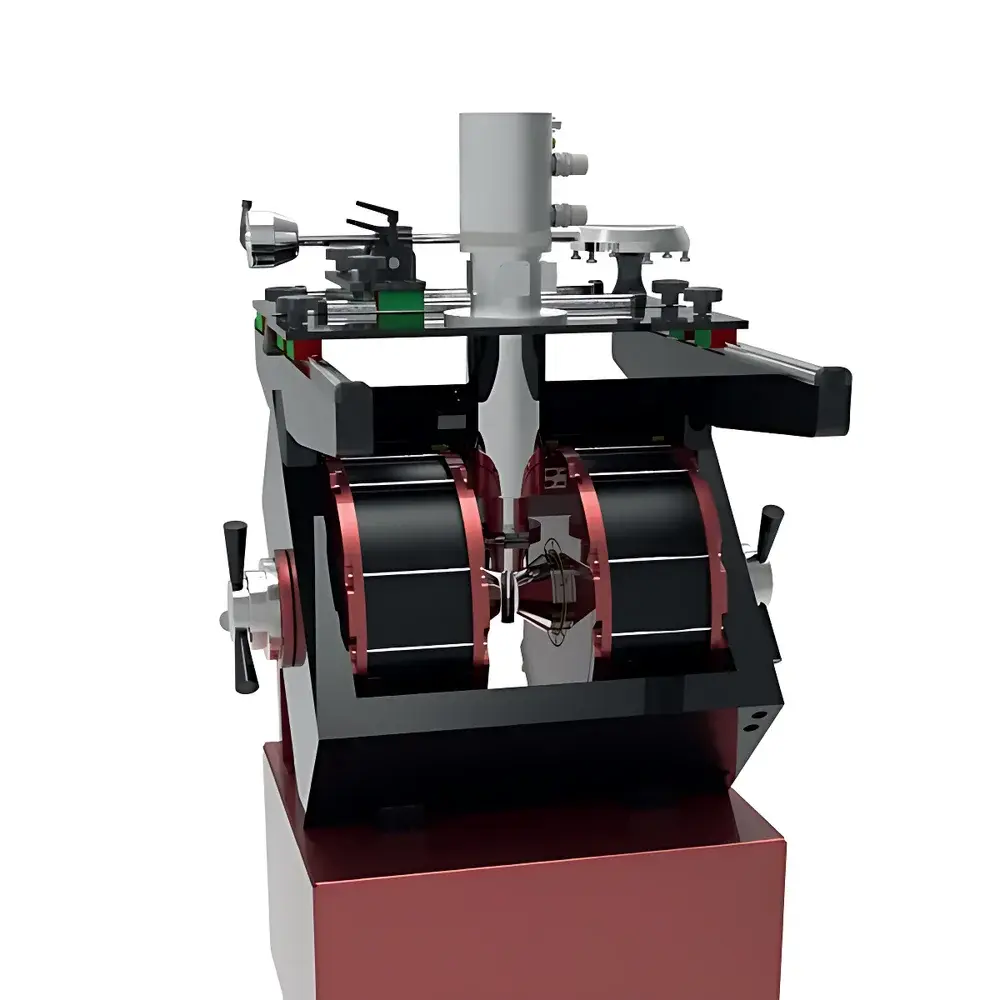
| Magnetic Field Range | ±2.5 T (electromagnet, 25 mm pole face, 10 mm gap) |
| Optional High-Field Configuration | up to ±16 T (with cryogen-free superconducting magnet & cryostat) |
| Temperature Range | 3 K – 1273 K (via interchangeable cryogenic and high-temperature measurement heads) |
| Sample Positioning | 3-axis motorized stage (X/Y/Z) with sub-micron repeatability |
| Hall Probe Calibration | Integrated NanoMagnetics Gaussmeter with traceable NIST-calibrated Hall sensor |
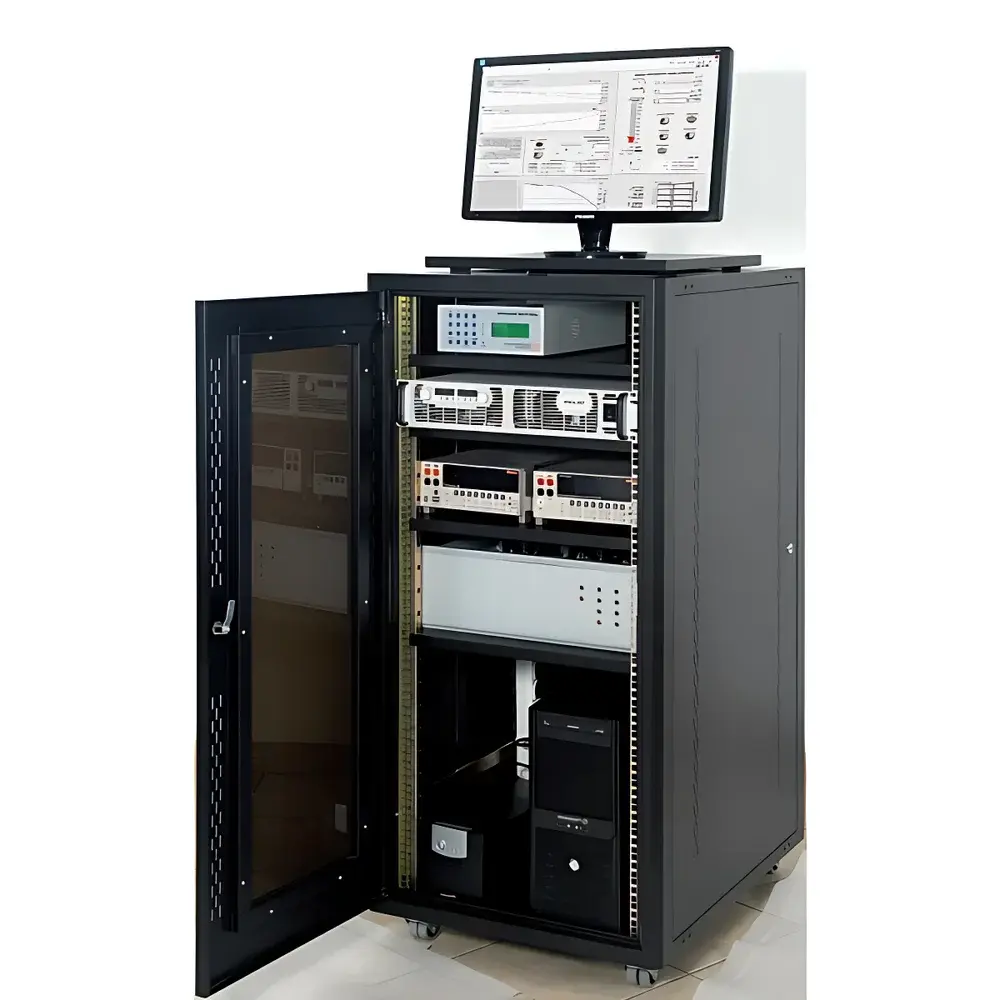
| Electrical Measurement | Keithley SourceMeter (pA/μV resolution) |
| Software Platform | LabVIEW-based, fully automated, USB/Ethernet-controlled |
| Compliance | Supports ASTM F76, ISO/IEC 17025-aligned workflows, FDA 21 CFR Part 11-ready audit trail (optional), GLP/GMP-compatible data logging |
Overview
The NanoMagnetics LT-AC/DC Benchtop Hall Effect Measurement System is a modular, research-grade platform engineered for quantitative electronic transport characterization of solid-state materials under controlled magnetic field and temperature conditions. Based on the classical Hall effect principle—where charge carriers experience a Lorentz force perpendicular to both current flow and applied magnetic field—the system enables precise extraction of carrier type (n/p), concentration, mobility, and resistivity via van der Pauw and Hall bar geometries. Its dual-mode architecture supports both DC and AC Hall measurements, with the latter enabling frequency-dependent carrier dynamics analysis (e.g., trapping/detrapping kinetics, minority carrier lifetime estimation). The system integrates a high-stability electromagnet (±2.5 T standard), optional cryogen-free superconducting magnet (up to ±16 T), and interchangeable temperature stages covering 3 K–1273 K—making it suitable for fundamental semiconductor physics studies, thin-film process development, and qualification of wide-bandgap and low-dimensional materials.
Key Features
- Modular magnetic field platform: Standard 25 mm pole-face electromagnet delivering ±2.5 T at 10 mm gap; upgrade path to ±16 T via integrated cryogen-free superconducting magnet with 3 K base temperature.
- Multi-range thermal control: Three independently configurable measurement heads—closed-cycle cryostat (3–300 K), high-temperature furnace (300–1273 K), and room-temperature probe station—each equipped with calibrated Pt-100 or Cernox sensors and active PID feedback.
- Precision sample manipulation: Motorized 3-axis stage (X/Y/Z) with <1 µm positional repeatability and programmable alignment routines for optimal contact placement during van der Pauw or Hall bar configurations.
- High-fidelity electrical metrology: Dual-channel Keithley 2450/2460 SourceMeter units providing pA-level current sourcing and µV-level voltage measurement, fully synchronized with magnetic field ramping and temperature sweeps.
- Integrated field calibration: On-board NanoMagnetics Gaussmeter with NIST-traceable Hall probe, enabling real-time field mapping and closed-loop field stabilization during dynamic measurements.
- Flexible contact architecture: Spring-loaded micro-probe cards supporting 4-, 6-, or 8-terminal Hall bar configurations; standard 5 × 5 mm sample footprint with options for larger substrates (up to 50 × 50 mm) and multi-sample carriers (dual-position holders).
Sample Compatibility & Compliance
The LT-AC/DC accommodates a broad spectrum of conductive and semiconducting materials—including elemental (Si, Ge), compound (GaAs, InP, GaN, AlN, HgCdTe), oxide (ZnO, ITO, NiO), organic semiconductors, and magnetic oxides (ferrites, manganites). It supports industry-standard geometries per ASTM F76 (“Standard Test Method for Measuring Resistivity and Hall Coefficient of Semiconductor Materials”) and ISO 9513 (“Metallic materials — Calibration of extensometers used in mechanical testing”). Data acquisition and reporting modules are configurable to meet GLP and GMP documentation requirements, including electronic signatures, version-controlled method files, and 21 CFR Part 11-compliant audit trails (available as software option). All hardware interfaces comply with CE, UKCA, and RoHS directives.
Software & Data Management
Control and analysis are unified within a LabVIEW-based application featuring intuitive workflow scripting, real-time parameter visualization, and automated sequence execution. The software supports full instrument synchronization: simultaneous ramping of magnetic field (0–2.5 T at ≤0.1 T/s), temperature (3–1273 K at ≤5 K/min), and bias conditions. Raw data—including voltage traces, resistance vs. field, Hall coefficient vs. temperature—are stored in HDF5 format with embedded metadata (sample ID, operator, timestamp, calibration history). Built-in analysis modules perform automatic carrier concentration/mobility extraction using iterative van der Pauw inversion and linear Hall slope fitting. Export options include CSV, MATLAB .mat, and PDF reports compliant with internal QA templates. Remote access and firmware updates are delivered over secure HTTPS; no third-party cloud dependency.
Applications
- Characterization of epitaxial III–V and II–VI heterostructures for HEMT and pHEMT device development.
- Quality control of transparent conducting oxides (TCOs) in photovoltaic absorber stacks and OLED charge transport layers.
- Mobility mapping across wafer-scale 2D materials (graphene, MoS₂, h-BN) and perovskite thin films.
- Thermoelectric material screening via Seebeck coefficient integration (with optional thermocouple module).
- Defect engineering studies in wide-bandgap semiconductors (GaN, SiC) through low-temperature Hall mobility activation analysis.
- Space-qualified component validation under cryogenic magnetic environments (e.g., satellite sensor calibration).
FAQ
What is the minimum detectable carrier concentration using the LT-AC/DC system?
Carrier concentration resolution depends on sample geometry and contact quality; typical detection limit is ~1 × 10¹⁴ cm⁻³ for standard van der Pauw configurations with 5 × 5 mm samples.
Can the system perform time-resolved Hall measurements?
Yes—when configured with the optional AC Hall module (0.1 Hz–1 kHz excitation), the system captures phase-resolved Hall voltage transients for recombination lifetime and trap density analysis.
Is vacuum compatibility supported for in-situ measurements?
The base configuration operates in ambient air or dry nitrogen purge; UHV-compatible variants (10⁻⁷ mbar) with feedthrough-integrated probes are available upon request.
How is magnetic field homogeneity ensured across the sample area?
Field uniformity is verified via 2D Hall probe mapping; standard electromagnet achieves ±0.5% variation over a 10 × 10 mm² region at ±2.5 T.
Does the software support custom script development for proprietary measurement protocols?
Yes—the LabVIEW source code is provided under license agreement, enabling full customization of measurement sequences, data reduction algorithms, and report generation logic.
Related Products





