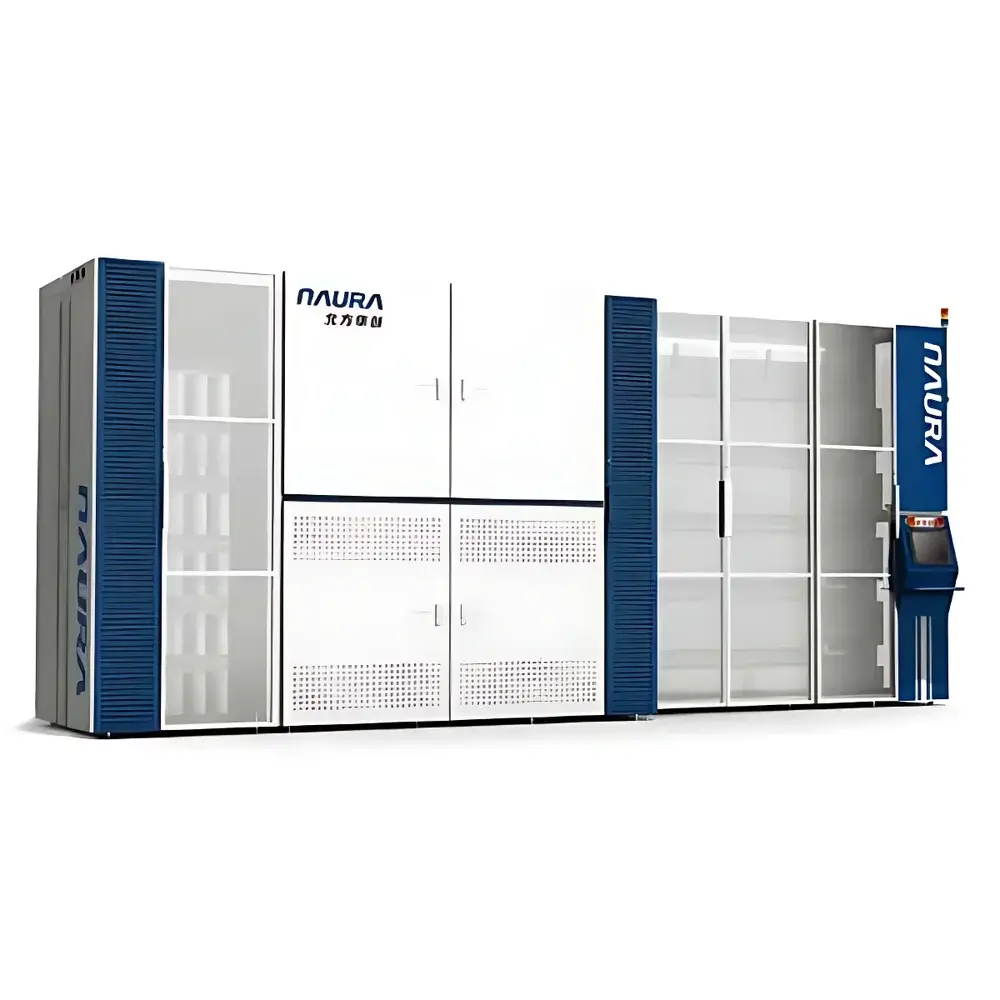
NAURA HORIC D200 Series Oxidation and Diffusion Furnace System
| Brand | NAURA |
|---|---|
| Origin | Beijing, China |
| Model | HORIC D200 Series |
| Wafer Sizes | 4", 6", 8" |
| Compatible Substrates | Silicon (Si), Silicon Carbide (SiC), Silicon-on-Gallium Nitride (Si/GaN) |
| Process Capabilities | Phosphorus Diffusion, Boron Diffusion, Thermal Oxidation, Annealing, Alloying |
| Application Domains | R&D Laboratories, Compound Semiconductor Fabrication |
| Compliance | GB/T Standards, IEC 61000-6-2/6-4, SEMI S2-0215, CE Marked (EMC & LVD) |
| MES Integration | SECS/GEM, OPC UA, Custom API Support |
Overview
The NAURA HORIC D200 Series Oxidation and Diffusion Furnace System is a horizontal tube-based thermal processing platform engineered for precision dopant introduction, gate oxide growth, defect passivation, and metallurgical activation in semiconductor R&D and pilot-line fabrication. Operating on the principle of controlled gas-phase chemical reactions within a quartz process tube under precisely regulated temperature gradients (up to 1250 °C), the system leverages laminar flow dynamics and optimized thermal uniformity to ensure repeatable dopant profile control—critical for shallow junction formation in Si, high-temperature stability in SiC, and interface quality management in GaN-on-Si heterostructures. Designed for flexibility in research-intensive environments, the HORIC D200 supports both single-wafer and batch processing configurations with programmable ramp rates (0.1–20 °C/s), soak stability ≤±0.5 °C over 4 hours, and integrated furnace atmosphere monitoring (O₂, N₂, Ar, POCl₃, BBr₃, forming gas).
Key Features
- Modular chamber architecture enabling rapid reconfiguration between oxidation, diffusion, annealing, and alloying modes without hardware replacement
- Dual-zone or triple-zone heating elements with independent PID control per zone, delivering axial temperature uniformity <±1.5 °C across 8-inch wafers at 1000 °C
- Gas delivery subsystem with mass flow controllers (MFCs) calibrated to ±0.8% FS for reactive precursors (e.g., POCl₃ vapor, BBr₃ carrier gas mixtures) and inert purge lines
- Integrated safety interlocks compliant with ISO 13857 and SEMI S2-0215, including over-temperature cutoff, gas leak detection (electrochemical sensors), and emergency venting pathways
- Front-end loadlock compatibility for oxygen-sensitive processes; optional quartz boat or graphite susceptor configurations for low-metallic-contamination operation
- Real-time process logging with timestamped temperature, pressure, gas flows, and valve status—archived in binary format with SHA-256 checksum integrity verification
Sample Compatibility & Compliance
The HORIC D200 accommodates standard semiconductor substrates including crystalline silicon (Czochralski and float-zone), 4H-SiC wafers up to 150 mm, and GaN epitaxial layers grown on silicon or sapphire templates. Its thermal design meets the mechanical and thermal expansion constraints of wide-bandgap materials, minimizing wafer bow during high-temperature cycles (>1100 °C). All electrical, pneumatic, and exhaust interfaces conform to SEMI E10 (Equipment Communications Standard), SEMI E30 (GEM), and IEC 61508 SIL2 for functional safety. The system is validated per ASTM F1918-19 for thermal process repeatability and supports audit-ready documentation for GLP and ISO/IEC 17025-accredited laboratories.
Software & Data Management
Control is executed via NAURA’s proprietary Furnace Control Software (FCS v4.2), a Windows-based HMI supporting recipe-driven operation, multi-step thermal profiles (up to 99 segments), and real-time deviation alerts. Data export complies with ASTM E1578-22 (Standard Guide for Laboratory Information Management Systems) and includes CSV, XML, and HDF5 formats. Full 21 CFR Part 11 compliance is achieved through role-based access control (RBAC), electronic signatures, and immutable audit trails covering all parameter modifications, run initiations, and alarm acknowledgments. Optional integration with third-party MES platforms (e.g., Applied Materials Envision, PDF Solutions Exensio) is supported via SECS/GEM HSMS over TCP/IP or RESTful API endpoints.
Applications
- Phosphorus diffusion for n-type emitter formation in Si solar cells and power devices
- Boron diffusion and drive-in for p-well isolation in CMOS-compatible compound semiconductor processes
- Dry/wet thermal oxidation of SiC for MOS interface trap density reduction (Dit < 1×10¹² cm⁻²·eV⁻¹)
- Rapid thermal annealing (RTA) of ion-implanted GaN layers to restore crystal lattice integrity
- Alloying of Ni/Au contacts on AlGaN/GaN HEMT structures for ohmic behavior optimization
- Thermal budget evaluation for gate-stack integration in GaN-on-Si RF power transistors
FAQ
What wafer sizes does the HORIC D200 support?
The system is configured for 100 mm (4″), 150 mm (6″), and 200 mm (8″) diameter wafers, with interchangeable quartz boats and alignment fixtures.
Is the system qualified for SiC and GaN process flows?
Yes—thermal uniformity mapping and gas residence time validation have been performed per JEDEC JEP184 for SiC oxidation and IEEE P3001.1 for GaN anneal stability.
Can the HORIC D200 be integrated into an existing factory automation environment?
It supports full GEM/SECS-II communication, equipment front-end module (EFEM) handshake protocols, and can be commissioned under AMHS host control via standard SEMI E40/E87 interfaces.
Does NAURA provide process qualification support?
Yes—application engineers deliver on-site recipe development, DOE-based optimization, and CPK-based process capability reporting aligned with IPC-7530B guidelines.
What maintenance intervals are recommended for MFCs and thermocouples?
MFC recalibration is advised every 6 months or after 500 process cycles; Type S thermocouples require verification against NIST-traceable reference standards every 3 months per ASTM E230/E230M.