
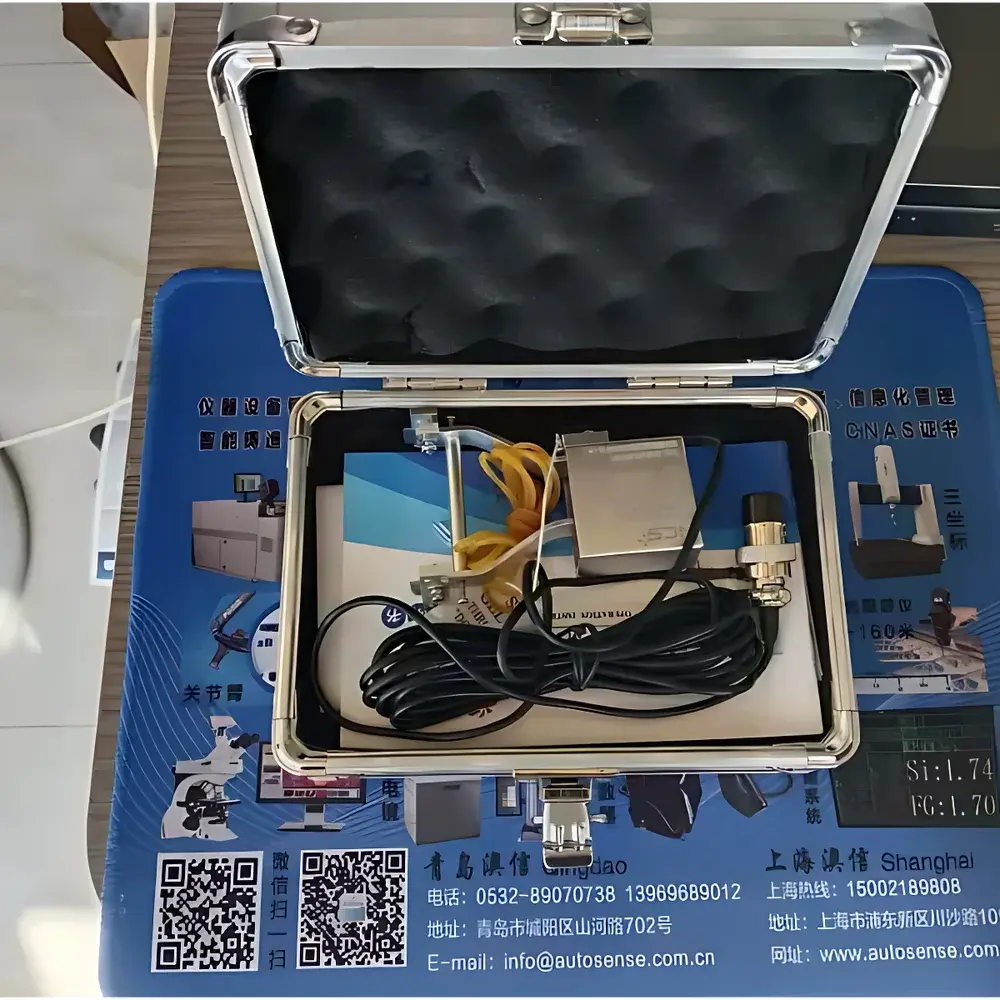
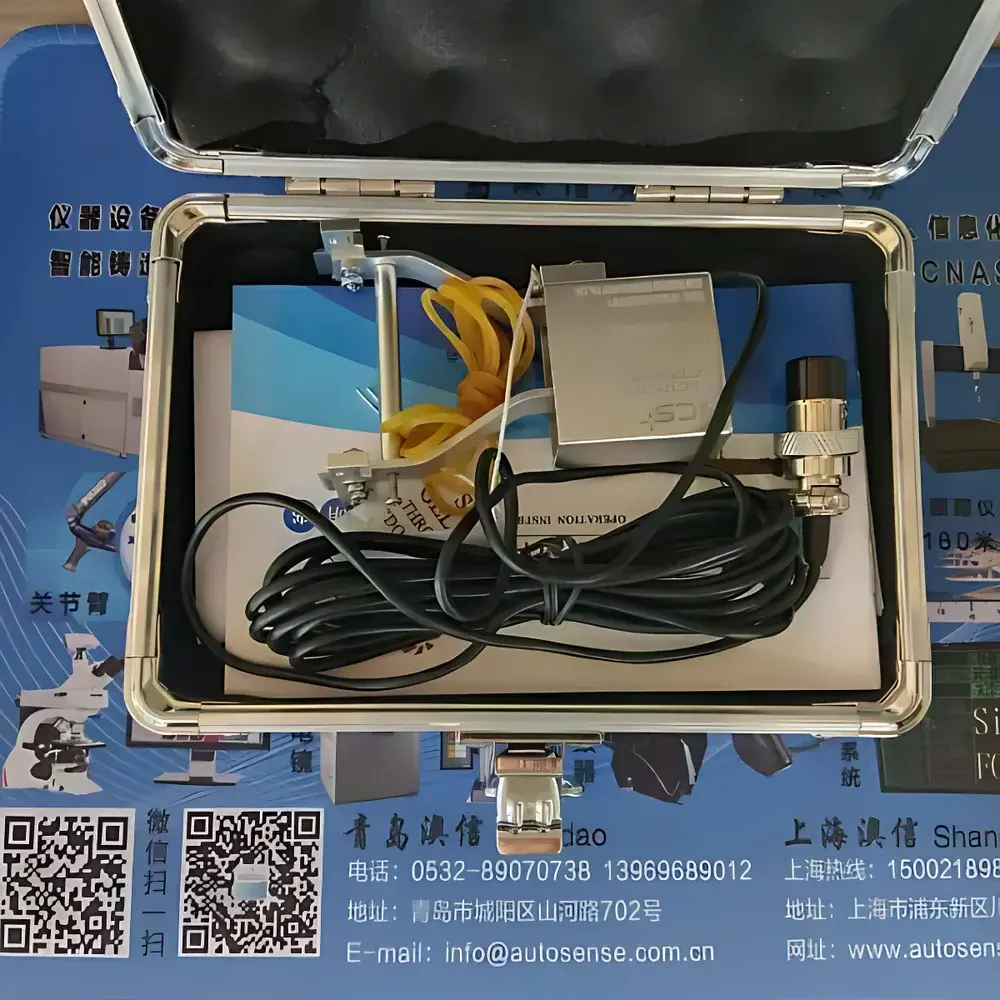
NCS YYU-5/50 Electronic Extensometer
| Brand | NCS |
|---|---|
| Model | YYU-5/50 |
| Gauge Length | 50 mm |
| Extension Range | ±5 mm |
| Output Signal | Analog Voltage (±10 V) or Digital RS-232/RS-485 |
| Resolution | ≤0.1 µm |
| Accuracy | ±0.5% of full scale |
| Operating Temperature | 10–40 °C |
| Compliance | ASTM E8/E21, ISO 6892-1, GB/T 228.1 |
Overview
The NCS YYU-5/50 Electronic Extensometer is a high-precision, clip-on axial strain measurement device engineered for integration with universal testing machines (UTMs) and fatigue testing systems. It operates on the principle of linear variable differential transformer (LVDT) or strain-gauge-based displacement transduction—depending on internal sensor configuration—to convert mechanical extension or contraction into a proportional analog voltage or digital serial output. Designed for uniaxial tensile, compression, and cyclic loading tests, the YYU-5/50 delivers traceable, real-time strain data with sub-micrometer resolution, enabling accurate determination of modulus of elasticity, yield strength, uniform elongation, and strain hardening behavior in metallic, polymeric, and composite specimens per internationally recognized mechanical testing standards.
Key Features
- Fixed gauge length of 50 mm ensures consistent strain definition across test specimens conforming to ASTM E8 and ISO 6892-1 specimen geometry requirements.
- Full-scale extension range of ±5 mm accommodates both low-ductility metals (e.g., high-strength steels, titanium alloys) and moderately ductile polymers without manual repositioning during testing.
- Dual-output interface supports analog ±10 V signal for direct integration with legacy UTM controllers and digital RS-232/RS-485 communication for synchronization with modern PC-based data acquisition systems.
- Robust aluminum alloy housing with precision-machined knife-edge contacts minimizes slippage and parasitic bending moments during high-load applications up to 500 kN.
- Thermally compensated sensor architecture maintains measurement stability over ambient temperature fluctuations between 10 °C and 40 °C—critical for long-duration creep or low-cycle fatigue experiments.
- Interchangeable mounting arms allow rapid adaptation to round, flat, or notched specimens per ASTM E23 and ISO 12737 specifications.
Sample Compatibility & Compliance
The YYU-5/50 is validated for use with standard tensile specimens—including Type I, II, and IV flat and round bars per ASTM E8, as well as sub-sized specimens per ISO 6892-1 Annex A. Its low-inertia design avoids resonance-induced signal noise during dynamic loading at frequencies up to 100 Hz. Calibration certificates are provided traceable to NIM (National Institute of Metrology, China) and include as-found/as-left data against reference artifacts certified to ISO/IEC 17025. The extensometer meets essential requirements of EN 10002-4 for verification of extensometric systems and supports GLP-compliant audit trails when paired with compliant software platforms.
Software & Data Management
The device interfaces natively with industry-standard testing software including MTS TestSuite™, Instron Bluehill®, and ZwickRoell TestXpert® via standard SCPI command sets or vendor-specific DLLs. Raw strain data is timestamped and synchronized with load and crosshead displacement channels at user-defined sampling rates (up to 1 kHz). All acquired datasets include embedded metadata: gauge length, calibration date, operator ID, and environmental conditions. For regulated environments, optional firmware enables 21 CFR Part 11–compliant electronic signatures, audit logging, and role-based access control when deployed with validated LIMS or ELN integrations.
Applications
- Tensile property characterization of aerospace-grade aluminum and nickel-based superalloys under room and elevated temperatures.
- Yield point detection and plastic strain ratio (r-value) determination in sheet metal forming studies.
- Cyclic strain-controlled fatigue testing per ASTM E606 and ISO 1099, including hysteresis loop analysis and Coffin–Manson parameter derivation.
- Creep rupture testing of pipeline steels and pressure vessel materials under sustained loads over 1,000+ hours.
- Quality assurance of additive-manufactured components where local strain heterogeneity must be resolved beyond crosshead-derived values.
- Educational laboratories requiring ISO/ASTM-aligned instrumentation for undergraduate and graduate mechanical metallurgy curricula.
FAQ
What is the recommended calibration interval for the YYU-5/50?
Calibration should be performed at least annually or prior to critical certification testing; more frequent verification is advised after mechanical shock, thermal cycling beyond specified limits, or if zero drift exceeds ±0.2 µm.
Can the YYU-5/50 be used on specimens with coatings or surface treatments?
Yes—provided the coating thickness does not exceed 5% of specimen thickness and exhibits sufficient adhesion to prevent interfacial slip; knife-edge contact pressure is optimized to minimize surface damage on anodized or nitrided surfaces.
Does the extensometer support automatic return-to-zero functionality?
No—zero offset must be manually confirmed prior to each test sequence using the host system’s tare function; however, programmable zero-hold modes are available in compatible software environments.
Is third-party calibration documentation accepted for ISO 17025 compliance?
Yes—provided the accredited laboratory issues a report containing uncertainty budgets, traceability statements to SI units, and identification of the specific YYU-5/50 unit serial number.
How is thermal expansion of the extensometer body compensated during high-temperature testing?
The YYU-5/50 is rated for ambient operation only; for elevated-temperature applications above 40 °C, users must deploy high-temperature variants (e.g., YYU-HT series) equipped with Invar linkages and ceramic-coated contacts.



