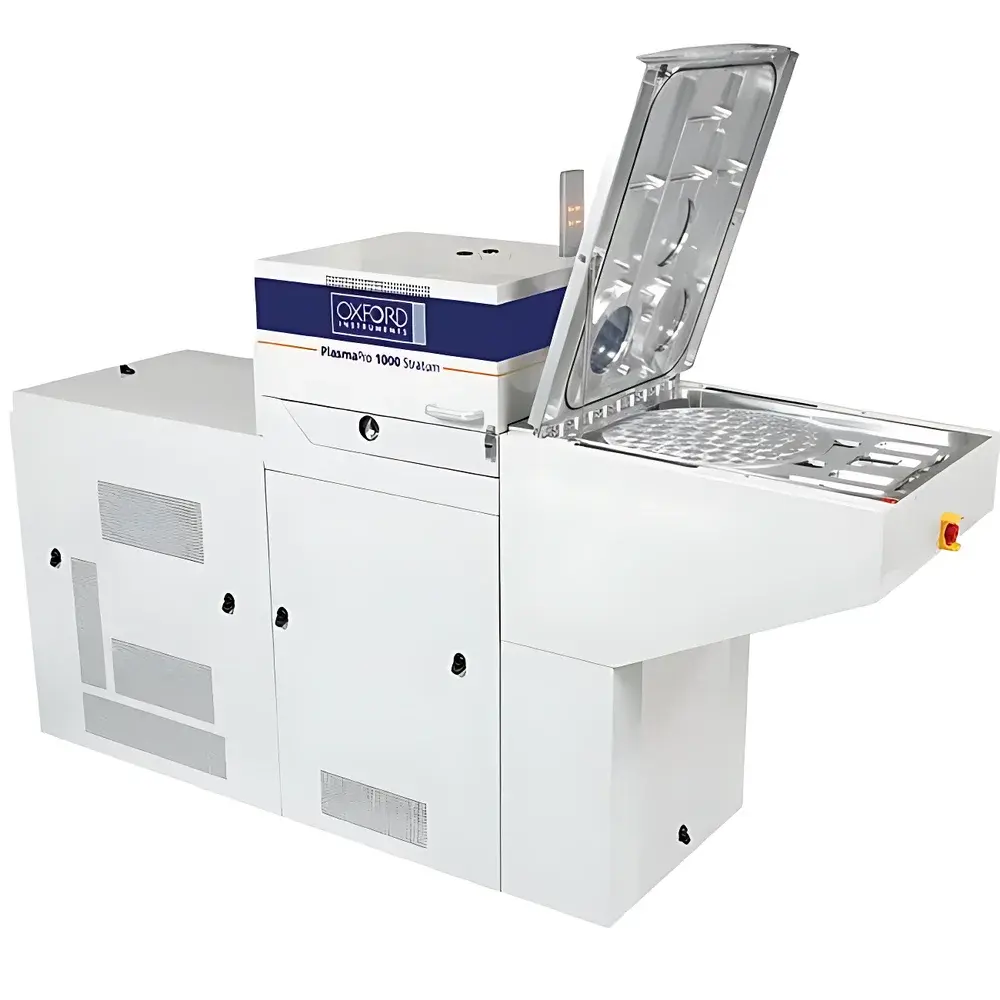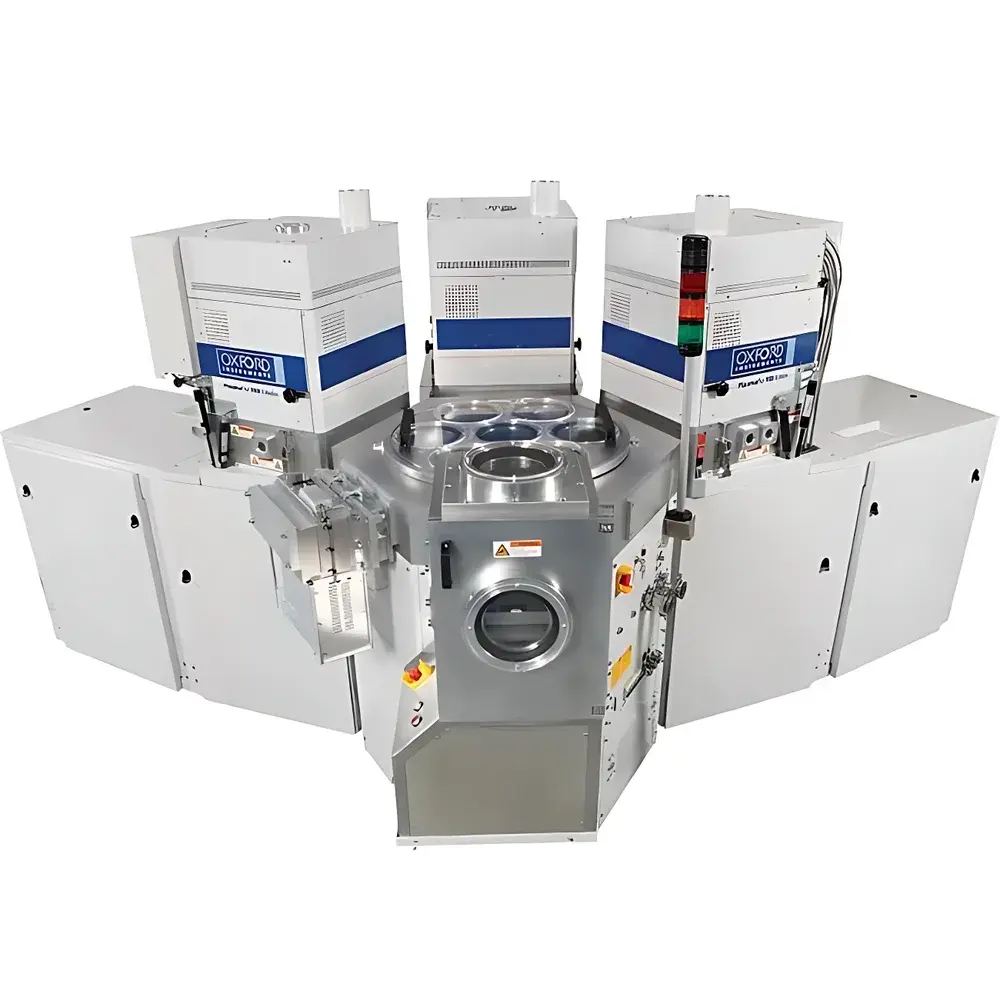
Neocera 180 PED Pulsed Electron Deposition System
| Brand | Neocera |
|---|---|
| Origin | USA |
| Manufacturer Type | Authorized Distributor |
| Origin Category | Imported |
| Model | 180 PED |
| Quotation | Upon Request |
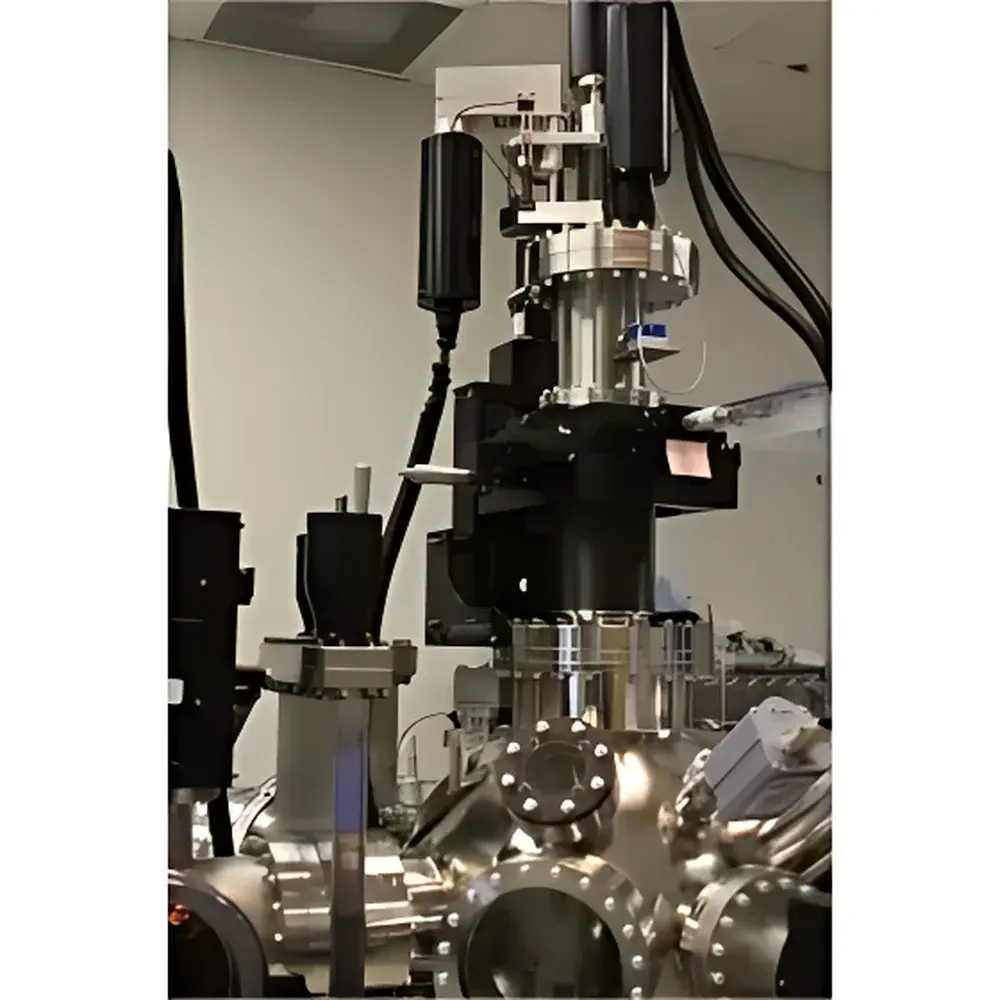
| Vacuum Chamber | 18" spherical chamber with 8" CF viewport, 6.75" CF PED source port, three 6" CF ports, two additional 2.75" and 1.33" CF ports |
| Electron Gun Energy | 8–20 keV |
| Pulse Energy | 100–800 mJ |
| Pulse Width | 100 ns |
| Max Repetition Rate | 10 Hz at 15 kV, 5 Hz at 20 kV |
| Beam Cross-Section (Min) | 8 × 10⁻² cm² |
| Peak Power Density | 1.3 × 10⁸ W/cm² |
| Z-Axis Alignment Range | 50 mm |
| XY Alignment Range | ±20 mm |
| Spark Plug Lifetime | ~3 × 10⁷ pulses |
| Substrate Heater | Ø2" max / 10×10 mm² min |
| Substrate Rotation | 1–30 RPM (360° continuous) |
| Target Carousel | 6 × 1" or 3 × 2" targets |
| Target Grid Scanning | Programmable raster ablation pattern |
| Target Height Adjustment | Motorized |
| Target Shutters | Individual shutters per target to prevent cross-contamination |
| Process Gas Compatibility | O₂, N₂, Ar |
| Pulse Energy Stability | ±10% |
| Base Pressure | ≤8 × 10⁻⁸ Torr (with dry pump + turbomolecular pump) |
| Software Platform | Windows 7 + LabVIEW 2013 |
Overview
The Neocera 180 PED Pulsed Electron Deposition System is a high-vacuum, UHV-compatible thin-film growth platform engineered for stoichiometric transfer of complex multi-element materials—particularly oxides, nitrides, and insulating compounds—via non-thermal, pulsed electron beam ablation. Unlike conventional thermal evaporation or sputtering, PED employs short-duration (100 ns), high-current (up to 1000 A), moderate-energy (8–20 keV) electron pulses to induce rapid, localized surface heating and plasma generation directly from the solid target. This results in a transient, highly ionized plume with minimal thermal diffusion into the bulk target—preserving the original chemical stoichiometry in the deposited film. The process operates under controlled reactive gas environments (O₂, N₂, Ar) at pressures between 3–20 mTorr, enabling epitaxial growth of metastable phases such as high-Tc superconductors and ferroelectric perovskites. The 180 PED’s modular architecture supports integration into larger UHV cluster systems—including in situ XPS and ARPES—and conforms to standard semiconductor cleanroom infrastructure requirements.
Key Features
- Turnkey UHV-compatible PED platform with 18″ spherical stainless-steel chamber and seven standardized CF ports (including dedicated 6.75″ CF source flange)
- High-reproducibility electron gun delivering pulse energies from 100–800 mJ at 100 ns width, with programmable repetition rates up to 10 Hz (at 15 kV)
- Motorized XYZ alignment stage for precise beam-to-target positioning (Z: 50 mm range; XY: ±20 mm)
- 6-position rotating target carousel supporting either six 1″ or three 2″ targets, each equipped with individual mechanical shutters to eliminate inter-target contamination
- Programmable grid-scan ablation mode enabling uniform erosion across target surface and extended target lifetime
- Substrate heating stage capable of reaching 850 °C under 1 atm O₂ partial pressure, with closed-loop PID temperature regulation and real-time thermocouple feedback
- Continuous 360° substrate rotation (1–30 RPM) and optional in-plane tilt for enhanced film homogeneity and stress control
- Integrated LabVIEW 2013 control suite running on Windows 7, providing synchronized operation of vacuum pumps, mass flow controllers, heater, carousel, and external triggers
Sample Compatibility & Compliance
The 180 PED accommodates a broad class of solid-state materials—including metals, semiconductors, wide-bandgap insulators, and multicomponent oxides—without requiring precursor synthesis or volatile ligands. It has been validated for stoichiometric deposition of YBCO, GdBCO, Ba0.6Sr0.4TiO3, SrRuO3, Al2O3, SiO2, and PTFE. All vacuum components meet ASTM F2781-10 standards for UHV elastomer compatibility. The system achieves base pressures ≤8 × 10⁻⁸ Torr using a dry-backed turbomolecular pumping station, with turbo speed regulated via RS-485 interface and logged for auditability. Optional configurations support FDA 21 CFR Part 11-compliant electronic records and signature functionality when paired with validated LabVIEW runtime modules and timestamped data archiving.
Software & Data Management
Control firmware is built on NI LabVIEW 2013 with modular VIs for vacuum sequencing, gas dosing, pulse triggering, temperature ramping, and motion coordination. All operational parameters—including beam energy, pulse count, substrate temperature profile, gas flow setpoints, and shutter timing—are stored in XML-based experiment templates. Real-time acquisition logs include thermocouple readings, pressure transducer outputs, and turbo pump status with millisecond timestamp resolution. Export formats include CSV and HDF5 for post-processing in MATLAB, Python (NumPy/Pandas), or Origin. Optional add-ons include automated recipe validation, failure-mode logging, and GLP/GMP-aligned audit trail generation with user authentication and change history.
Applications
- Growth of epitaxial high-temperature superconducting films (YBCO, GdBCO) on single-crystal substrates (LAO, STO, MgO) for Josephson junctions and SQUID fabrication
- Deposition of ferroelectric and dielectric oxide heterostructures (e.g., BTO/STO superlattices) for memristive and tunable microwave devices
- Multi-layer oxide stacks for resistive switching memory (ReRAM) and ferroelectric tunnel junctions (FTJs)
- Low-defect amorphous and nanocrystalline barrier layers (Al2O3, SiO2) in advanced CMOS and power electronics
- In situ combinatorial library synthesis via continuous composition grading using dual-target raster scanning and synchronized gas modulation
- Integration with UHV surface science clusters for direct transfer of as-deposited films into XPS, ARPES, or LEED chambers without air exposure
FAQ
What vacuum level is required for optimal stoichiometric transfer in PED?
Base pressure ≤8 × 10⁻⁸ Torr is recommended prior to introducing reactive gases; process pressure during deposition is maintained between 3–20 mTorr depending on material system and desired plasma confinement.
Can the 180 PED deposit metallic films without oxidation?
Yes—by operating under ultra-high-purity Ar or N₂ background, or in vacuum-only mode, the system enables reduction-sensitive metal deposition (e.g., Ni, Co, Fe) with minimal native oxide formation.
Is remote operation and monitoring supported?
The LabVIEW-based controller supports TCP/IP communication and OPC UA server configuration, enabling secure remote access via enterprise VPN with role-based UI permissions.
How is film thickness monitored in real time?
While the base system does not include in situ ellipsometry or QCM, it features standardized flanges and electrical feedthroughs for seamless integration of commercial quartz crystal microbalances or laser reflectance tools.
What maintenance intervals are specified for the electron gun spark plug?
The spark plug is rated for ≥3 × 10⁷ pulses; typical replacement occurs after 6–12 months of routine operation (≈10⁶ pulses/month), with full replacement kits and alignment procedures documented in the service manual.