
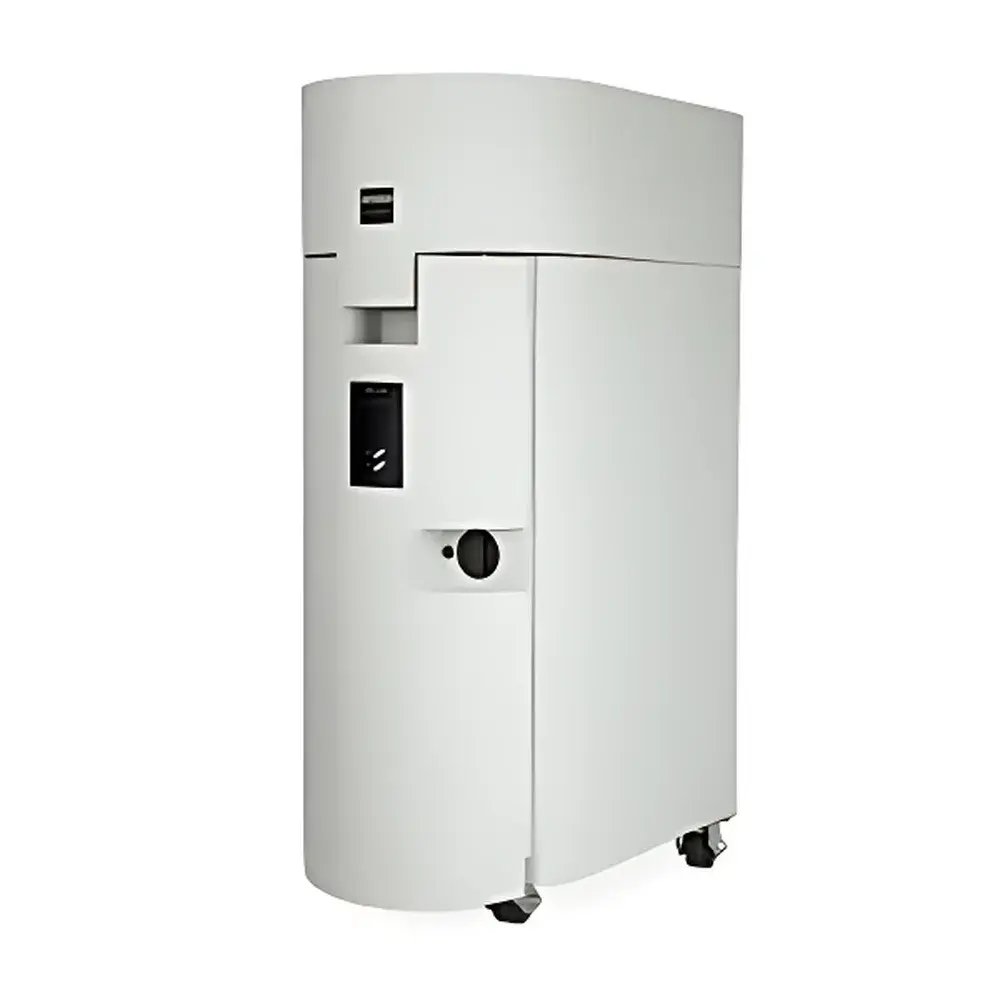
Netzsch ARC254 Adiabatic Accelerating Calorimeter
| Brand | Netzsch |
|---|---|
| Origin | Germany |
| Model | ARC254 |
| Temperature Range | RT to 500°C |
| Temperature Tracking Rate | 0–200°C/min |
| Minimum Detectable Heat Flow Rate | 0.01°C/min |
| Pressure Range | 0–200 bar |
| Measurement Mode | Adiabatic Calorimetry |
| Instrument Type | Accelerating Rate Calorimeter |
| Optional Accessories | VARIPHI™ Technology Module, Stirring/Injection/Emission Units, Battery Test Fixture, Nail Penetration Fixture for Li-ion Cells |
Overview
The Netzsch ARC254 Adiabatic Accelerating Calorimeter is a high-precision, benchtop thermal safety instrument engineered for the quantitative assessment of exothermic reaction hazards under near-adiabatic conditions. Based on the heat-wait-search (HWS) protocol and continuous adiabatic tracking mode, the ARC254 applies the fundamental principle of adiabatic calorimetry—minimizing heat loss to the environment via active temperature control of the surrounding furnace—to accurately determine self-heating rates, onset temperatures, pressure rise kinetics, time-to-maximum-rate (TMR), and adiabatic temperature rise (ΔTad) of reactive chemical systems. Designed for process safety engineers, thermal hazard analysts, and battery safety researchers, the system supports regulatory-compliant thermal runaway characterization required by CCPS, NFPA 484, UN RTDG, and EU REACH Annex VII testing frameworks.
Key Features
- Patented VARIPHI™ technology enabling dynamic adjustment of thermal inertia and improved adiabatic fidelity across diverse sample masses and thermal capacities
- Integrated dual-sensor architecture for simultaneous, synchronized measurement of sample temperature and vapor pressure with traceable NIST-traceable calibration
- Programmable HWS (Heat-Wait-Search) and dynamic adiabatic tracking modes for comprehensive thermal stability screening and kinetic parameter extraction
- High-fidelity temperature control with ramp rates up to 200°C/min and detection sensitivity down to 0.01°C/min for early-stage decomposition event identification
- Robust 200 bar pressure-rated cell with optional venting, liquid injection, and magnetic stirring capabilities to simulate real-world process conditions
- Modular accessory platform including battery-specific fixtures (e.g., nail penetration, tab heating, pouch cell clamping) compliant with IEEE 1624 and UL 9540A test configurations
Sample Compatibility & Compliance
The ARC254 accommodates solid, liquid, slurry, and composite samples in standard 1–10 g quantities within stainless steel or Hastelloy crucibles. It supports hazardous material evaluation per OSHA 1910.1200 (HazCom), GHS classification criteria (UN Class 4.1, 5.1, 5.2), and thermokinetic input generation for DSC-based screening and TSS (Thermal Safety Software) modeling. All data acquisition and reporting workflows comply with GLP principles and support 21 CFR Part 11–ready audit trails when integrated with Netzsch’s Proteus® software suite. The instrument meets CE marking requirements and conforms to IEC 61000-6-3 (EMC) and IEC 61010-1 (safety) standards.
Software & Data Management
Controlled via Netzsch Proteus® Thermal Analysis Software, the ARC254 provides intuitive method setup, real-time visualization of dT/dt vs. T and dP/dt vs. T profiles, and automated event detection (onset, peak, inflection). Raw data are stored in vendor-neutral ASCII format with full metadata embedding (operator ID, timestamp, calibration history, environmental logs). Export options include ASTM E698-compliant kinetic analysis templates, Excel-compatible reports, and direct import into third-party tools such as Kinetics Neo, Thermo-Calc, or AspenTech Process Safety Suite. Secure user role management, electronic signatures, and configurable data retention policies ensure alignment with pharmaceutical and fine chemical industry QA/QC documentation standards.
Applications
- Reaction calorimetry for nitration, oxidation, polymerization, and hydrogenation processes
- Thermal runaway analysis of lithium-ion batteries, solid-state electrolytes, and cathode/anode slurries
- Decomposition kinetics of peroxides, azo initiators, and energetic materials
- Emergency relief system design (ERS) using DIERS methodology and two-phase flow modeling inputs
- Process safety qualification for API manufacturing, catalyst handling, and waste stream treatment
- Regulatory dossier preparation for EPA TSCA, ECHA REACH registration, and transport classification (UN Manual of Tests and Criteria)
FAQ
What distinguishes the ARC254 from conventional DSC or TAM instruments?
The ARC254 operates under true adiabatic conditions with active thermal feedback, enabling quantification of runaway behavior at scale-relevant adiabatic conditions—unlike DSC (heat-flux) or TAM (isothermal) systems that lack pressure monitoring and dynamic thermal inertia compensation.
Can the ARC254 be used for UN 38.3 thermal testing of lithium batteries?
Yes—when configured with the battery fixture and nail penetration module, it satisfies UN 38.3 Section 4.4.2.2 thermal abuse requirements and generates critical parameters (Tonset, Pmax, ΔTad) for UL 9540A and IEEE 1624 validation.
Is VARIPHI™ technology mandatory or optional?
VARIPHI™ is an optional hardware module; however, its inclusion is strongly recommended for samples with low thermal mass or high volatility to maintain adiabatic fidelity during rapid exotherms.
Does the system support remote operation and networked data backup?
Yes—Proteus® supports Ethernet-based remote control, scheduled unattended runs, and integration with centralized LIMS or cloud-based data repositories via secure API endpoints.
What calibration standards are supported?
Certified reference materials include high-purity indium (156.6°C), tin (231.9°C), and zinc (419.5°C) for temperature verification; pressure transducers are calibrated using dead-weight testers traceable to national metrology institutes.
Related Products



