
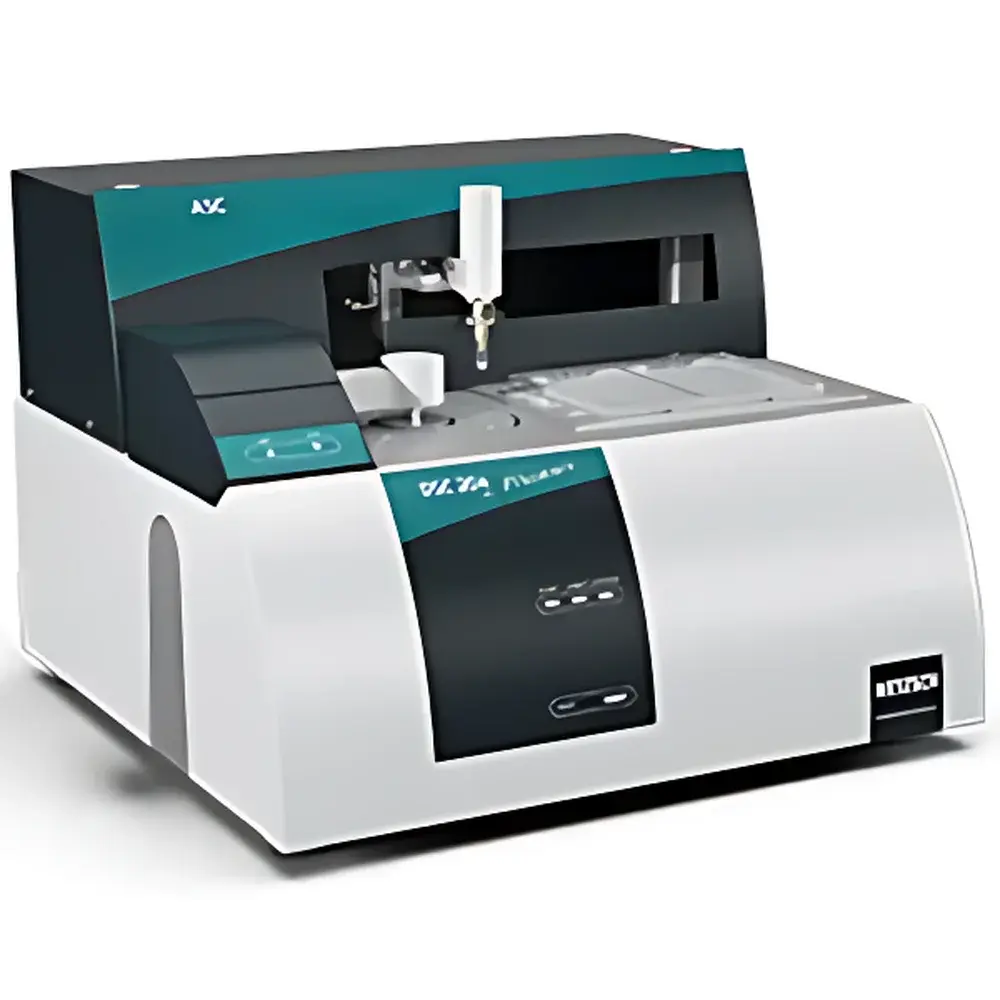
Netzsch DSC 204 F1 Phoenix Differential Scanning Calorimeter
| Brand | Netzsch |
|---|---|
| Origin | Germany |
| Model | DSC 204 F1 Phoenix |
| Instrument Type | Differential Scanning Calorimeter (DSC) |
| Temperature Range | –180 °C to 700 °C |
| Temperature Accuracy | ±0.1 K |
| Heating/Cooling Rate | 0 to 200 K/min |
| Sensor Options | τ-type (time constant 0.6 s), μ-type (high-sensitivity) |
| Cooling Options | Liquid nitrogen (LN₂), mechanical refrigeration (–85 °C to 600 °C), compressed air, cooling cup |
| Sample Capacity | Multi-sample capability (optional 64-position ASC auto-sampler) |
| Atmosphere Control | Integrated mass flow controller, gas-tight furnace design compatible with FTIR/MS coupling |
Overview
The Netzsch DSC 204 F1 Phoenix is a high-performance differential scanning calorimeter engineered for precision thermal characterization across academic research, pharmaceutical development, polymer science, food technology, and advanced materials engineering. Based on the heat-flux DSC principle, it measures the difference in heat flow between a sample and an inert reference as both are subjected to identical, programmable temperature profiles under controlled atmosphere conditions. This enables quantitative determination of enthalpic transitions—including glass transitions (Tg), melting points (Tm), crystallization onset and peak temperatures, solid-solid phase changes, oxidative induction time (OIT), and reaction enthalpies—with traceable accuracy and high reproducibility. Its modular architecture integrates a cylindrical 3D silver furnace with embedded heating elements and optional active cooling, delivering exceptional temperature uniformity (<±0.05 K across sample zone) and rapid thermal response—critical for resolving overlapping thermal events in complex formulations.
Key Features
- High-Fidelity Furnace Design: Monolithic silver furnace ensures superior thermal conductivity and spatial homogeneity; optimized geometry minimizes thermal lag and improves baseline stability over extended runs.
- Dual-Sensor Platform: Interchangeable τ-type sensor (time constant <0.6 s) for high-resolution separation of closely spaced transitions; μ-type sensor offering ~15× higher sensitivity than standard sensors—ideal for microgram-scale pharmaceuticals, biopolymers, and liquid crystal studies.
- Multi-Mode Cooling Architecture: Supports four independent cooling configurations: liquid nitrogen (enabling full –180 °C to 700 °C range), mechanical refrigeration (–85 °C to 600 °C), compressed air, and passive cooling cup—ensuring operational flexibility without hardware reconfiguration.
- Gas Management System: Integrated digital mass flow controllers (MFCs) support precise, repeatable purge and protective gas delivery (N₂, Ar, O₂, synthetic air); gas-tight furnace outlet enables seamless hyphenation with FTIR or quadrupole mass spectrometry for evolved gas analysis (EGA).
- Advanced Thermal Modulation Capability: Optional Temperature-Modulated DSC (TM-DSC) mode separates reversing and non-reversing heat flows—enabling deconvolution of enthalpic relaxation, kinetic curing behavior, and multi-step decomposition mechanisms.
Sample Compatibility & Compliance
The DSC 204 F1 Phoenix accommodates a broad spectrum of sample types—from metallic alloys and ceramics to lyophilized proteins, amorphous small-molecule APIs, thermoset resins, edible fats, and nanocomposites. Standard crucibles include aluminum, gold-plated aluminum, stainless steel, and high-purity quartz; hermetic sealing options ensure containment of volatile or reactive species. The system complies with ISO 11357 series standards for DSC testing, supports ASTM E794 (melting point), ASTM E1356 (Tg determination), and USP <1151> for pharmaceutical thermal analysis. Full audit trail, electronic signatures, and 21 CFR Part 11–compliant software modules are available for regulated environments operating under GMP/GLP frameworks.
Software & Data Management
Controlled via Proteus® Analysis Software, the instrument provides intuitive method setup, real-time data visualization, and automated calibration routines—including BeFlat® baseline correction, Advanced DSC Calibration (ADC), and dynamic sensitivity adjustment. Raw data files (.ASC) are stored in vendor-neutral format and fully exportable to CSV, ASCII, or universal thermal analysis interchange formats (TAIF). Batch processing, statistical comparison tools, and customizable reporting templates facilitate routine QC workflows. Optional ASC 64-position autosampler integrates seamlessly with scheduling logic, enabling unattended overnight analysis of stability-indicating thermal profiles across multiple batches or timepoints.
Applications
- Pharmaceutical: Polymorph screening, hydrate/anhydrate differentiation, excipient compatibility assessment, freeze-drying cycle optimization, and accelerated stability prediction.
- Polymers: Crystallinity quantification, crosslink density estimation, degradation kinetics modeling, and additive migration analysis.
- Food Science: Solid fat content (SFC) profiling, polymorphic behavior of cocoa butter, starch gelatinization enthalpy, and lipid oxidation onset evaluation.
- Materials R&D: Phase diagram construction for intermetallics, latent heat storage capacity measurement in PCMs, and thermal stability benchmarking of battery electrode composites.
- Failure Analysis: Identification of thermal history effects (e.g., prior annealing), residual stress relaxation, and root-cause investigation of delamination or embrittlement.
FAQ
What cooling methods are supported, and how do they affect usable temperature range?
Liquid nitrogen cooling extends the lower limit to –180 °C and maintains full 700 °C upper limit; mechanical refrigeration operates from –85 °C to 600 °C with zero consumables and reduced infrastructure requirements.
Can the DSC 204 F1 Phoenix be used for regulatory submissions in pharmaceutical development?
Yes—when configured with 21 CFR Part 11–compliant software, secure user access controls, and full electronic audit trail, it meets ICH Q5C, Q1A(R2), and USP general chapters for thermal characterization in drug substance and product registration dossiers.
Is evolved gas analysis (EGA) integration possible out-of-the-box?
The gas-tight furnace and standardized outlet port allow direct coupling to FTIR or MS systems; no internal modification is required—only external interface hardware and synchronization protocols.
How does the μ-type sensor improve detection limits compared to conventional DSC sensors?
Its optimized thermal resistance and low thermal mass yield signal-to-noise ratios improved by approximately one order of magnitude, enabling reliable detection of transitions in samples as small as 0.2 mg with sub-millijoule enthalpy resolution.
What calibration standards are recommended for routine verification?
Indium (Tm = 156.6 °C, ΔHfus = 28.45 J/g), zinc (Tm = 419.5 °C), and sapphire (for heat capacity calibration) are traceably certified per ISO 11357-2 and supplied with NIST-traceable certificates.



