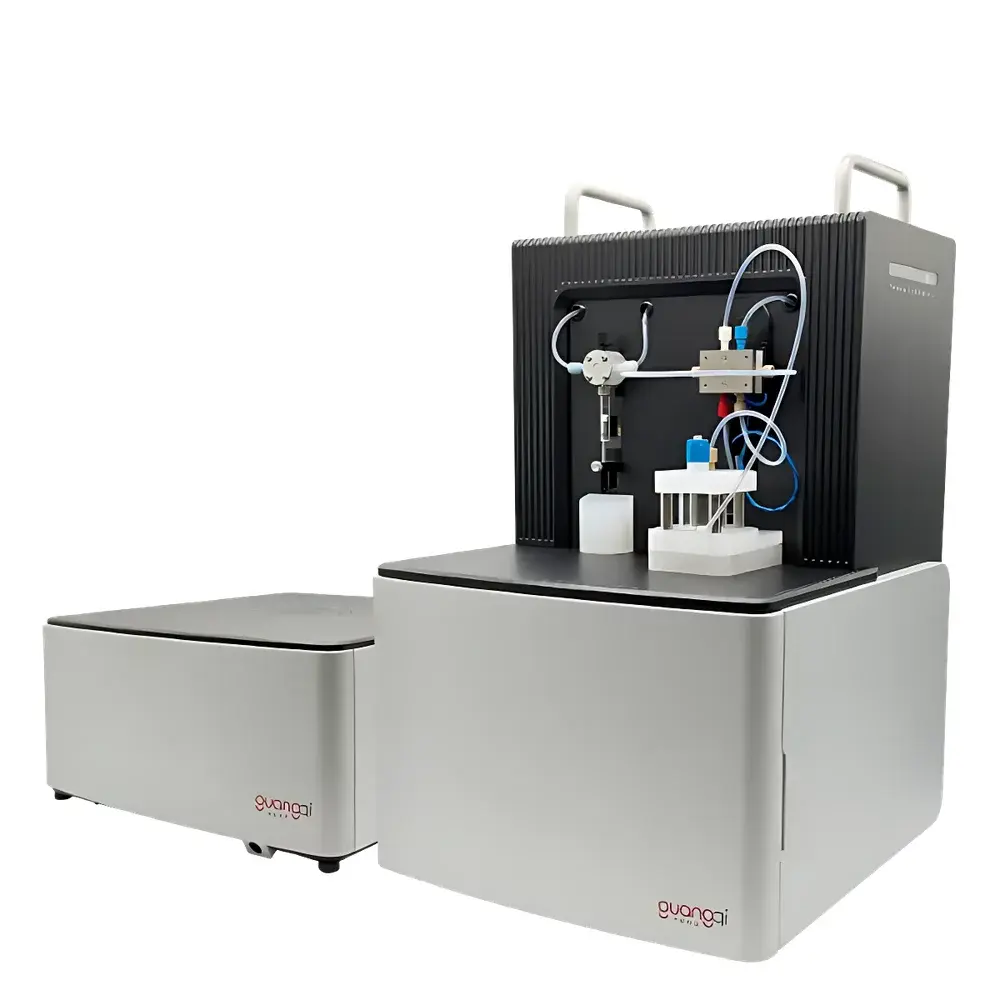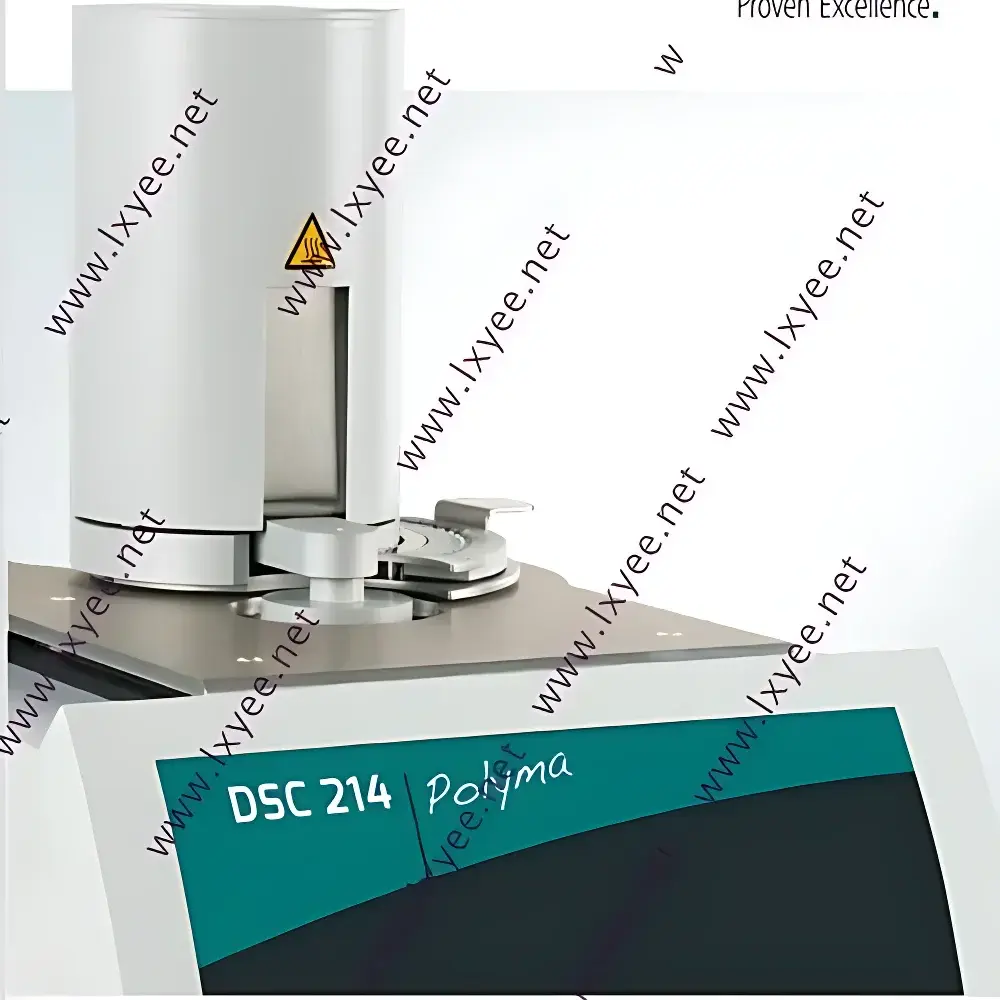
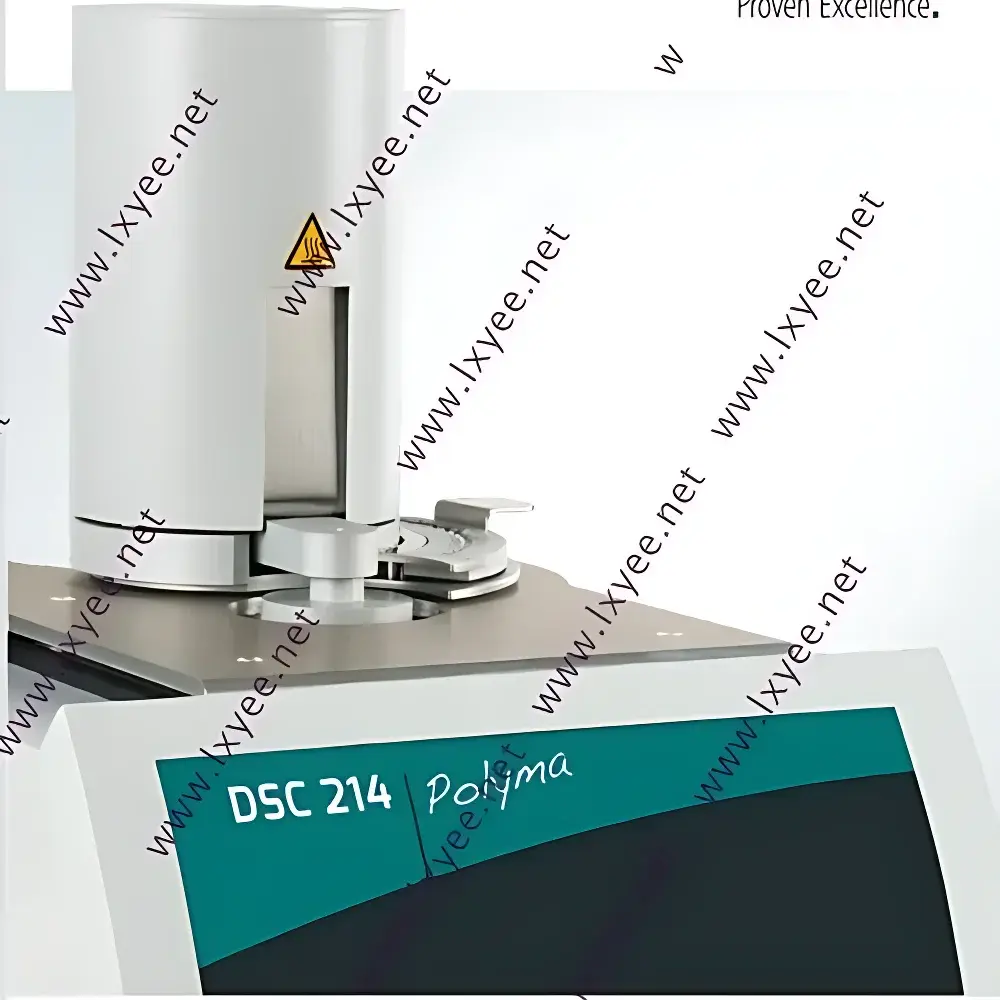
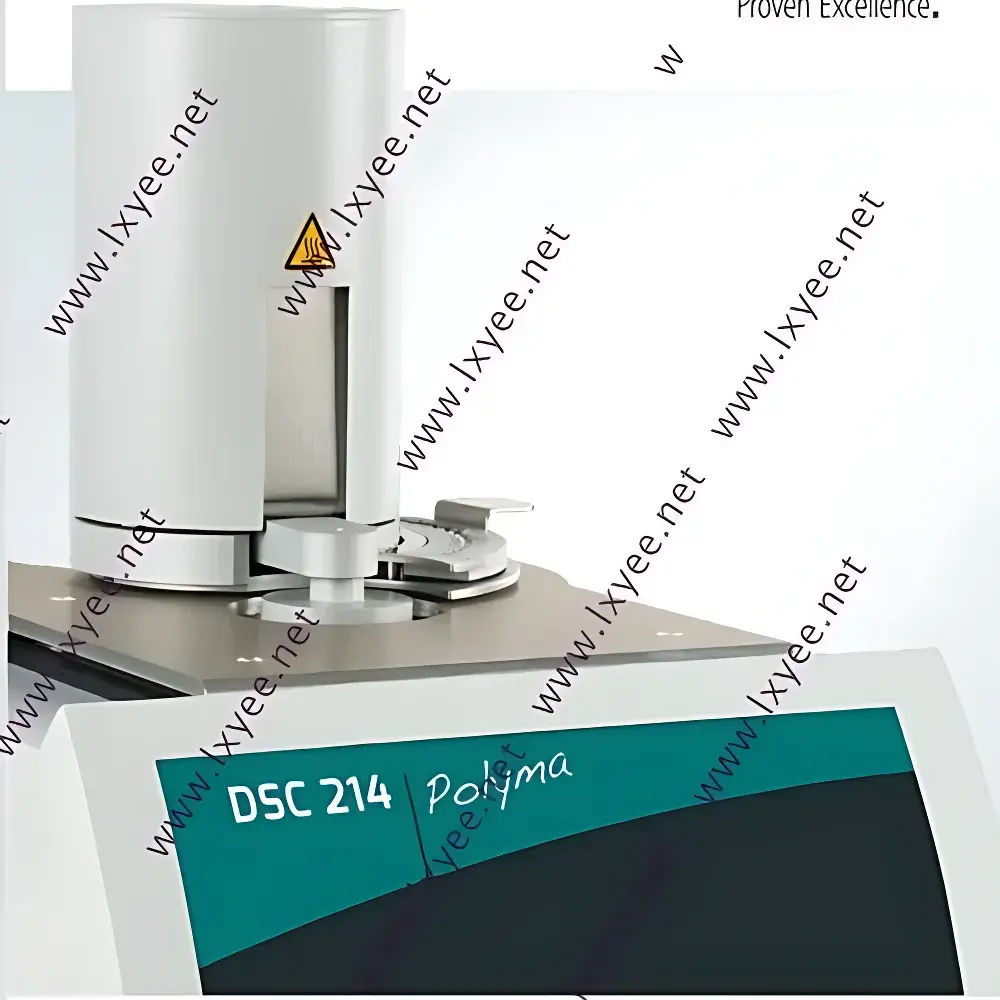
Netzsch DSC 214 Polyma Advanced Differential Scanning Calorimeter
| Brand | Netzsch |
|---|---|
| Origin | Germany |
| Model | DSC 214 Polyma |
| Temperature Range | −100 °C to 600 °C |
| Heating/Cooling Rate | up to 500 °C/min |
| Sensor Type | Corona® high-reproducibility heat-flux sensor |
| Crucible System | Concavus® concave-bottom crucibles with fixed annular contact geometry |
| Software Platform | Proteus® with Smart Mode, Expert Mode, TM-DSC, Beflat® baseline correction, Auto-Analysis, Identify™ polymer recognition database |
| Compliance | ISO 11357-1, ASTM E794, ASTM E1356, USP <1151>, GLP/GMP-ready audit trail (FDA 21 CFR Part 11 optional) |
Overview
The Netzsch DSC 214 Polyma is a next-generation differential scanning calorimeter engineered for high-precision thermal analysis of polymeric, organic, and inorganic materials in R&D, quality control, and process development laboratories. Operating on the fundamental principle of heat-flux DSC—measuring the differential heat flow between a sample and inert reference as a function of temperature or time—the instrument delivers quantitative thermodynamic data critical for material characterization. Unlike conventional heat-flux systems, the DSC 214 Polyma integrates the Arena® furnace architecture, enabling unprecedented thermal inertia reduction and dynamic response. This design bridges the performance gap between traditional heat-flux and power-compensation DSCs: it achieves heating and cooling rates up to 500 °C/min while maintaining exceptional baseline stability, low drift, and long-term calibration integrity. Its compliance with ISO 11357-1 ensures methodological rigor for standardized determination of glass transition (Tg), melting temperature (Tm), crystallization onset (Tc), oxidative induction time (OIT), specific heat capacity (Cp), reaction enthalpy, and degree of cure—parameters indispensable for polymer formulation, semiconductor packaging material validation, and thin-film encapsulation process qualification.
Key Features
- Arena® furnace with ultra-low thermal mass enables rapid, symmetric heating/cooling cycles—critical for simulating real-world polymer processing conditions (e.g., injection molding, film quenching) and kinetic studies requiring precise isothermal holds.
- Corona® sensor paired with Concavus® crucibles establishes a mechanically constrained, repeatable annular contact interface—eliminating variability from crucible deformation during sample compression and ensuring <0.1% inter-run reproducibility in peak temperature and enthalpy.
- Modular “3-in-1” sample carrier system with individually indexed positions supports traceable sample handling, retesting capability, and full chain-of-custody documentation under GLP/GMP workflows.
- Compact footprint (< 0.35 m² including mechanical cooler) allows seamless integration into space-constrained QA/QC environments, cleanrooms, or shared instrumentation labs without compromising accessibility or serviceability.
- Integrated cooling options include liquid nitrogen (LN2) and mechanical refrigeration (−100 °C base temperature), both fully automated and synchronized with Proteus® software control logic.
Sample Compatibility & Compliance
The DSC 214 Polyma accommodates standard aluminum, gold-plated aluminum, and high-purity platinum crucibles (hermetic and vented), supporting solids, powders, films, fibers, and viscous melts—including filled polymers used in semiconductor die-attach adhesives and underfill materials. It meets ISO 11357-1 requirements for DSC methodology and is validated per ASTM E794 (melting point), ASTM E1356 (Tg determination), and ASTM E1965 (OIT testing). For regulated environments, optional FDA 21 CFR Part 11-compliant electronic signatures, audit trails, and user-access controls are embedded within Proteus®. The system supports IQ/OQ/PQ documentation packages aligned with ISO/IEC 17025 and ICH Q5C guidelines for thermal stability assessment of pharmaceutical excipients and electronic-grade packaging resins.
Software & Data Management
Proteus® software serves as the unified analytical engine—offering dual operational paradigms: Smart Mode for guided, workflow-driven operation (ideal for routine QC analysts), and Expert Mode for full parameter control (required for method development and kinetics modeling). Core capabilities include:
- Automated baseline correction via Beflat®—executed using two empty-crucible runs to eliminate sensor asymmetry and thermal lag artifacts, yielding near-zero-slope baselines across full temperature ranges.
- Temperature-modulated DSC (TM-DSC) for deconvolution of overlapping transitions (e.g., Tg + cold crystallization) by separating reversible (heat capacity-related) and irreversible (kinetically driven) contributions.
- Auto-Analysis module: applies heuristic algorithms to detect, integrate, and report Tg, Tm, ΔHf, OIT, and Cp without manual peak assignment—validated against NIST SRM 3451 and certified polymer standards.
- Identify™ spectral library: contains >1,100 reference curves (expandable with KIWM polymer database of 600+ commercial grades); uses pattern-matching algorithms to classify unknowns with similarity scores (e.g., 99.5% match to PA12), supporting raw material verification and counterfeit detection.
- Report generation via Microsoft Word add-in: enables customizable templates with embedded metadata, statistical summaries, comparative overlays, and electronic signature fields compliant with internal SOPs or external regulatory submissions.
Applications
The DSC 214 Polyma is routinely deployed in semiconductor manufacturing support labs for:
- Thermal stability evaluation of photoresists, spin-on dielectrics, and low-k film precursors under ramp-and-hold profiles mimicking lithography and curing steps.
- Quantification of residual solvent content and post-bake enthalpy changes in wafer-level packaging epoxies and underfills.
- Assessment of glass transition shifts induced by moisture absorption or aging—directly informing reliability predictions per JEDEC JESD22-A101.
- Crystallinity monitoring in polyimide passivation layers and PBO-based redistribution layers to correlate thermal history with dimensional stability.
- Oxidative degradation onset analysis of copper diffusion barrier polymers under accelerated aging protocols (e.g., 200 °C/air, 1000 h).
FAQ
What distinguishes the DSC 214 Polyma from conventional heat-flux DSC instruments?
It combines the robustness and cost-efficiency of heat-flux architecture with the dynamic performance of power-compensation systems—achieving 500 °C/min rates without sacrificing baseline flatness or long-term calibration stability.
Is the instrument suitable for GLP-compliant thermal analysis of electronic packaging materials?
Yes—when configured with audit trail, electronic signature, and role-based access modules, it fulfills ALCOA+ data integrity principles and supports 21 CFR Part 11 compliance for regulated submissions.
Can Proteus® software perform kinetic modeling of curing reactions?
Yes—using isoconversional methods (e.g., Friedman, Ozawa-Flynn-Wall) applied to multi-rate DSC data, the software calculates activation energy (Ea) and pre-exponential factor (A) for epoxy crosslinking and silicone condensation reactions.
How does the Concavus® crucible improve measurement reproducibility?
Its concave bottom maintains consistent radial contact area with the sensor surface—even after sample compaction—preventing localized thermal resistance variations that cause peak broadening or enthalpy drift.
Does the system support ASTM E1356-compliant Tg determination for amorphous polymer films?
Yes—via modulated temperature programs with amplitude/frequency optimization, and automatic inflection-point detection with uncertainty propagation per ASTM guidelines.