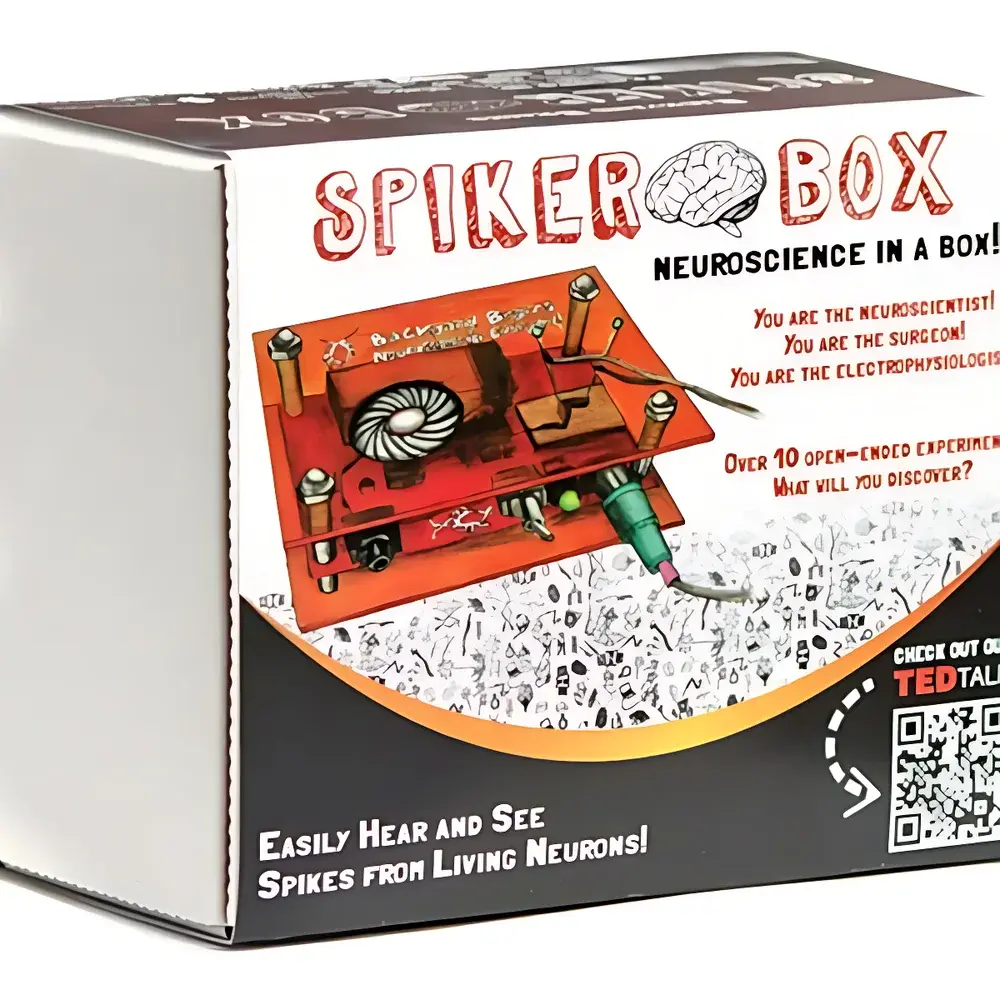
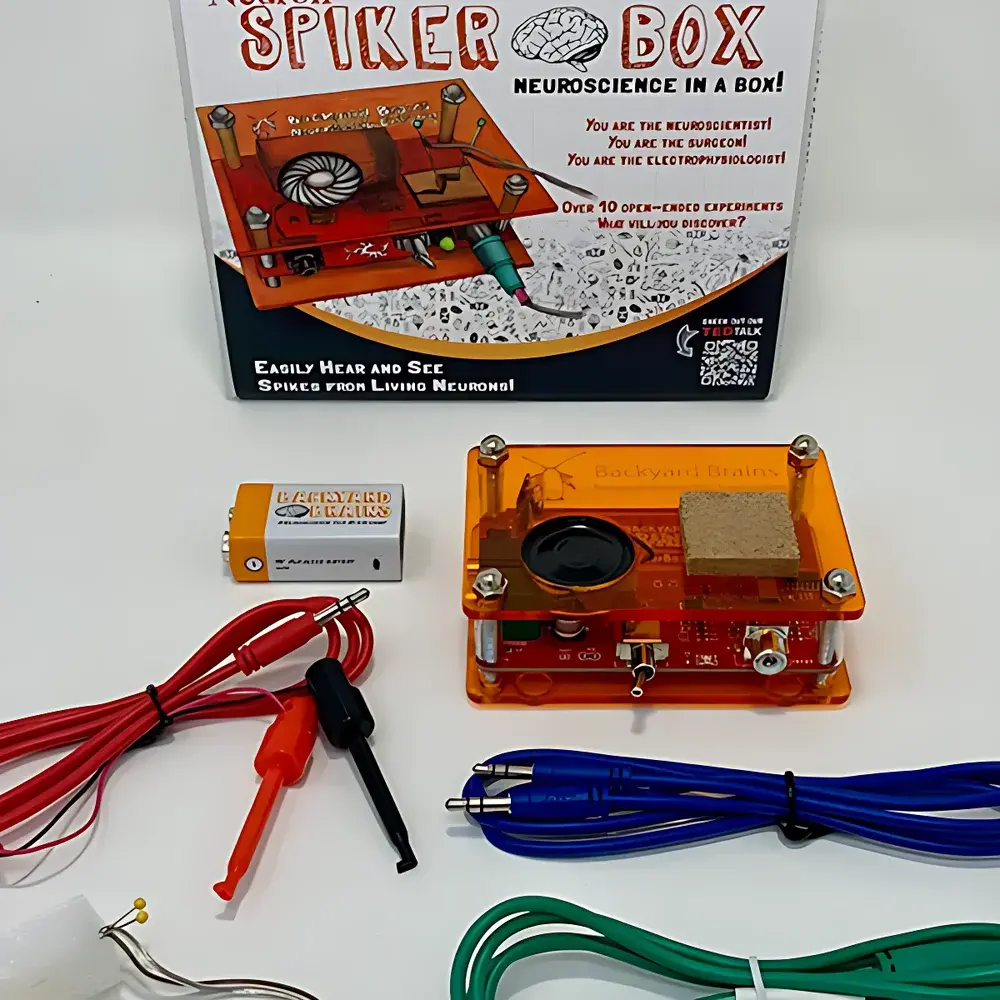
Neuron SpikerBox Bundle
| Brand | Backyard Brains |
|---|---|
| Origin | USA |
| Model | Neuron SpikerBox Bundle |
| Type | Portable Bioamplifier System for Extracellular Neural Recording and Electrical Stimulation |
| Compliance | CE, FCC, RoHS |
| Software | SpikeRecorder (iOS/Android/macOS/Windows), Open-Source Python SDK Available |
| Battery | 9V alkaline (included) |
| Input Impedance | >100 MΩ |
| Gain | 1,000× (fixed) |
| Bandpass Filter | 100 Hz – 3 kHz |
| Sampling Rate | Up to 48 kHz (via USB or audio jack interface) |
| Electrode Interface | Standard 3.5 mm mono audio jack + alligator clip leads |
| Stimulus Output | Biphasic, current-limited (≤2 mA peak), programmable pulse width (0.1–10 ms) and frequency (1–100 Hz) |
Overview
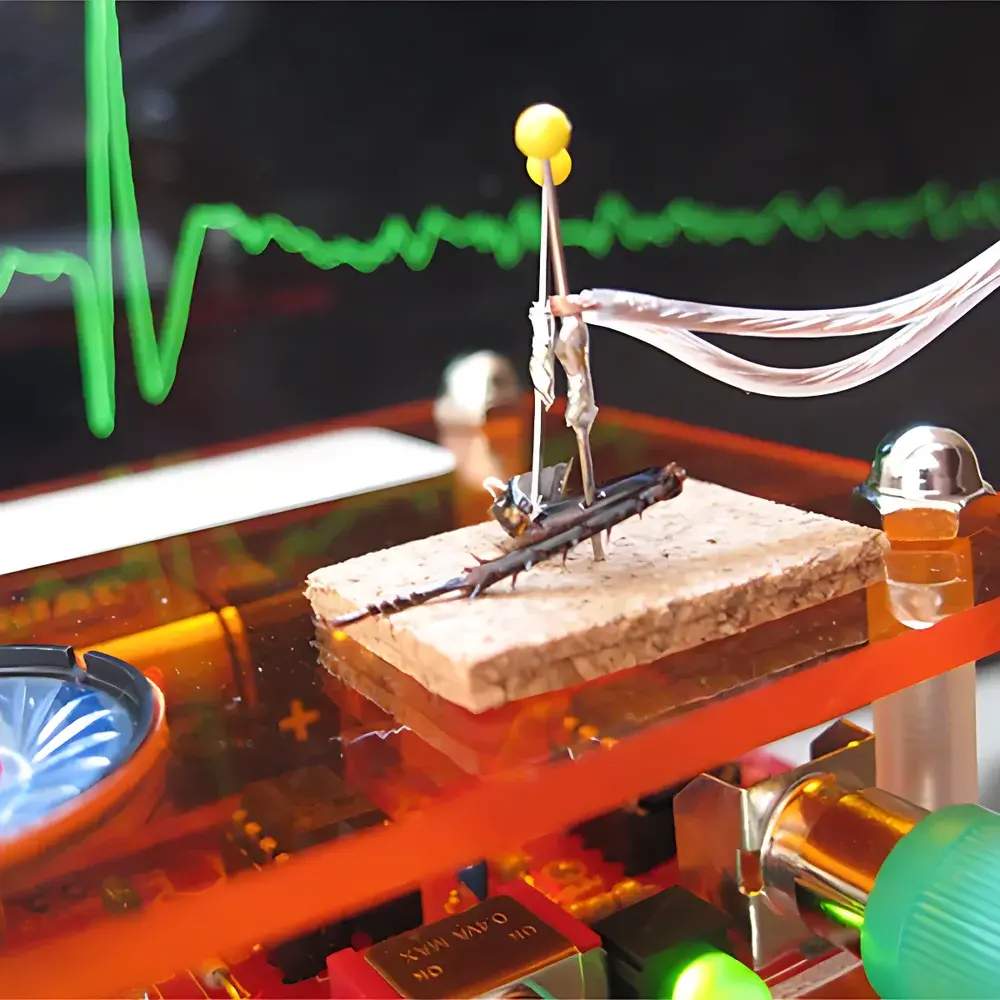
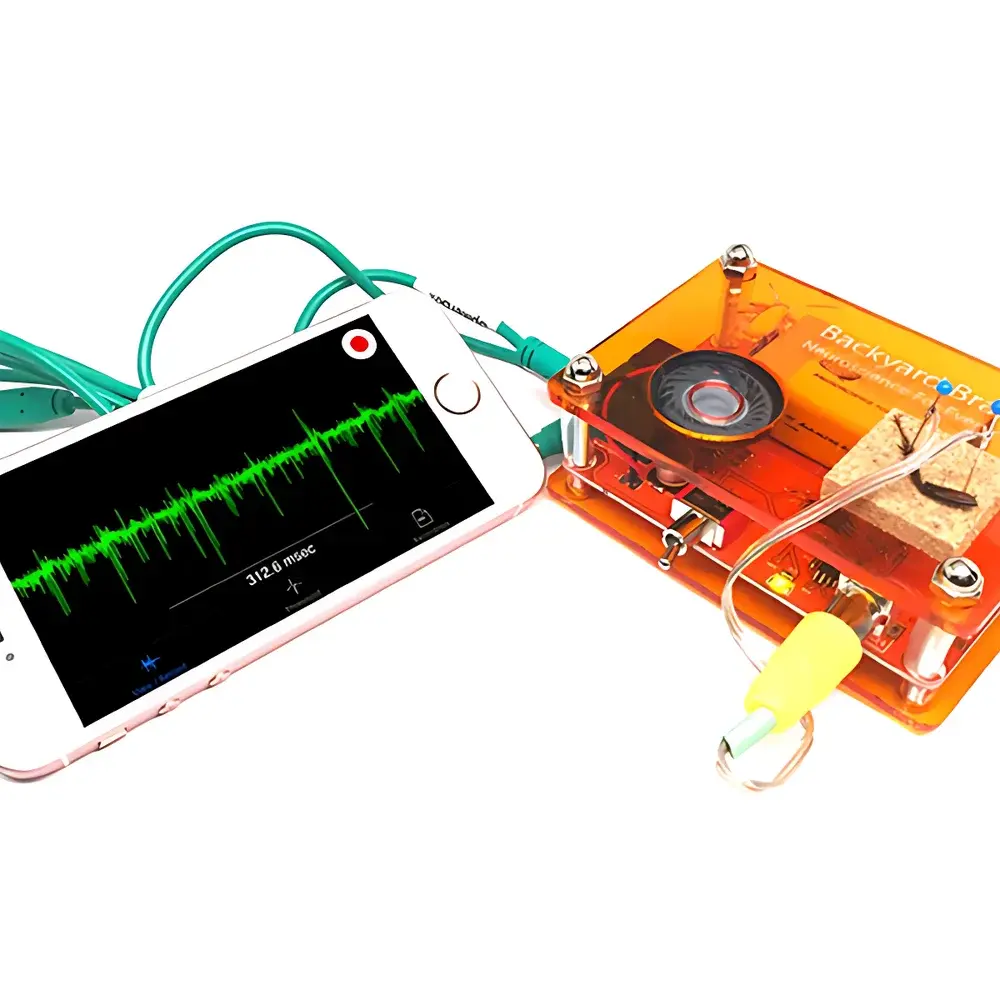
The Neuron SpikerBox Bundle is a compact, open-hardware bioamplifier system engineered for real-time extracellular recording and controlled electrical stimulation of invertebrate nervous systems. Based on the principles of differential amplification and analog bandpass filtering, it captures action potentials—transient voltage spikes generated by active neurons—as they propagate along peripheral nerves. Unlike conventional electrophysiology rigs requiring Faraday cages, differential amplifiers, and oscilloscopes, the SpikerBox integrates signal conditioning, power management, and audio/data output into a single palm-sized unit. It operates on standard 9V battery power and interfaces directly with consumer-grade devices via 3.5 mm audio input or USB-C, enabling immediate visualization and acoustic playback of neural activity without proprietary hardware dependencies. Designed explicitly for educational transparency and experimental accessibility, its circuit schematics, firmware, and software are fully open-source under CC-BY-SA and MIT licenses.
Key Features
- Real-time extracellular neural recording from live invertebrate preparations (e.g., cockroach leg nerve, cricket cercal nerve, earthworm ventral cord)
- Dual-mode operation: passive recording (spike detection) and active stimulation (closed-loop neuromuscular interfacing)
- Fixed-gain (1000×), high-input-impedance (>100 MΩ) amplifier optimized for low-noise biological signal acquisition
- Hardware-implemented 100 Hz–3 kHz bandpass filter to suppress DC drift and high-frequency noise while preserving spike morphology
- Stimulus module delivers safe, biphasic, current-limited pulses (≤2 mA peak) with adjustable width (0.1–10 ms) and repetition rate (1–100 Hz)
- Plug-and-play compatibility with smartphones, tablets, and laptops using standard audio input or USB-C connection
- Fully open-source ecosystem: schematics, PCB layouts, firmware (Arduino-based), and SpikeRecorder application available on GitHub
Sample Compatibility & Compliance
The SpikerBox Bundle is validated for use with common classroom-accessible invertebrates, including Periplaneta americana (American cockroach), Acheta domesticus (house cricket), and Lumbricus terrestris (earthworm). All protocols comply with widely adopted institutional guidelines for invertebrate handling in undergraduate teaching labs (e.g., Society for Neuroscience Guidelines for the Use of Animals in Research, NIH Office of Laboratory Animal Welfare recommendations for non-vertebrate species). The device carries CE, FCC, and RoHS certifications, confirming electromagnetic compatibility and restricted substance compliance for international academic deployment. No IACUC approval is required for invertebrate experiments under standard US and EU regulatory frameworks.
Software & Data Management
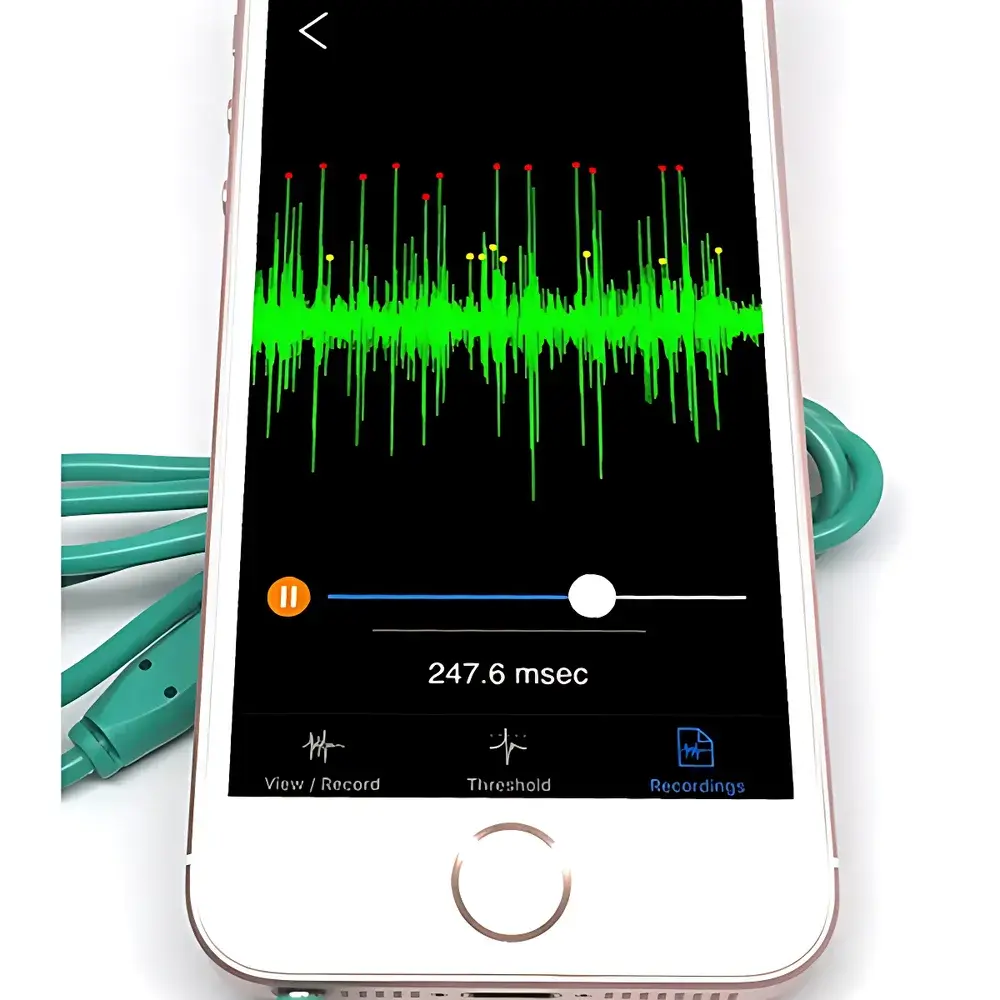
SpikeRecorder—a cross-platform application developed by Backyard Brains—enables real-time waveform display, audio translation of spikes (via pitch-shifted “neural sonification”), timestamped event logging, and export of raw .csv or .wav files. The software supports GLP-aligned metadata tagging (user ID, date/time, preparation notes) and includes built-in calibration tools using known test signals. For advanced users, a Python SDK provides programmatic access to streaming data, stimulus control, and integration with Jupyter notebooks or custom analysis pipelines (e.g., SciPy, Neo, Elephant libraries). All software updates, experiment protocols, and video tutorials are hosted at backyardbrains.com and distributed free of charge under perpetual license.
Applications
- Undergraduate neuroscience education: Demonstrating action potential propagation, refractory periods, and sensory transduction in live tissue
- K–12 STEM outreach: Guided inquiry modules on neurophysiology, bioelectricity, and experimental design aligned with NGSS standards
- Independent research: Pilot studies in comparative neuroethology, neuromodulation screening, or biohybrid interface prototyping
- Science fair projects: Building closed-loop systems where neural activity triggers LED arrays, robotic actuators, or MIDI-controlled synthesizers
- Teacher training workshops: Hands-on curriculum development for inquiry-based life science instruction
FAQ
Is animal ethics approval required for using this system?
No—routine classroom use with invertebrates (cockroaches, crickets, earthworms) does not require IACUC or equivalent ethics committee review under most national frameworks, including USDA APHIS policy and EU Directive 2010/63/EU Annex I exemptions.
Can the SpikerBox record from vertebrate tissue?
It is not designed or validated for vertebrate neural recordings; signal amplitude, noise floor, and electrode interface specifications are optimized for invertebrate peripheral nerve preparations.
What software formats are supported for data export?
Raw time-series data can be exported as comma-separated values (.csv) or waveform audio (.wav), both retaining full temporal resolution and calibrated voltage scaling.
Is technical support available for educators?
Yes—Backyard Brains offers free educator onboarding webinars, downloadable lab manuals (with NGSS/IB alignment), and an active community forum moderated by neuroscientists and instructional designers.
Does the system meet FDA or ISO requirements for clinical use?
No—the Neuron SpikerBox Bundle is designated strictly for educational and non-clinical research applications; it is not certified as a medical device under FDA 21 CFR Part 820 or ISO 13485.