
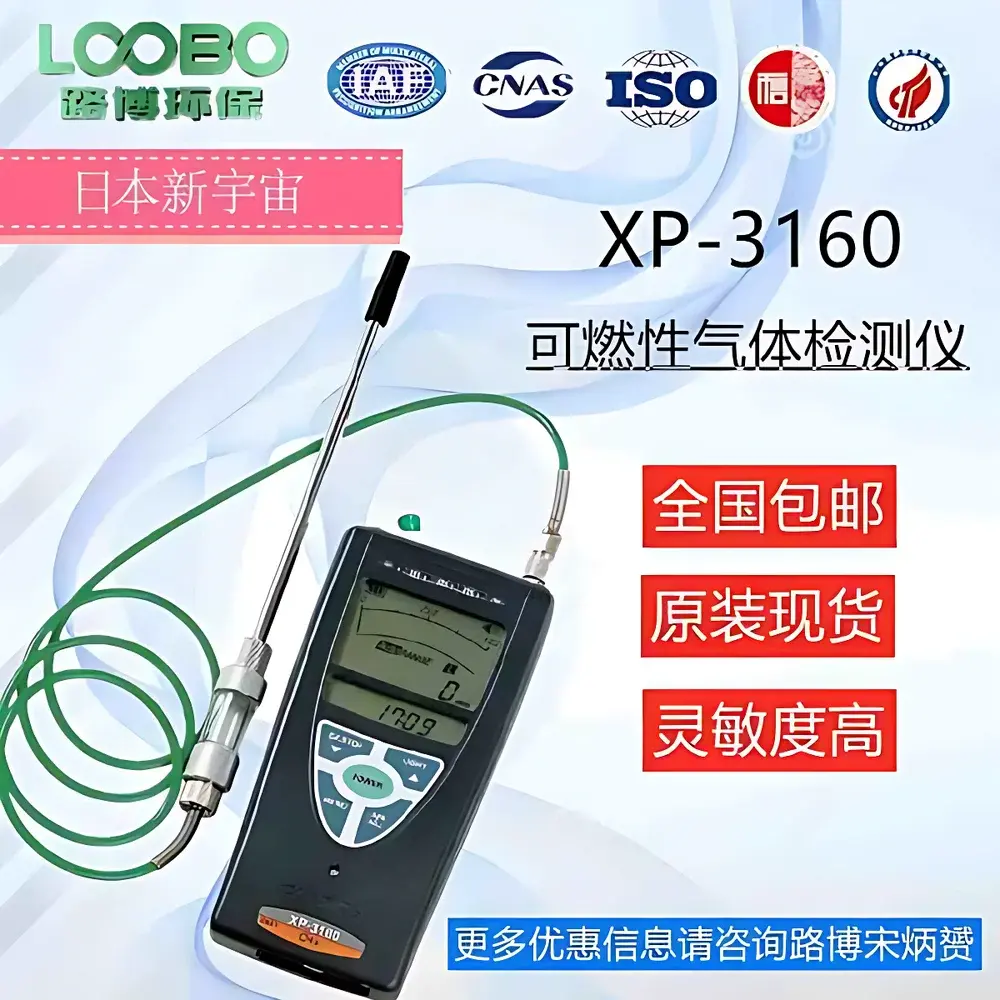
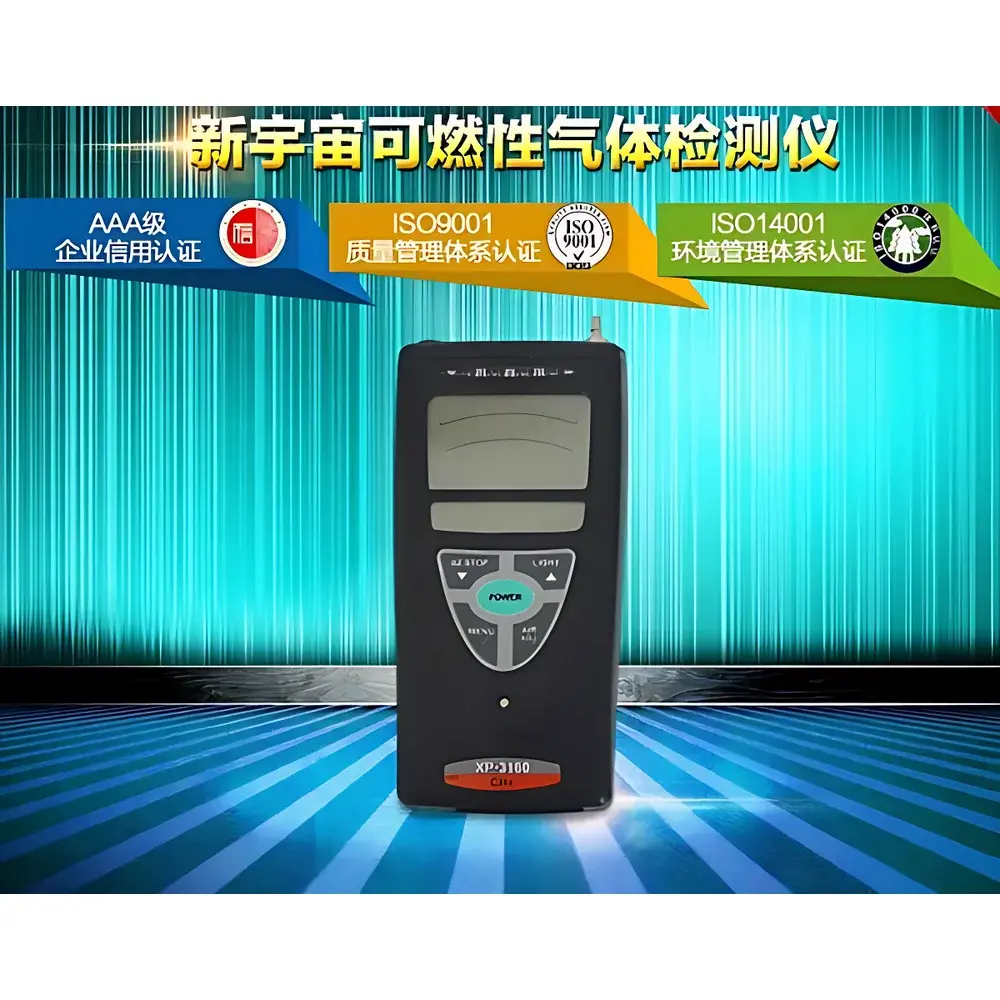
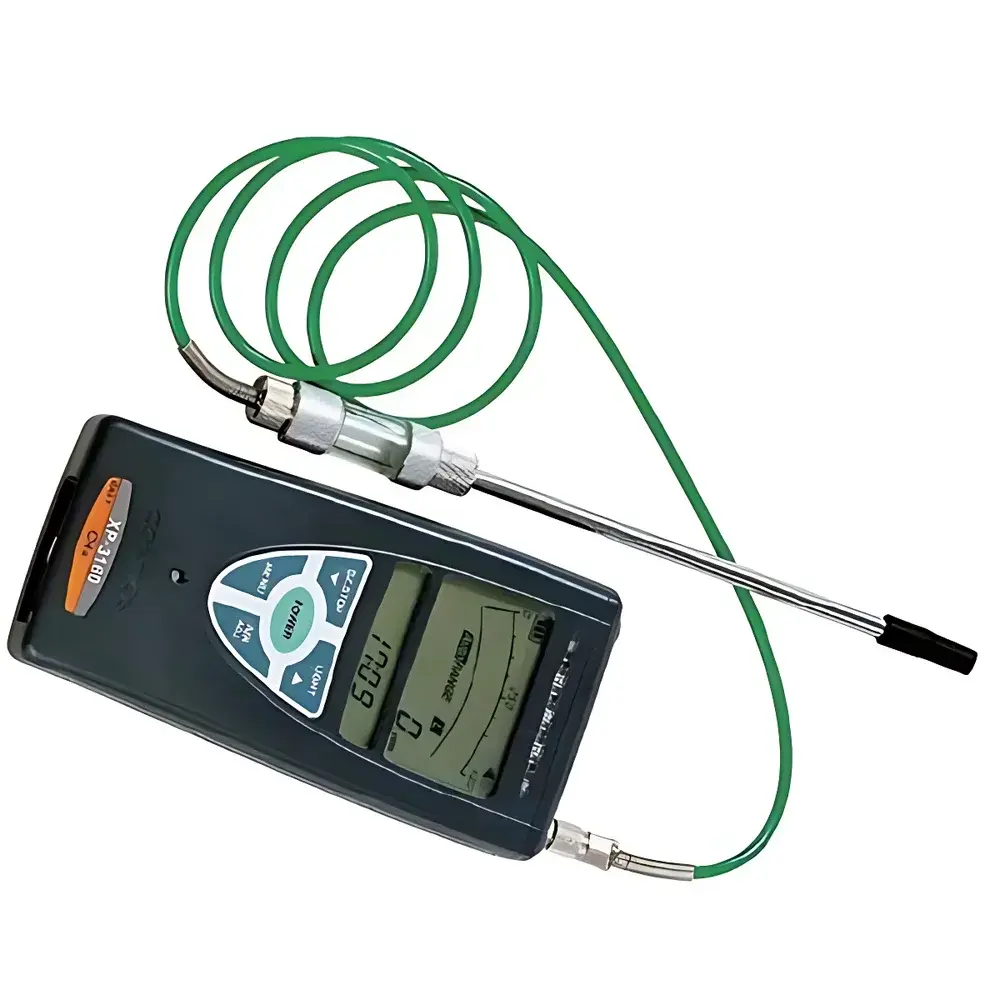
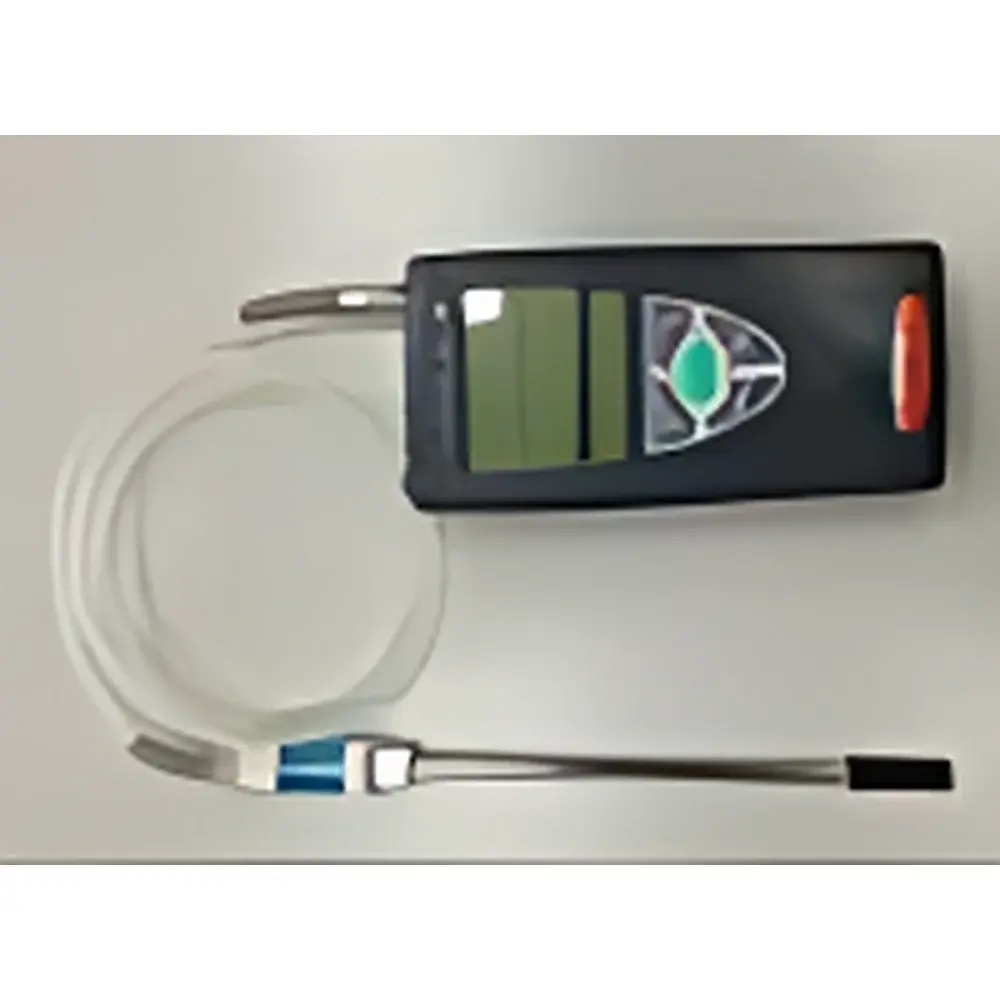
New Cosmos XP-3160 Contact Combustion-Type High-Sensitivity Combustible Gas Detector
| Brand | New Cosmos |
|---|---|
| Origin | Japan |
| Model | XP-3160 |
| Detection Principle | Catalytic Contact Combustion |
| Detection Range | 0–5000 ppm or 0–10,000 ppm (selectable) |
| Accuracy | ±5% FS (H-range), ±10% FS (L-range) |
| Alarm Thresholds | 250 ppm or 500 ppm (configurable) |
| Display | Backlit LCD with dual-mode numeric + bar-graph analog simulation |
| Power Supply | 4 × AA alkaline batteries (~20 h continuous operation, methane spec.) |
| Enclosure Rating | Intrinsically Safe Ex ib d IIC T3 (sensor housing: flameproof) |
| Certification | NK Type Approval No. 06T605, CE compliant (upon request) |
| Operating Temperature | –20 °C to +50 °C (0–40 °C for iso-butane spec.) |
| Dimensions | 82 × 162 × 36 mm |
| Weight | ~450 g (excl. batteries) |
| Sample Draw Method | Motorized suction pump with flow anomaly detection |
| Auto-ranging | Dual L/H range switching based on concentration |
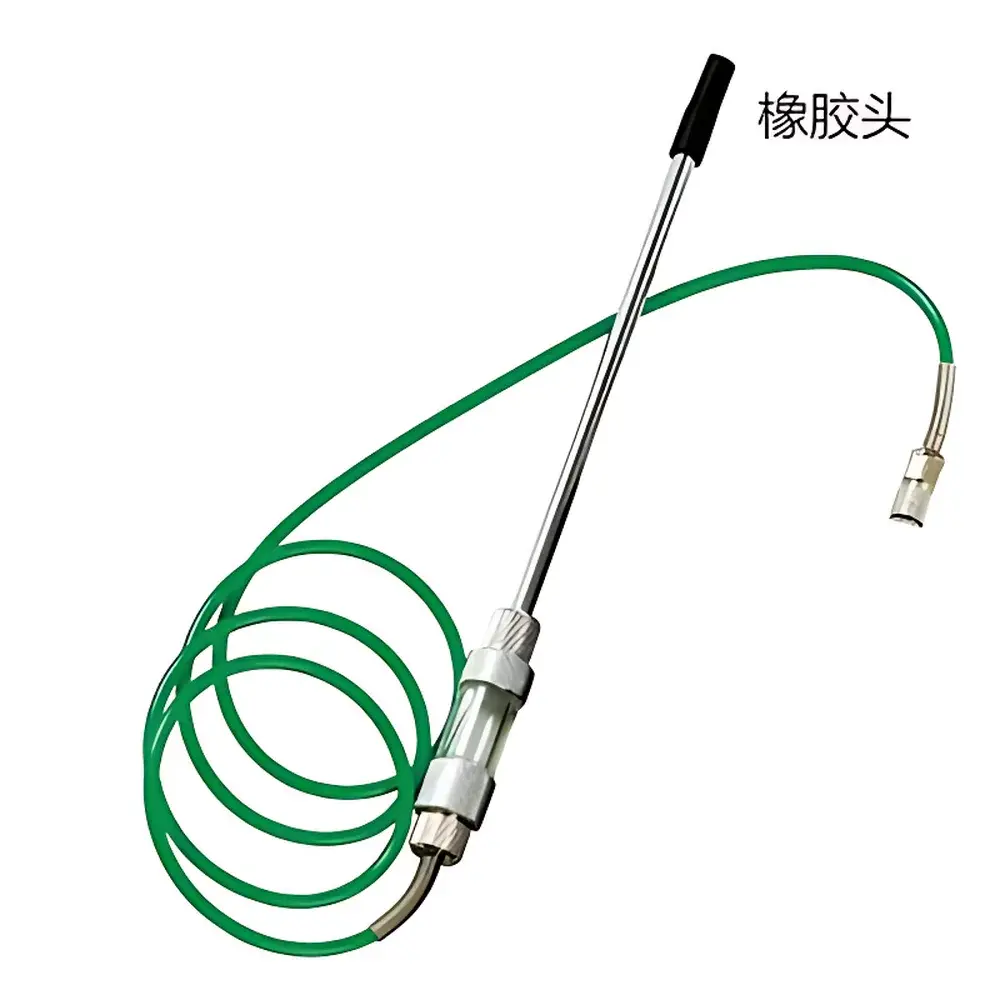
| Standard Accessories | Leather case, 1 m sampling tube, exhaust filter, filter element, rubber suction tip |
Overview
The New Cosmos XP-3160 is a portable, intrinsically safe combustible gas detector engineered for high-reliability monitoring in confined and hazardous environments—including ship holds, utility tunnels, manholes, tank interiors, and underground construction sites. It employs catalytic contact combustion sensing—a well-established, field-proven principle where target gases oxidize exothermically on a heated platinum coil within a matched Wheatstone bridge configuration. This method delivers stable, repeatable response across a broad spectrum of hydrocarbon vapors and common industrial solvents. Unlike semiconductor or infrared alternatives, the XP-3160’s catalytic sensor maintains consistent sensitivity to low-concentration combustibles without requiring frequent zero calibration under typical ambient conditions. Its dual-range architecture (0–5000 ppm and 0–10,000 ppm) enables precise quantification at trace levels while preserving linearity at higher exposures—critical for both routine safety checks and pre-entry verification per OSHA 1910.146 and NFPA 350 guidelines.
Key Features
- Intrinsically safe design certified to Ex ib d IIC T3 (IEC 60079-0/-11/-15), with flameproof sensor housing—validated for use in Zone 1 and Zone 2 hazardous areas.
- Dual-mode display: high-contrast backlit LCD showing real-time digital concentration values alongside an analog-style bar graph that emulates human perceptual response to gas gradients.
- Intelligent auto-ranging circuitry automatically selects between Low (0–500 ppm / 0–1000 ppm) and High (0–5000 ppm / 0–10,000 ppm) measurement spans, eliminating manual range selection errors.
- Integrated motorized sampling pump with real-time flow monitoring; triggers audible/visual fault alerts if obstruction, filter clogging, or airflow deviation exceeds ±15% of nominal rate.
- Configurable alarm thresholds (250 ppm or 500 ppm) with simultaneous visual (flashing red LED), audible (85 dB @ 30 cm), and display-based notification for both gas presence and system faults.
- Robust mechanical architecture: IP65-rated enclosure, shock-absorbing elastomer grips, and compact form factor (82 × 162 × 36 mm) optimized for one-handed operation in tight access points.
Sample Compatibility & Compliance
The XP-3160 supports over 50 specified combustible gases and vapors—including methane, propane, ethylene, hydrogen, acetylene, toluene, acetone, ethanol, methyl ethyl ketone, vinyl chloride, tetrahydrofuran, and liquefied petroleum gas (LPG)—with individual calibration factors traceable to NIST-certified standards. Sensor response is documented per gas in the manufacturer’s calibration matrix, enabling accurate cross-gas interpretation when used with known composition profiles. The unit meets Japanese Maritime Association (NK) Type Approval requirements (No. 06T605) for marine applications and complies with EU CE directives (ATEX 2014/34/EU, EMC 2014/30/EU, RoHS 2011/65/EU) upon formal declaration. Note: Hydrogen and acetylene are excluded from Ex certification per NK stipulations; operation in such atmospheres requires supplementary risk assessment per IEC 61511 SIL-2 context.
Software & Data Management
While the XP-3160 operates as a standalone instrument, optional data logging functionality (via CD-ROM software and USB cable) enables time-stamped concentration records compliant with GLP audit trails. Logged datasets include timestamp, measured value, range mode, alarm status, and battery voltage—exportable to CSV for integration into enterprise EHS platforms. The firmware supports configurable logging intervals (1–60 s), automatic file rollover, and password-protected configuration changes. All stored data adhere to ISO/IEC 17025 documentation integrity requirements when used in accredited laboratories. No cloud connectivity or remote telemetry is implemented—ensuring air-gapped operational security in classified or electromagnetically sensitive zones.
Applications
- Pre-entry atmospheric testing in permit-required confined spaces (PRCS) per OSHA 1910.146 and ANSI Z117.1.
- Continuous leak surveillance in petrochemical process areas, LNG transfer facilities, and bulk solvent storage depots.
- Maritime safety inspections aboard tankers and cargo vessels—validated for bilge, ballast, and void space assessments.
- Post-excavation verification in municipal infrastructure projects involving natural gas mains or sewer networks.
- QA/QC screening during solvent recovery operations, paint booth ventilation validation, and cleaning agent residue verification.
FAQ
What gases can the XP-3160 detect?
It detects over 50 combustible gases and vapors—including methane, propane, hydrogen, toluene, acetone, ethanol, and LPG—when calibrated for the specific target compound. A full list is provided in the calibration certificate and user manual.
Is the XP-3160 suitable for hydrogen detection in Class I, Division 1 areas?
No. While the sensor responds to hydrogen, NK Type Approval excludes H₂ from its Ex ib d IIC T3 certification. Alternative instrumentation meeting IEC 60079-26 for hydrogen-specific use is recommended.
How often does the sensor require calibration?
Field calibration is recommended before each day’s use (bump test) and full calibration every 30 days or after exposure to poisoning agents (e.g., silicones, leaded fuels, sulfur compounds).
Can the XP-3160 be used with an AC adapter?
Yes, but AC operation disables intrinsic safety certification. Battery-only operation is mandatory in classified hazardous locations.
Does the device meet FDA 21 CFR Part 11 requirements?
No. As a field-deployed safety instrument—not a regulated analytical system—it does not implement electronic signature, audit trail, or role-based access controls required under Part 11.







