
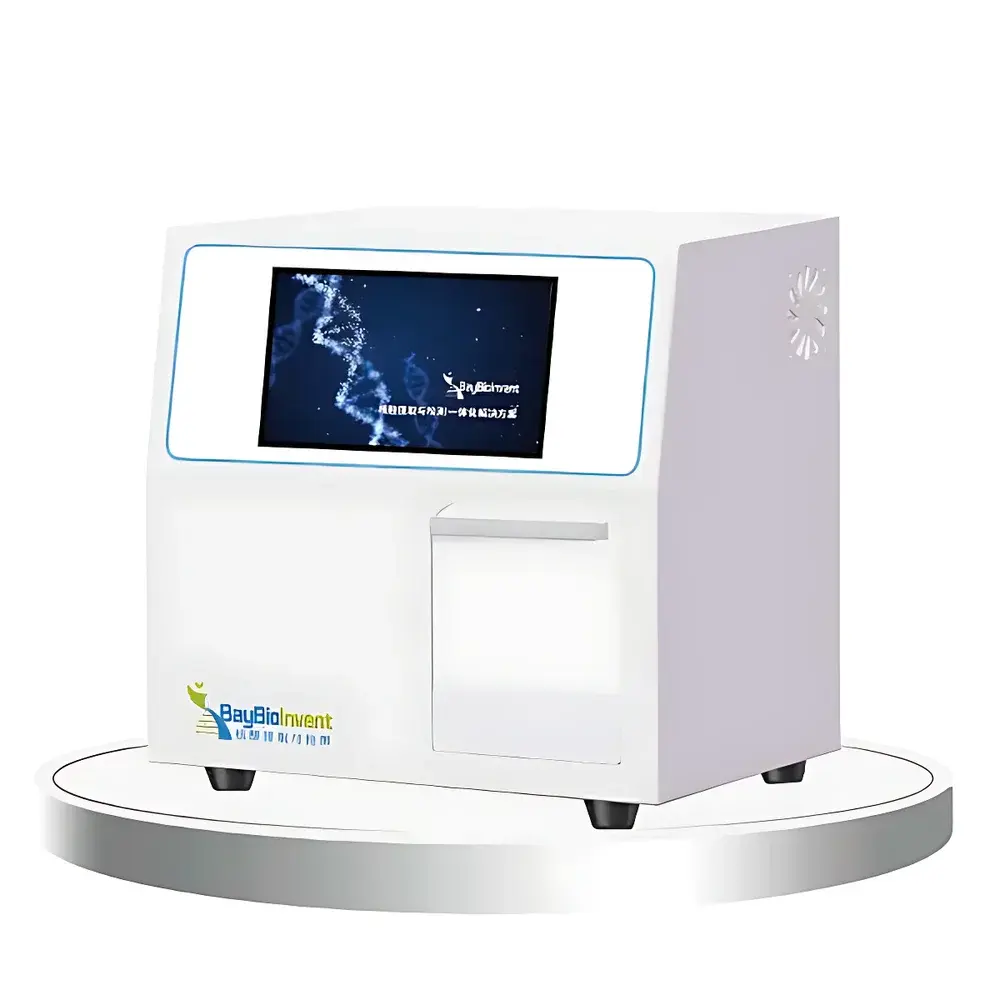
NewtonOptic EDU12 Automated Magnetic Bead-Based Nucleic Acid Extraction System
| Brand | NewtonOptic |
|---|---|
| Origin | Guangdong, China |
| Manufacturer Type | Authorized Distributor |
| Instrument Type | Magnetic Bead-Based Extraction |
| Automation Level | Dedicated Fully Automatic |
| Throughput | 12 Samples per Run |
| Sample Volume Range | 50–1000 µL |
Overview
The NewtonOptic EDU12 Automated Nucleic Acid Extraction System is an integrated, benchtop platform engineered for reproducible, hands-free isolation of genomic DNA, plasmid DNA, viral RNA, and total RNA from diverse biological matrices—including whole blood, serum, plasma, saliva, buccal swabs, tissue homogenates, and cultured cells. It operates on the principle of magnetic bead-based solid-phase extraction: paramagnetic beads functionalized with silica or carboxyl groups selectively bind nucleic acids under controlled chaotropic salt and pH conditions; subsequent magnetic separation, washing, and elution steps are executed through precisely coordinated liquid handling, magnetic actuation, and temperature-controlled incubation modules. Designed for mid-throughput laboratory environments—such as clinical diagnostics labs, academic core facilities, and contract research organizations—the EDU12 delivers standardized, operator-independent purification without requiring manual pipetting, centrifugation, or column handling.
Key Features
- Dedicated fully automated workflow: Pre-programmed, single-touch operation from lysis to elution—no protocol editing or user intervention required during run execution.
- 12-position sample processing capacity: Enables parallel processing of up to 12 samples per batch, supporting scalable throughput while maintaining consistent inter- and intra-run reproducibility (CV < 8% for yield across replicates).
- Wide dynamic input range: Accommodates sample volumes from 50 µL to 1000 µL, allowing flexibility in starting material volume—critical for low-abundance targets (e.g., cfDNA) or high-volume clinical specimens.
- Integrated thermal control: On-deck heating (37–70 °C) and optional cooling (4–25 °C) modules ensure optimal lysis efficiency and RNase inhibition during RNA workflows.
- Sealed reagent cartridge architecture: Pre-loaded, barcode-scanned consumables minimize contamination risk, reduce reagent preparation time, and support traceability under GLP-compliant documentation practices.
- Robust fluidics design: Positive-displacement pipetting with disposable tips eliminates carryover; independent tip-wash stations and real-time liquid level sensing enhance accuracy and reliability across viscous or foaming samples.
Sample Compatibility & Compliance
The EDU12 has been validated for use with human whole blood (EDTA/K₂EDTA tubes), serum, plasma, nasopharyngeal/oropharyngeal swabs in viral transport media (VTM), saliva collected in stabilization buffers, FFPE tissue lysates, and bacterial cultures. All protocols adhere to ISO 20387:2018 (Biobanking—General requirements for biobanking), and nucleic acid yields meet minimum quality thresholds defined in CLSI MM19-A3 for molecular diagnostic specimen processing. The system supports audit-ready operation: onboard event logging, user access control (role-based login), and electronic records compliant with FDA 21 CFR Part 11 when paired with validated LIMS integration.
Software & Data Management
The embedded control software provides intuitive touchscreen navigation, real-time run monitoring (including step progress, temperature status, and error alerts), and automatic generation of run reports in PDF/CSV format. Each report includes timestamped metadata (operator ID, protocol version, lot numbers of reagents and tips), raw yield data (A260/A280 ratios, concentration estimates), and pass/fail QC flags based on preconfigured acceptance criteria. Data export supports secure SFTP transfer and direct API linkage to enterprise laboratory information systems (LIS) or electronic lab notebooks (ELN). Software updates are delivered via encrypted USB or network push, with full version history and rollback capability maintained in the system registry.
Applications
- Clinical molecular testing: Preparation of templates for real-time PCR, digital PCR, and multiplex amplification assays targeting infectious disease pathogens (e.g., SARS-CoV-2, influenza A/B, RSV, HPV).
- Next-generation sequencing (NGS) library prep: High-integrity gDNA and RNA inputs suitable for fragmentation, adapter ligation, and hybridization capture workflows.
- Biobank sample processing: Standardized extraction across longitudinal cohorts, ensuring cross-study comparability of nucleic acid integrity metrics (e.g., DIN, RIN).
- Veterinary and agricultural diagnostics: Isolation of pathogen nucleic acids from animal swabs, milk, or environmental swab samples for surveillance applications.
- Research-grade biomarker discovery: Reproducible recovery of low-concentration circulating nucleic acids (e.g., miRNA, ctDNA) from minimally invasive biofluids.
FAQ
What types of nucleic acids can the EDU12 isolate?
Genomic DNA, plasmid DNA, total RNA, viral RNA, and microRNA—depending on the selected pre-installed protocol and compatible reagent kit.
Is method validation support available?
Yes. NewtonOptic provides protocol verification packages including spike-recovery studies, limit-of-detection assessments, and inter-laboratory reproducibility data upon request.
Can the EDU12 be integrated into existing laboratory automation systems?
It features standard RS232 and Ethernet interfaces, enabling bidirectional communication with track-based automation platforms via HL7 or ASTM E1384 messaging protocols.
Are reagent kits supplied by NewtonOptic or third parties?
Both options are supported: OEM-certified kits (NewtonOptic-branded) and open-system compatibility with major third-party magnetic bead kits meeting ISO 13485 manufacturing standards.
What maintenance is required for long-term operational stability?
Scheduled quarterly calibration of pipetting accuracy and magnetic field strength, plus annual firmware and security patch updates—documented in the included Preventive Maintenance Logbook.




